
朋友問你想吃什麼,你想說「我沒意見」,英文一開口就說 “I don’t care”?這個說法在英文語境裡聽起來像在不爽、不耐煩,跟你想表達的「都可以、隨便你」完全不一樣!想說得自然又有禮貌,其實有更好的選擇,這篇整理了 8 種說法,不同場合通通適用。
中文說「我不在乎」或「我沒意見」可能只是表達隨和、好相處,但英文的 “I don’t care” 通常帶有負面情緒,傳達的是:
- 我不關心(我對這件事沒興趣)
- 我很不爽(我懶得管了)
- 隨便你(我不想跟你討論)
(1)
A: Do you want Chinese or Italian for dinner?
A: 你晚餐想吃中式還是義式?
B: I don’t care.
B: 我不在乎。
這樣回答聽起來像是「你煩不煩啊,吃什麼都行,別再問我了」的感覺,會讓對方覺得你很不耐煩或心情不好。
(2)
A: Should we watch a movie or go for a walk?
A: 我們要看電影還是散步?
B: Whatever.
B: 隨便。
“Whatever” 更糟,聽起來超級不屑或生氣,就像在說「我不想理你」。
什麼時候可以用 “I don’t care”?
只有在你真的「不在乎」、「不關心」,或是表達負面情緒時才用:
(3)
A: What will people think if you quit your job?
A: 如果你辭職,別人會怎麼想?
B: Honestly, I don’t care what people think. It’s my life.
B: 說實話,我不在乎別人怎麼想。這是我的人生。
(4)
A: He’s upset that you didn’t invite him.
A: 他很不高興你沒邀請他。
B: I don’t care. He was rude to me last time.
B: 我不在乎。他上次對我很沒禮貌。
方式 1:I don’t mind(我不介意)
這是最常用、最安全的說法,表示「我沒有特別偏好,什麼都可以」。語氣友善、隨和,完全沒有負面情緒。
(5)
A: Do you want to sit by the window or the aisle?
A: 你想坐窗邊還是走道?
B: I don’t mind. Either is fine with me.
B: 我不介意。哪個都可以。
(6)
A: Is it okay if we meet at 3 instead of 2?
A: 我們改成三點而不是兩點見面可以嗎?
B: I don’t mind at all. Whatever works for you.
B: 我完全不介意。你方便就好。
(7)
A: Do you mind if we reschedule to next week?
A: 我們改到下週你介意嗎?
B: No, I don’t mind. Next week actually works better for me.
B: 不,我不介意。下週其實對我更方便。
(8)
A: Coffee or tea?
A: 咖啡還是茶?
B: I don’t mind. I’ll have whatever you’re having.
B: 我都可以。你喝什麼我就喝什麼。
實用句型:
- I don’t mind either way.(兩個都可以。)
- I really don’t mind.(我真的不介意。)
- I don’t mind at all.(我完全不介意。)
方式 2:I’m easy / I’m flexible(我都可以)
“I’m easy” 或 “I’m flexible” 表示「我很好說話、我很有彈性」,是非常正面、友善的說法。特別適合在做計畫或安排時使用。
(9)
A: What time works for you? Morning or afternoon?
A: 你什麼時間方便?早上還是下午?
B: I’m flexible. Whatever’s more convenient for everyone else.
B: 我都可以。其他人方便就好。
(10)
A: Where do you want to go for lunch?
A: 你想去哪裡吃午餐?
B: I’m easy! You pick.
B: 我都可以!你選。
(11)
A: Do you prefer Friday or Saturday for the party?
A: 你比較想在週五還是週六辦派對?
B: I’m flexible. Either day works for me.
B: 我都可以。哪天都行。
注意: “I’m easy” 在某些情境可能有其他意思(比較隨便、容易上手),但在「選擇」的情境中使用是安全的。如果擔心誤會,用 “I’m flexible” 更保險。
方式 3:Either is fine / Any is fine(哪個都可以)
這是明確表達「任何選項我都接受」,清楚又有禮貌。
(12)
A: Do you want the blue one or the green one?
A: 你要藍色還是綠色的?
B: Either is fine. They both look great.
B: 哪個都可以。兩個都很好看。
(13)
A: Thai or Japanese food tonight?
A: 今晚吃泰式還是日式?
B: Either is fine with me. I like both.
B: 我兩個都可以。我都喜歡。
(14)
A: Should we take the bus or the train?
A: 我們要搭公車還是火車?
B: Any is fine. Let’s just take whichever comes first.
B: 都可以。我們就搭先來的那個吧。
實用句型:
- Either way is fine.(兩種方式都可以。)
- Any option works for me.(任何選項我都行。)
- Both are fine with me.(兩個我都可以。)
方式 4:It’s up to you / You decide(你決定)
當你真的沒有偏好,或想讓對方做決定時,這個說法很好用。表示「我尊重你的選擇」。
(15)
A: Should we watch a comedy or an action movie?
A: 我們要看喜劇還是動作片?
B: It’s up to you. You pick something you’d enjoy.
B: 你決定。挑你喜歡的。
(16)
A: Do you want to go out or stay in tonight?
A: 你今晚想出去還是待在家?
B: It’s totally up to you. I’m happy either way.
B: 完全由你決定。我兩個都開心。
(17)
A: Should I order pizza or make dinner?
A: 我該訂披薩還是做晚餐?
B: Totally up to you. Whatever’s easier.
B: 完全由你決定。怎麼方便怎麼來。
實用句型:
- It’s your call.(由你決定。)
- You choose.(你選。)
- I’ll let you decide.(我讓你決定。)
- I’ll leave it up to you.(我交給你決定。)
方式 5:I’m okay with anything / I’m fine with whatever(什麼都可以)
這個說法表示你對所有選項都滿意,非常中性、友善。
(18)
A: What kind of music do you want to listen to?
A: 你想聽什麼類型的音樂?
B: I’m okay with anything. Play whatever you like.
B: 我什麼都可以。放你喜歡的。
(19)
A: Do you have any dietary restrictions?
A: 你有什麼飲食限制嗎?
B: No, I’m fine with whatever. I eat everything!
B: 沒有,什麼都可以。我什麼都吃!
(20)
A: What should we do this weekend?
A: 我們這週末該做什麼?
B: I’m okay with anything. Beach, hiking, or just staying home—all sound good.
B: 我什麼都可以。海邊、健行或只是待在家——都聽起來不錯。
實用句型:
- I’m okay with any option.(我任何選項都可以。)
- I’m good with whatever.(我什麼都可以。)
- Anything works for me.(什麼都行。)
方式 6:No preference — I have no preference(我沒有偏好)
這是比較正式的說法,適合工作或正式場合使用。清楚表達你沒有特別喜好。
(21)
A: Would you prefer to present first or second?
A: 你想先報告還是後報告?
B: I have no preference. Whatever fits the agenda better.
B: 我沒有偏好。怎麼符合議程就怎麼來。
(22)
A: Which hotel should we book for the conference?
A: 我們應該為會議訂哪家飯店?
B: I have no strong preference. Both seem equally good.
B: 我沒有特別偏好。兩家看起來都不錯。
(23)
A: Do you prefer email or phone communication?
A: 你偏好郵件還是電話溝通?
B: I have no particular preference. Either method is fine.
B: 我沒有特別偏好。兩種方式都可以。
實用句型:
- I don’t have a strong preference.(我沒有強烈偏好。)
- I have no particular preference.(我沒有特別偏好。)
方式 7:Surprise me(你給我驚喜)
這是比較俏皮、親近的說法,表示「我相信你的選擇」,適合跟朋友或熟人使用。
(24)
A: What do you want for your birthday?
A: 你生日想要什麼?
B: Surprise me! I trust your judgment.
B: 給我驚喜!我相信你的眼光。
(25)
A: Should I order for you?
A: 我幫你點餐好嗎?
B: Yeah, surprise me! Order something you think I’d like.
B: 好啊,給我驚喜!點你覺得我會喜歡的。
(26)
A: What movie should we watch?
A: 我們要看什麼電影?
B: You pick! Surprise me with something good.
B: 你選!給我個好看的驚喜。
注意: 這個說法比較輕鬆、非正式,不適合在正式或職場情境使用。
方式 8:Whatever works best / Whatever’s convenient(怎麼方便怎麼來)
這個說法強調「配合對方」、「以方便為主」,非常體貼、有禮貌。
(27)
A: When should we schedule the meeting?
A: 我們應該什麼時候安排會議?
B: Whatever works best for everyone else. I’m flexible.
B: 其他人怎麼方便就怎麼來。我很彈性。
(28)
A: Should I pick you up or meet you there?
A: 我去接你還是我們在那邊碰面?
B: Whatever’s more convenient for you. I can do either.
B: 看你怎樣比較方便,我都可以。
(29)
A: Do you want me to call or text?
A: 你要我打電話還是傳訊息?
B: Whatever’s easier for you. I’m available both ways.
B: 你怎麼方便就怎麼來。兩種方式我都可以。
實用句型:
- Whatever suits you best.(你怎麼合適怎麼來。)
- Whatever’s easiest.(怎麼最簡單怎麼來。)
- Whatever fits your schedule.(怎麼符合你的行程就怎麼來。)
常見錯誤要避免
錯誤 1:用 “I don’t care” 表達沒意見
不要: I don’t care. You choose.
可以: I don’t mind. You choose.
錯誤 2:只說 “Whatever” 就停住
不要: Whatever.(聽起來很不爽)
可以: Whatever works for you is fine with me.
錯誤 3:語氣聽起來不耐煩
即使用對的字,如果語氣不對,還是會讓人覺得你不高興。說這些話時要保持友善、輕鬆的語氣。
錯誤 4:什麼都說「都可以」但心裡有意見
如果你其實有偏好,就誠實說出來!一直說「都可以」然後事後抱怨,會讓對方覺得你不真誠。
正確做法:
- 如果真的沒意見:I don’t mind. Either is fine.
- 如果有一點偏好:I’m okay with either, but I slightly prefer Italian.
- 如果有明確偏好:Actually, I’d prefer Chinese if that’s okay.
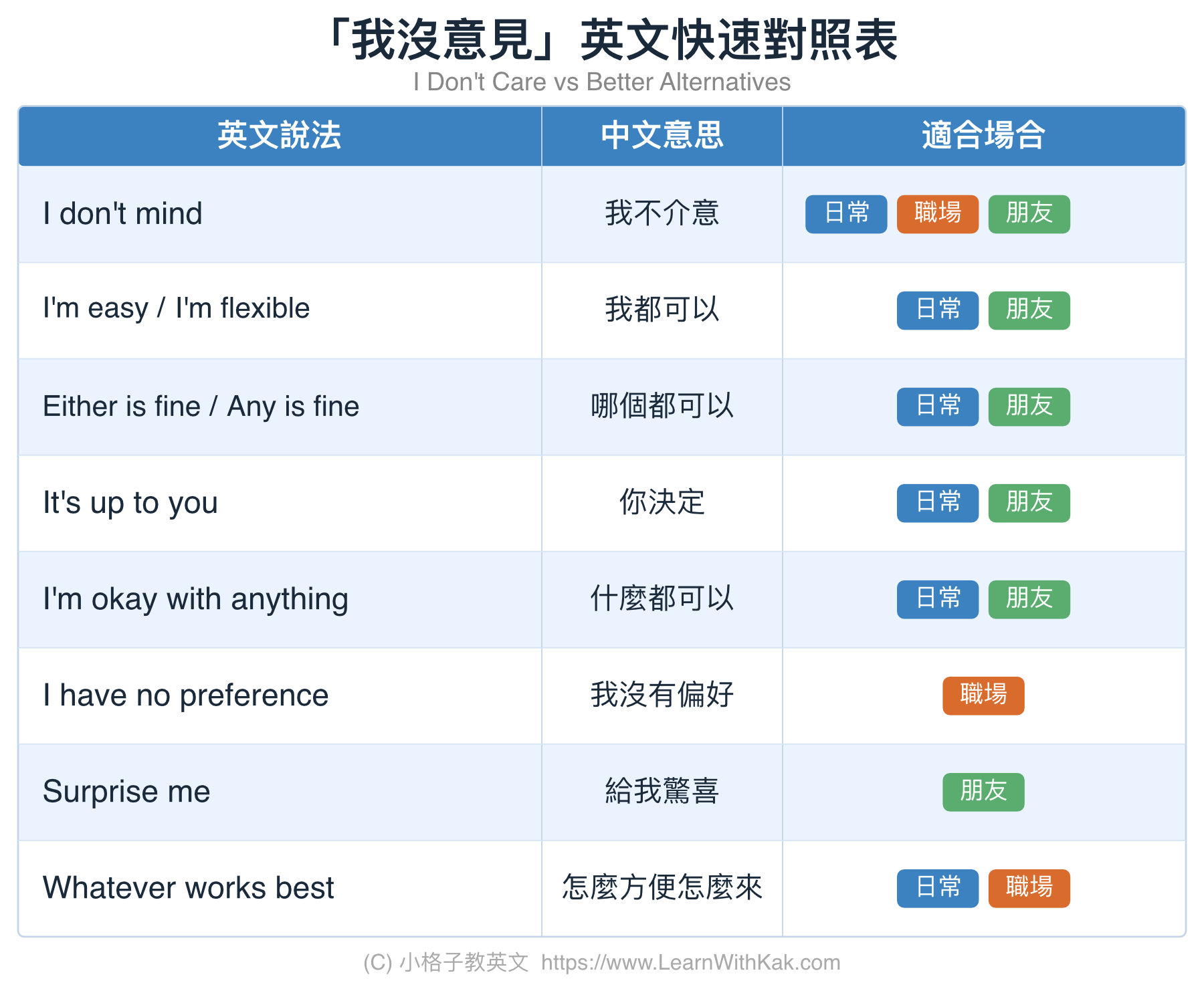
下次朋友問你想吃什麼、做什麼,千萬別直接說 “I don’t care” 了。「沒意見英文」有很多更友善的說法,記住這 8 種,輕鬆應對各種場合,語氣對了,說「都可以」也不會讓人覺得你在敷衍!
延伸閱讀:【別再只用 ‘I think’: 更自然的表達意見和想法的方式】
如果你喜歡這篇文章的話,可以追蹤我們的Threads和Facebook唷!