
原來「直覺」英文不是只有 gut feeling 這個字,還有其他說法,語感差很多,隨便亂用真的會讓老外聽了覺得怪怪的,這篇文章幫你分清楚差別。
三個字到底差在哪
這三個字都可以翻成中文的「直覺」,但差別在於「有沒有根據」跟「感覺的強度」。Gut feeling 是最單純、完全講不出理由的一種感覺;hunch 是心裡有一點蛛絲馬跡在支撐的預感;instinct 則是靠經驗累積出來、幾乎變成反射動作的判斷。三個字乍看很像,用在對的情境才不會讓人覺得你英文卡卡的。
想先抓重點的話,可以看下面這張整理表,把中文意思、語感強度、常見搭配跟使用情境都放在一起比較,一眼就能看出差別。
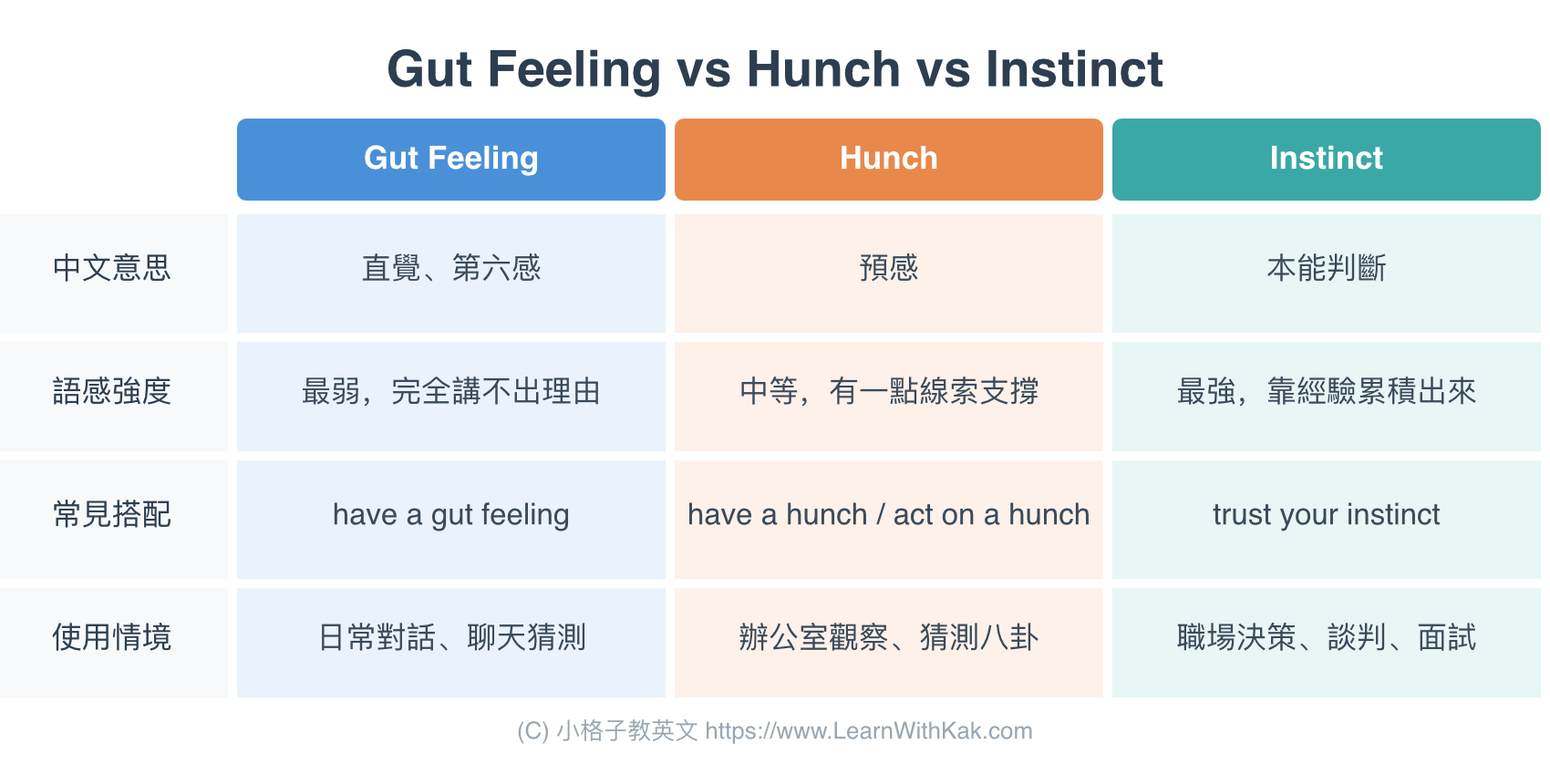
看完表格有概念之後,我們一個一個拆開來講「直覺」英文這三種說法,順便配幾個情境對話,讓你知道實際上要怎麼用在句子裡。
Gut Feeling:完全講不出理由的單純感覺
Gut feeling 中文常翻成「直覺」或「第六感」,重點是這種感覺完全沒有根據,就是單純「就是覺得」,你問當事人為什麼會這樣覺得,對方大概也答不出個所以然。這種說法在日常對話裡出現頻率最高,朋友聊天、選餐廳、猜心情都很常用。
(1)
A: Why did you cancel the date last minute?
A: 你為什麼臨時取消約會?
B: I don’t know, I just had a bad gut feeling about him.
B: 我也說不上來,我對他就是有種不太好的直覺。
(2)
A: Are you sure this is the right apartment for us?
A: 你確定這間公寓適合我們嗎?
B: My gut feeling says yes, even though it’s a bit small.
B: 我的直覺告訴我是的,雖然空間小了一點。
(3)
A: How did you know she was lying?
A: 你怎麼知道她在說謊?
B: Honestly, it was just a gut feeling. Nothing she said made sense.
B: 老實說就是直覺,她說的話都兜不起來。
(4)
A: You barely know this guy, why do you trust him?
A: 你才剛認識這個人,為什麼會信任他?
B: I can’t explain it, my gut feeling tells me he’s a good person.
B: 我也解釋不了,我的直覺告訴我他人不錯。
(5)
Sometimes you just have to trust your gut feeling, even when it doesn’t make sense.
有時候你就是得相信自己的直覺,就算它聽起來沒什麼道理。
Hunch:心裡有點蛛絲馬跡的預感
Hunch 比 gut feeling 多了一點東西,就是「多少有點線索」,只是這些線索還不夠明確到能拿出來當證據。這個字很常出現在辦公室觀察、猜測八卦、或是覺得事情不太對勁的情境。
(6)
A: Why do you think Amy is quitting soon?
A: 你為什麼覺得 Amy 快要離職了?
B: Just a hunch, she’s been updating her LinkedIn a lot lately.
B: 就是有點預感,她最近一直在更新 LinkedIn。
(7)
A: Do you think the client will approve the proposal?
A: 你覺得客戶會同意這個提案嗎?
B: I have a hunch they will, they seemed really interested in the meeting.
B: 我有預感他們會同意,會議上他們看起來滿有興趣的。
(8)
A: Why did you double-check the numbers again?
A: 你為什麼又重新確認了一次數字?
B: I had a hunch something was off, and turns out I was right.
B: 我有預感哪裡怪怪的,結果真的被我發現問題了。
(9)
A: How did you guess he got the promotion?
A: 你怎麼猜到他升職了?
B: It was just a hunch, he’s been in a lot of closed-door meetings.
B: 就只是預感,他最近常被叫進去開閉門會議。
(10)
I acted on a hunch and messaged the client before they even called.
我憑著預感在客戶打來之前就先傳訊息給他們了。
Instinct:靠經驗累積出來的本能判斷
Instinct 是三個字裡最強烈的一個,通常代表這個判斷已經內化成本能反應,往往來自長期經驗累積,不太需要思考就會自動出現。這個字很適合用在職場決策、談判、面試這種需要快速判斷的情境,跟前面提到的相信自己的直覺,其實是同一種能力練出來的結果。
(11)
A: How do you decide so fast in negotiations?
A: 你在談判的時候怎麼可以決定得這麼快?
B: After years of doing this, it’s mostly instinct at this point.
B: 做了這麼多年,現在幾乎都是靠本能反應了。
(12)
A: Weren’t you nervous interviewing so many candidates today?
A: 你今天面試了這麼多人不會緊張嗎?
B: Not really, my instinct usually tells me within the first five minutes.
B: 還好,我的直覺通常前五分鐘就能感覺出來了。
(13)
A: Why did you pull the product before the data even came in?
A: 數據都還沒出來,你為什麼就先把產品下架了?
B: My instinct told me something was wrong with the launch.
B: 我的直覺告訴我這次上市有問題。
(14)
A: How did you know the deal was too good to be true?
A: 你怎麼知道這筆交易好到不像真的?
B: Instinct, mostly. I’ve seen enough bad deals to recognize the pattern.
B: 大部分靠本能,爛交易看多了自然認得出套路。
(15)
Trust your instinct in the interview room, it’s usually more accurate than you think.
在面試現場相信你的本能判斷,通常比你想像的還準。
多益最愛考的直覺相關搭配
多益考題很喜歡在閱讀或聽力裡放這幾個字的固定搭配,考的不是意思本身,而是動詞跟介系詞有沒有配對。常見的是 trust your instinct、act on a hunch、go with your gut feeling,這幾組固定用法背起來,考試遇到就不會卡住。
(16)
A: What’s the key to making quick decisions at work?
A: 職場上快速做決定的關鍵是什麼?
B: Learning to trust your instinct instead of overthinking everything.
B: 學會相信自己的本能判斷,不要什麼都想太多。
(17)
A: Should we wait for more data before launching?
A: 我們應該等更多數據再上線嗎?
B: No, let’s act on this hunch and move fast.
B: 不用,就照這個預感行動,動作快一點吧。
(18)
A: The report doesn’t fully support this decision.
A: 這份報告沒有完全支持這個決定。
B: I know, but I’m going to go with my gut feeling on this one.
B: 我知道,但這次我要照我的直覺走。
(19)
Reading comprehension questions in the TOEIC often test whether you can pair instinct with the right verb, like trust or follow.
多益閱讀測驗常考你能不能把 instinct 跟正確的動詞配對,像是 trust 或 follow。
延伸單字/片語充電站
除了前面三個主角,還有幾個相關詞彙也很常出現,順便一起整理起來,之後看到就不會眼熟卻想不起意思,也不用每次都回去查 gut feeling 中文對照。
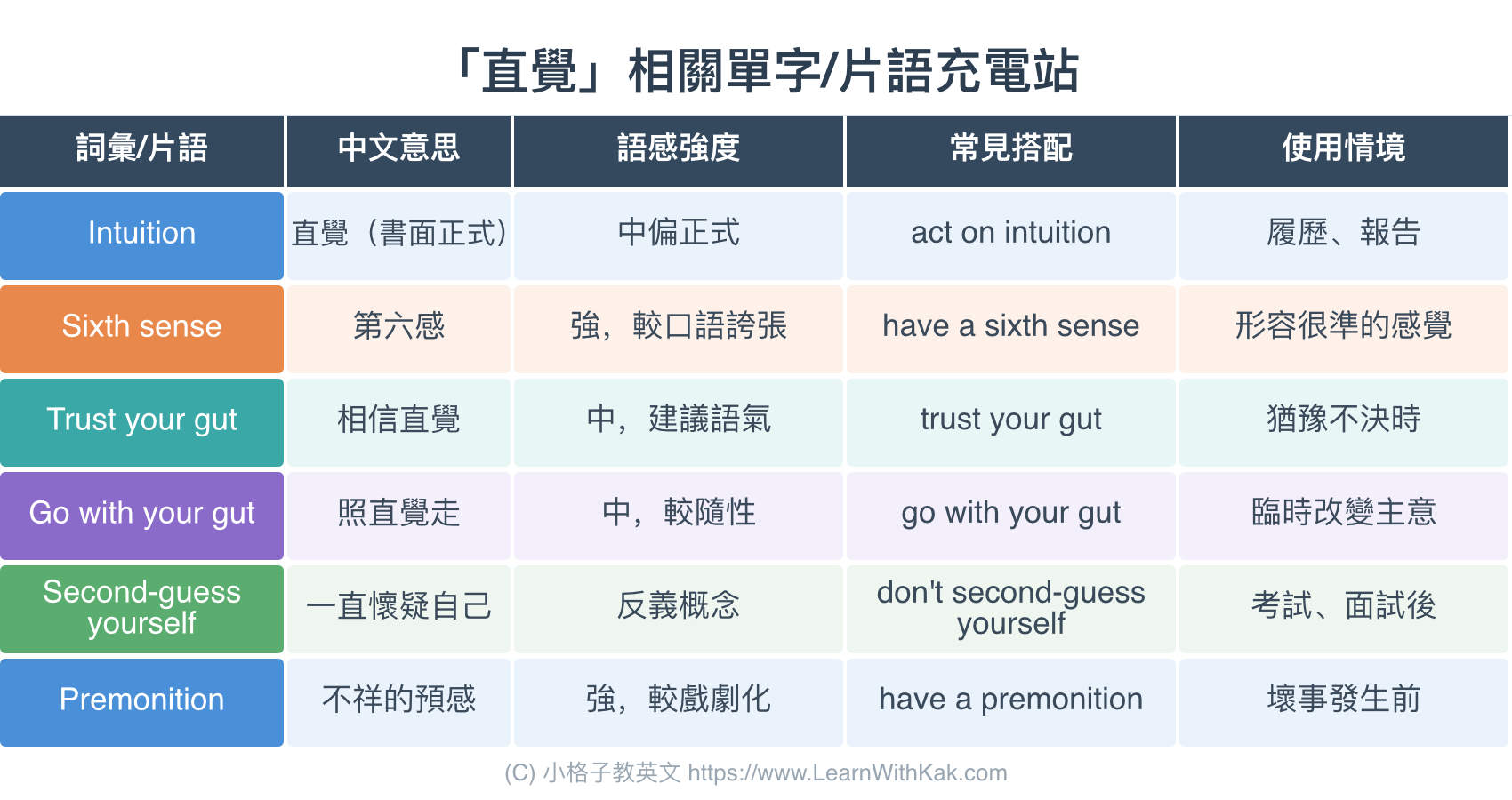
Intuition:比較正式的書面版本
Intuition 是 gut feeling 比較正式的書面版本,履歷、報告、正式場合會用到。
(20)
A: What made you choose this candidate over the others?
A: 你為什麼選這個候選人而不是其他人?
B: Partly experience, partly intuition, she just felt like the right fit.
B: 一部分靠經驗,一部分靠直覺,她感覺就是最適合的人選。
Sixth Sense:口語又誇張的第六感
Sixth sense 是「第六感」,比起前面幾個字更口語、也更誇張一點,通常用在形容準到有點神奇的感覺。
(21)
A: How did you know it was going to rain before we even left?
A: 我們都還沒出門,你怎麼知道會下雨?
B: I have a sixth sense for weather, don’t ask me how.
B: 我對天氣有第六感,別問我為什麼。
Trust Your Gut / Go With Your Gut:相信直覺的固定說法
Trust your gut 跟 go with your gut 意思很接近,都是「相信直覺」的固定說法,差別只在語氣,前者比較像建議,後者比較隨性。
(22)
A: I still can’t decide which job offer to take.
A: 我還是無法決定要接受哪個工作邀約。
B: At some point you just have to trust your gut.
B: 到某個程度你就是得相信自己的直覺了。
(23)
A: This isn’t the plan we discussed, but I like it better.
A: 這不是我們討論好的計畫,但我更喜歡這個版本。
B: Then go with your gut, plans change all the time.
B: 那就照你的直覺走吧,計畫本來就常常在變。
Second-guess Yourself:直覺的反義概念
Second-guess yourself 剛好是直覺的反義概念,意思是「一直懷疑自己原本的判斷」,通常是提醒別人不要想太多。
(24)
A: I already picked an answer, but now I’m not sure.
A: 我已經選好答案了,但現在又不確定了。
B: Don’t second-guess yourself, your first instinct is usually right.
B: 不要一直懷疑自己,你的第一直覺通常是對的。
(25)
Second-guessing yourself too much in interviews can actually make you sound less confident.
面試的時候太常懷疑自己,反而會讓你聽起來比較沒自信。
Premonition:戲劇化的不祥預感
Premonition 語感比較戲劇化,通常是「不祥的預感」,常用在描述壞事發生之前的感覺。
(26)
A: Why did you check on your parents twice today?
A: 你今天為什麼兩次打給爸媽關心?
B: I had a strange premonition something was wrong.
B: 我有種奇怪的不祥預感,覺得好像有事情不對勁。
三個字的差別其實不難分,抓住「有沒有根據」跟「強度」這兩個重點,下次要用的時候自然就會挑對字。
延伸閱讀:【Trust 和 Believe 差在哪?信任和相信大不同,一次搞懂用法別再混】
如果你喜歡這篇文章的話,可以追蹤我們的 Threads 和 Facebook 唷!