
Interested 中文是「感興趣」,這個大家都知道。但 uninterested 和 disinterested 這兩個字,很多人以為是同義詞,其實根本差很遠。就連不少英文母語者也會把它們混用,但在職場英文和多益裡,用錯了真的差很多。這篇把三個字的意思、用法和語感全部拆清楚。
Interested 中文是什麼?
Interested 是形容詞,不是動詞。很多人看到這個字,第一反應是「interest 的過去式」,但 interest 當名詞用的時候代表「興趣」或「利息」,名詞哪來的過去式?
Interested 中文意思是「感興趣的」、「有興趣的」,用來描述一個人對某件事有興趣的狀態。這裡順帶釐清一個常見混淆:interesting 和 interested 容易搞混,但用法完全不同。Interesting 描述「事物本身很有趣」,interested 描述「人對某事感興趣」。同樣的道理也適用在 boring 和 bored、exciting 和 excited 這類形容詞上。
(1)
A: We’re going hiking this weekend. Do you want to join?
A: 我們這個週末要去健行,你要一起嗎?
B: I’m interested! Where are you going?
B: 我有興趣!你們要去哪裡?
(2)
A: Are you selling your old laptop?
A: 你要賣你的舊筆電嗎?
B: Yeah, why? Are you interested?
B: 對啊,怎麼了?你有興趣嗎?
(3)
A: The documentary on Netflix is so interesting.
A: Netflix 上那部紀錄片超有趣的。
B: Really? I’m not that interested in documentaries, but I’ll check it out.
B: 真的嗎?我對紀錄片沒什麼興趣,但我會去看看。
(4)
A: Did you know the company is hiring?
A: 你知道那間公司在徵人嗎?
B: I heard. I’m interested, but I haven’t looked at the details yet.
B: 我聽說了。我有興趣,但我還沒看細節。
Interested 用法:be interested in 還是 interested to?
Interested 用法上有兩個主要結構,語感不太一樣,但很多人只知道其中一個。
be interested in + 名詞 / V-ing
最常見的用法,表示「對某件事持續有興趣」。In 後面接名詞或動名詞(V-ing)。
be interested to + 動詞原形
這個用法比較少被教到,但在職場英文裡很常見,尤其是正式 email 或開會時。語感是「我想知道某件事的結果或進展」,帶有一點好奇、想進一步了解的意思。簡單說:be interested in 是「我對這件事有興趣」,be interested to 是「我很想知道…」。
(5)
A: What do you do in your free time?
A: 你空閒時都做什麼?
B: I’m interested in photography. I take photos on weekends.
B: 我對攝影有興趣,週末都在拍照。
(6)
A: Have you thought about joining the marketing team?
A: 你有考慮過加入行銷團隊嗎?
B: I’m interested in moving to that department, actually.
B: 其實我對轉到那個部門有興趣。
(7)
A: We haven’t heard back from the client yet.
A: 我們還沒收到客戶的回覆。
B: I’d be interested to know what they think about our proposal.
B: 我很想知道他們對我們提案的看法。
(8)
A: The new manager seems very different from the last one.
A: 新主管感覺跟上一個很不一樣。
B: I’d be interested to see how he handles the team.
B: 我很想看看他怎麼帶這個團隊。
(9) He mentioned he’s interested in exploring opportunities abroad.
他說他對去海外尋找新機會有興趣。
Uninterested 中文:「沒興趣」的正式說法
在形容詞前面加上 un- 這個字首,就是把那個字的意思變成反義。Unsafe 是「不安全」,unhappy 是「不開心」,uninterested 中文就是「不感興趣的」、「沒興趣的」。
Uninterested 和 not interested 意思幾乎一樣,差別在於 uninterested 聽起來更正式、語氣也更強烈一點,帶有「完全沒興趣」的感覺,而不只是「目前剛好沒興趣」。日常口語的時候,大家比較常說 not interested,用 uninterested 反而顯得有點刻意,比較適合書面或比較正式的場合。
(10)
A: They’re showing the game on TV tonight. You want to watch?
A: 今晚電視在播那場比賽,你要看嗎?
B: I’m pretty uninterested in sports, honestly.
B: 說真的,我對運動完全沒興趣。
(11)
A: Did you read the article I sent you?
A: 你有看我傳給你的那篇文章嗎?
B: I started it, but I was uninterested after the first paragraph.
B: 我開始看了,但看到第一段就沒興趣了。
(12)
A: Why didn’t you apply for that promotion?
A: 你為什麼沒有申請那個升遷機會?
B: Honestly, I’m uninterested in taking on more management responsibilities right now.
B: 老實說,我現在對接更多管理職責沒有興趣。
(13)
A: The kids don’t want to do homework again.
A: 孩子們又不想做功課了。
B: They seem completely uninterested in anything school-related lately.
B: 他們最近對任何跟學校有關的事都完全沒興趣。
(14) She looked uninterested throughout the entire meeting.
她整場會議看起來都興趣缺缺。
Disinterested 中文:跟「沒興趣」完全無關
這裡才是大家最容易搞錯的地方。
Dis- 這個字首的意思是「分離、抽離」。Disinterested 的核心概念是把自己的「利益」從一件事情裡抽離出來,也就是「沒有利益衝突」、「公正客觀」、「不偏袒任何一方」的意思。
Disinterested 中文:「公正的」、「不偏袒的」、「沒有利益關係的」。
這個字跟「有沒有興趣」一點關係都沒有。如果你跟老闆說 “I’m disinterested in this project”,老闆會以為你是在強調你對這個專案沒有個人利益、完全站在中立立場,而不是在說你對這個專案沒興趣。
Conflict of interest(利益衝突)是職場和法律文件裡很常見的詞,而 disinterested 正好代表它的反面狀態,指「沒有利益衝突、可以客觀判斷」。在需要強調公正性的場合,例如採購決策、人事評核、合約審閱,找一個 disinterested 的人來參與,才能確保整個過程是accountable(可被問責)的。
(15)
A: Can you help mediate the disagreement between the two teams?
A: 你可以幫忙調解那兩個團隊之間的分歧嗎?
B: I think you need someone more disinterested than me. I work closely with both of them.
B: 我覺得你需要找一個比我更能保持中立的人。我跟他們兩個都有密切合作。
(16)
A: Who’s going to review the budget proposal?
A: 誰要來審核這份預算提案?
B: We need a disinterested party to look at it so no one feels it’s biased.
B: 我們需要一個沒有利益關係的人來審,這樣才不會讓人覺得有偏袒。
(17)
A: Is she a good judge for the competition?
A: 她適合當這個比賽的評審嗎?
B: I’m not sure. Her daughter is one of the contestants. She might not be disinterested enough.
B: 我不確定。她女兒是其中一位參賽者,她可能不夠公正。
(18)
A: Why did they bring in an outside consultant?
A: 他們為什麼要找外部顧問進來?
B: They wanted a disinterested opinion on whether the merger was a good idea.
B: 他們想要一個沒有利益立場的人來評估這個合併是否是個好主意。
(19) The committee chose a disinterested expert to review the case.
委員會選了一位沒有利益關係的專家來審查這個案子。
(20)
A: Can you give me honest feedback on my business plan?
A: 你可以給我對我商業計畫的誠實意見嗎?
B: I’ll try, but since I’m your business partner, I’m not exactly disinterested.
B: 我盡量,但因為我是你的商業夥伴,我不算完全中立。
職場和多益為什麼要搞清楚?
TOEIC 閱讀測驗裡,disinterested 是個很經典的陷阱字。它出現在合約、法律文件、企業公告類的文章裡,如果你把它讀成「沒興趣」,整句話的意思就完全跑掉了。多益常見的情境包括審計報告、顧問意見、委員會決議,這些場合都很需要強調「公正客觀、沒有利益衝突」,disinterested 就是這個概念的關鍵字。
另外,interested parties(利益相關方)也是職場和商業英文裡很常見的詞,指的是「在某件事上有利益關係的人或機構」。這個詞跟 disinterested 正好是一對反義概念,一起記會更清楚。
(21) The report was reviewed by a disinterested auditor to ensure there was no conflict of interest.
這份報告由一位沒有利益關係的審計員審閱,以確保沒有利益衝突。
(22)
A: We need to find someone to evaluate the competing bids.
A: 我們需要找人來評估這些競標方案。
B: It should be someone disinterested. Anyone from our procurement team would have too much at stake.
B: 應該找一個沒有利益立場的人。我們採購團隊的任何人都有太多利益關係了。
(23)
A: Who are the interested parties in this contract?
A: 這份合約的利益相關方是哪些?
B: Both companies and the supplier. They’ll all need to sign off.
B: 兩家公司和供應商,他們都需要簽字確認。
(24) The decision was made by a panel of disinterested experts with no ties to either side.
這個決定由一組與雙方均無利益關係的專家小組做出。
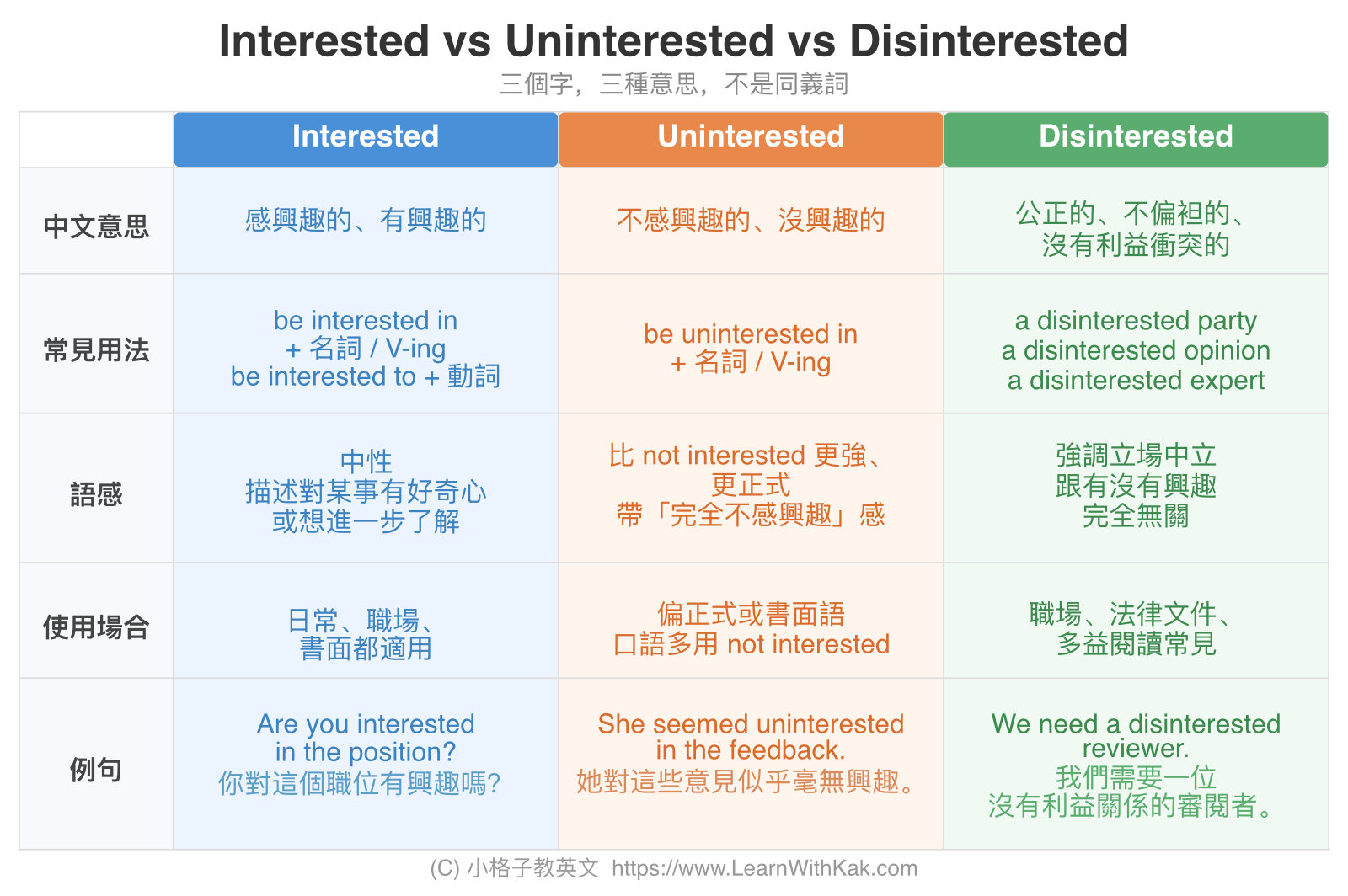
記住一個關鍵:uninterested 是情緒問題(我對這件事沒感覺),disinterested 是立場問題(我在這件事上沒有私利)。兩個字根本不在同一個頻道。下次在多益閱讀裡看到 disinterested,或在職場需要表達「中立客觀」,你就知道怎麼用了。
延伸閱讀:【Satisfactory 中文不是「滿意」!搞清楚這兩個字,英文說話才不會踩雷】
如果你喜歡這篇文章的話,可以追蹤我們的Threads和Facebook唷!