
開會時老闆丟出一個你覺得根本行不通的計畫,想反對又不敢開口?心裡想著 “I disagree”,但總覺得這樣講太衝、太沒禮貌,只好硬著頭皮點頭裝沒事?跟外國客戶討論案子,明明有更好的想法,卻不知道怎麼委婉地說出來,最後錯過表現機會?其實表達不同意英文根本不用那麼難!從超委婉的 “I see what you’re saying, but…” 到比較直接的 “I respectfully disagree”,不同情況選對說法就好。今天就來教你 10 種從委婉到直接的表達方式,讓你職場上、生活中都能自信又不失禮貌地說出自己的想法!
為什麼不要直接說 I disagree?
在職場溝通中,表達不同意和指出別人的錯誤一樣,都需要技巧。很多人學英文時第一個學到的不同意說法就是 “I disagree”,但說真的,在實際對話中這句話聽起來超直接、超硬,甚至有點不舒服。
(1)
A: I think we should launch the product next month.
A: 我認為我們應該下個月推出產品。
B: I disagree.
B: 我不同意。
“I disagree” 這麼直接地否定別人,在英語文化中會讓對方覺得:
- 你態度有點兇欸
- 氣氛瞬間尷尬
當然啦,”I disagree” 也不是完全不能用。在辯論比賽、學術討論,或是你真的需要超明確表達立場的時候,這樣講沒問題。但平常在公司開會、跟客戶聊天、跟同事討論的時候,用更委婉的說法會讓溝通順暢超多。
老外在表達不同意的時候,通常會用更有技巧的說法。這些說法既能清楚講出自己的想法,又不會搞砸雙方關係。來看看有哪些實用的表達方式吧!
軟化語氣的開場白
表達不同意之前,先來個「緩衝句」軟化一下語氣,你的不同意聽起來就會友善超多、也更專業。這些開場白就像英文客套話一樣,能讓溝通更順暢、更不容易得罪人。
以下是兩個超常用的開場方式:
I see what you’re saying, but…
這句話意思是「我明白你的意思,但是…」,先肯定對方的想法,再提出自己的看法。職場討論時用這個超安全。
(2)
A: I think we should launch the product next month.
A: 我認為我們應該下個月推出產品。
B: I see what you’re saying, but I’m concerned we haven’t done enough testing yet.
B: 我明白你的意思,但我擔心我們還沒有做足夠的測試。
(3)
A: We should cut the budget for marketing.
A: 我們應該削減行銷預算。
B: I see what you’re saying, but reducing marketing spend might hurt our sales in the long run.
B: 我明白你的意思,但削減行銷支出可能會長期損害我們的銷售。
(4)
A: Let’s have the meeting at 8 AM tomorrow.
A: 我們明天早上8點開會吧。
B: I see what you’re saying, but some team members have expressed that early meetings are difficult for them.
B: 我明白你的意思,但有些團隊成員表示太早的會議對他們來說很困難。
I hear you, but…
“I hear you” 超口語的一個說法,意思是「我聽到你的意思了」或「我懂你在講什麼」。這個比 “I see what you’re saying” 更輕鬆、更隨性,跟同事朋友聊天的時候用這個最自然。
(5)
A: I really think we should order pizza for lunch.
A: 我真的覺得我們午餐應該訂披薩。
B: I hear you, but we had pizza twice last week already. How about trying that new Thai place?
B: 我聽到你的意思了,但我們上週已經吃了兩次披薩了。試試那家新開的泰式餐廳怎麼樣?
(6)
A: The old system was working fine. Why do we need to change it?
A: 舊系統運作得很好。我們為什麼需要改變它?
B: I hear you, but the old system is becoming outdated and our competitors are already using more advanced technology.
B: 我理解你的想法,但舊系統正在變得過時,而我們的競爭對手已經在使用更先進的技術了。
(7)
A: I think we should work through the weekend to finish this project.
A: 我認為我們應該週末加班來完成這個專案。
B: I hear you, but I think we can meet the deadline if we prioritize the most important features first.
B: 我聽到你的意思了,但我認為如果我們優先處理最重要的功能,我們可以趕上截止日期。
提出替代方案
與其單純說「我不同意」,不如提個替代方案,這樣聽起來超有建設性的。提替代方案的時候,像「讓我想想」這類說法也超實用,可以給自己時間想更好的建議。
Have you considered…?
「你有考慮過…嗎?」這個問句式超聰明的,不會直接否定對方,而是引導對方去想其他可能性。
(8)
A: I think we should hire more people to handle the workload.
A: 我認為我們應該雇用更多人來處理工作量。
B: Have you considered automating some of the repetitive tasks first? That might be more cost-effective.
B: 你有考慮過先自動化一些重複性的任務嗎?那可能更具成本效益。
(9)
A: We should advertise on TV to reach more people.
A: 我們應該在電視上打廣告來接觸更多人。
B: Have you considered digital advertising? Our target audience spends most of their time online.
B: 你有考慮過數位廣告嗎?我們的目標受眾大部分時間都在網上。
What if we…?
「如果我們…會怎麼樣?」這也是提替代方案的好方法,聽起來像在一起想點子,而不是在反對對方。
(10)
A: I think we should cancel the event due to low registration numbers.
A: 我認為由於報名人數少,我們應該取消這個活動。
B: What if we turned it into a smaller, more intimate gathering instead? That could actually make it more valuable for attendees.
B: 如果我們把它變成一個更小、更私密的聚會會怎麼樣?這實際上可能讓參加者覺得更有價值。
(11)
A: Let’s translate our website into five languages at once.
A: 我們一次把網站翻譯成五種語言吧。
B: What if we started with just one or two languages where we have the most international customers? We can expand from there.
B: 如果我們先從我們擁有最多國際客戶的一兩種語言開始會怎麼樣?我們可以從那裡擴展。
表達疑慮和擔憂
有時候你不是完全不同意啦,只是對某個計畫或想法有點擔心而已。這時候可以用下面這些說法:
I’m a bit concerned about…
「我有點擔心…」這個說法可以讓你表達疑慮,但不會聽起來太負面。
(12)
A: Let’s promise the client we can deliver in two weeks.
A: 我們向客戶承諾兩週內交付吧。
B: I’m a bit concerned about that timeline. The development team mentioned they need at least three weeks for testing alone.
B: 我有點擔心那個時間表。開發團隊提到光是測試就需要至少三週。
(13)
A: We should eliminate the training budget to save money.
A: 我們應該削減培訓預算來省錢。
B: I’m a bit concerned about how that might affect employee development and retention in the long term.
B: 我有點擔心長期來看,這可能會如何影響員工的發展和留任。
I’m not sure that’s the best approach because…
這個說法比直接說「這主意很爛」溫和超多,而且後面加個 “because” 講出理由,會讓你的反對更有說服力。
(14)
A: Let’s just copy what our competitor is doing.
A: 我們就照抄競爭對手在做的事吧。
B: I’m not sure that’s the best approach because our target market is quite different from theirs.
B: 我不確定那是最好的方法,因為我們的目標市場與他們的相當不同。
(15)
A: Let’s require everyone to return to the office full-time.
A: 我們要求每個人全職回到辦公室吧。
B: I’m not sure that’s the best approach because we’ve seen a significant increase in productivity with the hybrid model.
B: 我不確定那是最好的方法,因為我們已經看到混合模式下生產力有顯著提升。
直接但禮貌的不同意
有時候你就是需要講清楚一點,但還是可以保持禮貌跟專業。需要明確表達立場的時候,用對說法就跟催促進度一樣重要。
I respectfully disagree
在 “disagree” 前面加個 “respectfully”(恭敬地),就能讓這個直接的不同意聽起來有禮貌很多。跟老闆或在正式場合講話時,用這個最保險。
(16)
A: The customer is always right, so we should accept all their demands.
A: 顧客永遠是對的,所以我們應該接受他們所有的要求。
B: I respectfully disagree. While customer satisfaction is important, we also need to set boundaries to maintain our business standards.
B: 我不太同意。雖然客戶滿意度很重要,但我們也需要設定界限來維持我們的業務標準。
(17)
A: This approach has always worked in the past.
A: 這個方法過去一直有效。
B: I respectfully disagree. I think we need to look at this from a different angle given the current market conditions.
B: 我不是很同意。考慮到目前的市場狀況,我認為我們需要從不同的角度來看這個問題。
I see it differently
這個說法是在表達「我的看法不一樣」,不會直接否定對方,而是提出另一個角度。
(18)
A: This project failed because the team didn’t work hard enough.
A: 這個專案失敗是因為團隊不夠努力。
B: I see it differently. I think we had unclear objectives from the start, which made it difficult for the team to succeed.
B: 我的看法不同。我認為我們從一開始就沒有明確的目標,這讓團隊很難成功。
(19)
A: Remote work is making our team less connected.
A: 遠距工作讓我們的團隊變得不那麼緊密。
B: I see it differently. I think it’s given us more flexibility, and we can strengthen connections through intentional virtual team-building activities.
B: 我的看法不同。我認為它給了我們更多彈性,而且我們可以透過有意識的虛擬團隊建設活動來加強連結。
日常生活中的委婉不同意
不是只有職場需要表達不同意啦,跟朋友、家人相處時也常常會意見不合。來看看一些更輕鬆、更口語的說法:
I’m not so sure about that
超口語的一個說法,意思是「我不太確定欸」或「我對那有點保留」。
(20)
A: Let’s go hiking this weekend. It’s supposed to rain, but it’ll be fun!
A: 我們這週末去爬山吧。預報會下雨,但會很好玩!
B: I’m not so sure about that. Hiking in the rain sounds pretty miserable to me. How about we go to that new museum instead?
B: 我不太確定呢。在雨中爬山對我來說聽起來很慘。我們去那個新博物館怎麼樣?
(21)
A: You should totally quit your job and travel the world for a year!
A: 你絕對應該辭職然後環遊世界一年!
B: I’m not so sure about that. It sounds amazing, but I need to save more money first and make sure I have a solid plan.
B: 我不太確定。聽起來很棒,但我需要先存更多錢,並確保我有一個穩固的計畫。
That’s one way to look at it, but…
「那是一種看法啦,但是…」這個說法先承認對方的觀點有道理,但你有不同想法。
(22)
A: The best way to learn English is to memorize grammar rules.
A: 學英文最好的方法就是背文法規則。
B: That’s one way to look at it, but I’ve found that immersion and real conversation practice are actually more effective for most people.
B: 那是一種看法,但我發現對大多數人來說,沉浸式學習和真實對話練習實際上更有效。
(23)
A: Living in a big city is always better than living in a small town.
A: 住在大城市總是比住在小鎮好。
B: That’s one way to look at it, but small towns have their own advantages, like a stronger sense of community and lower cost of living.
B: 那是一種看法,但小鎮也有自己的優勢,比如更強的社區意識和更低的生活成本。
不同情境的使用指南
學會這 10 種說法之後,接下來就是要知道什麼時候用什麼說法啦。來看看完整比較:
根據不同對象和場合,選對說法超重要:
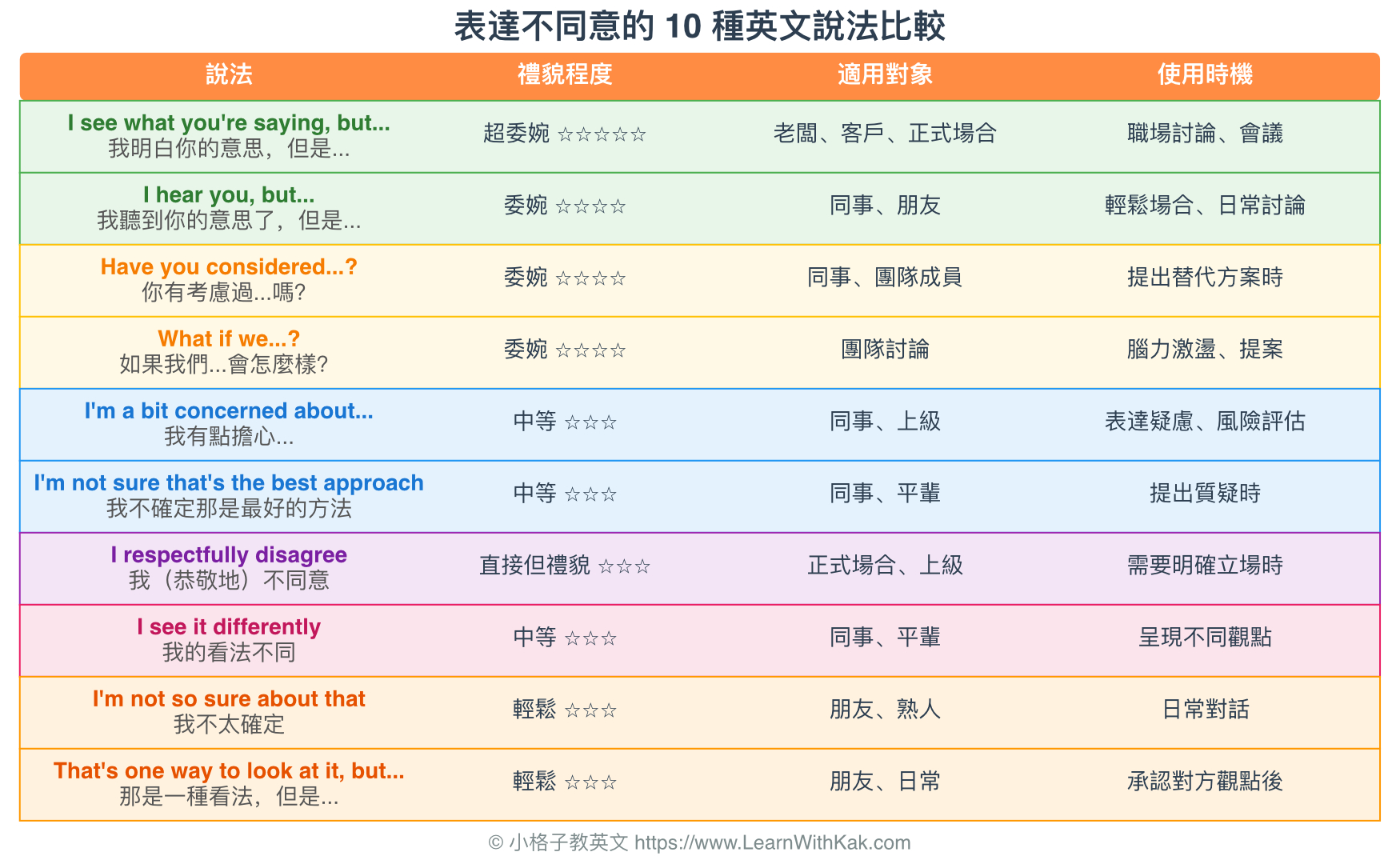
下次開會或聊天時需要表達不同意,選個適合情境的說法,記得先肯定對方、再講出你的想法。用對說法、語氣保持好,你的意見會更容易被接受,溝通也會順暢超多。
如果你喜歡這篇文章的話,可以追蹤我們的Threads和Facebook唷!