
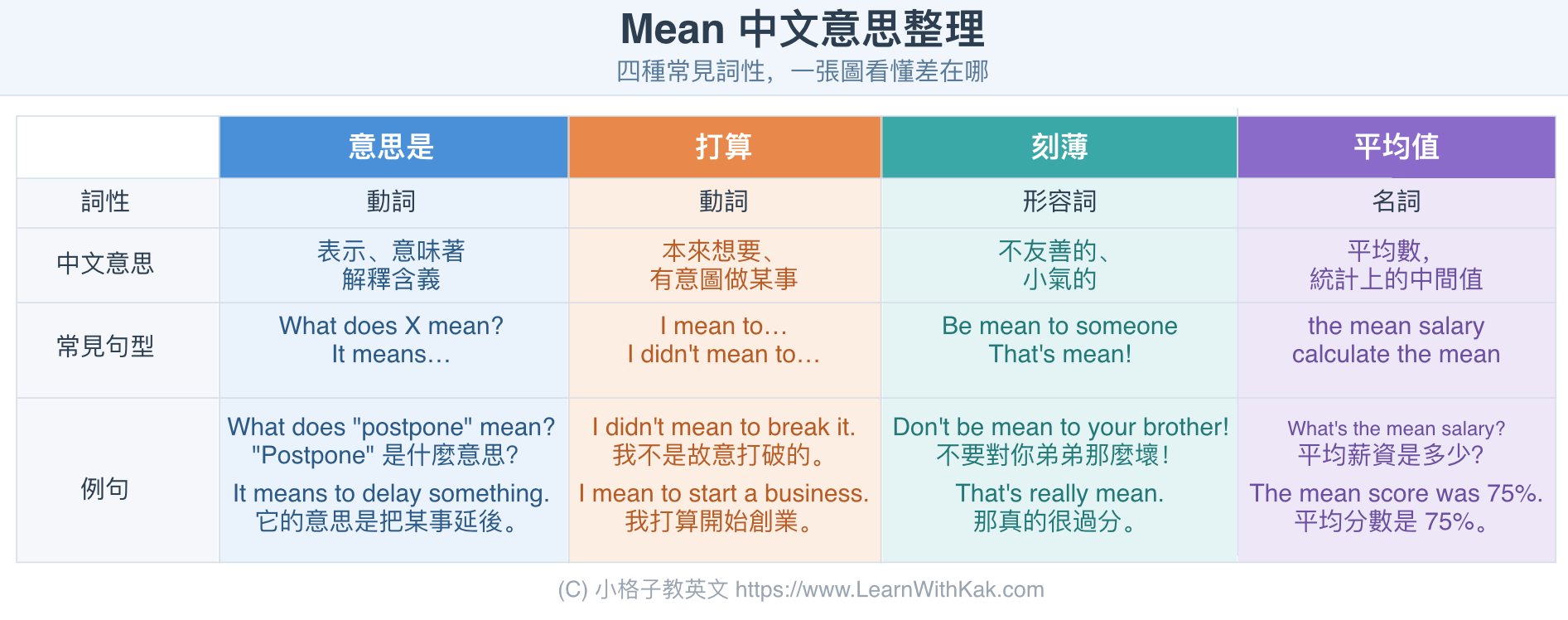
Mean 中文意思其實有好幾種,最常見是「意思是」,但它當形容詞用又會變成「刻薄」,難怪常常搞混,連學英文一段時間的人也常常分不清楚。這篇把最常用的幾種意思整理清楚,配上生活對話範例,看完就知道怎麼分。
Mean 用法一:動詞「意思是、意味著」
這是 mean 最常見的用法,中文意思是「意思是」、「意味著」、「表示」,講到 mean 中文意思,大概第一個想到的就是這個。
常見句型:
- What does [X] mean?([X] 是什麼意思?)
- It means…(它的意思是…)
- Do you know what [X] means?(你知道 [X] 是什麼意思嗎?)
(1)
A: What does “postpone” mean?
A: “Postpone” 是什麼意思?
B: It means to delay something to a later time.
B: 它的意思是把某事延到稍後的時間。
(2)
A: I don’t understand this sentence. What does it mean?
A: 我不懂這個句子,它是什麼意思?
B: It means you need to submit the report by Friday.
B: 它的意思是你需要在星期五前提交報告。
(3)
A: What do these symbols mean?
A: 這些符號是什麼意思?
B: They mean “no parking” and “no entry.”
B: 它們表示「禁止停車」和「禁止進入」。
(4)
A: His silence means he disagrees with the plan.
A: 他的沉默意味著他不同意這個計劃。
B: Not necessarily. Maybe he’s just thinking it over.
B: 不一定,也許他只是在考慮。
(5) What does this word mean in English?
這個字的英文是什麼意思?
(6) Just because she didn’t reply doesn’t mean she’s angry.
她沒回覆不代表她生氣了。
Mean 用法二:動詞「打算、意圖」
Mean 當動詞還可以表示「打算做某事」、「本來想要」、「有意圖」,跟第一種用法感覺差滿多的。
常見句型:
- I mean to…(我打算…)
- I didn’t mean to…(我不是故意的/我本來不想…)
- I meant to…(我本來想要…)
(7)
A: Did you break my cup on purpose?
A: 你是故意打破我的杯子的嗎?
B: No! I didn’t mean to. It was an accident.
B: 不是!我不是故意的,那是意外。
(8)
A: Why didn’t you call me back yesterday?
A: 你昨天為什麼沒回我電話?
B: I’m sorry. I meant to call you, but I got caught up with work.
B: 對不起,我本來想打給你,但工作太忙了。
(9)
A: Are you really going to quit your job?
A: 你真的要辭職嗎?
B: Yes, I mean to start my own business next year.
B: 對,我打算明年開始創業。
(10)
A: I heard you told everyone about my secret.
A: 我聽說你把我的秘密告訴大家了。
B: I didn’t mean to! It just slipped out.
B: 我不是故意的!我不小心說溜嘴了。
(11) She didn’t mean any harm by her comment.
她的評論不是要傷害人的。
Mean 用法三:形容詞「刻薄的、吝嗇的」
Mean 當形容詞時,中文意思是「刻薄的」、「不友善的」、「小氣的」,這應該是台灣人最熟悉的 mean 用法,一講到 mean 刻薄,大部分人第一個聯想到的就是這個意思。
常見句型:
- Be mean to someone(對某人刻薄)
- That’s mean!(那很刻薄!/那樣很過分!)
(12)
A: Why is Sarah always so mean to the new employees?
A: Sarah 為什麼總是對新員工那麼刻薄?
B: I don’t know. Maybe she’s just stressed.
B: 我不知道,也許她只是壓力大。
(13)
A: Don’t be mean to your little brother!
A: 不要對你弟弟那麼壞!
B: But he broke my toy first!
B: 但他先弄壞我的玩具的!
(14)
A: My boss said my presentation was terrible in front of everyone.
A: 我老闆當著大家的面說我的簡報很糟糕。
B: That’s really mean. He could have given you feedback privately.
B: 那真的很過分,他可以私下給你意見的。
(15)
A: Is your neighbor really that mean?
A: 你鄰居真的那麼小氣嗎?
B: Yes, he won’t even let kids play near his yard.
B: 對,他甚至不讓小孩在他院子附近玩。
(16) It was mean of you to laugh at her mistake.
你嘲笑她的錯誤真的很刻薄。
職場上如果聽到同事說 “Don’t be so mean about it”,通常是在說「不要那麼刻薄/講話不要那麼酸」,不是在講平均值,也不是打算做什麼,這種語境下 mean 刻薄的意思最常見,一聽就能反應過來是在說誰講話太酸。
Mean 用法四:名詞「平均值」
Mean 當名詞時,中文意思是「平均數」、「平均值」,比較常出現在數據、統計相關的內容裡,職場做報告時也常會用到。
(17)
A: What’s the mean salary for this position?
A: 這個職位的平均薪資是多少?
B: The mean is around $60,000 per year.
B: 平均大約是每年 6 萬美元。
(18)
A: How do we calculate the mean?
A: 我們如何計算平均值?
B: Add all the numbers together and divide by how many numbers there are.
B: 把所有數字加起來,然後除以數字的個數。
(19)
A: The mean temperature in July is 28 degrees Celsius.
A: 七月的平均溫度是攝氏 28 度。
B: That’s higher than last year’s mean.
B: 那比去年的平均值高。
(20) The mean score on the test was 75%.
測驗的平均分數是 75%。
Mean 用法五:地道口語表達
Mean 在日常對話中有很多超實用的口語表達,這些是母語人士天天在用的,學起來馬上就能用在對話裡。
I mean it!(我是說真的!/我不是開玩笑!)
用來強調你說的話是認真的,不是隨便說說。
(21)
A: I’m going to start exercising every day.
A: 我要開始每天運動。
B: Yeah, right. I’ve heard that before.
B: 是啊,好啦,這話我聽過很多次了。
A: No, I mean it this time! I already signed up for a gym membership.
A: 不,這次我是說真的!我已經辦健身房會員了。
(22)
A: Thank you so much for your help!
A: 非常感謝你的幫助!
B: I mean it when I say call me anytime you need anything.
B: 我說的是真的,任何時候需要什麼就打給我。
I mean(我的意思是、也就是說)
用來補充說明、更正或解釋你剛才說的話。
(23)
A: Are you coming to the party?
A: 你會來派對嗎?
B: I want to, I mean, if I finish my work on time.
B: 我想去,我的意思是,如果我準時完成工作的話。
(24) This restaurant is expensive. I mean, it’s worth it, but still pricey.
這家餐廳很貴,我是說,值得啦,但還是很貴。
You know what I mean?(你懂我意思吧?)
用來確認對方是否理解你的意思。
(25)
A: Sometimes you just need a break from everything, you know what I mean?
A: 有時候你就是需要暫時逃離一切,你懂我意思吧?
B: Totally. I feel the same way.
B: 完全懂,我也有同感。
Mean business(認真的、玩真的)
表示某人是認真的,不是在開玩笑或隨便說說。
(26)
A: The new manager seems tough.
A: 新經理看起來很嚴格。
B: Yeah, she definitely means business. She’s already implementing new policies.
B: 對啊,她絕對是玩真的,她已經在實施新政策了。
Mean well(出於好意)
表示某人的本意是好的,即使結果可能不理想。
(27)
A: My mom keeps giving me advice about my career, and it’s annoying.
A: 我媽一直給我職業建議,很煩。
B: I’m sure she means well. She just wants what’s best for you.
B: 我相信她是出於好意,她只是想要對你最好的。
Mean a lot to someone(對某人很重要)
表示某事對某人有重要意義或價值。
(28)
A: Thank you for coming to my graduation. It means a lot to me.
A: 謝謝你來參加我的畢業典禮,這對我意義重大。
B: Of course! I wouldn’t miss it for the world.
B: 當然!我絕對不會錯過的。
(29) Your support really means a lot to me.
你的支持對我真的很重要。
容易搞混的用法對比
Mean 中文意思這麼多,難免會有幾組讓人分不清楚的用法,這邊直接拿出來對比一下。
What do you mean? vs What does it mean?
What do you mean? = 你是什麼意思?(問對方想表達什麼)
(30) What do you mean by “complicated”?
你說「複雜」是什麼意思?
What does it mean? = 它是什麼意思?(問某個字或事物的含義)
(31) What does this sign mean?
這個標誌是什麼意思?
I mean to vs I meant to
I mean to = 我打算…(現在的計劃)
(32) I mean to call her later today.
我打算今天稍後打給她。
I meant to = 我本來想…(過去的意圖,但沒做到)
(33) I meant to call her yesterday, but I forgot.
我昨天本來想打給她,但我忘了。
That’s mean vs That means
That’s mean = 那很刻薄/很過分,跟前面提到的 mean 刻薄用法是同一種
(34) That’s mean! You shouldn’t say that to her.
那很過分!你不該那樣對她說。
That means = 那意味著
(35) That means we have to work overtime.
那意味著我們要加班。
Mean 中文 vs Meant 中文
Mean 是現在式,meant 是過去式,時態不同意思就會差一點。
(36) I mean what I say.
我說的話是認真的。(現在,強調此刻的態度)
(37) I meant what I said.
我剛才說的是認真的。(過去,強調當時說的那句話)
記住一個原則:先看 mean 在句子裡是動詞、形容詞還是名詞,再套進去意思就對了。下次聽到「You’re so mean」,就知道對方是在說你「很刻薄」啦。
延伸閱讀:【By all means 中文是什麼意思?和 By no means 只差一個字,意思卻是天差地遠】
如果你喜歡這篇文章的話,可以追蹤我們的 Threads 和 Facebook 唷!