
跟朋友或同事聊事情,討論到最後誰都說服不了誰,對方突然拋出 “Well, I guess we’ll have to agree to disagree.” 你是不是有時候不太確定這句話到底是在同意你還是不同意你?agree to disagree 中文意思其實一點都不難,搞懂一次,職場和日常對話都用得上。
Agree to disagree 中文是什麼意思?
“Agree” 是「同意」,”disagree” 是「不同意」,兩個放在一起感覺好像在鬼打牆。
其實 agree to disagree 中文可以理解成「各執己見」、「就各自保留意見吧」,或更口語一點:「我知道你有你的想法,我有我的,就這樣了。」這是一個固定片語,整體意思要一起理解,不能拆開翻譯。
它的意思是:雙方都同意彼此有不同的看法,誰也沒辦法說服誰,所以各自保留自己的立場,不再繼續爭論下去。
這句話的重點不是誰輸誰贏,而是雙方都願意承認「我跟你想法不一樣,這沒關係」,然後讓對話好好結束。
(1)
A: Do you think pineapple belongs on pizza?
A: 你覺得鳳梨可以放在披薩上嗎?
B: Absolutely not. That’s a crime.
B: 絕對不行。那是種罪。
A: I love it, though. Okay, I think we’ll just have to agree to disagree on this one.
A: 但我超愛。好啦,這件事我們就各自保留意見吧。
(2)
A: I really think we should have gone with the black sofa.
A: 我真的覺得我們應該買黑色沙發的。
B: And I still think the gray one was the right call. Let’s just agree to disagree.
B: 而我還是覺得灰色的才對。我們就各自保留意見吧。
(3)
A: I can’t believe you don’t like Studio Ghibli films.
A: 我不敢相信你不喜歡吉卜力的電影。
B: They’re just not for me. Can we agree to disagree?
B: 那就是不合我胃口。我們可以各自保留意見嗎?
(4) We’ve been going back and forth on this for an hour. I think we just need to agree to disagree and move on.
我們為這個來回討論了一個小時了。我覺得我們就各自保留意見,繼續往前吧。
什麼時候會說這句話?
Agree to disagree 通常用在兩種情況:一是兩個人聊了很久,誰都沒辦法說服誰;二是話題本來就沒有標準答案,例如口味、個人偏好、價值觀這類事情。
這句話不代表你認輸,也不代表你改變了立場,而是你選擇承認「我跟你本來就可以有不同的看法」,然後讓對話好好結束。這種態度在朋友之間、跟家人聊,甚至在職場上,都是一種有禮貌又成熟的表現。
如果平常討論事情時,你想知道怎麼用英文自然表達「你說的有道理」或「我完全同意」,這篇關於同意說法的整理裡有很多實用選項,可以一起搭著學。
(5)
A: Okay, we’ve been arguing about which streaming platform is better for like twenty minutes.
A: 好了,我們爭哪個串流平台比較好已經快二十分鐘了。
B: Fair point. Let’s agree to disagree and just pick something to watch already.
B: 有道理。我們就各自保留意見,快點選個東西來看吧。
(6)
A: I still don’t think remote work is as productive as working from the office.
A: 我還是覺得在家工作沒有進辦公室有效率。
B: We’ve been over this. I completely disagree, but I respect your view. I think we’ll just have to agree to disagree.
B: 我們討論過這個了。我完全不同意,但我尊重你的看法。我覺得我們就各自保留意見吧。
(7)
A: My dad thinks I should have stayed at my old company.
A: 我爸覺得我應該繼續留在舊公司。
B: And you obviously see it differently?
B: 然後你的看法明顯不一樣?
A: Yeah, but we just agreed to disagree. He has his reasons, I have mine. No hard feelings.
A: 對,但我們就各自保留意見了。他有他的理由,我有我的,也沒什麼好傷感情的。
(8)
A: You seriously think this ending was good?
A: 你真的覺得這個結局很好看?
B: I loved it! But it sounds like we’ll have to agree to disagree on that one.
B: 我超愛!但看來這件事我們只能各自保留意見了。
Agree to disagree 用法
Agree to disagree 的用法不複雜,最常見的有三種說法,語氣上有一點點差別。
Let’s agree to disagree.
最輕鬆的版本,常見於朋友之間或氣氛比較隨意的對話。語氣有點「好啦好啦,我們就這樣吧」的感覺。
We’ll have to agree to disagree.
語氣稍微正式,帶一點「雖然不理想,但只好如此」的感覺。朋友和職場都可以用。
I think we can agree to disagree on this (one).
最完整的版本,在句尾加 “on this” 或 “on this one” 是在說「就針對這件事」各保留意見,不代表其他事情也談不攏。在會議或比較正式的討論裡很常出現。
此外還有過去式 “We agreed to disagree”,用來說雙方之前已經確認各自保留意見了,在職場回報進度時很好用。
這幾個句型裡,agree to 後面接了 disagree 這個動詞。如果你對 agree to 和 agree with 這兩種用法本來就有點搞不清楚,這篇完整拆解了 agree with 和 agree to 的差別,可以先去看一下。
(9) Let’s just agree to disagree. I don’t think either of us is going to change our minds.
我們就各自保留意見吧。我覺得我們兩個都不會改變想法的。
(10)
A: Are you two still on the same argument?
A: 你們兩個還在爭同一件事?
B: Yeah. I think we’ll just have to agree to disagree at this point.
B: 對。我覺得到這個程度我們就只能各自保留意見了。
(11)
A: So where do we land on the design direction?
A: 那我們對設計方向的立場是什麼?
B: I think we can agree to disagree on the style, but we need to align on the timeline.
B: 我覺得風格的部分我們可以各自保留意見,但時程我們必須取得共識。
(12)
A: Whatever happened with you and James on the project direction?
A: 你跟 James 對於專案方向的事後來怎樣了?
B: We agreed to disagree and decided to present both options to the client.
B: 我們各自保留了意見,決定把兩個方案都呈現給客戶。
職場和多益裡的 agree to disagree
在職場裡,能夠說出這句話是一種很重要的能力。會議討論時,兩個人對某個方向就是看法不同,繼續爭不但浪費時間,還可能讓氣氛很僵。說出 agree to disagree,既表示你尊重對方的看法,又能讓討論往前進。
在多益(TOEIC)Part 3 和 Part 4 的對話場景中,這類「意見分歧但需要繼續合作」的情境很常出現。聽到 agree to disagree,就代表雙方決定不再糾結這個分歧,把焦點移回手上的工作。考試時碰到這個片語,後面的對話通常會繼續討論其他事,而不是繼續同一個爭點。
在職場英文裡,agree to disagree 常常會搭配其他說法,讓整句話更完整自然:
- “I respect your perspective, but I think we’ll have to agree to disagree.”
- “It sounds like we’ll have to agree to disagree on this, so let’s move on to the next item.”
- “We can agree to disagree for now and revisit this after the pilot.”
如果你想知道在職場上怎麼表達「我不同意」又不傷感情,這篇有 10 種高情商的職場不同意說法,跟這篇的內容可以一起搭著用。
(13)
A: I still think we should launch in Q2, not Q3.
A: 我還是覺得我們應該在第二季上市,不是第三季。
B: I believe the team needs more prep time. I think we’ll have to agree to disagree and bring this to the manager.
B: 我認為團隊需要更多準備時間。我覺得我們只能各自保留意見,然後把這個問題帶給主管決定。
(14)
A: We’ve gone back and forth on this three times already.
A: 這個問題我們已經來回討論了三次了。
B: I know. Can we agree to disagree for now and move on to the next agenda item?
B: 我知道。我們可以暫時各自保留意見,先繼續下一個議程嗎?
(15)
A: I respect your point, but I don’t think the numbers support your conclusion.
A: 我尊重你的觀點,但我不覺得這些數字支持你的結論。
B: Fair enough. We can agree to disagree on the interpretation.
B: 好吧。對於這個解讀,我們可以各自保留意見。
(16)
A: Did you and Sarah reach a decision on the marketing approach?
A: 你和 Sarah 對行銷方式有沒有做出決定?
B: Not exactly. We agreed to disagree and decided to A/B test both ideas.
B: 不太算。我們各自保留了意見,決定對兩個方案都做 A/B 測試。
(17)
A: Are you and the client aligned on the proposal now?
A: 你和客戶現在對提案的看法一致了嗎?
B: Not entirely. But we agreed to disagree on the scope and moved forward with the timeline.
B: 不完全是。但我們對範圍的部分各自保留了意見,然後按照時程繼續推進了。
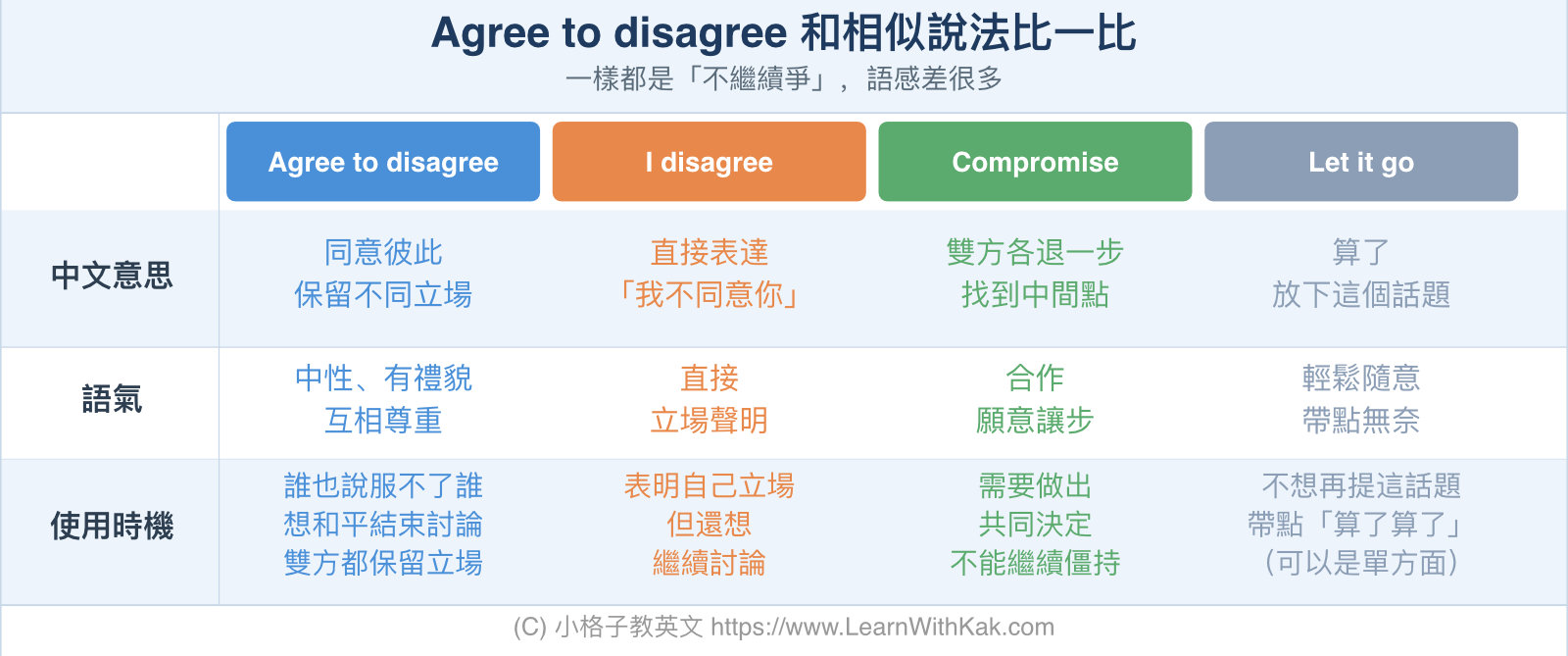
聽起來很像,但其實不一樣
Agree to disagree 跟下面幾種說法感覺有點像,但用法和語感差蠻多的。
Agree to disagree vs. I disagree
“I disagree” 只是表明「我不同意你」,是立場聲明,討論還沒結束,雙方可能繼續爭。Agree to disagree 是雙方一起決定「我們的看法就是不一樣,不再繼續了」,對話正式收尾。
Agree to disagree vs. Compromise
Compromise(妥協)是雙方各退一步,找到一個新的中間點,有人做出讓步。Agree to disagree 是雙方都沒有讓步,只是決定各自保留自己的立場,沒有人需要改變立場。
Agree to disagree vs. Let it go
“Let it go” 更隨意,帶點「算了不管了」的無奈感,有時候只是單方面選擇不繼續這個話題。Agree to disagree 是雙方一起做出的決定,語氣更正式、更有禮貌。
(18)
A: Should we just compromise and meet in the middle on the budget?
A: 我們要不要就各退一步,在預算上找個中間點?
B: Or we could agree to disagree and each manage our own portion.
B: 或者我們可以各自保留意見,各自管理自己的那份。
(19)
A: He kept pushing after I said I disagree.
A: 我說我不同意之後他還是一直在強調他的觀點。
B: Sometimes you have to actually say “let’s agree to disagree” to close the topic for real.
B: 有時候你必須真的說「我們各自保留意見吧」,話題才真的結束。
(20)
A: Did you two sort it out?
A: 你們兩個解決了嗎?
B: Kind of. We compromised on the timeline, but on the budget we just agreed to disagree.
B: 算是吧。時程部分我們妥協了,但預算部分我們就各自保留意見了。
(21)
A: I don’t want to keep fighting about this.
A: 我不想繼續為這件事吵架了。
B: Same. Can we just let it go?
B: 我也是。可以算了嗎?
A: Yeah. Although I still think I was right.
A: 好。雖然我還是覺得我是對的。
B: Ha, same. Okay, agree to disagree then.
B: 哈,我也是。那就各自保留意見。
(22)
A: I said I disagree with the plan, but that doesn’t mean I want to shut it down entirely.
A: 我說我不同意這個計畫,但那不代表我想完全否決它。
B: Got it. So you’re more in “agree to disagree” mode, not “veto” mode.
B: 了解。所以你比較是「各自保留意見」的狀態,不是「否決」的模式。
A: Exactly.
A: 就是這樣。
遇到意見不合又討論不出結果的時候,agree to disagree 是讓大家都好好走開的一句話。不是認輸,不是逃避,而是承認「我們本來就可以有不同的看法」。在職場或日常對話裡,能說出這句話,其實是一種成熟的表現。
延伸閱讀:【Agree 用法完整攻略:Agree with、Agree to、Agree on 三種用法一次搞清楚】
如果你喜歡這篇文章的話,可以追蹤我們的Threads和Facebook唷!