
Dump 和 dumb 只差一個字母 b,但意思完全不同!Dump 意思跟「丟」有關;Dumb 意思跟「笨」有關,搞混這兩個字會超尷尬,不過不用擔心,讓小編幫你完整搞懂這兩個字的所有用法,保證看完就不會再搞混!
Dump:名詞與動詞的多重身份
Dump 中文意思很特別,可以當動詞也可以當名詞,而且動詞又有好幾種不同的意思。讓我們一個一個來看。
動詞用法 1:丟垃圾、傾倒、倒掉
Dump 當動詞時,最基本的意思是「丟棄」、「傾倒」、「倒掉」。
就是把垃圾或不要的東西丟掉,或是把液體倒出來。這是 dump 最字面、最直接的意思。想像你拿著垃圾袋往垃圾桶一丟,或是把髒水往外一倒,那就是 dump。
常見的搭配有哪些?Dump garbage/trash(丟垃圾)、dump something into/onto(把某物倒進/倒在某處)、dump out(倒出來)。基本上任何「倒」、「丟」的動作都可以用 dump。
什麼時候會用到?丟垃圾、倒液體、清理不要的東西、把東西一次全部倒出來。Dump 給人一種「隨便倒」、「不小心處理」的感覺,不像 throw(丟)那麼精準,也不像 pour(倒)那麼優雅。
(1)
A: Where should I dump this garbage?
A: 我應該在哪裡丟這些垃圾?
B: There’s a dumpster behind the building.
B: 大樓後面有個大垃圾箱。
(2)
A: Don’t dump that paint down the sink! It’ll clog the pipes.
A: 不要把那個油漆倒進水槽!會堵住管子。
B: Oh, I didn’t know. Where should I dump it then?
B: 喔,我不知道。那我該倒哪裡?
(3)
A: Just dump all those old magazines in the recycling bin.
A: 就把那些舊雜誌全部丟進回收箱。
B: Are you sure you don’t want to keep any?
B: 你確定一本都不留嗎?
(4)
A: Why is there mud all over the driveway?
A: 為什麼車道上都是泥巴?
B: Sorry, I accidentally dumped a bucket of dirt while cleaning the garage.
B: 抱歉,我清理車庫時不小心倒了一桶土。
(5) He dumped the contents of his backpack onto the table to find his keys.
他把背包裡的東西全倒在桌上找鑰匙。
動詞用法 2:甩人、拋棄(感情)
Dump 還有一個超常用的口語意思:「甩掉」、「拋棄」(另一半)!
這是在談感情時用的,表示結束戀愛關係,而且通常是單方面的決定。一方想分手,另一方被甩了。Dump someone 就是「甩掉某人」,get dumped 就是「被甩」。這個用法在日常對話、美劇、電影裡超常出現。
常見用法有 dump someone(甩掉某人)、get dumped(被甩)、dump your boyfriend/girlfriend(甩掉你的男/女朋友)。語感上有點直接、不太溫柔,就像把垃圾丟掉一樣把對方丟掉,所以聽起來比較負面。
什麼時候會用到?談論分手、聊八卦、形容被甩、抱怨感情問題。這是非常生活化、口語化的說法,比 break up with(分手)更直接、更有畫面感。
(6)
A: Did you hear? Sarah dumped her boyfriend last week.
A: 你聽說了嗎?Sarah 上週甩了她男朋友。
B: Really? I thought they were doing fine.
B: 真的嗎?我以為他們很好啊。
(7)
A: Why do you look so sad?
A: 你為什麼看起來這麼難過?
B: My girlfriend dumped me yesterday. I didn’t see it coming.
B: 我女朋友昨天甩了我。我完全沒預料到。
(8)
A: Are you still dating Mike?
A: 你還在跟 Mike 約會嗎?
B: No, I dumped him last month. He was too clingy.
B: 沒有,我上個月甩了他。他太黏人了。
(9) Getting dumped right before Valentine’s Day is the worst timing ever.
在情人節前被甩是最糟糕的時間點。
名詞用法:垃圾場、破爛地方
當名詞用的時候,dump 中文意思是「垃圾場」、「垃圾堆」。
引申意思是形容一個地方又破又爛、很髒亂、很糟糕。當你說某個地方是 “a dump”,你就是在嫌棄這個地方很爛、很髒、破破爛爛的,像垃圾場一樣。
常見用法有 a dump(一個爛地方)、this place is a dump(這地方是個垃圾場)、live in a dump(住在破地方)。語感帶有負面、嫌棄的意思,是在抱怨或批評。
什麼時候會用到?抱怨住的地方、形容髒亂的環境、批評某個餐廳或旅館、吐槽某個城市或區域。這是很直接的負面評價,不要隨便用在別人家裡,會很不禮貌。
(10)
A: How’s your new apartment?
A: 你的新公寓怎麼樣?
B: Honestly, it’s kind of a dump. The walls are dirty and the bathroom is falling apart.
B: 老實說,有點像垃圾場。牆壁很髒,浴室都快垮了。
(11)
A: That motel we stayed at last night was terrible.
A: 我們昨晚住的那個汽車旅館超糟。
B: I know! What a dump. I couldn’t wait to leave.
B: 我知道!真是個爛地方。我等不及要離開。
(12)
A: Do you want to eat at that diner on the corner?
A: 你想在轉角那家小餐館吃嗎?
B: No way. That place is a total dump.
B: 不要。那地方是個徹底的垃圾場。
(13) I can’t believe they’re charging so much rent for this dump.
我不敢相信他們對這個破地方收這麼多租金。
職場特殊用法:丟工作給別人
Dump 在職場還有一個特殊用法:dump work on someone,意思是「把工作丟給某人」。
這表示不負責任地把工作推給別人,通常是自己不想做或做不完的工作,就隨便丟給別人處理。帶有負面語感,暗示這樣做不公平、是在推卸責任。
常見情境包括同事把不想做的工作推給你、老闆臨時丟一堆工作下來、抱怨工作分配不均。相關用法還有 dump everything on me(把所有事都丟給我)、don’t dump your problems on me(別把你的問題丟給我)。
(14)
A: My manager always dumps the boring tasks on me.
A: 我經理總是把無聊的任務丟給我。
B: That’s not fair. You should talk to him about it.
B: 那不公平。你應該跟他談談。
(15)
A: Can you help me with this report? I’m swamped.
A: 你能幫我做這個報告嗎?我忙翻了。
B: Don’t dump your work on me just because you procrastinated!
B: 別因為你拖延就把工作丟給我!
(16) She dumped all her responsibilities on the new intern and went on vacation.
她把所有責任都丟給新實習生然後就去度假了。
Dumb:形容詞的各種層次
搞懂 dump 意思之後,再來看 dumb。Dumb 是形容詞,主要意思是「愚蠢的」、「笨的」,但還有一些特殊用法和需要注意的地方。
基本意思:愚蠢的、笨的
Dumb 的中文意思是「愚蠢的」、「笨的」、「沒頭腦的」。
用來形容人、想法、決定、問題很笨、很沒道理、很愚蠢。語感上有點不禮貌,不要隨便用在別人身上,會得罪人。但可以用來自嘲(說自己做了蠢事)或批評某個想法、決定。
常見用法有 dumb idea(笨主意)、dumb question(笨問題,但這樣說其實有點不禮貌)、dumb mistake(愚蠢的錯誤)、that’s dumb(那很蠢)。注意:雖然英文有句話 “There’s no such thing as a dumb question”(沒有笨問題這回事),但直接說 “That’s a dumb question” 還是很不禮貌。
什麼時候會用到?批評某個想法、說自己做了蠢事、抱怨某件事很沒道理、形容某個規則很荒謬。通常用在比較非正式的場合,跟朋友聊天時可以用,但在正式場合或對陌生人最好避免。
(17)
A: I left my phone at home again. I’m so dumb!
A: 我又把手機忘在家了。我好笨!
B: Don’t worry, it happens to everyone.
B: 別擔心,每個人都會這樣。
(18)
A: He spent all his savings on lottery tickets.
A: 他把所有積蓄都花在買彩券上。
B: That’s so dumb. What was he thinking?
B: 那超蠢。他在想什麼?
(19)
A: Why do we have to work on a Saturday? That’s dumb.
A: 為什麼我們要週六工作?那很蠢。
B: I agree, but the boss made the decision.
B: 我同意,但老闆做了這個決定。
(20)
A: I made such a dumb mistake on the exam. I knew the answer but wrote the wrong thing.
A: 我在考試上犯了個愚蠢的錯誤。我知道答案但寫錯了。
B: That’s frustrating!
B: 那很令人沮喪!
(21) It was a dumb idea to go hiking without checking the weather forecast.
不查天氣預報就去健行是個笨主意。
口語用法
Dumb 還有一些固定的口語用法,超常聽到!
Dumb luck 的意思是「純粹運氣好」,不是靠實力或努力,就是運氣好而已。Dumb 在這裡強調「沒有技巧」、「沒有智慧」,純粹是運氣。例如 “He won by dumb luck”(他純粹靠運氣贏的)。
Play dumb 的意思是「裝傻」,明明知道但假裝不知道。例如 “Don’t play dumb, I know you saw what happened”(別裝傻,我知道你看到發生了什麼)。
Dumb down 的意思是「簡化」、「降低難度」,把複雜的東西變簡單,通常是為了讓大眾能理解。例如 “They dumbed down the explanation for beginners”(他們把解釋簡化給初學者)。
(22)
A: How did you pass the exam without studying?
A: 你怎麼沒讀書就通過考試?
B: Pure dumb luck. I guessed most of the answers.
B: 純粹運氣好。我大部分都是猜的。
(23)
A: Did you tell him about the surprise party?
A: 你有跟他說驚喜派對的事嗎?
B: No! I played dumb when he asked what we were planning.
B: 沒有!他問我們在計畫什麼時我裝傻。
(24) The textbook was too advanced, so they had to dumb it down for high school students.
這本教科書太進階了,所以他們必須簡化給高中生。
Dumb 在早期英文中也有「啞巴」、「無法說話」的意思。
你可能聽過 deaf and dumb(聾啞),這是舊的說法。但在現代,這個用法被認為不禮貌、冒犯性,應該避免使用。現在應該說 mute(啞巴)或 speech-impaired(言語障礙)。
大部分情況下,當你聽到或看到 dumb,它就是指「笨」的意思,不是指無法說話。只有在很舊的文學作品或歷史文件中,才可能看到 dumb 表示「啞巴」。
Dump vs Dumb 快速對照表
| Dump | Dumb | |
|---|---|---|
| 詞性 | 動詞、名詞 | 形容詞 |
| 中文意思 | 丟、倒、甩掉、垃圾場 | 笨的、愚蠢的 |
| 常見用法 | dump garbage(丟垃圾)、dump someone(甩人)、a dump(爛地方)、dump work on someone(丟工作給別人) | dumb idea(笨主意)、that’s dumb(那很蠢)、dumb luck(純粹運氣)、play dumb(裝傻) |
| 發音重點 | p 有發音 | b 不發音 |
| 例句 | Don’t dump your problems on me.(別把你的問題丟給我。) | That’s such a dumb idea.(那真是個蠢主意。) |
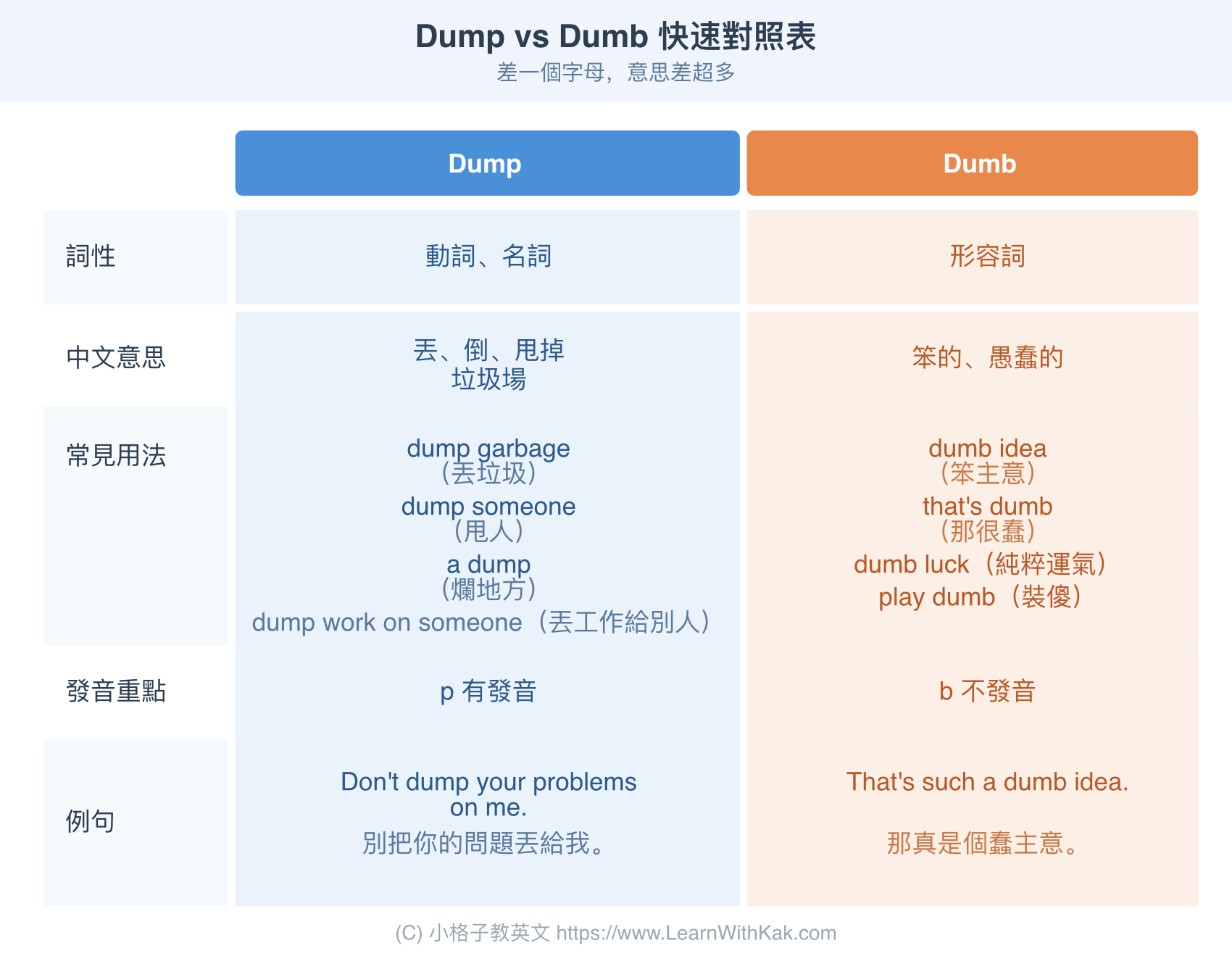
搞清楚 dump 意思和 dumb 意思之後,下次想說別人做了蠢事,記得用 dumb 不是 dump;想說丟垃圾或甩人,用 dump 不是 dumb。發音也要注意,dumb 的 b 不發音!這樣你就不會再把「笨」和「丟」搞混啦!
延伸閱讀:【Affect 和 Effect 到底哪個才對?動詞名詞別再搞混,一招秒懂不再寫錯】
如果你喜歡這篇文章的話,可以追蹤我們的 Threads 和 Facebook 唷!