
跟人討論事情,你是不是從頭到尾只有一句 “I agree”,不然就是尷尬地點頭?其實表達同意英文是有程度之分的——「嗯你說的有點道理」和「我跟你想法完全一樣!」,語氣不同,說法也完全不一樣。這篇幫你整理從部分認同到強烈贊同的道地說法,不管是職場開會還是跟朋友閒聊,都能馬上用上。
「有道理,但⋯」
遇到一個不是 100% 認同的觀點,很多人要嘛默默點頭、要嘛硬說 “I agree but…”,但其實有幾個說法更自然,聽起來也更有邏輯感,不會讓對方覺得你是在敷衍。
這種情境需要的是部分同意英文說法——承認對方有道理,但也保留自己的立場。
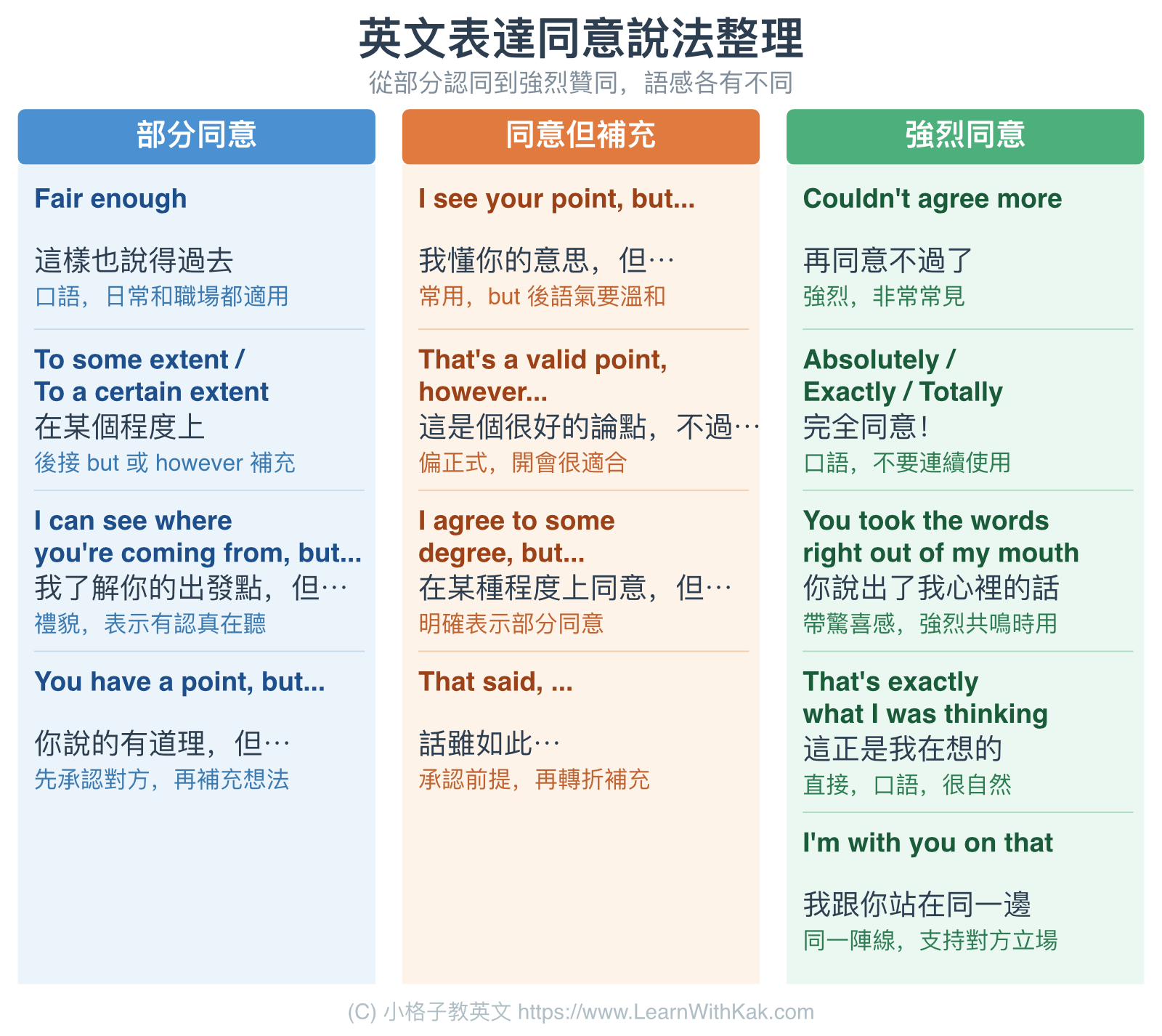
Fair enough
這句的意思是「這樣也說得過去」,不是百分之百同意,但承認對方的理由合理。語氣輕鬆,日常和職場都很常用。
To some extent / To a certain extent
「在某個程度上」,表示你有部分同意,但不是全部。通常後面會接 but 或 however,用來補充你有保留的地方。
I can see where you’re coming from, but…
「我了解你的出發點,但是⋯」,這句很有禮貌,聽起來你有認真聽對方說話,只是想補充不同的看法。
You have a point, but…
「你說的有道理,但是⋯」,先承認對方的觀點有其道理,再補充你的想法。
(1)
A: I think we should push the deadline to next month.
A: 我覺得我們應該把截止日期延到下個月。
B: Fair enough. The timeline is quite tight.
B: 這樣也說得過去,時間確實蠻趕的。
(2)
A: Working from home is more productive for most people.
A: 在家工作對大多數人來說效率更高。
B: To some extent, yes. But it really depends on the person.
B: 在某個程度上是這樣,但真的很因人而異。
(3)
A: I think we should switch to a different vendor.
A: 我覺得我們應該換一個廠商。
B: I can see where you’re coming from, but we’ve built a really solid relationship with the current one.
B: 我了解你的出發點,但我們跟現在的廠商關係建立得很好了。
(4)
A: The new policy feels a bit too strict, don’t you think?
A: 新政策感覺有點太嚴了,你不覺得嗎?
B: You have a point, but there were a lot of problems before it was put in place.
B: 你說的有道理,但在這個政策出來之前問題也很多。
「你說得對,不過⋯」
這個區塊跟上面類似,但重點不同——這裡是先表示同意,再帶出你有保留的部分,整體語氣更傾向認同,但有所補充。這種說法在表達意見的情境裡很實用,開會時特別好用。
I see your point, but…
「我懂你的意思,但是⋯」,很日常,但要注意 but 後面的話語氣不要太強,不然會變成在槓人。
That’s a valid point, however…
「這是個很好的論點,不過⋯」,語氣偏正式,開會或討論時很適合,聽起來既尊重對方又有自己的立場。
I agree to some degree, but…
「我在某種程度上同意,但是⋯」,直接說明你有部分同意,但不是全部,語氣清晰也不失禮貌。
That said, …
「話雖如此⋯」,先承認前面說的,再轉個彎提出另一個角度。”Having said that” 也是一樣的意思,比較正式一點。
(5)
A: I think we should go with the cheaper option to save costs.
A: 我覺得我們應該選便宜的方案來節省成本。
B: I see your point, but the cheaper option might end up costing us more in the long run.
B: 我懂你的意思,但便宜的方案長遠來看可能反而更貴。
(6)
A: Remote work helps employees maintain a better work-life balance.
A: 遠端工作能幫助員工維持更好的工作與生活平衡。
B: That’s a valid point. However, it can also make team collaboration much harder.
B: 這是個很好的論點,不過這也讓團隊協作變得困難很多。
(7)
A: We should put more focus on social media marketing.
A: 我們應該把重心放在社群媒體行銷上。
B: I agree to some degree, but we also shouldn’t ignore email marketing.
B: 我在某種程度上同意,但我們也不應該完全忽略電子郵件行銷。
(8)
A: The new hire is talented, but she still needs a lot of guidance.
A: 新來的人才很好,但還是需要很多指導。
B: True. That said, she’s been picking things up really fast.
B: 確實,話雖如此,她進步得蠻快的。
(9)
A: I don’t think we need to redesign the whole website, just update the homepage.
A: 我不覺得我們需要重新設計整個網站,只要更新首頁就好。
B: I see your point. That said, the overall UX is also a bit outdated.
B: 我懂你的意思,話雖如此,整體的使用體驗也有點過時了。
「就是這樣!」
這裡的說法是真心、全力支持對方說的話,語氣比前兩個區塊強烈很多。這種情況不只是表達同意英文而已,更是在傳遞「我跟你完全同一個頻道」的感覺,聽起來很有共鳴,也讓對話更有溫度。
如果你本來習慣說 “Exactly!” 或 “Right!” 就好,但其實還有更道地的說法——把這些加進去,英文對話會自然很多。
Couldn’t agree more
「再同意不過了」,是強烈表達同意英文裡最常見的說法之一。直接說 “Couldn’t agree more” 就很自然,不需要加 “I” 開頭也沒問題。
Absolutely / Exactly / Totally
這三個都是「完全同意!」的感覺,很口語,回應很快時特別好用。但不要每一句話都接,用太多反而聽起來很空洞。
You took the words right out of my mouth
「你說出了我心裡的話」,帶有一點驚喜感,通常是對方說的話跟你心裡想的一模一樣時才用,很有畫面感。
That’s exactly what I was thinking
「這正是我在想的」,跟上一句類似但更簡單直接,日常口語裡很自然。
I’m with you on that
「我跟你站在同一邊」,表示你支持對方的立場,帶有一點「我們同陣線」的感覺,很適合在討論、表態的時候用。
(10)
A: I think the meeting could’ve just been an email.
A: 我覺得這個會議根本可以用一封 email 代替。
B: Couldn’t agree more. It was a complete waste of time.
B: 再同意不過了,真的是完全浪費時間。
(11)
A: We should give the team more autonomy instead of micromanaging everything.
A: 我們應該給團隊更多自主空間,而不是事事管。
B: Absolutely. Micromanaging just kills creativity.
B: 完全同意,事事管只會扼殺創意。
(12)
A: I think work-life balance matters more than a high salary in the long run.
A: 我覺得長遠來看,工作生活平衡比高薪更重要。
B: You took the words right out of my mouth. I’ve been thinking the same thing lately.
B: 你說出了我心裡的話,我最近也一直這樣想。
(13)
A: We need to simplify the onboarding process. It’s way too complicated right now.
A: 我們需要簡化入職流程,現在真的太複雜了。
B: That’s exactly what I was thinking. Let’s bring it up in the next meeting.
B: 這正是我在想的,我們下次開會提出來討論吧。
(14)
A: I don’t think we should rush the launch just to hit the deadline.
A: 我不覺得我們應該為了趕截止日期而倉促上線。
B: I’m with you on that. Quality should always come first.
B: 我跟你想法一樣,品質永遠應該排第一。
其實不管是部分同意英文說法還是強烈贊同的表達,重點都是讓對方感覺你有認真在聽。語氣對了,即使是不完全同意,對話也會更順暢。下次開會或閒聊,試著把這些說法換進去,感受一下差別。
延伸閱讀:【表達不同意英文別說 I disagree!10 種高情商職場說法完整解析】
如果你喜歡這篇文章的話,可以追蹤我們的Threads和Facebook唷!