
開會或簡報時,是不是每次要總結重點都只會蹦出一句 “In short”?其實「簡單來說」英文有 8 種說法,正式報告、跟同事閒聊、甚至多益考試會考的用法都不一樣,選對說法整個人氣勢都不一樣。
在溝通中,這類轉折語(transition phrase)很重要,它們可以:
- 總結複雜的資訊(把長篇大論濃縮成重點)
- 換個方式解釋(用更簡單的話重新說明)
- 引出結論(告訴聽眾「重點是這個」)
- 讓聽眾跟上(確保大家理解核心訊息)
掌握多種說法,你的英文才不會每次都卡在同一句。
方式 1:In short / In brief(簡而言之)
這是最常見、最中性的說法,適合用在任何場合。
使用時機:
- 總結前面說過的內容
- 快速給出結論
- 正式和非正式場合都適用
(1)
A: Can you explain the new policy?
A: 你能解釋新政策嗎?
B: Sure. There are many changes to the leave system, vacation days, and sick leave procedures. In short, we now have more flexibility.
B: 當然。休假制度、假期天數和病假程序有很多變更。簡而言之,我們現在有更多彈性。
(2)
A: What happened at the meeting?
A: 會議上發生了什麼?
B: We discussed budget, timeline, and resource allocation for over two hours. In brief, we agreed to delay the project by one month.
B: 我們討論了預算、時程和資源分配超過兩小時。簡單來說,我們同意將專案延後一個月。
(3)
A: What’s your opinion on remote work?
A: 你對遠距工作有什麼看法?
B: There are pros and cons. In brief, I think it works well for our team.
B: 有優點也有缺點。簡單來說,我認為對我們團隊很有效。
方式 2:Simply put / To put it simply(簡單地說)
這個說法強調「用簡單的方式解釋」,特別適合用在解釋複雜概念時。
使用時機:
- 把技術或複雜的內容簡化
- 確保聽眾理解
- 想要更口語化的表達
(4)
A: What’s the difference between these two plans?
A: 這兩個方案有什麼差別?
B: There are many details, but to put it simply, Plan A is cheaper but slower, while Plan B costs more but delivers faster results.
B: 有很多細節,但簡單來說,A 方案比較便宜但較慢,B 方案成本較高但能更快看到結果。
(5)
A: What’s causing the delay?
A: 是什麼造成延遲?
B: To put it simply, we don’t have enough staff to handle the workload.
B: 簡單來說,我們沒有足夠的人力處理工作量。
方式 3:Basically(基本上)
Basically 是最口語、最隨意的說法,常用在日常對話中。
使用時機:
- 非正式對話
- 跟朋友或熟悉的同事聊天
- 想要輕鬆的語氣
(6)
A: What’s your new job like?
A: 你的新工作怎麼樣?
B: Basically, I do the same thing as before, just with a different team.
B: 基本上,我做的事跟以前一樣,只是換了團隊。
(7)
A: Can you explain the game rules?
A: 你能解釋遊戲規則嗎?
B: Sure! Basically, you just need to collect points and avoid obstacles.
B: 當然!基本上,你只需要收集分數並避開障礙物。
(8)
A: What happened at the party?
A: 派對上發生了什麼?
B: Basically, we ate, drank, and danced all night. It was fun!
B: 基本上就是吃喝跳舞一整晚。很好玩!
方式 4:In essence / Essentially(本質上)
這個說法強調「核心」或「本質」,比較正式和學術。
使用時機:
- 學術討論或專業場合
- 強調事物的核心本質
- 正式寫作或報告
(9)
A: What’s the main point of the research?
A: 這個研究的主要論點是什麼?
B: In essence, it shows that regular exercise improves mental health.
B: 本質上,它顯示規律運動能改善心理健康。
(10)
A: What are you trying to say?
A: 你想說什麼?
B: Essentially, I think we need to rethink our strategy.
B: 本質上,我認為我們需要重新思考策略。
(11)
A: What’s the problem with this approach?
A: 這個方法有什麼問題?
B: Essentially, it’s too expensive and time-consuming.
B: 本質上,它太昂貴而且耗時。
方式 5:Long story short(長話短說)
這是非常口語的說法,常用在講故事或敘述事件時。
使用時機:
- 非正式對話
- 跳過不重要的細節
- 直接說結論
(12)
A: How did you end up in New York?
A: 你怎麼會到紐約的?
B: Well, I applied to several jobs, got a few interviews, had to decide between offers… Long story short, I took the job here.
B: 我申請了好幾份工作,參加了幾次面試,必須在 offer 之間做選擇…長話短說,我接受了這裡的工作。
(13)
A: What happened with your car?
A: 你的車怎麼了?
B: I had engine trouble, took it to three different mechanics, spent way too much money… Long story short, I ended up buying a new car.
B: 引擎出問題,帶去三家不同的修車廠,花了太多錢…長話短說,我最後買了新車。
(14)
A: How did you two meet?
A: 你們兩個怎麼認識的?
B: We were both at this conference, sat next to each other by accident, started chatting… Long story short, we’ve been together for five years now.
B: 我們都在那個會議上,意外坐在隔壁,開始聊天…長話短說,我們現在在一起五年了。
方式 6:To sum up / To summarize(總結來說)
這個說法明確表示「我要總結了」,常用在演講、簡報或文章結尾。
使用時機:
- 演講或簡報的總結
- 文章或報告的結論部分
- 正式場合
(15)
A: That was a lot of information. Can you wrap it up?
A: 資訊量很大。你能總結一下嗎?
B: Of course. To sum up, we need to focus on three key areas: customer service, product quality, and marketing.
B: 當然。總結來說,我們需要專注三個關鍵領域:客戶服務、產品品質和行銷。
(16)
A: What did the speaker say?
A: 演講者說了什麼?
B: He talked about many topics. To summarize, he believes education is the key to social change.
B: 他談了很多主題。總結來說,他認為教育是社會改變的關鍵。
(17)
A: Can you give me the highlights of the report?
A: 你能給我報告的重點嗎?
B: Sure. To summarize, sales are up, costs are down, and we’re on track to meet our targets.
B: 當然。總結來說,銷售增加、成本降低,而且我們正朝目標前進。
方式 7:The bottom line is(重點是)
這個說法強調「最重要的結論」,常用在商業場合。
使用時機:
- 商業討論
- 強調最關鍵的結論
- 想要直截了當
(18)
A: What do the numbers tell us?
A: 數字告訴我們什麼?
B: We can analyze this from many angles, but the bottom line is we’re losing money.
B: 我們可以從很多角度分析,但重點是我們在虧錢。
(19)
A: Can we afford to hire more staff?
A: 我們負擔得起雇用更多員工嗎?
B: The bottom line is, if we want to grow, we need more people.
B: 重點是,如果我們想成長,就需要更多人。
(20)
A: What’s your recommendation?
A: 你的建議是什麼?
B: The bottom line is we need to act now, or we’ll lose this opportunity.
B: 重點是我們需要現在行動,否則會失去這個機會。
方式 8:At the end of the day(說到底)
這個說法強調「最終」、「歸根究底」,帶有「考慮所有因素後」的意思。
使用時機:
- 表達最終結論
- 強調最重要的因素
- 比較口語化
(21)
A: Should I take the job in another city?
A: 我應該接受另一個城市的工作嗎?
B: You need to consider salary, career growth, and lifestyle. But at the end of the day, it’s about whether you’ll be happy there.
B: 你需要考慮薪水、職涯發展和生活方式。但說到底,重點是你在那裡會不會快樂。
(22)
A: Which phone should I buy?
A: 我應該買哪支手機?
B: There are so many features to compare. But at the end of the day, just get the one that fits your budget.
B: 有很多功能要比較。但說到底,就買符合你預算的那支。
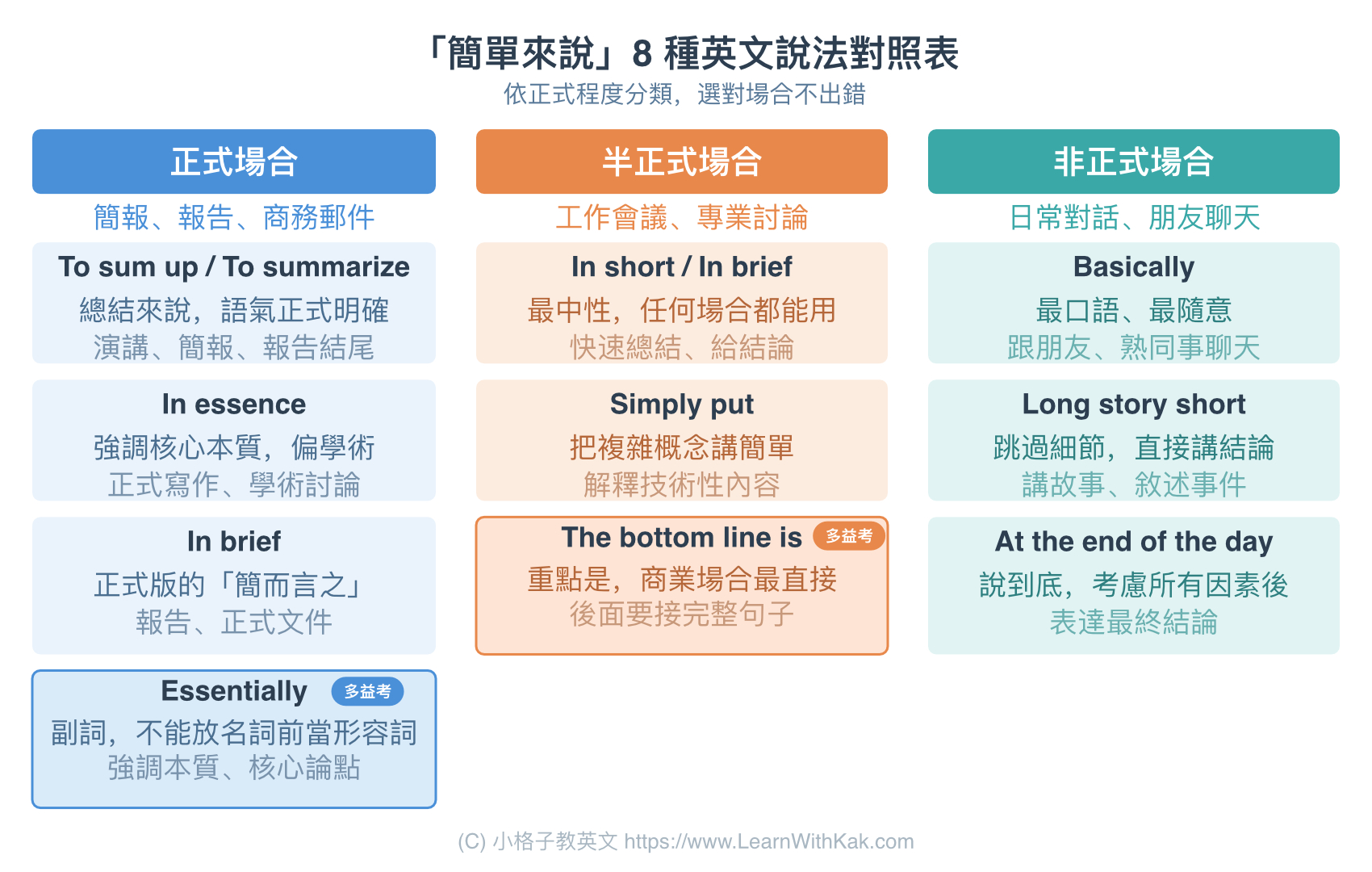
多益跟職場信件也很愛考這幾個地方
這幾個說法不只口說會用到,多益閱讀跟寫作也常出現,職場信件用錯還會讓語氣整個跑掉。
Essentially 只能當副詞用,不能直接放在名詞前面當形容詞,多益 Part 5 的句子填空常常拿這點出題,考生一慌就選錯詞性。
- 正確:Essentially, the two proposals are the same.
- 錯誤:The essentially proposal is the same as before.
The bottom line is 後面一定要接一個完整的句子,不能只放一個名詞就結束,多益閱讀測驗常常用這句當一段話的轉折點,抓到這個結構就能更快找到文章的結論。
(23)
A: Should we switch suppliers?
A: 我們應該換供應商嗎?
B: There are cost differences and delivery time to think about, but the bottom line is our current supplier keeps missing deadlines.
B: 有成本差異和交貨時間要考慮,但重點是我們現在的供應商一直delay。
正式職場信件的結尾,”To summarize” 比 “Basically” 更適合,”Basically” 在書面上會顯得太隨便。
(24)
Hi team, to summarize today’s call, we will finalize the budget by Friday and share it with finance next week.
大家好,總結今天的通話重點,我們會在週五前定案預算,下週跟財務部分享。
(25)
A: How was the client feedback?
A: 客戶的回饋怎麼樣?
B: They had a few concerns about pricing, but essentially, they’re happy with the proposal.
B: 他們對價格有一些疑慮,但本質上他們對這個提案是滿意的。
從最正式的 “To summarize” 到最口語的 “Basically”,選對場合用對說法,下次開會、寫信或跟外國同事聊天,就不用每次都靠同一句 “In short” 撐場面了。
延伸閱讀:【換句話說英文不只 In other words!5 種說法語氣差很多,用對才道地】
如果你喜歡這篇文章的話,可以追蹤我們的 Threads 和 Facebook 唷!