
每句話單獨看都沒問題,但整篇讀起來很跳、沒有邏輯感——很多人寫英文遇到這個狀況,問題通常不是文法,而是少了 cohesive devices。Cohesive devices 中文叫做「銜接詞」,作用是把句子和段落黏在一起,讓文章讀起來有條理、有層次。寫英文 email、報告、作文,這些都是必學的東西。
表示順序的銜接詞
要描述步驟、流程或事件的先後順序時,這類 cohesive devices 例子包括: First / Next / Then / After that / Finally,這五個按順序排下去,邏輯清楚又自然。
(1)
A: How do I make your famous pasta?
A: 你那個超好吃的義大利麵怎麼做的?
B: Easy! First, boil the pasta. Next, fry the garlic in olive oil. Then add the sauce and mix. Finally, top with parmesan.
B: 很簡單!首先,把義大利麵煮熟。接著,用橄欖油炒蒜頭。然後加入醬汁攪拌。最後,撒上帕瑪森起司。
(2)
A: I have no idea how to apply for a student exchange program.
A: 我完全不知道怎麼申請學生交換計畫。
B: I did it last year. First, check the eligibility requirements. After that, prepare your documents. Then submit the online form. You’ll hear back in about a month.
B: 我去年申請過。首先,確認申請資格。之後,準備好文件。然後提交線上申請表。大約一個月後會有消息。
(3)
A: Can you walk me through the onboarding process?
A: 你可以帶我了解一下入職流程嗎?
B: Sure. First, you’ll set up your accounts. Next, you’ll meet your team lead. Then we’ll go over your responsibilities. Finally, you’ll shadow someone for the first week.
B: 當然。首先,你要設定好帳號。接著,你會和你的組長見面。然後我們會討論你的工作職責。最後,第一週你會跟著某人學。
(4)
A: How was your trip to Tokyo?
A: 你去東京的旅程怎麼樣?
B: Amazing. First we visited Senso-ji temple in the morning. Then we explored Shibuya. After that, we tried ramen in this tiny place down an alley. Finally ended the day with karaoke.
B: 超棒的。早上先去了淺草寺。然後逛了澀谷。之後在一條小巷裡的小店吃了拉麵。最後唱卡拉 OK 收尾。
表示因果的銜接詞
因果銜接詞用來說明「為什麼」或「導致了什麼」。Because 和 since 說明原因,therefore / as a result / consequently 說明結果。要注意正式度的差異——consequently 和 hence 比較書面,口語的話 so 更自然。
(5)
A: Why did you cancel your gym membership?
A: 你為什麼取消健身房會員資格?
B: I wasn’t going enough. As a result, I was basically paying $60 a month for nothing.
B: 我去得不夠多。結果,我每個月基本上在白花 60 塊。
(6)
A: Why didn’t you come to the party last night?
A: 你昨晚為什麼沒來派對?
B: Since I had an exam this morning, I decided to stay home and study.
B: 因為我今天早上有考試,所以決定待在家複習。
(7)
A: She didn’t reply to any of the emails. Consequently, the contract fell through.
A: 她沒有回覆任何一封 email。結果,合約就沒談成。
B: That’s unfortunate. What’s the plan now?
B: 真可惜。現在的計畫是什麼?
(8)
A: Due to the heavy rain, the outdoor concert was moved indoors.
A: 由於大雨,戶外演唱會移到室內舉行。
B: Oh no! Was the sound quality still okay?
B: 不會吧!音效還可以嗎?
表示對比和讓步的銜接詞
很多人會把 however 當成 but 直接替換,但 however 通常放在句首或句中加逗號,不能像 but 一樣連接兩個子句。
However 和 nevertheless 表示轉折;on the other hand 帶出另一個角度;although 和 even though 引導讓步。
如果你想讓寫作更有層次,可以參考這篇【寫作、Email 還在用 But?】,裡面有更多進階的轉折說法。
(9)
A: Did you enjoy the movie?
A: 你喜歡那部電影嗎?
B: The visuals were stunning. However, the plot didn’t make much sense to me.
B: 畫面非常精彩。然而,劇情我覺得不太合理。
(10)
A: I really want to study abroad, but it’s so expensive.
A: 我很想出國讀書,但超貴的。
B: On the other hand, the experience and network you’d build are hard to put a price on.
B: 另一方面,你獲得的經驗和人脈是很難用錢衡量的。
(11)
A: Although the café is far from my house, I go there every weekend.
A: 雖然那間咖啡廳離我家很遠,但我每個週末都去。
B: It must be really good. What do you always order?
B: 一定很好吃。你都點什麼?
(12)
A: He’s very experienced. Nevertheless, this type of project is new to him.
A: 他非常有經驗。儘管如此,這類型的專案對他來說是新的。
B: We should pair him up with someone who’s done it before.
B: 我們應該讓他和有過類似經驗的人搭檔。
表示舉例和補充的銜接詞
這類銜接詞分兩種功能:舉例用 for example / for instance / such as,補充用 in addition / moreover / furthermore。
For example 和 for instance 可以互換;such as 後面只接名詞,不能後接完整的句子——這是很多人搞混的點。補充類的銜接詞裡,furthermore 語氣比 in addition 更強,帶有「更重要的是」的感覺。
(13)
A: What do you do to stay healthy?
A: 你怎麼維持健康的?
B: A few things. For example, I walk at least 30 minutes a day, drink lots of water, and try to sleep before midnight.
B: 幾個方法。例如,我每天至少走路 30 分鐘、多喝水,還有盡量在午夜前睡覺。
(14)
A: Why do you like living alone?
A: 你為什麼喜歡一個人住?
B: I can set my own schedule. In addition, it’s so much quieter — I can actually focus when I study.
B: 我可以自己決定時間安排。此外,安靜很多——讀書的時候真的可以專心。
(15)
A: What kind of music do you like?
A: 你喜歡什麼音樂?
B: I’m into a lot of different genres, such as indie pop, jazz, and lo-fi.
B: 我喜歡很多不同的類型,像是獨立流行、爵士和 lo-fi。
(16)
A: The new policy saves time. Moreover, it reduces the risk of human error.
A: 新政策節省了時間。而且,它還降低了人為錯誤的風險。
B: That’s a strong case for rolling it out company-wide.
B: 這是在全公司推行的有力理由。
表示總結的銜接詞
寫作或演講到了尾聲,總結類的銜接詞能幫你優雅地收尾。In conclusion 和 to sum up 適合正式寫作;in short 和 overall 口語也能用;last but not least 則是在最後一點想特別強調的時候用。
這些 cohesive devices 例子包括 To sum up, last but not least 等,在 email 結語、簡報總結、或報告最後一段都很常出現。
(17)
A: So what did you think of the book overall?
A: 你整體覺得這本書怎麼樣?
B: To sum up, it started slow but the second half completely hooked me. Totally worth reading.
B: 總結來說,開頭有點慢,但後半段完全把我迷住了。很值得看。
(18)
A: In conclusion, I’d recommend moving forward with Option A. It’s cost-effective, scalable, and aligns with our long-term goals.
A: 總結而言,我建議推進 A 方案。它具有成本效益、可擴展性,並且符合我們的長期目標。
B: Well argued. Let’s put it to a vote.
B: 說得很有說服力。我們來投票表決。
(19)
A: Last but not least, I just want to say — thank you all for making this trip so special. I’ll never forget it.
A: 最後同樣重要的是,我想說——謝謝大家讓這趟旅程這麼特別。我永遠不會忘記。
B: Same here. We have to do it again next year!
B: 我也是。明年一定要再來一次!
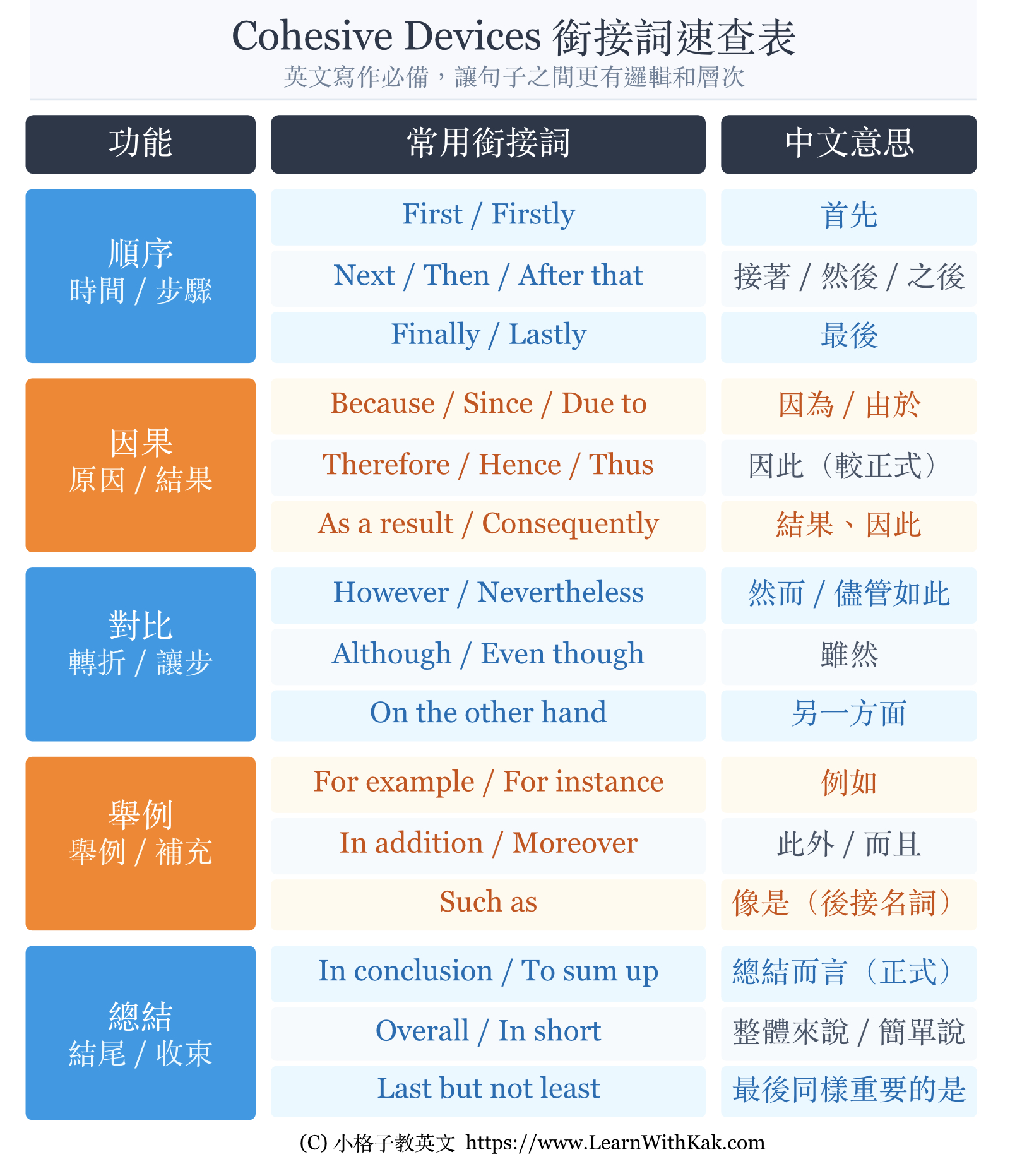
用對銜接詞,英文不只是文法正確,而是讀起來真的清楚有邏輯。搞懂這些 cohesive devices 的意思和使用場合,下次寫 email 或報告的時候,試著有意識地加進去幾個,文章的層次感立刻不一樣。
如果你喜歡這篇文章的話,可以追蹤我們的Threads和Facebook唷!