
寫英文 email 或作文的時候,很常出現一種狀況:每一句文法都沒問題,整段讀起來卻一句一句斷開,像在念購物清單。這時候缺的通常不是單字量,而是 cohesive devices。Cohesive devices 中文常翻成「銜接詞」,負責把句子和想法串在一起。不過它其實不只有 however 和 therefore,還有很多母語者每天在用、課本卻很少教的銜接方式,用對了,英文馬上從「一句一句」變成「一整段」。
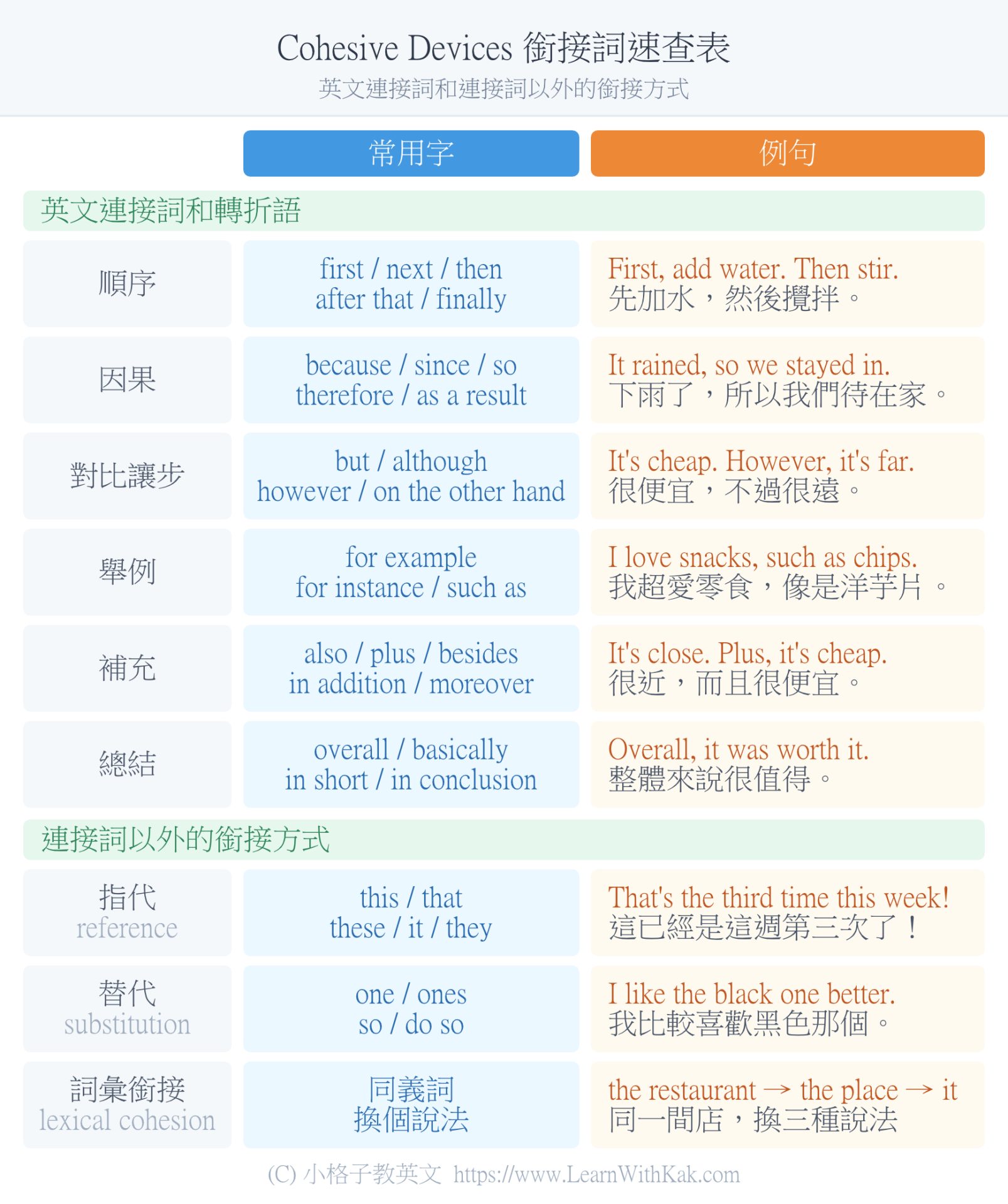
Cohesive Devices 是什麼
Cohesive 這個字有「黏在一起、連成一體」的意思,所以 cohesive devices 就是讓句子黏在一起的工具。讀者看到它們,就知道下一句跟上一句是什麼關係,是原因、轉折,還是補充。
大家最熟的是第一類:英文連接詞和轉折語,像 and、but、so、however、for example。第二類是連接詞以外的銜接方式,例如用 this、it 指前面講過的事,或換個說法避免同一個字一直重複。所以 cohesive devices 中文翻成「銜接詞」,其實只講對了一半。
順便提一下,「銜接」英文最常用 transition 或 link。講段落和段落之間的轉換用 transition,講兩件事之間的關聯就用 link 或 connect。
先看一組 cohesive devices 例子,同一段話有沒有銜接,差別有多大:
(1)
A: How was your weekend?
A: 你週末過得怎樣?
B: I went to Tamsui. It rained. I stayed in a café. I read a book. I went home.
B: 我去淡水。下雨了。我待在咖啡廳。我看了一本書。我回家了。
(2)
A: How was your weekend?
A: 你週末過得怎樣?
B: I went to Tamsui, but it started raining, so I hid in a café and read a book. After that, I just went home.
B: 我去了淡水,但開始下雨,所以我躲進咖啡廳看書。之後就直接回家了。
(3)
A: Why is the report late?
A: 報告怎麼晚交了?
B: The client changed the numbers yesterday, so I had to redo all the charts. I’ll send it by noon, though.
B: 客戶昨天改了數字,所以我得重做所有圖表。不過我中午前會寄出。
(4)
A: Can you check my essay? Something feels off.
A: 可以幫我看一下作文嗎?總覺得哪裡怪怪的。
B: Your ideas are good, but the transition between the second and third paragraphs is kind of rough. You need something to link them.
B: 你的想法不錯,但第二段和第三段之間的銜接有點生硬,需要一些東西把它們連起來。
不只是連接詞
很多人以為 cohesive devices 就等於連接詞,其實母語者聊天和寫作時,更常用的是下面這三種方式。它們不像 however 那麼顯眼,但少了它們,英文會變得超囉嗦。
指代(reference):用 this、that、these、it、they 指前面講過的東西。中文也會說「這件事」、「那個」,只是英文用得更頻繁,因為英文很不喜歡同一個名詞一直重複。
替代(substitution):用 one、ones 代替前面的名詞,用 so、do so 代替前面整句話或整個動作。別人問你會不會來,回一句 “I think so.” 就夠了,不用把整句再講一次。
詞彙銜接(lexical cohesion):換個說法講同一件事。前面說 ramen place,後面改說 the place 或 it;前面說 laptop,後面可以說 the thing 或 this one。寫作分數一直上不去的人,很常就是忽略了這一塊。
(5)
A: The MRT got delayed again this morning.
A: 今天早上捷運又延誤了。
B: That’s the third time this week!
B: 這已經是這週第三次了吧!
(6)
A: Which bag are you getting?
A: 你要買哪個包包?
B: I like the black one better. The brown ones look kind of old.
B: 我比較喜歡黑色那個,咖啡色那幾個看起來有點舊。
(7)
A: Are you coming to the barbecue tonight?
A: 你今晚會來烤肉嗎?
B: I think so. I just need to finish this report first.
B: 應該會吧。我只是要先把這份報告弄完。
(8)
A: Did you finally buy the new laptop?
A: 你終於買新筆電了嗎?
B: Yep. The thing is super light, and the battery lasts all day.
B: 對啊。這台超輕,電池還可以用一整天。
(9)
We tried a new ramen place last night. The place is tiny, but it has the best broth I’ve ever had.
我們昨晚去吃一間新的拉麵店。店很小,但湯頭是我吃過最好喝的。
表示順序的銜接詞
要講步驟、流程或事情發生的先後,最常用的是 first、next、then、after that、finally。照這個順序排下去,聽的人很容易跟上。
這裡有個很多人會混的地方:finally 和 at last。列步驟或講最後一件事,用 finally。At last 是「終於」,帶有「等了好久總算來了」的感覺,比較像在抒發心情,不能拿來排步驟。
(10)
A: How do you make that garlic pasta? It’s so good.
A: 你那個蒜味義大利麵怎麼做的?超好吃。
B: It’s easy. First, boil the pasta. Next, fry some garlic in olive oil. Then toss everything together. Finally, add a bit of parmesan.
B: 很簡單。先把麵煮好,接著用橄欖油炒蒜頭,然後全部拌在一起,最後撒一點帕瑪森起司。
(11)
A: How was Tokyo?
A: 東京好玩嗎?
B: Amazing. First, we went to Senso-ji in the morning. Then we walked around Shibuya. After that, we found a tiny ramen shop in an alley. Finally, we ended the night with karaoke.
B: 超讚。早上先去淺草寺,然後去澀谷逛逛,之後在小巷裡找到一間小拉麵店,最後唱卡拉 OK 結束這一晚。
(12)
A: How do I make a video call on LINE?
A: LINE 要怎麼視訊啊?
B: First, open your chat with Auntie. Then tap the phone icon at the top. After that, choose “Video call,” and you’re good to go.
B: 先打開跟阿姨的聊天室,然後按上面的電話圖示,接著選「視訊通話」就可以了。
(13)
A: The food’s here! At last!
A: 餐點來了!終於!
B: We waited over an hour. I’m never ordering from that place again.
B: 我們等了超過一個小時,我再也不要跟那家訂了。
表示因果的銜接詞
因果類的銜接詞用來說明「為什麼」和「所以呢」。講原因用 because、since,講結果用 so、therefore、as a result、consequently。
這幾個字的差別主要在正式度。聊天用 so 就很自然,寫報告或工作 email 才比較常看到 therefore 和 as a result,consequently 又更書面一點。不過 so 和 therefore 的差別其實不只正式度,therefore、so、thus 三個字的語感也各有不同。Since 除了表示原因,也很常帶有「既然」的語氣,跟 because 不完全一樣。
(14)
A: Why did you cancel your gym membership?
A: 你為什麼退掉健身房會員?
B: I only went twice in three months. As a result, I was basically paying NT$1,500 a month for nothing.
B: 我三個月只去兩次,結果每個月等於白繳一千五。
(15)
A: Why didn’t you come to the party last night?
A: 你昨晚怎麼沒來聚會?
B: Since I had an exam this morning, I stayed home and studied.
B: 因為今天早上要考試,所以我待在家讀書。
(16)
A: What happened with the Taichung client?
A: 台中那個客戶後來怎麼了?
B: We missed the deadline twice. Consequently, they decided to go with another vendor.
B: 我們錯過兩次期限,結果他們決定找別的廠商。
(17)
A: Is the concert still on? There’s a typhoon coming.
A: 演唱會還會照常嗎?颱風要來了耶。
B: They just posted an update. The typhoon is getting stronger, so they’ve moved it to next Saturday.
B: 他們剛發公告,颱風越來越強,所以延到下週六了。
表示對比和讓步的銜接詞
想表達「但是」、「雖然」、「另一方面」,常見的有 but、however、nevertheless、on the other hand、although、even though。
這裡要先講一個關鍵差別。But、although 是英文連接詞,可以直接把兩個句子接在一起;however、therefore 是連接副詞,本身沒有連接句子的功能。所以 however 通常放在新句子的開頭加逗號,或是用分號接在前一句後面,寫成「; however,」。把 however 當 but 直接接兩個句子,是台灣學生寫作最常被扣分的錯誤之一。
另外,中文習慣說「雖然……但是……」,英文卻不能 although 和 but 一起用,although、though、despite 的用法各有一套規則。Even though 則常常跟 even if 搞混,一個講事實,一個講假設。比較正式的轉折還有 nevertheless 和 regardless,多半用在書面。
(18)
A: Did you like the movie?
A: 你喜歡那部電影嗎?
B: The visuals were stunning. However, the plot made zero sense.
B: 畫面超美,可是劇情完全不合理。
(19)
A: What did the client say about the new design?
A: 客戶對新設計怎麼說?
B: They love the look; however, they want us to cut the budget by 20%.
B: 他們很喜歡整體風格,不過希望我們把預算砍兩成。
(20)
A: I really want to study in the UK, but it’s so expensive.
A: 我很想去英國讀書,但真的好貴。
B: True. On the other hand, the experience could totally change your career.
B: 確實。不過換個角度想,這個經驗可能會完全改變你的職涯。
(21)
A: Although that café is a 40-minute ride from my place, I go there every weekend.
A: 雖然那間咖啡廳離我家要騎四十分鐘,我每個週末還是會去。
B: Their basque cheesecake must be amazing.
B: 他們的巴斯克乳酪蛋糕一定超好吃。
(22)
A: Kevin has ten years of experience. Is he ready to lead the app project?
A: Kevin 有十年經驗,他可以帶 app 專案了嗎?
B: He’s great. Nevertheless, he’s never worked on mobile before, so let’s pair him with Amy.
B: 他很強,但他從沒做過手機的專案,所以讓他跟 Amy 搭檔吧。
表示舉例和補充的銜接詞
舉例最常用 for example、for instance 和 such as。前兩個可以互換,後面接完整句子;such as 後面只能接名詞,像 such as mango shaved ice 可以,such as I like mango 就不行。
補充類常見的有 also、in addition、moreover、furthermore、besides。課本很愛教 moreover 和 furthermore,但老實說,美國人聊天幾乎不會用這兩個字,講出來會像在念論文。日常對話用 also、plus、on top of that 就很自然,in addition 和 moreover 留給寫作和正式 email。想強調「不只這樣,還有那樣」的時候,not only…but also 的句型也很好用,只是要注意前後的平行結構。
(23)
A: How do you stay in shape with such a busy job?
A: 你工作那麼忙,怎麼維持身材的?
B: Small stuff, mostly. For example, I take the stairs instead of the elevator and walk to the MRT station every day.
B: 大多是一些小事。像是我都走樓梯不搭電梯,每天走路去捷運站。
(24)
A: What kind of music are you into?
A: 你喜歡聽什麼音樂?
B: All kinds of stuff, such as indie pop, jazz, and lo-fi.
B: 什麼都聽,像是獨立流行、爵士和 lo-fi。
(25)
The new system saves us a lot of time. In addition, it reduces data entry errors.
新系統幫我們省下很多時間,此外還能減少資料輸入錯誤。
(26)
A: Should I take the job offer?
A: 我該接那個工作嗎?
B: Honestly, yes. The pay is better. Plus, you get to work from home twice a week.
B: 老實說要。薪水比較高,而且每週可以在家上班兩天。
(27)
A: How’s the new apartment?
A: 新租的房子怎麼樣?
B: Not great. The walls are super thin. On top of that, the landlord never replies to my messages.
B: 不太好。牆超薄,而且房東都不回我訊息。
表示總結的銜接詞
要收尾或下結論時,正式場合用 in conclusion、to sum up,口語用 overall、basically、in short 就好。跟朋友聊天說 to sum up,聽起來會很像在做報告。In short 是把話講精簡,如果是想換個方式把話重講一次,就要用 in other words。
另外 last but not least 很常被用錯。它是用來帶出清單裡的最後一項,前面一定要先列過其他東西,不能單獨拿來當結語。它跟 finally、lastly 這些收尾說法的語感也不太一樣。
(28)
A: So what did you think of the book?
A: 你覺得那本書怎麼樣?
B: Overall, it’s worth reading. The first half is slow, but the ending totally got me.
B: 整體來說值得看。前半段有點慢,但結局完全打到我。
(29)
A: In conclusion, I’d recommend going with Option A. It’s cheaper and easier to scale.
A: 總結來說,我建議選 A 方案,比較便宜也比較好擴充。
B: Makes sense. Let’s put it to a vote at Friday’s meeting.
B: 有道理。我們週五開會時投票決定吧。
(30)
A: Any last words before we wrap up the trip?
A: 旅行結束前有什麼想說的嗎?
B: I want to thank Jessie for planning everything and Tom for driving the whole time. And last but not least, thanks to Grace for finding the best hot springs ever.
B: 我想謝謝 Jessie 規劃所有行程,還有 Tom 一路開車。最後也同樣重要的,謝謝 Grace 找到超讚的溫泉。
(31)
A: Is that new brunch place any good?
A: 那間新的早午餐店好吃嗎?
B: Basically, it’s overpriced. The food’s fine, but nothing special.
B: 簡單說就是太貴了。東西還可以,但沒什麼特別。
台灣人最常用錯的銜接詞
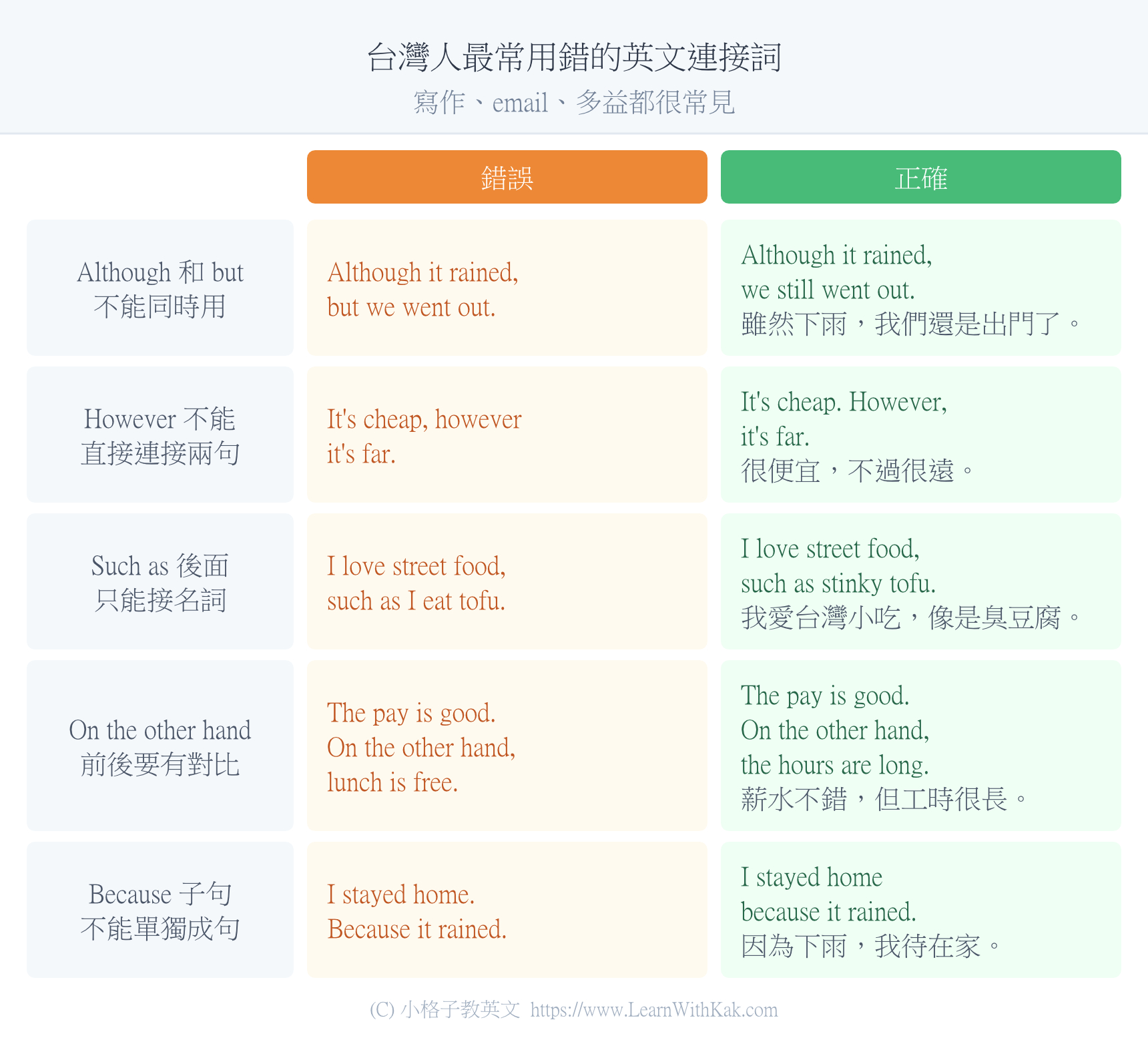
下面這五個錯誤,在作文、email 和多益都很常見。很多其實是把中文習慣直接搬到英文造成的,像中文說「雖然……但是……」很自然,英文卻只能二選一。
Although 和 but 不能同時出現:英文一個句子只需要一個字來表達轉折,留一個就好。
However 不能直接連接兩個句子:前面提過,however 是副詞,不是英文連接詞,前面要用句號或分號。
Such as 後面不能接完整句子:想接句子的話,改用 for example。
On the other hand 前後要有對比:如果兩件事是同一個方向,要用 also 或 in addition。
Because 子句不能單獨成句:口語單獨回一句 “Because I was tired.” 沒問題,但寫作時 because 子句要跟主要句子接在一起。
(32)
錯誤:Although it was raining, but we still went hiking.
正確:Although it was raining, we still went hiking.
雖然在下雨,我們還是去爬山了。
(33)
錯誤:The hotel was cheap, however it was really far from the station.
正確:The hotel was cheap. However, it was really far from the station.
那間飯店很便宜,不過離車站超遠。
(34)
錯誤:I love Taiwanese street food, such as I eat stinky tofu every week.
正確:I love Taiwanese street food, such as stinky tofu and oyster omelets.
我超愛台灣小吃,像是臭豆腐和蚵仔煎。
(35)
錯誤:My job pays well. On the other hand, I get free lunch.
正確:My job pays well. On the other hand, the hours are pretty long.
我的工作薪水不錯,但另一方面,工時也滿長的。
(36)
A: Why didn’t you hand in your essay?
A: 你怎麼沒交作文?
B: Because I was sick all weekend.
B: 因為我整個週末都在生病。
寫成作文時要接在一起:
I didn’t hand in my essay because I was sick all weekend.
我沒交作文,因為我整個週末都在生病。
改寫前 vs 改寫後
光看規則可能還沒什麼感覺,直接來看同一段話改寫前後的差別。改寫前的版本每一句都對,但讀起來很像機器人在報告;改寫後只加了幾個銜接詞,整段馬上順很多。
第一組是跟主管解釋為什麼沒趕上會議。
(37) 改寫前
A: Why weren’t you at the 9 a.m. meeting?
A: 你怎麼沒來九點的會議?
B: I was late. The MRT broke down. I took a taxi. The traffic was bad. I missed the meeting. I’m sorry.
B: 我遲到了。捷運故障。我搭計程車。路上很塞。我錯過會議了。抱歉。
(38) 改寫後
A: Why weren’t you at the 9 a.m. meeting?
A: 你怎麼沒來九點的會議?
B: I’m so sorry. The MRT broke down, so I grabbed a taxi. Unfortunately, the traffic was terrible, and I ended up missing the whole meeting. Could someone fill me in?
B: 真的很抱歉。捷運故障,所以我改搭計程車,結果路上超塞,最後整場會議都錯過了。可以請人跟我說一下重點嗎?
改寫後用 so 說明因果,unfortunately 帶出意外,ended up 交代結果,最後還主動問重點,聽起來就是一個負責任的人。
第二組是請假 email 的其中一段。寫職場英文 email 的時候,銜接詞用得順不順,對方一讀就感覺得出來。
(39) 改寫前
I can’t come to work tomorrow. I have a doctor’s appointment. The client report is almost done. Jason can send it. You can call me.
我明天沒辦法上班。我要看醫生。客戶報告快完成了。Jason 可以寄出去。你可以打給我。
(40) 改寫後
I won’t be able to come in tomorrow because I have a doctor’s appointment in the morning. The client report is almost done, so Jason will send it out by noon. In the meantime, feel free to call me if anything comes up.
我明天沒辦法進公司,因為早上要去看醫生。客戶報告差不多完成了,所以 Jason 會在中午前寄出。這段期間如果有任何狀況,都可以打給我。
多益 Part 6 怎麼考
多益 Part 6 是段落填空,每篇文章很常有一題考銜接詞。題目看起來是在考單字,其實是在考邏輯:你要先看空格前後兩句是什麼關係。
判斷方法很簡單。前後是因果,選 therefore 或 as a result;前後意思相反,選 however 或 nevertheless;後面在補充更多資訊,選 in addition 或 moreover;後面是具體的例子,選 for example。選項裡常常四種關係各放一個,只要關係判斷對,答案就出來了。試試看下面四題:
(41)
The office will be closed this Friday for electrical repairs. _____, all employees are asked to work from home.
(A) However (B) Therefore (C) For example (D) Although
辦公室本週五因電路維修關閉,因此請所有員工在家工作。
答案:(B)。前面是原因,後面是結果。
(42)
Sales of our new smart speaker were lower than expected. _____, customer reviews have been overwhelmingly positive.
(A) As a result (B) In addition (C) However (D) For instance
新款智慧音箱的銷量不如預期,不過顧客評價幾乎都是好評。
答案:(C)。前面是壞消息,後面是好消息,意思轉折。
(43)
Members receive 10% off all purchases. _____, they enjoy free shipping on every order.
(A) In addition (B) However (C) Therefore (D) Instead
會員所有商品享九折優惠,此外每筆訂單都免運。
答案:(A)。後面是在補充另一個好處。
(44)
We offer several convenient payment options. _____, customers can pay by credit card or LINE Pay.
(A) For example (B) Such as (C) Otherwise (D) Therefore
我們提供好幾種方便的付款方式,例如顧客可以用信用卡或 LINE Pay 付款。
答案:(A)。空格後面是完整句子,所以不能用 such as。
常見問題
Cohesive devices 就是英文連接詞嗎?
不完全是。Cohesive devices 中文雖然常翻成銜接詞,但英文連接詞(and、but、because)和轉折語(however、therefore)只是其中一部分,大家常說的 transition words 指的也大多是這一類。前面提到的指代、替代、詞彙銜接,同樣都算 cohesive devices。
(45)
A: Did you see Mark’s new car?
A: 你看到 Mark 的新車了嗎?
B: Yeah, but it’s way too loud. I have no idea why he bought it.
B: 看到了,但聲音超吵,真不知道他為什麼要買。
這句裡的 but 是連接詞,it 則是指代,兩個都是 cohesive devices。
Cohesion 和 coherence 差在哪?
Cohesion 是「銜接」,看的是句子之間有沒有用字詞串起來;coherence 是「連貫」,看的是整篇的邏輯和想法順不順。雅思寫作把這兩個放在同一個評分項目 Coherence and Cohesion,就算用了一堆銜接詞,邏輯跳來跳去,分數一樣拿不高。
(46)
A: My teacher said my essay has good cohesion but weak coherence. What does that even mean?
A: 老師說我的作文銜接不錯,但連貫性很弱,這到底是什麼意思?
B: Probably that you used lots of linking words, but your ideas jump around too much.
B: 大概是說你用了很多連接的字,但想法跳來跳去。
銜接詞用越多越好嗎?
不是。每句都塞 moreover、furthermore,讀起來會很像在湊字數。母語者寫作時,很多句子之間其實沒有任何銜接詞,靠的是指代和自然的邏輯順序。一段話放兩三個剛好的銜接詞,效果比硬塞十個好很多。
(47)
I moved to Taichung last year. The rent here is cheaper, and the pace of life is slower, which I really like.
我去年搬到台中。這裡房租比較便宜,生活步調也比較慢,我很喜歡。
整段只用了 and 和 which,讀起來就很順。
口語聊天也需要銜接詞嗎?
需要,只是用的字不一樣。聊天時大家更常用 so、but、plus,還有 by the way、anyway 這種轉換話題的說法,跟寫作常用的 however、therefore 是兩種完全不同的風格。
(48)
A: Anyway, enough about work. Are you still going to Kenting next week?
A: 好啦,工作的事不聊了。你下週還是要去墾丁嗎?
B: Yeah! Actually, I was going to ask if you want to come.
B: 對啊!其實我正想問你要不要一起去。
Cohesive devices 不用一次全部用上。挑幾個最順手的,下次傳訊息或寫 email 時刻意放進去,再加上 this、it 這類小字,你的英文就會開始有「一整段」的感覺。
延伸閱讀:【Therefore 用法解析:跟 So、Thus 差在哪?別再搞混】
如果你喜歡這篇文章的話,可以追蹤我們的 Threads 和 Facebook 唷!