
你是不是每次想說「我記得」就只會講 “I remember”?老闆問你細節,你說 “I remember…”,聽起來超不確定,像在打太極、在敷衍?其實「我記得」英文有超多更專業的說法,語氣和給人的感覺差超多!今天就來教你 5 種不同情境的「我記得」,讓你從此不再只會 I remember,講話更有專業感、更精準!
I remember 哪裡不夠專業?
I remember 這個說法本身沒有錯,文法也對,但問題就在於它太基本、太平淡了。就像你只會說「好」、「不好」,而不會說「很棒」、「有點遺憾」一樣,缺乏細膩度。
在職場或正式場合,當老闆或客戶問你「那時候的情況是怎樣」,你只回 “I remember it was…”,聽起來就像個學生在背課文,沒有專業人士該有的成熟度和確定感。更糟的是,有時候用 I remember 會給人一種「你想起來了但不太確定」的感覺,讓人懷疑你是不是在瞎掰。
問題不是 I remember 本身,而是它太單調、太缺乏語氣變化。英文母語者在不同情境會用不同的「我記得」來表達細微的差異:有時候要表現謹慎(如果我沒記錯的話),有時候要表現專業(據我記憶),有時候是突然想起來(我剛想到)。學會這些變化,你的英文馬上升一級。
(1)
A: What did the client say about the timeline last month?
A: 客戶上個月對時程怎麼說的?
B: Uh… I remember they wanted it done by Q3? Or was it Q4? I’m not totally sure.
B: 呃…我記得他們想要第三季完成?還是第四季?我不是很確定。
(2)
A: Did we agree on the budget for this project?
A: 我們有對這個專案的預算達成共識嗎?
B: I remember we talked about it, but I don’t remember the exact number.
B: 我記得我們有討論過,但我不記得確切數字。
As I recall – 最專業、最萬用的「據我記憶」
As I recall 是職場上最常用、最安全的說法,意思是「據我記憶」或「就我所記得的」。這個說法聽起來專業又不會太僵硬,適合各種正式場合。
重點是 As I recall 自帶一點保留空間的語氣,就是「我記得是這樣,但我不敢說100%確定」的感覺。這種謹慎的態度在職場上反而是優點,因為你不是在斬釘截鐵地說死,而是給自己和別人一點彈性空間。萬一記錯了,也不會太尷尬。
As I recall 可以放在句首,也可以放在句中。放句首的時候,後面通常會接一個完整的句子。它的語氣比 I remember 正式很多,但又不會像法律用語那麼死板。
這個說法特別適合用在回憶過去的事實、細節、對話內容的時候。比如開會討論之前的決定、回想客戶說過的話、或是報告過去發生的事件。
(3)
A: What was the original deadline for this project?
A: 這個專案原本的截止日期是什麼時候?
B: As I recall, we agreed on the end of March. Let me double-check the email though.
B: 據我記憶,我們說好三月底。不過讓我再確認一下email。
(4)
A: Did Sarah mention why she couldn’t attend the client meeting?
A: Sarah有說她為什麼不能參加客戶會議嗎?
B: As I recall, she had a conflict with another presentation that day.
B: 就我記得的,她那天跟另一個簡報撞期了。
(5) As I recall, the client specifically requested a detailed breakdown of costs.
據我記憶,客戶特別要求要有詳細的成本明細。
(6)
A: What were the main concerns from the last stakeholder meeting?
A: 上次利害關係人會議的主要疑慮是什麼?
B: As I recall, they were worried about the timeline and whether we had enough resources.
B: 據我記憶,他們擔心時程還有我們是否有足夠資源。
(7)
A: Did we discuss budget cuts in the Q2 review?
A: 我們在第二季檢討有討論預算削減嗎?
B: As I recall, it came up briefly but we didn’t make any final decisions.
B: 就我記得的,有簡短提到但我們沒有做最終決定。
(8) The contract terms, as I recall, included a 30-day cancellation clause.
據我記憶,合約條款包含30天的取消條款。
If I remember correctly / If my memory serves me right – 謹慎版「如果我沒記錯」
這兩個說法意思幾乎一樣,都是「如果我沒記錯的話」,但語感有點微妙差異。
If I remember correctly 是比較常用、比較口語的版本,適合一般職場對話。它的重點在於「如果」,強調你不敢100%肯定,但你覺得自己記得的應該是對的。這種謹慎的態度在職場上很重要,因為你不是在瞎掰,而是在誠實表達你的記憶程度。
If my memory serves me right 則更正式、更文雅一點,有種「如果我的記憶力沒有背叛我」的感覺。這個說法在正式報告、書面文件、或是比較嚴肅的對話裡比較常見。它聽起來比較有教養、比較專業。
兩個都可以用,但如果你不確定要用哪個,就用 If I remember correctly,這是最安全、最不會出錯的選擇。
(9)
A: When did we last update the employee handbook?
A: 我們上次更新員工手冊是什麼時候?
B: If I remember correctly, it was sometime in early 2024. Maybe February?
B: 如果我沒記錯的話,是2024年初某個時候。可能是二月?
(10)
A: Who was responsible for the marketing campaign last year?
A: 去年的行銷活動是誰負責的?
B: If my memory serves me right, it was Emily’s team. But you might want to check with HR.
B: 如果我記憶沒錯的話,是Emily的團隊。但你可能要跟人資確認一下。
(11) If I remember correctly, the client requested three revisions before approving the final design.
如果我沒記錯的話,客戶在批准最終設計前要求了三次修改。
(12)
A: Did we sign a non-disclosure agreement with that vendor?
A: 我們有跟那個供應商簽保密協定嗎?
B: If my memory serves me right, yes we did. It should be in the legal folder.
B: 如果我記憶沒錯的話,有的。應該在法律文件夾裡。
(13)
A: What was the outcome of the Q1 performance review?
A: 第一季績效檢討的結果是什麼?
B: If I remember correctly, we exceeded our targets by about 15%.
B: 如果我沒記錯的話,我們超過目標大約15%。
(14) The meeting, if my memory serves me right, was scheduled for 2 PM but got pushed to 3.
這個會議,如果我記憶沒錯的話,原本排下午兩點但被延到三點。
It just occurred to me / It just came to me – 突然想起來的「我想起來了」
這兩個說法跟前面的都不一樣,它們不是在說「我一直記得」,而是在說「我剛剛突然想起來」,有種「靈光一現」或「恍然大悟」的感覺。
It just occurred to me 的意思是「我剛才突然想到」或「我剛意識到」。這個說法強調的是一個想法或記憶突然冒出來,可能是你之前沒想到,或是突然連結起來了。它可以用在想起某件事,也可以用在突然意識到某個觀念或想法。
It just came to me 則更強調「記憶突然回來了」的感覺,像是你本來想不起來,但現在突然想起來了。通常用在你努力回想某件事,然後突然想起來的時候。
這兩個說法都帶有一種「此時此刻」的即時感,不是在敘述過去一直都記得的事情,而是在描述「剛才這一瞬間」想起來的感覺。在對話中用這些說法,會讓你聽起來很真誠、很自然。
(15)
A: Do you remember what time the meeting starts tomorrow?
A: 你記得明天會議幾點開始嗎?
B: Oh! It just occurred to me – it’s at 9 AM, not 10. We changed it last week.
B: 噢!我剛想起來了——是早上九點,不是十點。我們上週改了。
(16)
A: What was the name of that restaurant we went to last month?
A: 我們上個月去的那間餐廳叫什麼名字來著?
B: Hmm… oh! It just came to me – it’s called “The Blue Elephant.”
B: 嗯…噢!我突然想起來了——叫「藍色大象」。
(17) It just occurred to me that we forgot to invite the design team to the kickoff meeting.
我剛想到我們忘記邀請設計團隊參加啟動會議了。
(18)
A: Why didn’t we go with that vendor in the end?
A: 我們最後為什麼沒有選那個供應商?
B: Oh, it just came to me – they couldn’t meet our delivery timeline. That was the dealbreaker.
B: 噢,我剛想起來了——他們無法配合我們的交貨時程。那是決定性因素。
(19) It just occurred to me that today’s her birthday and we didn’t get her anything!
我剛想到今天是她生日,我們什麼都沒準備!
(20)
A: What was the password for that shared folder again?
A: 那個共享資料夾的密碼是什麼來著?
B: Wait… it just came to me. Try “Project2026” with a capital P.
B: 等等…我剛想起來了。試試看「Project2026」,P要大寫。
什麼情境用哪個?一次搞懂
現在你已經學會 5 種不同的「我記得」說法了,但到底什麼時候該用哪個?下面的表格讓你一目瞭然:
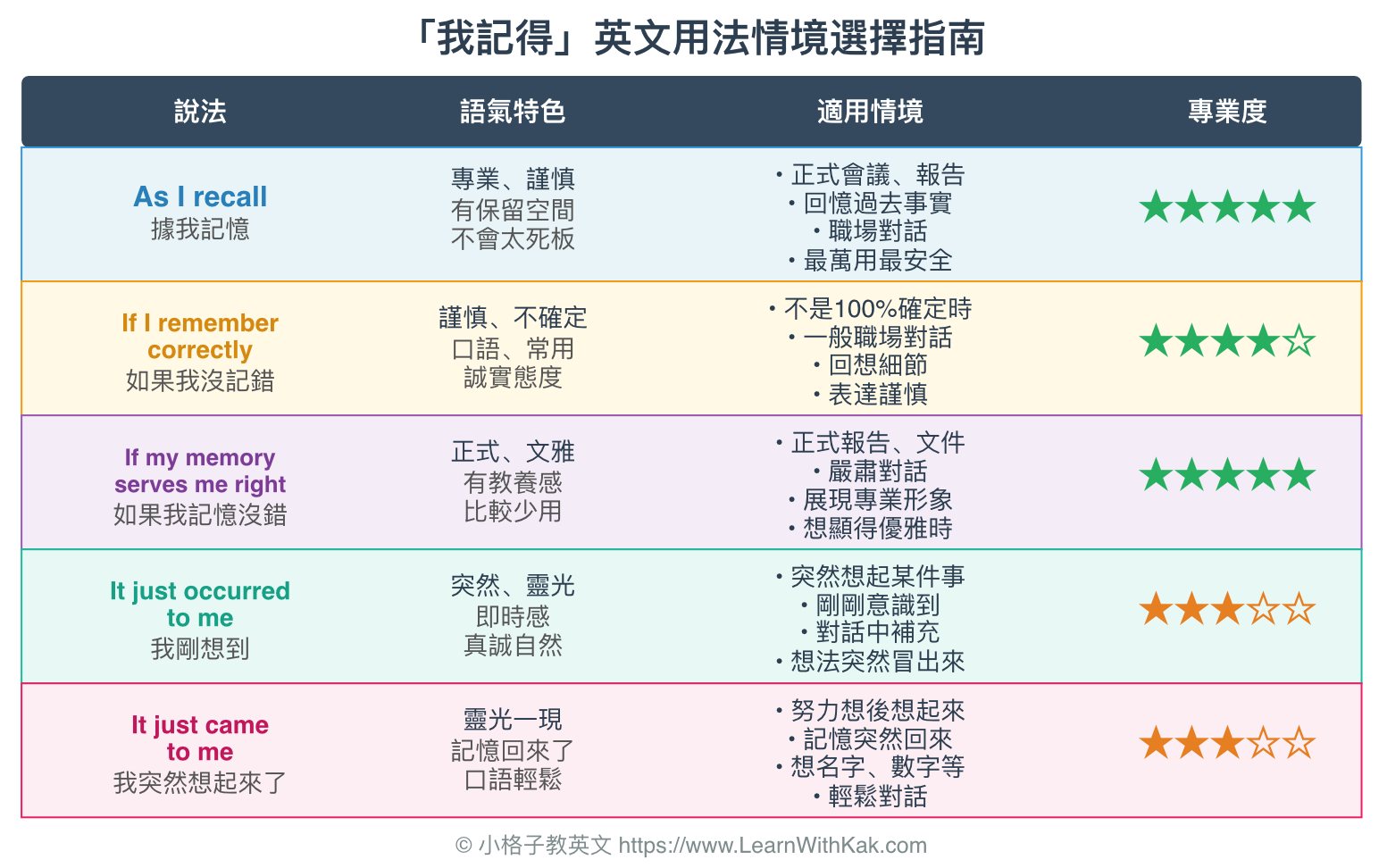
下次不要再只會說 I remember 了!學會上面這幾種說法不但能更精準表達你的記憶狀態,還能讓你的英文聽起來更專業、更有層次。記住:說對話比說對字更重要,選對用法讓你瞬間專業度加分!
如果你喜歡這篇文章的話,可以追蹤我們的Threads和Facebook唷!