
你有沒有想過,為什麼有些 to 後面接原形動詞,有些卻要接 Ving?像 be used to、object to 這種片語,一不小心就會寫成原形動詞,整句文法就錯了。很多人學文法時都被教過 to 後面一定接原形動詞,一遇到這種片語就整個亂掉。其實問題不是記錯了,是沒人講清楚 to V 還是 Ving 用法的關鍵,藏在 to 這個字本身的身分裡,搞懂不定詞 to 用法,你會發現這件事沒有想像中複雜。
先搞懂:不定詞 to 用法 vs 介系詞 to 的差別
要搞懂 to 後面接什麼,第一步就是要分清楚不定詞 to 用法跟介系詞 to 用法。
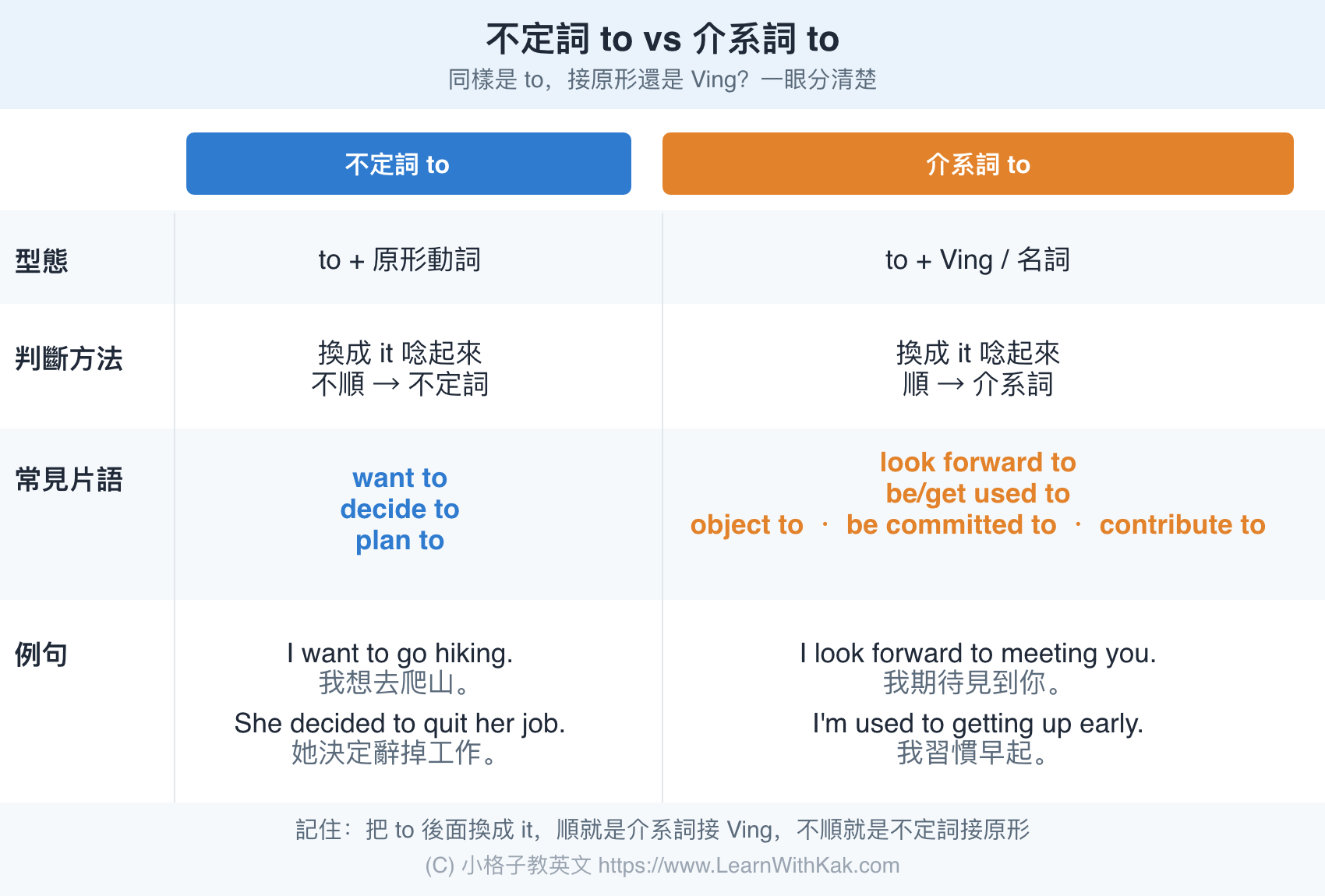
不定詞 to 是什麼?就是 to + 原形動詞的組合,像 to do、to go、to eat。它通常表示目的、未來要做的動作、或是某個動作本身。常見的動詞後面會接不定詞 to,像是 want to(想要)、need to(需要)、plan to(計畫)、decide to(決定)、hope to(希望)等等。這種 to 後面一定接原形動詞。
介系詞 to 是什麼?這個 to 本身就是一個介系詞,跟 in、on、at 這些介系詞功能一樣。既然是介系詞,後面就要接名詞或動名詞(Ving)。這是很多人搞混的地方,因為它看起來跟不定詞 to 長得一模一樣,但功能完全不同。
為什麼會搞混?因為都是 to 這兩個字母,但一個是不定詞的一部分(要接原形),一個是介系詞(要接 Ving 或名詞)。就像中文的「了」,在「吃了」和「為了」裡意思完全不同,英文的 to 也是這樣。
那怎麼判斷是 to V 還是 Ving 用法?教你一個測試大招:把 to 後面換成一個普通名詞,像 it、money、this。如果句子讀起來順,那個 to 就是介系詞,動詞就要加 ing。如果不順,那就是不定詞,要接原形。
(1)
A: What do you want to do this weekend?
A: 你這週末想做什麼?
B: I want to go hiking if the weather is nice.
B: 如果天氣好我想去爬山。
→ Want to + 原形(不定詞 to)
(2)
A: I heard you got a new job! Congratulations!
A: 我聽說你有新工作了!恭喜!
B: Thanks! I’m really looking forward to starting next month.
B: 謝謝!我真的很期待下個月開始。
→ Look forward to + Ving(介系詞 to)
(3)
A: How’s life in the new apartment?
A: 新公寓住得怎麼樣?
B: It’s good! I’m slowly getting used to living alone.
B: 不錯!我慢慢習慣一個人住了。
→ Get used to + Ving(介系詞 to)
(4)
A: Are you really going to quit your job?
A: 你真的要辭職嗎?
B: Yeah, I’ve decided to pursue my dream of starting a business.
B: 對,我決定追求我創業的夢想。
→ Decide to + 原形(不定詞 to)
這種介系詞 to 的陷阱,特別容易出現在職場書信和正式場合,因為這些片語本身就偏正式語氣,寫信給客戶或主管時最容易一緊張就手滑打成原形動詞。以下這幾個片語都是被打臉機率最高的常客,一次整理給你。
這幾個片語,to 後面也要接 Ving
look forward to + Ving/N(期待…)
千萬別寫 look forward to meet you,正確是 look forward to meeting you,因為這裡的 to 是介系詞,後面要接 Ving 或名詞。
測試:Look forward to it(順!)→ 所以是介系詞 → 接 Ving
(5) We look forward to working with your team on this project.
我們期待與您的團隊合作這個專案。
這個片語出現的頻率太高,多益也超愛考這個陷阱位置,如果想看更多考題形式的練習,可以參考Look forward to 後面加什麼?多益超愛考的動名詞陷阱用法這篇。
be/get used to + Ving/N(習慣於…)
注意!這個跟 used to + 原形(過去常常)完全不同!
Be used to = 習慣於(現在的習慣) Get used to = 逐漸習慣
測試:Be used to it(順!)→ 介系詞 → 接 Ving
對比:
- I used to live in Taipei.(我過去住在台北。)→ 過去習慣,接原形
- I am used to living in Taipei.(我習慣住在台北。)→ 現在習慣,接 Ving
(6)
A: How do you handle the early morning meetings?
A: 你怎麼應對一大早的會議?
B: I’m used to getting up early now. It was hard at first, but I got used to it.
B: 我現在習慣早起了。一開始很難,但我已經習慣了。
(7)
A: Do you miss working from home?
A: 你想念在家工作嗎?
B: A bit, but I’m getting used to coming to the office every day.
B: 有一點,但我開始習慣每天來辦公室。
(8) After living abroad for three years, she’s completely used to speaking English every day.
在國外住了三年後,她完全習慣每天說英文了。
object to + Ving/N(反對…)
Object to 是比較正式的用語,常用在會議、討論、正式場合。
測試:Object to this(順!)→ 介系詞 → 接 Ving
(9)
A: Do you object to postponing the meeting until next week?
A: 你反對把會議延到下週嗎?
B: No, I don’t object. Next week works better for me anyway.
B: 不,我不反對。下週對我來說反而更好。
(10)
A: Some team members object to changing the project timeline.
A: 有些團隊成員反對改變專案時間表。
B: We should discuss their concerns before making a final decision.
B: 我們應該在做最終決定前討論他們的顧慮。
be committed to + Ving/N(致力於…、承諾…)
Be committed to 在職場超常用,表示決心、承諾要做某事。
測試:Committed to this(順!)→ 介系詞 → 接 Ving
(11)
A: What’s the company’s priority this year?
A: 公司今年的優先事項是什麼?
B: We are committed to improving customer satisfaction and reducing response time.
B: 我們致力於提升客戶滿意度和縮短回應時間。
(12)
A: Are you really going to finish this project on time?
A: 你真的會準時完成這個專案嗎?
B: Yes, I’m fully committed to completing it by the deadline.
B: 會,我完全承諾在期限前完成。
(13) Our team is committed to providing the best service possible.
我們的團隊致力於提供最好的服務。
contribute to + Ving/N(有助於…、促成…)
Contribute to 表示貢獻、有助於、導致某個結果。
測試:Contribute to this(順!)→ 介系詞 → 接 Ving
(14)
A: How can we reduce costs without affecting quality?
A: 我們怎麼在不影響品質的情況下降低成本?
B: Automating this process will contribute to reducing our expenses significantly.
B: 自動化這個流程會大幅有助於降低我們的支出。
(15)
A: What factors contributed to the project’s success?
A: 什麼因素促成了專案的成功?
B: Good communication and teamwork contributed to achieving our goals ahead of schedule.
B: 良好的溝通和團隊合作促成我們提前達成目標。
(16) Regular exercise contributes to maintaining good health and mental well-being.
規律運動有助於維持健康和心理健康。
in addition to + Ving/N(除了…之外)
In addition to 常用來補充說明,除了前面提到的事,還有其他事情要做。
測試:In addition to this(順!)→ 介系詞 → 接 Ving
(17)
A: What does her job actually involve?
A: 她的工作實際上包含哪些事?
B: In addition to managing the budget, she also trains new hires.
B: 她除了要管理預算,還要訓練新進員工。
(18) In addition to writing the report, he had to present it to the board.
除了寫報告之外,他還得向董事會簡報。
when it comes to + Ving/N(說到…、談到…)
When it comes to 很口語,也很萬用,講到某個主題或某件事的時候都能用。
測試:When it comes to this(順!)→ 介系詞 → 接 Ving
(19)
A: You’re really good at negotiating prices.
A: 你真的很會談價錢。
B: When it comes to saving money, I take it seriously.
B: 說到省錢,我可是很認真的。
(20) When it comes to choosing a career, there’s no one right answer.
說到選職業,沒有唯一的正確答案。
prior to + Ving/N(在…之前)
Prior to 是比較正式的說法,意思跟 before 很像,常出現在書面通知或合約裡。
測試:Prior to this(順!)→ 介系詞 → 接 Ving
(21)
A: Do we need to sign anything before the trip?
A: 出發前需要簽什麼文件嗎?
B: Yes, prior to departing, everyone needs to sign the liability waiver.
B: 對,出發前每個人都要簽責任免除書。
(22) Prior to submitting your application, please double-check all the required documents.
在提交申請之前,請再次確認所有必要文件。
測試大招:一秒判斷 to V 還是 Ving
記住這個測試方法,以後再也不會搞混這組不定詞 to 用法。
把 to 後面的動詞換成普通名詞(it, money, this, that)。如果句子讀起來順,那個 to 就是介系詞,要接 Ving。如果不順,就是不定詞,要接原形。
- Look forward to ___ → Look forward to it(順!) → 介系詞 to → Look forward to meeting ✓
- Be used to ___ → Be used to it(順!) → 介系詞 to → Be used to working ✓
- Want to ___ → Want to it(不順!怪怪的) → 不定詞 to → Want to work ✓
- Plan to ___ → Plan to it(不順!) → 不定詞 to → Plan to go ✓
- When it comes to ___ → When it comes to this(順!) → 介系詞 to → When it comes to saving ✓
- Prior to ___ → Prior to this(順!) → 介系詞 to → Prior to submitting ✓
這是幾個常見的錯誤,記住正確用法:
- 錯誤:I look forward to meet you. 正確:I look forward to meeting you.(我期待見到你。)
- 錯誤:I am used to wake up early. 正確:I am used to waking up early.(我習慣早起。)
- 錯誤:Prior to submit your application, please check the documents. 正確:Prior to submitting your application, please check the documents.(在提交申請之前,請確認文件。)
記住關鍵:不是所有的 to 後面都接原形,要先分清楚是不定詞 to 還是介系詞 to。特別是遇到 look forward to、prior to、when it comes to 這類固定搭配,千萬記得後面要接 Ving。掌握這組 to V 還是 Ving 用法的判斷邏輯,寫信、開會、考試都不會再卡關。
其實這個判斷邏輯一旦內化,速度會比想像中快很多。一開始可能需要在心裡默念一次「把 to 後面換成 it」,但練習幾次之後,看到 be used to、object to、in addition to 這種固定搭配,幾乎會直接反射性接 Ving,不用每次都重新推理一遍。職場上要寫英文信件的人,這組介系詞 to 的規則特別值得花時間內化,因為這幾個片語出現的頻率真的非常高,一封正式 email 裡很可能同時出現兩三個。
想更完整搞懂動詞後面接 to do 還是 doing 這組概念,可以參考不定詞與動名詞差在哪?職場英文、多益都會考的動詞用法這篇,裡面整理了 forget、remember、stop 這幾組更容易搞混的動詞。
下次寫信或準備考試,先想一秒:這個 to 是不定詞還是介系詞,答案自然就出來了。
延伸閱讀:【不定詞與動名詞差在哪?職場英文、多益都會考的動詞用法】
如果你喜歡這篇文章的話,可以追蹤我們的 Threads 和 Facebook 唷!