
週末朋友問你「幹嘛」,你說 “I’m just hanging out at home.”,這樣說當然沒錯,但如果你只會這一句,碰到「在家發呆」、「躺著不動」、「偷懶摸魚」這些情境,就只能硬撐一個 hang out 撐到底。hang out 意思其實不只一種,而且在「無所事事」這個語義範圍裡,還有好幾個說法,語氣和畫面感各不相同,今天全部整理給你。
Hang out
Hang out 是大家最熟悉的起點,但很多人一查 hang out 意思,只看到「出去玩、跟朋友混」,以為這樣就夠了。其實 hang out 帶有一種「輕鬆相處、閒晃」的感覺,通常是跟人在一起,或是在某個地方混一混,不一定有具體計畫,但也不是完全什麼都不做。可以是跟朋友喝咖啡、在公園坐著、逛個街,重點是沒有特定目的,就是「耗在一起」。這個說法通常還是有個對象或地點,不像後面幾個說法那樣,純粹在「混」。
(1)
A: What did you do this weekend?
A: 你週末做了什麼?
B: Nothing much. Just hung out with my roommates.
B: 沒什麼特別,就跟室友混在一起。
(2)
A: Do you want to hang out later?
A: 你等一下想出來晃晃嗎?
B: Sure, where do you want to go?
B: 好啊,你想去哪?
(3)
A: Is your sister home?
A: 你妹妹在家嗎?
B: Yeah, she’s just hanging out in her room.
B: 在,她就在房間裡混。
(4)
A: We need more people for the barbecue.
A: 烤肉需要更多人。
B: Call Jason. He’s been hanging out at home all week.
B: 叫 Jason,他整個星期都窩在家。
(5)
A: Do you want to hang out at the night market tonight?
A: 你今晚想去夜市逛一逛嗎?
B: I’m down. I haven’t been out in days.
B: 好啊,我好幾天沒出門了。
Sit around
比起 hang out 意思上的那種「有地點、有對象的輕鬆」,sit around 更純粹是「坐著,什麼都沒在幹」。這是六個無所事事英文說法裡最直接的一個,帶有一種發呆、乾等、混時間的畫面感,語氣上有一點輕微的負面,通常是在說自己或別人什麼有意義的事都沒做。可以是自嘲,也可以是在催促別人。
(6)
A: Did you get any work done today?
A: 你今天有做到什麼事嗎?
B: Not really. I just sat around watching YouTube all day.
B: 沒什麼,就坐著看了一整天 YouTube。
(7)
A: Why are you in such a bad mood?
A: 你幹嘛心情這麼差?
B: I spent my whole day off just sitting around. I feel like I wasted it.
B: 我整個休假日就坐著發呆,感覺白白浪費掉了。
(8)
A: Come on, stop sitting around and help me clean up.
A: 好了,別坐著混了,來幫我一起整理。
B: Fine, fine. I’m coming.
B: 好好好,我來了。
(9)
A: Have you heard from the hiring manager?
A: 你有收到人資的消息嗎?
B: Not yet. I’ve just been sitting around waiting for their reply.
B: 還沒,我就在這裡乾等他們的回覆。
(10)
A: What did your dog do while you were at work?
A: 你上班的時候你的狗做了什麼?
B: Probably just sat around and slept all day.
B: 應該就坐著然後睡一整天吧。
Lounge around
Lounge around 比 sit around 更「癱」,有一種懶散地攤著、四處躺的畫面感,整個人就散在那邊,可能在沙發上、床上,或是隨便找個地方靠著。這個說法沒有太強的負面意思,更多是一種「舒服地什麼都不做」的狀態,有時候甚至帶點享受的語氣,尤其是假日或度假的情境裡。
(11)
A: What’s your ideal day off?
A: 你理想中的休假日是什麼樣子?
B: Honestly? Just lounging around at home in my pajamas.
B: 說實話?就穿著睡衣在家到處躺。
(12)
A: Are you ready to go?
A: 你準備好出門了嗎?
B: Not yet. I’ve been lounging around all morning and now I can’t find my keys.
B: 還沒,我早上一直在躺,現在找不到鑰匙。
(13)
A: The resort looks amazing. What did you do there?
A: 那個度假村看起來超棒,你在那裡做了什麼?
B: Mostly just lounged around by the pool.
B: 大部分就在泳池邊懶散地躺著。
(14)
A: Where’s your brother?
A: 你哥在哪?
B: He’s lounging around in the living room as always.
B: 老樣子,他在客廳攤著。
(15)
A: We should do something productive this weekend.
A: 我們這個週末應該做一些有意義的事。
B: Or we could just lounge around and do nothing. That sounds way better to me.
B: 或者我們也可以就躺著什麼都不做,我覺得這個聽起來好太多了。
Goof off
Goof off 是「本來應該做事,但選擇在混」。帶有一點頑皮、不認真的語氣,通常是在應該上班、上課、做功課的時候,卻在做別的事或就是在混。語氣不算太嚴重,比較像是在笑說自己或別人在偷懶,有一點自嘲或輕描淡寫的感覺,是美式英文裡很口語的說法。
(16)
A: Did you finish the report?
A: 你把報告做完了嗎?
B: No, I was goofing off the whole afternoon. My boss is going to kill me.
B: 沒有,我整個下午都在混,我老闆要殺了我。
(17)
A: Why did it take you so long to finish that assignment?
A: 你為什麼花那麼久才完成那份作業?
B: I kept goofing off. I’d do five minutes of work and then watch videos for an hour.
B: 我一直在混,做五分鐘事然後看一個小時影片。
(18)
A: What were you guys doing in the office after hours?
A: 你們下班後在辦公室做什麼?
B: Just goofing off. Someone brought a dartboard.
B: 就在混啊,有人帶了個飛鏢靶來。
(19)
A: The new intern doesn’t seem to take things seriously.
A: 新來的實習生好像不太認真。
B: Yeah, I caught him goofing off on his phone during the meeting.
B: 對啊,我在開會的時候看到他在滑手機偷懶。
(20)
A: How was summer school?
A: 暑期輔導班怎麼樣?
B: Boring. Half the class was goofing off the whole time.
B: 很無聊,一半的同學整堂課都在混。
Slack off
Slack off 跟 goof off 有點像,但語氣更負面,更強調「鬆懈、不努力、態度不認真」的問題。Goof off 比較像是偶爾小玩一玩,slack off 更像是一種長期的行為或態度,通常有人要幫你補洞。在職場上如果有人長期 slacking off,其他同事就得分擔那些沒人想碰的事,包括那些打雜的工作也是。
(21)
A: Why did the project take so long?
A: 為什麼這個專案拖了那麼久?
B: Half the team was slacking off the whole time. I had to pick up the slack.
B: 一半的人整個過程都在偷懶,我只好補上去。
(22)
A: Do you think you’ll pass the exam?
A: 你覺得你考試會過嗎?
B: Probably not. I slacked off the whole semester and now it’s too late.
B: 大概不會,我整個學期都在偷懶,現在太晚了。
(23)
A: Your manager seems stressed lately.
A: 你們主管最近看起來壓力很大。
B: Yeah, two people on our team have been slacking off and she has to cover for them.
B: 對,我們組有兩個人一直在混,她要幫他們補洞。
(24)
A: Are you ready for the presentation tomorrow?
A: 你明天的簡報準備好了嗎?
B: Not really. I’ve been slacking off all week. Tonight’s going to be a long night.
B: 還沒,我這個星期一直在鬆懈,今晚要熬了。
(25)
A: Why did they let Kevin go?
A: 他們為什麼讓 Kevin 走?
B: He’d been slacking off for months. His manager finally had enough.
B: 他已經混了好幾個月了,他主管終於受不了。
Kill time
Kill time 是「打發時間」,完全中性,沒有負面意思。通常是在等待某件事的過程中,隨便找點事做,不是因為懶,只是要填滿這段空檔。這裡的 kill 不是字面上的「殺死」,而是「消耗、度過」的意思—這也是很多無所事事英文說法的特色,光靠直譯是看不出來的。
(26)
A: The flight got delayed by two hours. What do we do?
A: 班機延誤兩個小時,我們怎麼辦?
B: Let’s find a coffee shop to kill time.
B: 我們去找個咖啡廳打發時間吧。
(27)
A: Your appointment isn’t until 3. It’s only 1:30.
A: 你的預約要到三點,現在才一點半。
B: I know. I’m just walking around the mall to kill time.
B: 我知道,我就在商場走走打發時間。
(28)
A: Are you doing anything right now?
A: 你現在在幹嘛?
B: Just killing time before my friend gets off work.
B: 就在打發時間等我朋友下班。
(29)
A: How long have you been waiting here?
A: 你在這裡等多久了?
B: About 40 minutes. I’ve been scrolling through my phone just to kill time.
B: 大概四十分鐘,就一直滑手機打發時間。
(30)
A: This training session is taking forever.
A: 這個培訓課程怎麼這麼久。
B: I know. I’ve been doodling in my notebook just to kill time.
B: 對,我一直在筆記本上塗鴉打發時間。
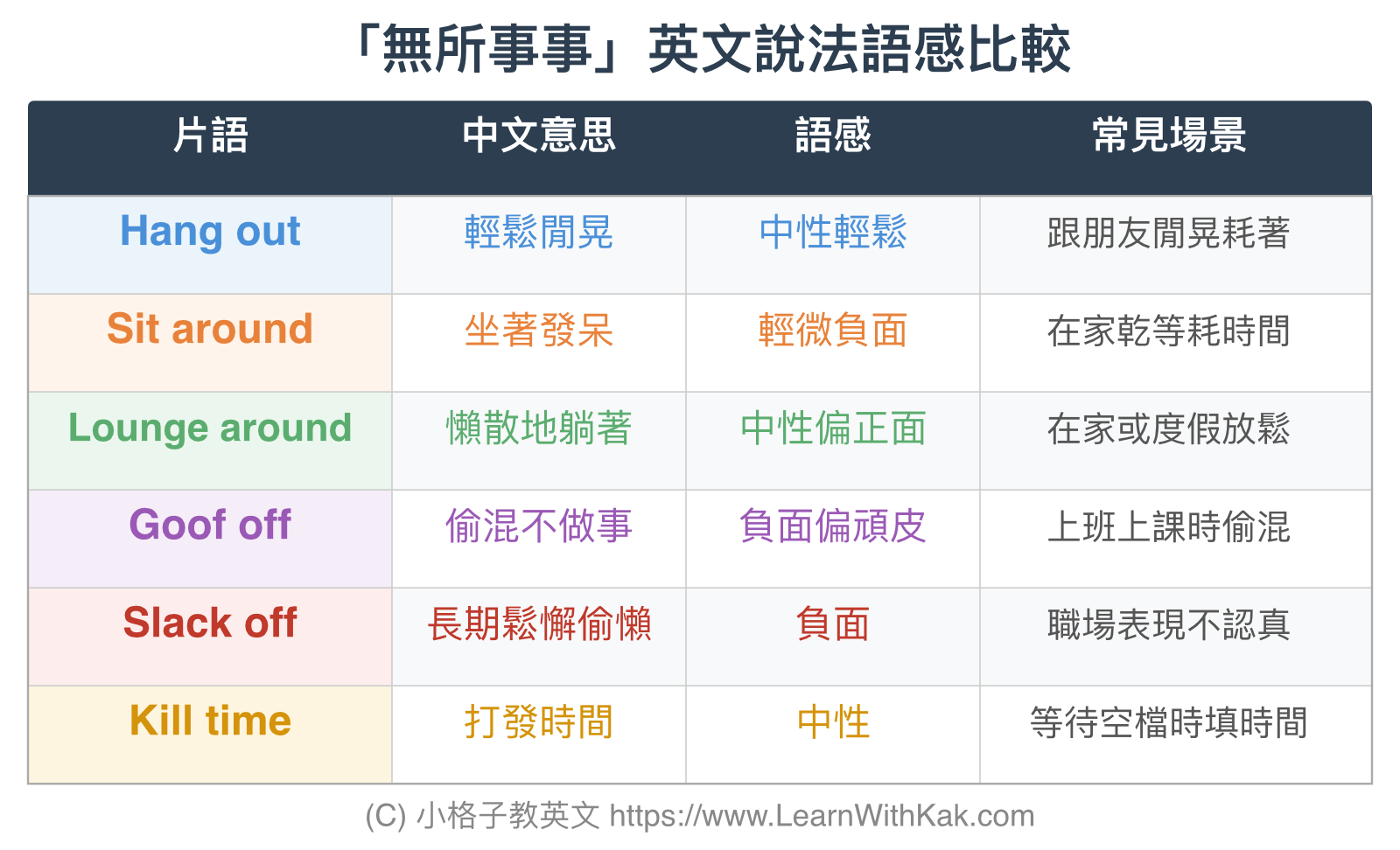
Hang out 是你認識最久的老朋友,但光靠這一個說法,很多情境你說不清楚。想說「在家發呆」就用 sit around,想說「懶散地躺著」就用 lounge around,偶爾偷混用 goof off,長期鬆懈用 slack off,等人的時候就 kill time。六個說法,各有語氣,學完直接能用。
延伸閱讀:【英文片語意思差很多!Get lost、Break down、Pick up 等 6 個超容易搞混的雙重意思片語】
如果你喜歡這篇文章的話,可以追蹤我們的Threads和Facebook唷!