
在找 effective 中文意思的你,可能發現它跟 efficient 中文都翻成「有效的」,但其實兩個字差很多。工作做得超快、超有效率,老闆還是不滿意?或是同事動作慢吞吞,但最後成果卻比你好?這就是 efficient 和 effective 的差別。簡單說:efficient 是效率高(做事快、省資源),effective 是有效果(達成目標)。快不一定有用,有用不一定快!
Efficient 是什麼意思?有效率的(做事快、省資源)
先來看 Efficient。這個字的重點是「效率」,就是做事快、省時省力、不浪費資源的意思。
Efficient 用法的核心是強調「過程」和「速度」,重點不是結果好不好,而是做得快不快、有沒有浪費資源。
常見搭配:
- Efficient method = 有效率的方法
- Work efficiently = 有效率地工作
- Time-efficient = 省時的
- Cost-efficient = 成本效益高的
- Energy-efficient = 節能的
(1)
A: How do you like the new system?
A: 你覺得新系統怎麼樣?
B: It’s very efficient. It saves us 2 hours per day.
B: 很有效率。它每天幫我們省 2 小時。
(2)
A: Why do you always finish your work so fast?
A: 你為什麼總是這麼快就做完工作?
B: I work efficiently and rarely waste time.
B: 我工作很有效率,很少浪費時間。
(3) We need a more efficient way to organize these files.
我們需要更有效率的方式來整理這些檔案。
(4)
A: Why did the company switch to this new production process?
A: 公司為什麼要改用這個新的生產流程?
B: Because it’s more efficient. It helps us reduce costs.
B: 因為它更有效率。幫我們降低成本。
(5)
A: How do you manage to get so much done in a day?
A: 你怎麼一天可以做這麼多事?
B: I use a time-efficient approach. I prioritize important tasks first.
B: 我用省時的做法。我先做重要的事。
(6) LED lights are more energy-efficient than traditional bulbs.
LED 燈比傳統燈泡更節能。
(7)
A: This software is great!
A: 這個軟體超讚!
B: Yeah, it’s efficient at processing large amounts of data.
B: 對啊,它處理大量資料時很有效率。
Efficient 的名詞:Efficiency(效率)
(8)
A: The boss wants us to improve our performance.
A: 老闆要我們改善表現。
B: We need to improve our work efficiency then.
B: 那我們需要提高工作效率。
(9) The company focuses on cost efficiency to stay competitive.
公司注重成本效益以保持競爭力。
(10)
A: Will automation really help us?
A: 自動化真的能幫到我們嗎?
B: Definitely. It can increase efficiency by 30%.
B: 絕對可以。它可以提高 30% 的效率。
Effective 中文是什麼?有效果的(達成目標、有用)
現在來看 Effective。Effective 中文的重點是「效果」,就是有沒有達成目標、有沒有用的意思。
Effective 用法的核心是強調「結果」和「成效」,重點不是做得快不快,而是有沒有達到你想要的結果。
常見搭配:
- Effective solution = 有效的解決方案
- Work effectively = 有效地工作
- Highly effective = 非常有效
- Cost-effective = 划算的、有成本效益的
- Prove effective = 證明有效
(11)
A: Was the training program worth it?
A: 培訓計畫值得嗎?
B: Absolutely! It was very effective. Sales increased by 30%.
B: 絕對值得!很有效。業績增加了 30%。
(12)
A: How does she always achieve her goals?
A: 她怎麼總是能達成目標?
B: She works effectively. She focuses on the right things.
B: 她工作很有效。她專注在對的事情上。
(13)
A: This problem is getting worse. What should we do?
A: 這個問題越來越嚴重。我們該怎麼辦?
B: We need an effective solution, not just a temporary fix.
B: 我們需要一個有效的解決方案,不只是暫時解決而已。
(14) The new marketing strategy proved highly effective.
新的行銷策略證明非常有效。
(15)
A: Does this medicine work?
A: 這個藥有效嗎?
B: Yes, it’s very effective in reducing pain.
B: 有,它在減輕疼痛方面很有效。
(16)
A: What makes him such a good leader?
A: 他為什麼是個這麼好的領導者?
B: He’s an effective leader. He motivates his team well.
B: 他是個有效的領導者。他很會激勵團隊。
(17)
A: Did the awareness campaign work?
A: 宣導活動有用嗎?
B: Yes, it was effective in raising public awareness.
B: 有,它在提高公眾意識方面很有效。
Effective 的名詞:Effectiveness(效果)
(18)
A: How do we know if the program is working?
A: 我們怎麼知道這個計畫有沒有用?
B: We need to measure the effectiveness of the program.
B: 我們需要衡量這個計畫的效果。
(19) The effectiveness of the treatment varies by patient.
治療的效果因病人而異。
(20)
A: Is our strategy working?
A: 我們的策略有用嗎?
B: The data shows the effectiveness of our approach.
B: 數據顯示我們方法的效果。
Efficient vs Effective 核心差異和四種組合
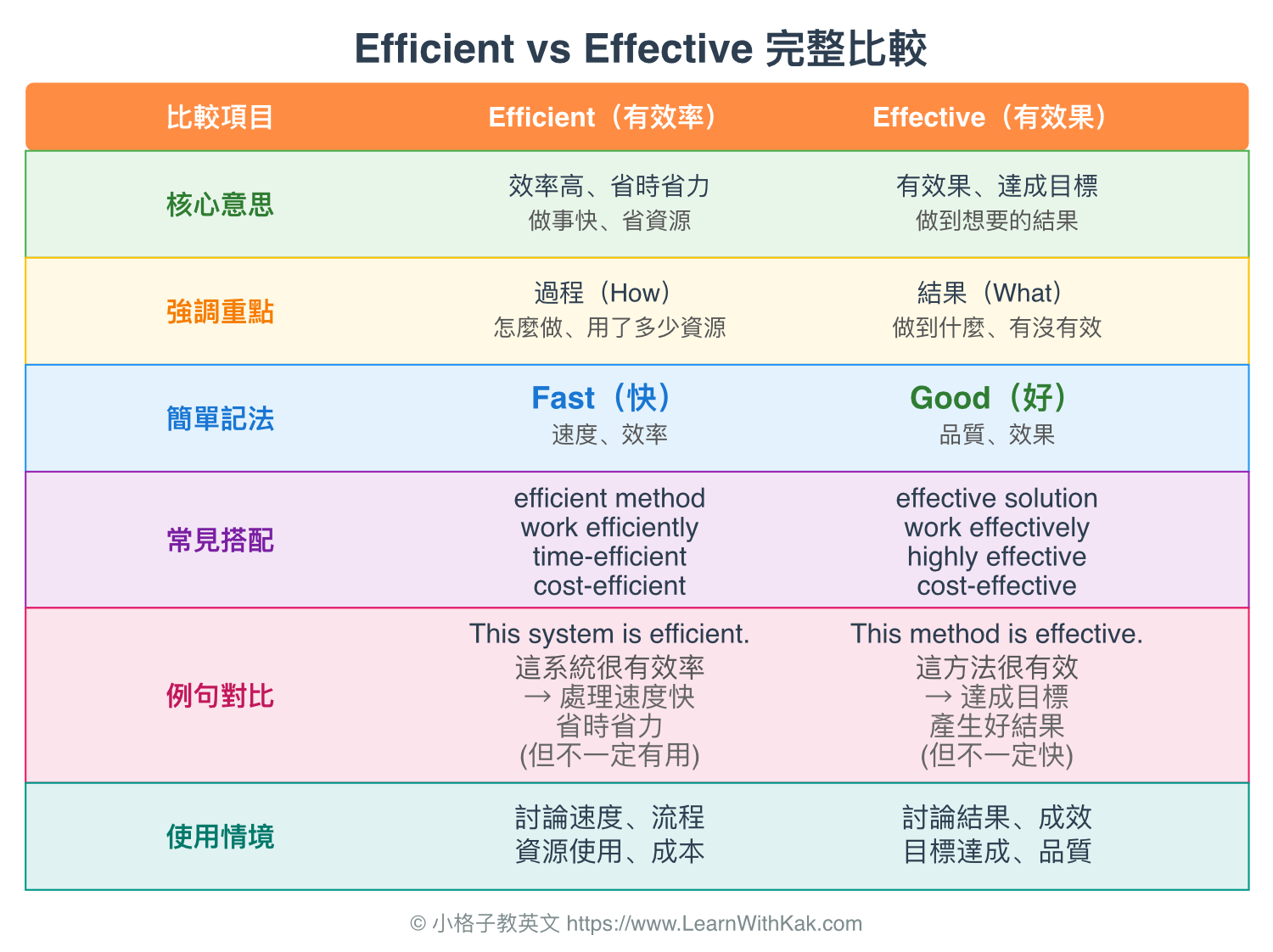
這兩個字的差異到底在哪?
核心差異:
- Efficient = 過程快、省資源(How) — 怎麼做
- Effective = 結果好、達成目標(What) — 做到什麼
記住這個就夠了:
Efficient = Fast(效率 = 快)
Effective = Good(效果 = 好)
快不一定好,好不一定快!
四種可能的組合
理解這四種組合,你就完全搞懂了:
組合 1:既 Efficient 又 Effective(最理想)
做得快又有效,這是最理想的狀態。
(21)
A: How’s the new workflow?
A: 新的工作流程怎麼樣?
B: It’s great! It’s both efficient and effective. We save time and achieve better results.
B: 超好的!既有效率又有效果。我們省時間又能達成更好的結果。
組合 2:Efficient 但不 Effective(快速做錯事)
做得很快,但沒用。這是最常見的問題。
(22)
A: You finished the report already? That was fast!
A: 你已經完成報告了?好快!
B: Yeah, but the boss said I missed the main point. I was working efficiently, but not effectively.
B: 對啊,但老闆說我沒抓到重點。我工作很有效率,但沒效果。
(23)
A: The new system processes everything so quickly!
A: 新系統處理速度超快的!
B: True, it’s efficient. But the data it gives us isn’t useful. It’s not effective for our needs.
B: 對,很有效率。但它給的資料沒什麼用。對我們的需求沒效果。
組合 3:Effective 但不 Efficient(有效但很慢)
有效果,但很慢、浪費資源。
(24)
A: Does the old method still work?
A: 舊方法還有用嗎?
B: It’s effective but not efficient. It works, but takes way too long.
B: 有效但沒效率。有用,但太花時間了。
(25)
A: How does he solve problems?
A: 他怎麼解決問題的?
B: His approach is effective, but not efficient. He gets results, but uses too many resources.
B: 他的方式有效,但沒效率。有成果,但用太多資源了。
組合 4:既不 Efficient 也不 Effective(最糟)
又慢又沒用,這是最糟的狀態。
(26)
A: Should we keep using this process?
A: 我們應該繼續用這個流程嗎?
B: No way. It’s neither efficient nor effective. It’s slow AND doesn’t produce good results.
B: 不要。它既沒效率也沒效果。又慢又產生不了好結果。
相關字彙和延伸用法
除了 Efficient 和 Effective,還有一些相關的字可以學起來:
類似 Efficient 的字
Productive(有生產力的) — 強調產出多
(27)
A: How was your day?
A: 你今天過得如何?
B: Very productive! I completed five reports.
B: 很有生產力!我完成了五份報告。
Streamlined(精簡的) — 強調流程簡化
(28)
A: Why is the approval process so much faster now?
A: 為什麼現在審批流程快這麼多?
B: We streamlined it to make it more efficient.
B: 我們精簡了流程,讓它更有效率。
類似 Effective 的字
Successful(成功的) — 強調達成目標
(29)
A: How did the campaign go?
A: 活動進行得如何?
B: It was successful! We reached our target audience.
B: 很成功!我們接觸到目標受眾了。
Impactful(有影響力的) — 強調產生影響
(30)
A: What did you think of her presentation?
A: 你覺得她的簡報怎麼樣?
B: It was impactful. It changed everyone’s opinion.
B: 很有影響力。它改變了每個人的看法。
下次工作或開會的時候,記得分清楚你在講效率還是效果。用對字,你的英文會精準超多,職場上的問責和成果表達也會更到位。不要再把這兩個字當同義詞亂用啦!
延伸閱讀:【「解決問題」英文只會用 solve?6 個更道地的職場動詞:Handle、Fix、Address、Deal With 語感差別在哪?】
如果你喜歡這篇文章的話,可以追蹤我們的Threads和Facebook唷!