
學英文形容詞,大家都知道要背單字,但有一件事很少人注意到:英文形容詞用法有個潛規則,決定你能不能加 very,還是要換成 absolutely 或 completely。搞錯了,母語者不會說你文法錯,但就是會覺得你說的英文怪怪的。
英文形容詞分兩種,差別比你想的大
先說一個概念:英文形容詞其實分兩種。
第一種是「可以有程度差別」的形容詞,比如 hot(熱)。你可以說 a bit hot(有點熱)、very hot(很熱)、extremely hot(超級熱),因為「熱」這件事有高有低,有程度之分。
第二種是「本身就是極端狀態」的形容詞,比如 boiling(滾燙的)。Boiling 的意思已經是「熱到沸騰」了,你不可能說「有一點點 boiling」或「非常 boiling」,因為它本身就是最高點了。這類形容詞搭配 very 聽起來就很奇怪。
台灣學英文的過程中,這兩種形容詞常常混在一起背,沒有人特別說清楚它們搭配副詞的方式不一樣,所以說出來的英文就容易怪怪的。
下面幾個例子可以讓你快速感受一下這兩種形容詞的差別:
(1)
A: How was the hike? Were you tired?
A: 健行怎麼樣?你累嗎?
B: Tired? I was exhausted. I could barely walk back to the car.
B: 累?我累到不行。我幾乎走不回停車場。
(2)
A: Is your new apartment big?
A: 你的新公寓大嗎?
B: Big? It’s huge. There’s a separate living room, dining room, and a study.
B: 大?超大的。有獨立的客廳、餐廳,還有一間書房。
(3)
A: How was the food at that new place?
A: 那家新開的店食物怎樣?
B: The food was good, but the dessert was absolutely amazing. I want to go back just for that.
B: 食物不錯,但甜點真的太厲害了。我想為了那個甜點再去一次。
在例句 (1) 和 (2) 裡,tired 和 big 是可以有程度差別的形容詞,所以說話的人用了程度更強的 exhausted 和 huge 來對比。例句 (3) 裡,amazing 是極端形容詞,所以用的是 absolutely,而不是 very。
第一種:可分級形容詞,搭配這些副詞
可以有程度差別的形容詞(文法上叫 gradable adjectives),搭配的副詞是你很熟悉的那些:
- a bit / a little(一點點)
- quite(相當,但程度因英美用法有差,下面會提到)
- very(很)
- extremely(極度)
- incredibly(難以置信地)
這類形容詞的共同點是:程度可以調高調低,也可以做比較級和最高級。比如 hot → hotter → hottest,或是 tired → more tired → most tired。
常見的可分級形容詞包括:hot、cold、big、small、happy、sad、tired、angry、good、bad 等等。
(4)
A: You look a bit tired today. Did you sleep okay?
A: 你今天看起來有點累。睡得好嗎?
B: Not really. I was extremely stressed about the presentation and couldn’t fall asleep until 3 a.m.
B: 不太好。我對那個簡報壓力很大,三點才睡著。
(5)
A: Is the new manager strict?
A: 新主管嚴格嗎?
B: She’s quite demanding, but she’s also very fair. I think it’ll be good for the team.
B: 她要求蠻高的,但也很公平。我覺得對團隊來說是好事。
(6)
A: Did you enjoy the conference?
A: 你喜歡那個研討會嗎?
B: Honestly, it was incredibly boring. I spent half the time checking my phone.
B: 老實說,超無聊的。我有一半的時間都在滑手機。
(7)
A: How was the traffic on the way here?
A: 來這裡路上塞車嗎?
B: It was a bit slow near the tunnel, but not too bad overall.
B: 隧道附近有點慢,但整體還好。
順帶一提,quite 這個副詞在英式和美式英文裡的程度感不太一樣:英式的 quite 有時候反而有「還好,沒那麼…」的感覺,不完全等於「很」。這是另一個話題,但記得 quite 和可分級形容詞搭配是沒問題的。
第二種:極端形容詞,搭配 absolutely 和 completely
另一種形容詞本身已經是極端狀態,稱為 non-gradable adjectives(或叫 extreme adjectives)。這類形容詞不能用 very 或 extremely 來修飾,要改用 absolutely、completely、totally、utterly。
為什麼?因為 very 的功能是「把程度調高」,但極端形容詞本身已經在最高點了,再說 very 就沒有邏輯了。
常見的極端形容詞有:
- freezing(冷到結冰)→ 對應 cold
- boiling(熱到沸騰)→ 對應 hot
- exhausted(精疲力竭)→ 對應 tired
- furious(暴怒)→ 對應 angry
- starving(餓到快死)→ 對應 hungry
- brilliant(出色極了)→ 對應 good
- awful(糟透了)→ 對應 bad
- tiny(極小的)→ 對應 small
- enormous / huge(極大的)→ 對應 big
- hilarious(超爆笑)→ 對應 funny
在職場英文裡,absolutely、completely、totally 也是非常常用的副詞,搭配的都是這類極端或絕對的形容詞,比如 absolutely right、completely wrong、totally unacceptable。
(8)
A: Why didn’t you eat at the meeting?
A: 你為什麼在會議上沒有吃東西?
B: I had a huge lunch right before. I was absolutely stuffed.
B: 我之前剛吃了一頓大餐。我已經撐到不行了。
(9)
A: What did you think of the client’s proposal?
A: 你覺得客戶的提案怎麼樣?
B: Honestly? It was completely unacceptable. The timeline was unrealistic and the budget was way off.
B: 說實話?完全不可接受。時程不切實際,預算也差太多了。
(10)
A: How was the camping trip? I heard it rained the whole time.
A: 露營怎麼樣?聽說一直下雨?
B: It was absolutely freezing at night. I slept in three layers and still couldn’t warm up.
B: 晚上冷到不行。我穿了三層還是暖不起來。
(11)
A: Did you hear what happened at the all-hands meeting?
A: 你有沒有聽說全員大會發生什麼事?
B: Yes, the director was totally furious. He said the sales numbers were totally unacceptable and demanded a full report by Friday.
B: 有,總監完全爆了。他說銷售數字完全不能接受,要求週五前交完整報告。
(12)
A: Is the new intern catching on quickly?
A: 新來的實習生上手快嗎?
B: She’s absolutely brilliant. She figured out our whole CRM system in two days.
B: 她真的厲害極了。兩天就把我們整套 CRM 系統摸透了。
Absolutely 用法完整拆解
Absolutely 是這幾個副詞裡最常出現的,所以值得單獨說清楚。它有兩個主要用法:
用法一:修飾極端形容詞,加強語氣
這個前面已經說了很多了。Absolutely 搭配 brilliant、freezing、furious、exhausted、hilarious 這類本身就是極端程度的形容詞。
用法二:單獨使用,表示強烈同意或肯定
這個用法在職場英文裡超常見。有人問你 “Are you sure this is the right approach?”,你回 “Absolutely.” 就是「完全確定、當然」的意思,比單說 “Yes.” 有力得多。這個用法在 TOEIC 聽力的對話部分也常出現,要認得。
(13)
A: Can you have the report ready by Thursday?
A: 你可以在週四前把報告準備好嗎?
B: Absolutely. I’ll send it over by Wednesday evening just to be safe.
B: 沒問題。我週三傍晚就會傳給你,保險一點。
(14)
A: Is it okay if I take Friday off? I have a family thing.
A: 我可以週五請假嗎?有家裡的事。
B: Absolutely, go ahead. Just make sure the handover notes are ready before you leave Thursday.
B: 當然可以,去吧。只要確保你週四離開前把交接文件準備好就行了。
(15)
A: That presentation you gave this morning was incredible.
A: 你今早的簡報真的超棒。
B: Thank you! The team worked incredibly hard on it. It was absolutely nerve-wracking to present in front of the whole board though.
B: 謝謝!團隊非常努力準備。不過在整個董事會面前報告還是緊張到不行。
(16)
A: Did you watch that comedy special last night?
A: 你昨晚有看那個喜劇特輯嗎?
B: Yes! It was absolutely hilarious. I was literally crying from laughing.
B: 有!超爆笑的。我笑到真的在哭。
Completely 用法完整拆解
Completely 和 absolutely 很像,但語感上有點不同。Absolutely 帶有比較強的情緒感,completely 則比較中性,強調的是「100% 完全、徹底」的感覺。
在職場上,completely 很常用來表達某件事是「完全的」,不管是正面還是負面。Completely wrong、completely different、completely unaware 這些搭配都很自然。
Totally 和 completely 意思很接近,但 totally 在口語裡更常見,也更輕鬆,在職場正式場合用 completely 或 absolutely 會更合適。
(17)
A: Did you know about the policy change before the announcement?
A: 你在公告之前知道政策要改嗎?
B: No, I was completely unaware. Nobody told me anything.
B: 不知道,我完全不知情。沒有人告訴我任何事。
(18)
A: Is the new process similar to the old one?
A: 新的流程和舊的差不多嗎?
B: Not at all. It’s completely different. We’re basically starting from scratch.
B: 完全不一樣。基本上我們是從頭開始。
(19)
A: I think I messed up the client presentation. I forgot to include the pricing slide.
A: 我覺得我搞砸了客戶簡報。我忘記放定價投影片了。
B: Oh no. What happened?
B: 喔不。後來怎樣?
A: The client was completely confused about the budget. I had to explain everything over email afterward.
A: 客戶完全搞不清楚預算的事。我事後得用 email 把一切都重新解釋一遍。
(20)
A: Are you done with the project handover?
A: 專案交接做完了嗎?
B: Almost. The documentation is completely done, but I still need to walk the new team through the system.
B: 快了。文件已經全部完成了,但我還需要帶新團隊了解一遍系統。
TOEIC 多益怎麼考這個?
TOEIC Part 5 的副詞題型裡,這個概念出現的頻率不低。題目通常長這樣:給你一個空格,讓你選填副詞,而正確答案取決於後面的形容詞是哪一類。
選項可能是 very、quite、absolutely、completely,而答案的關鍵就是:後面的形容詞是可分級的還是極端的。如果後面是 exhausted、furious、brilliant 這類極端形容詞,那正確答案就是 absolutely 或 completely,選 very 就錯了。
另外,TOEIC Part 4 和 Part 3 的商業對話場景裡,absolutely 也很常以表示同意的方式出現,「Absolutely, we can arrange that for you.」這類句子很典型,要練耳朵聽懂這個用法。
(21)
題目:The client was ________ furious when she found out the delivery had been delayed by two weeks.
(A) very (B) a bit (C) absolutely (D) fairly
答案:(C) absolutely
解析:furious 本身是極端形容詞,只能配 absolutely 或 totally,不能配 very 或 fairly。
(22)
題目:The new software update is ________ different from the previous version, so all staff will need to attend a training session.
(A) a little (B) quite (C) completely (D) very
答案:(C) completely
解析:completely different 是最自然的搭配,強調兩個版本在本質上沒有相同之處。其他選項語感較弱,無法帶出「需要全員重新培訓」的程度。
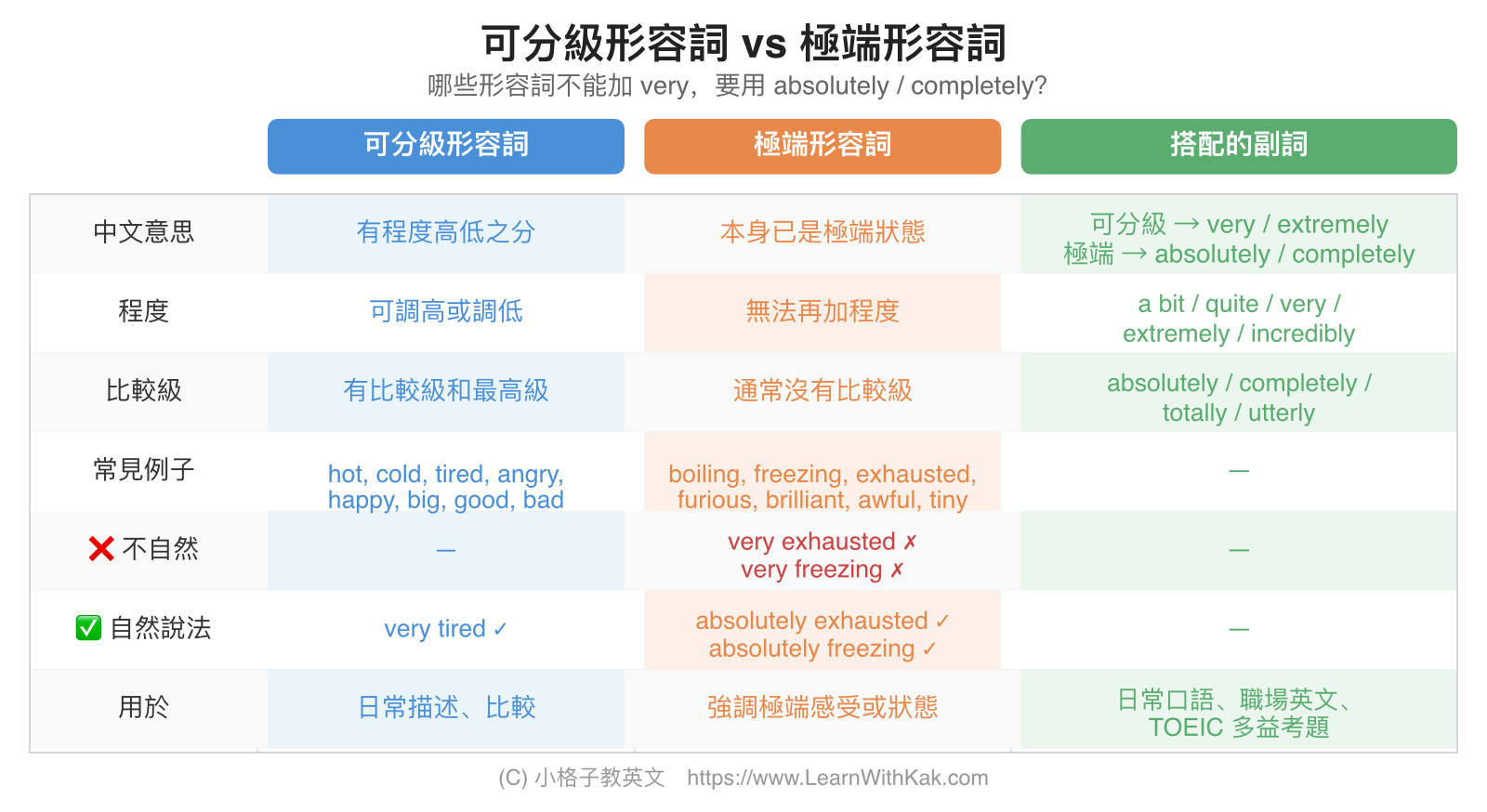
記住一個原則就好:形容詞本身的「極端程度」決定了你要用哪個副詞。普通形容詞配 very、extremely;極端形容詞配 absolutely、completely、totally。下次說英文形容詞用法的時候,先想一下這個形容詞是不是已經「滿了」,就不會搭錯了。
延伸閱讀:【Quite 中文意思超多變!從「有點」到「非常」,英式美式用法大不同】
如果你喜歡這篇文章的話,可以追蹤我們的 Threads 和 Facebook 唷!