
跟英國朋友吃完飯說 The food was quite good,你想誇超好吃,對方聽起來卻像「還行啦」。很多人查 quite 中文只看到「相當」,其實它可以是有點、還算、很,甚至是完全,要看後面接什麼字,也要看對方是英國人還是美國人。這篇整理 quite 常見用法,附上生活對話,下次開口不怕被誤會。
Quite 是什麼意思
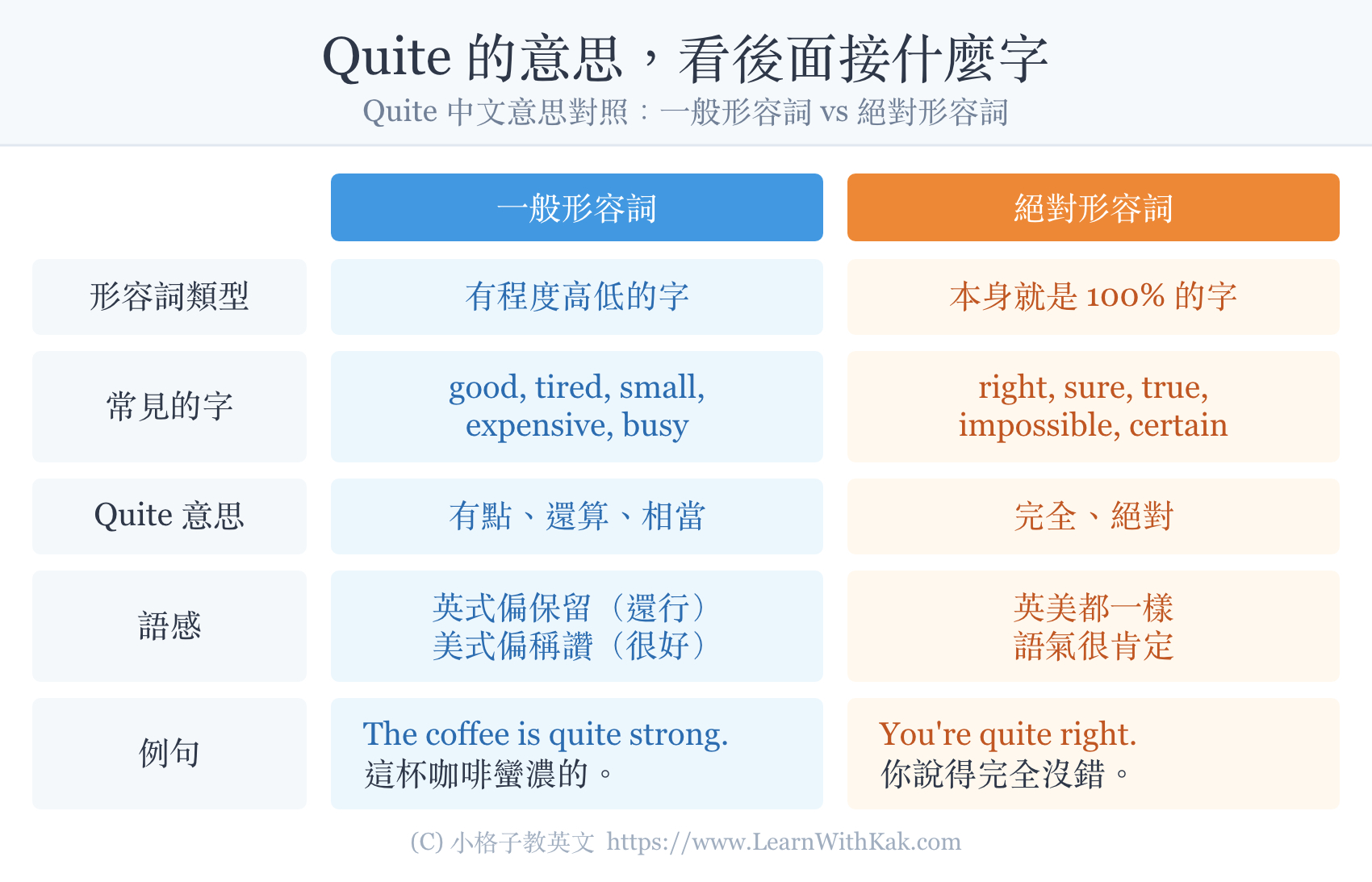
Quite 是副詞,中文可以是「有點、還算、相當」,也可以是「完全、絕對」。決定意思的關鍵,是後面接的形容詞:接一般形容詞(good、tired、expensive),quite 講的是程度,大概是「蠻、還算」;接絕對形容詞(right、sure、impossible),quite 就變成「百分之百、完全」。
一般形容詞是可以有高低的字,累可以有點累也可以很累。絕對形容詞則是本身已經到底的字,對就是對,不可能就是不可能,沒有「有點不可能」這種事。這個分法跟有些形容詞不能加 very,要改用 absolutely 是同一個道理,搞清楚這一點,quite 中文該怎麼翻就很好判斷。
(1)
This coffee is quite strong.
這杯咖啡蠻濃的。
(2)
The line was quite long, so we went somewhere else.
排隊的人蠻多的,所以我們就換一家了。
(3)
You’re quite right.
你說得完全沒錯。
(4)
That’s quite impossible with our budget.
以我們的預算,這完全不可能。
Quite + 一般形容詞
接一般形容詞的時候,quite 的意思落在「有點」跟「很」之間,中文最接近的是「蠻、還算、挺」。這個強度會跟著語氣和說話的人跑,英國人講起來比較保留,美國人講起來比較像稱讚,下面會再細講。日常對話裡最常聽到的,就是描述天氣、距離、價格、身體狀況這些。
(5)
A: How’s your new apartment?
A: 你的新房子怎麼樣?
B: It’s quite small, but the location is great.
B: 蠻小的,不過地點超好。
(6)
A: Want to try that ramen place tonight?
A: 晚上要不要去吃那家拉麵?
B: Sure, but it’s quite far from here. Let’s grab a cab.
B: 好啊,但離這裡蠻遠的,我們叫計程車吧。
(7)
A: You look tired.
A: 你看起來好累。
B: I’m quite tired, actually. I stayed up too late watching a show.
B: 其實我蠻累的,昨天追劇追太晚了。
(8)
A: How was the hike?
A: 爬山爬得怎麼樣?
B: Quite tough, but the view at the top was worth it.
B: 蠻硬的,不過山頂的風景很值得。
(9)
A: Is that restaurant expensive?
A: 那家餐廳很貴嗎?
B: It’s quite pricey, so maybe save it for a birthday or something.
B: 蠻貴的,可能生日之類的再去吧。
(10)
A: What’s the weather like in Tainan?
A: 台南天氣怎麼樣?
B: Quite hot and humid. Bring sunscreen and a small towel.
B: 蠻熱又很悶,記得帶防曬跟小毛巾。
Quite + 絕對形容詞
換成絕對形容詞,quite 就沒有「有點」這層意思了,直接等於 completely 或 absolutely。像 quite right 是「完全正確」,quite sure 是「很確定」,quite impossible 是「完全不可能」,不是「不太可能」,這個很多人會翻反。另外 quite 也可以放在 agree 這種動詞前面,I quite agree 就是「我完全同意」,英國人特別愛用。
(11)
A: So we should book the hotel before the flight?
A: 所以我們應該先訂飯店再訂機票?
B: Quite right. Hotel prices only go up closer to the date.
B: 完全正確,飯店越接近出發日只會越貴。
(12)
A: Are you sure you locked the door?
A: 你確定有鎖門嗎?
B: I’m quite sure. I checked twice before I left.
B: 我很確定,出門前檢查了兩次。
(13)
A: Can we finish the whole report by tonight?
A: 我們今晚有辦法把整份報告做完嗎?
B: That’s quite impossible. We don’t even have the numbers yet.
B: 完全不可能,我們連數據都還沒拿到。
(14)
A: Is it true that the bakery downstairs is closing?
A: 樓下那家麵包店真的要收了嗎?
B: Quite true. They put a notice on the door.
B: 是真的,他們在門上貼了公告。
(15)
A: I think we should just split the bill evenly.
A: 我覺得帳單直接平分就好。
B: I quite agree. We all ordered about the same.
B: 我完全同意,大家點的都差不多。
英式 vs 美式的 quite
quite good 意思在英國和美國差很多,這也是最容易踩雷的地方。美國人說 quite good,意思接近 really good,是真心覺得不錯;英國人說 quite good,常常是「還可以、有進步空間」,如果重音放在 quite 上,保留的感覺會更明顯。同樣地,英國人說 I quite like it,是「我還蠻喜歡的」,不是「我超愛」。
英式跟美式英文這種同一個字、不同解讀的狀況其實不少,想看更多可以翻翻英式英文和美式英文到底差在哪。如果你想真心稱讚別人,又怕對方聽成客套話,直接用 really good、great、amazing 最保險。反過來,別人用 quite good 稱讚你的時候,也可以先想想對方是哪裡人,再決定要怎麼回應對方的讚美。
(16)
A: What did you think of my presentation?
A: 你覺得我的簡報怎麼樣?
B (British): It was quite good. Maybe add a few more numbers next time.
B(英國人):還不錯,下次或許可以多放一點數據。
(17)
A: How was the new burger place?
A: 那家新開的漢堡店怎麼樣?
B (American): Quite good, honestly! I’d definitely go back.
B(美國人):老實說很好吃!我一定會再去。
(18)
A: Do you like the new office?
A: 你喜歡新辦公室嗎?
B: I quite like it. The chairs could be better, though.
B: 我還蠻喜歡的,不過椅子可以再好一點。
(19)
A: Did the client like our proposal?
A: 客戶喜歡我們的提案嗎?
B: He said it was “quite interesting.”
B: 他說「蠻有意思的」。
A: Uh-oh. That doesn’t sound great.
A: 糟了,聽起來不太妙。
(20)
A: So, how was my cooking?
A: 所以,我煮的東西怎麼樣?
B: Really good! I mean it.
B: 真的很好吃!我是說真的。
Not quite
not quite 中文意思是「不太、還沒完全」,是口語裡超實用的說法。它比直接說 no 委婉很多,事情還沒做完、答案不太對、自己沒聽清楚,都可以用。像開會時沒聽清楚對方講什麼,說一句 I didn’t quite catch that 就很自然,想多學幾種聽不清楚或不明白時的英文說法也很好用。
(21)
A: Are you ready to go?
A: 你準備好出門了嗎?
B: Not quite. Give me five minutes to do my hair.
B: 還沒,給我五分鐘弄頭髮。
(22)
A: Sorry, I didn’t quite catch your name.
A: 不好意思,我剛剛沒聽清楚你的名字。
B: It’s Ethan. E-T-H-A-N.
B: 我叫 Ethan,E-T-H-A-N。
(23)
A: How was your trip to Japan?
A: 日本玩得怎麼樣?
B: Fun, but not quite what I expected. It rained almost every day.
B: 好玩,但跟我想的不太一樣,幾乎每天都在下雨。
(24)
A: Is this the file you wanted?
A: 這是你要的檔案嗎?
B: Not quite. I need the one with the updated prices.
B: 不太對,我要的是有更新價格的那份。
(25)
A: Are you really going to quit your job?
A: 你真的要辭職嗎?
B: I’m not quite sure yet. I’ll think about it over the weekend.
B: 我還不太確定,週末再好好想想。
Quite a 的位置
quite 碰到 a 的時候,位置跟 very 剛好相反。very 放在 a 後面,說 a very long day;quite 則是放在 a 前面,說 quite a long day,這樣聽起來比較自然。quite a 加上名詞,意思是「真是個、相當的」,像 quite a view 就是「景色超美」。
另外兩個常用組合也要記住:quite a few 是「不少」,不是「一點點」,跟 a few(一些)意思差很多;quite a bit 則是「蠻多的」,可以用在錢、時間、工作量上。
(26)
A: How was your first day at the new job?
A: 新工作第一天怎麼樣?
B: It was quite a long day. I’m starving.
B: 真是漫長的一天,我快餓死了。
(27)
A: Look at this view!
A: 你看這風景!
B: Wow, that’s quite a view. Totally worth the climb.
B: 哇,這景色也太美了,爬上來完全值得。
(28)
A: Did many people show up to the event?
A: 活動有很多人來嗎?
B: Quite a few, actually. More than we expected.
B: 其實來了不少,比我們預期的多。
(29)
A: Do you know anyone at this party?
A: 這個派對你有認識的人嗎?
B: Yeah, quite a few people from my old job.
B: 有啊,不少是我以前公司的同事。
(30)
A: Did you spend a lot at the night market?
A: 你在夜市花很多錢嗎?
B: Quite a bit. The snacks add up fast.
B: 花了蠻多的,小吃一買就停不下來。
(31)
A: Your cousin is so funny.
A: 你表哥好好笑喔。
B: Yeah, he’s quite a character.
B: 對啊,他這個人真的很有個性。
Quite 的常用片語
除了接形容詞,quite 還有幾個固定說法。quite so 是「正是如此、沒錯」,偏英式也比較正式,日常聊天美國人比較常說 exactly。quite the opposite 是「剛好相反」,用來推翻對方的猜測。quite something 則是「很了不起、很壯觀」,看到令人印象深刻的東西時可以用。
(32)
A: So the meeting’s been moved to Friday?
A: 所以會議改到週五了?
B: Quite so. The manager just confirmed it.
B: 沒錯,經理剛剛確認了。
(33)
A: I heard you don’t like cats.
A: 聽說你不喜歡貓。
B: Quite the opposite! I have two at home.
B: 剛好相反!我家養了兩隻。
(34)
A: Have you ever seen the fireworks at Taipei 101?
A: 你看過 101 的跨年煙火嗎?
B: Once. It’s quite something.
B: 看過一次,真的超壯觀。
(35)
A: She finished the marathon in under four hours.
A: 她跑全馬不到四小時就完賽了。
B: That’s quite something for her first race.
B: 第一次跑就這樣,真的很厲害。
Quite、Very、Pretty 差在哪
中文的「相當」英文不只 quite,日常對話裡 pretty、very、really 也都很常見。這幾個字的差別大概是這樣:
- very:最直接的「很」,英美都一樣,不會被誤會。
- really:口語版的 very,聊天時比 very 更自然。
- pretty:美式口語超常用,大概是「蠻、挺」,比 very 弱一點。
- quite:英式偏「還算」,美式偏「很」,要看對方習慣。
如果你想講得比 very 更誇張,還可以用 totally、seriously 這種口語加強語氣詞。要注意的是,quite 跟 very 不會疊在一起用,不要說 very quite good。
(36)
A: How’s the new job going?
A: 新工作還好嗎?
B: Pretty good so far. My coworkers are nice.
B: 目前蠻不錯的,同事都很好相處。
(37)
A: Is the MRT crowded right now?
A: 捷運現在很擠嗎?
B: Very. It’s rush hour.
B: 超擠,現在是尖峰時間。
(38)
A: Did you like the movie?
A: 你喜歡那部電影嗎?
B: It was really good. I cried at the end.
B: 超好看,最後我哭了。
(39)
A: Is it hard to get tickets for that concert?
A: 那場演唱會的票很難搶嗎?
B: Pretty hard. They sold out in ten minutes.
B: 相當難,十分鐘就賣完了。
Quiet 跟 Quite 別拼錯
quiet 中文是「安靜的」,是形容詞,唸 [ˈkwaɪət],有兩個音節。quite 是副詞,唸 [kwaɪt],只有一個音節,最後的 e 不發音,跟 bite、kite 一樣。所以會搜尋 quite 安靜的人,其實要找的是 quiet。再多一個常搞混的 quit,唸 [kwɪt],意思是「放棄、辭職」。
分辨的方法很簡單:quiet 的 e 夾在 i 和 t 中間,所以多唸一拍;quite 的 e 放在最後,不發音。英文裡這種只差一個字母、意思完全不同的組合還不少,像 compliment 和 complement 也很常被寫錯。
(40)
A: How’s the neighborhood?
A: 那一區住起來怎麼樣?
B: It’s really quiet at night, which is nice.
B: 晚上很安靜,這點很不錯。
(41)
A: Should we study at the library?
A: 我們要不要去圖書館讀書?
B: Good idea. It’s quite quiet on weekday mornings.
B: 好主意,平日早上那裡蠻安靜的。
(42)
A: Can you be quiet for a second? I’m on the phone.
A: 你可以安靜一下嗎?我在講電話。
B: Oh, sorry!
B: 喔,抱歉!
(43)
A: Did you hear Jenny quit her job?
A: 你有聽說 Jenny 辭職了嗎?
B: Really? I thought she was quite happy there.
B: 真的假的?我以為她在那邊待得蠻開心的。
常見問題
Quite 中文是「相當」還是「有點」?
兩個都對,要看後面接什麼。接一般形容詞時,quite 中文是「有點、還算、相當」;接 right、sure、impossible 這類絕對形容詞時,意思是「完全、絕對」。
Quite good 是稱讚嗎?
在美式英文裡是真心稱讚,意思接近 really good;在英式英文裡比較像「還不錯」,有時候帶點保留。想確保對方聽得出你在誇他,用 really good 或 great 比較保險。
Not quite 中文是什麼意思?
not quite 是「不太、還沒完全」,例如 Not quite ready 是「還沒完全準備好」,I didn’t quite catch that 是「我沒聽清楚」,語氣比直接說 no 委婉。
Quiet 中文是什麼?跟 quite 怎麼分?
quiet 中文是「安靜的」,有兩個音節;quite 是「相當、完全」,只有一個音節,e 不發音。記住 quiet 的 e 在 t 前面,就不會寫錯。
Quite 雖然是個小字,接錯形容詞或遇到英國人,意思就差很多。想大力稱讚時直接說 really good,想留點餘地再用 quite。
延伸閱讀:【英文形容詞用法:為什麼有些形容詞不能加 very,要用 absolutely 才對?】
如果你喜歡這篇文章的話,可以追蹤我們的 Threads 和 Facebook 唷!