
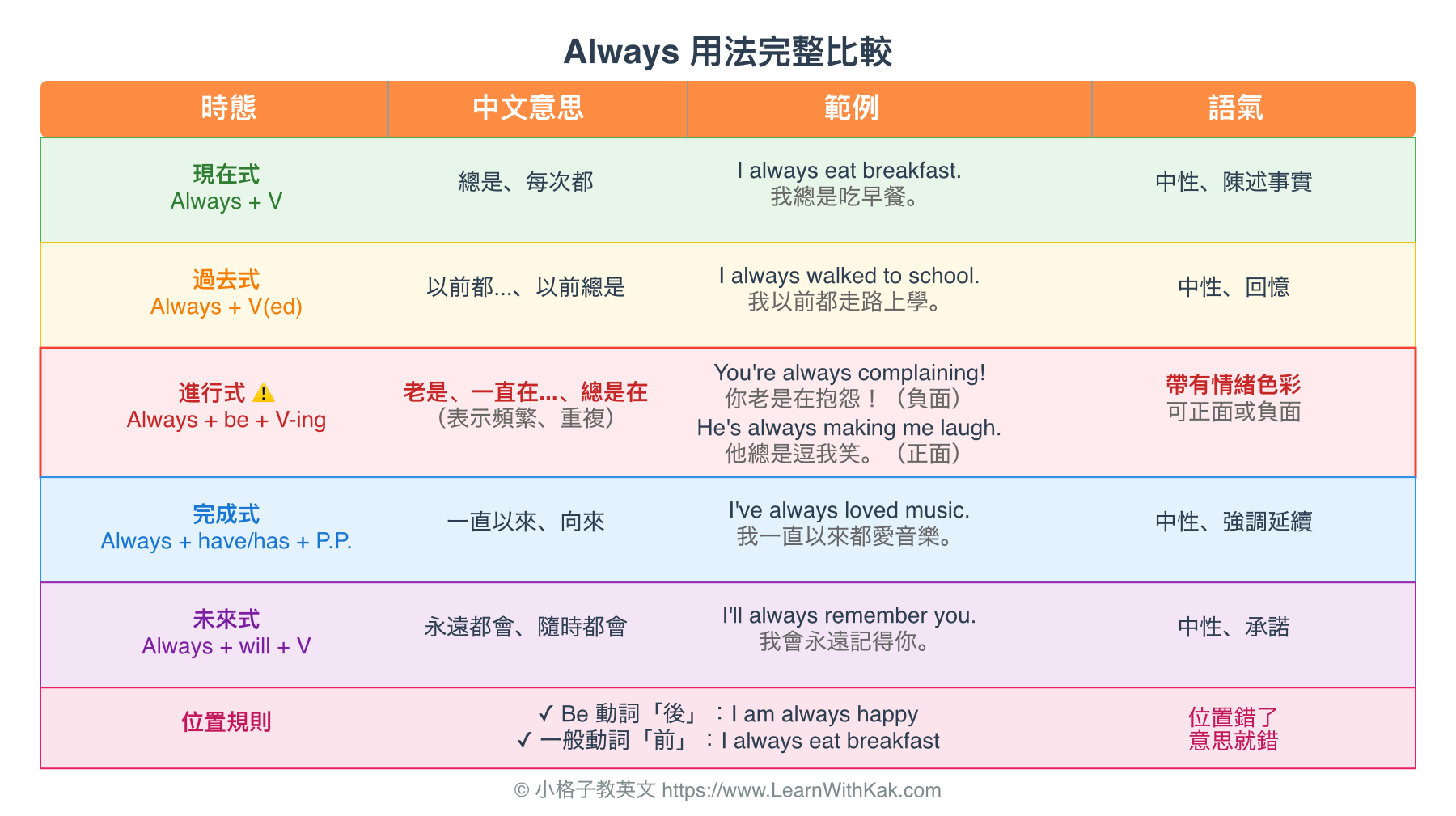
Always 這個字看起來簡單,中文都是「總是」,但放在不同時態、不同位置,意思和語氣完全不同。現在式是中性的「總是」,過去式是回憶「以前都…」,進行式卻變成「老是、一直在…、總是在…」,帶有情緒色彩。位置放錯更慘,”I always am late” 根本是錯的!今天就來完整教你 Always 的所有用法,從基本位置規則到 5 種時態,讓你每次都用對、說得道地!
Always 基本意思和位置規則
基本意思:
- 總是、一直
- 每次都、永遠
- 常常(進行式時)
位置規則(超重要!):
1. 放在 be 動詞「之後」
- ✓ I am always happy.
- ❌ I always am happy.
2. 放在一般動詞「之前」
- ✓ I always eat breakfast.
- ❌ I eat always breakfast.
3. 放在助動詞和主要動詞「之間」
- ✓ I have always loved you.
- ❌ I always have loved you.
記住這三個規則,Always 就不會放錯位置了!
Always 用於現在式(表示習慣、常態)
Always 用於現在式時,表示「總是、每次都」,是中性的陳述事實,沒有特別的情緒。
(1)
A: Do you eat breakfast?
A: 你吃早餐嗎?
B: Yes, I always eat breakfast. It’s the most important meal of the day.
B: 對,我總是吃早餐,那是一天最重要的一餐。
(2)
A: Where does John have lunch?
A: John 在哪裡吃午餐?
B: He always eats in his office. He never goes out.
B: 他總是在辦公室吃,從不出去。
(3)
A: Is this restaurant good?
A: 這家餐廳好嗎?
B: Yeah, it’s always packed. You need to book in advance.
B: 對,總是擠滿人,你需要提前訂位。
(4)
A: Why do you take the bus?
A: 你為什麼搭公車?
B: I always take the bus to work. It’s cheaper than driving.
B: 我上班都搭公車,比開車便宜。
(5)
A: Does she reply to emails quickly?
A: 她回覆 email 很快嗎?
B: Always. She’s very professional.
B: 總是很快,她很專業。
(6)
A: Is your boss strict?
A: 你老闆嚴格嗎?
B: He’s always on time and expects everyone else to be too.
B: 他總是準時,也期待其他人準時。
Always 用於過去式(表示過去習慣)
Always 用於過去式時,表示「以前都…、以前總是…」,常用來回憶過去的習慣。
(7)
A: How did you get to school when you were a kid?
A: 你小時候怎麼上學的?
B: I always walked to school. It was only 10 minutes away.
B: 我以前都走路上學,只要 10 分鐘。
(8)
A: Did your family have any traditions?
A: 你家有什麼傳統嗎?
B: We always had dinner together on Sundays.
B: 我們以前星期天都會一起吃晚餐。
(9)
A: What was your old job like?
A: 你以前的工作怎麼樣?
B: I always worked late. The hours were crazy.
B: 我以前都工作到很晚,工時很瘋狂。
(10)
A: Did you like your previous apartment?
A: 你喜歡你之前的公寓嗎?
B: It was okay, but it was always cold in winter.
B: 還可以,但冬天總是很冷。
(11)
A: What do you remember most about your grandfather?
A: 你對爺爺最深的記憶是什麼?
B: He always told the best stories. I miss him.
B: 他以前總是講最棒的故事,我很想他。
Always 用於進行式(表示頻繁、重複)
Always 用於進行式時,意思變成「老是、一直在…、總是在…」,強調動作**頻繁、重複發生**。這個用法帶有**情緒色彩**,可以是負面(抱怨、不耐煩)也可以是正面(讚美、欣賞)。
(12)
A: You’re always late! This is the third time this week!
A: 你老是遲到!這是這週第三次了!
B: Sorry, I’ll try to be on time tomorrow.
B: 抱歉,我明天會準時。
(13)
A: Why are you so annoyed?
A: 你為什麼這麼煩?
B: My roommate is always making noise. I can’t concentrate!
B: 我室友一直製造噪音,我沒辦法專心!
(14)
A: What’s wrong with your phone?
A: 你手機怎麼了?
B: It’s always freezing! I need to get a new one.
B: 老是當機!我需要換一支新的。
(15)
A: You’re always complaining! Can’t you be more positive?
A: 你老是在抱怨!你不能正面一點嗎?
B: Sorry, I’m just stressed.
B: 抱歉,我只是壓力大。
(16)
A: Why do you like hanging out with Tom?
A: 你為什麼喜歡跟 Tom 出去玩?
B: He’s always making me laugh. He’s so funny!
B: 他總是逗我笑,他超好笑!
(17)
A: Your mom is so sweet!
A: 你媽媽人真好!
B: I know. She’s always helping others.
B: 我知道,她總是在幫助別人。
(18)
A: She’s always checking her phone during meetings.
A: 她開會時一直在滑手機。
B: I know, it’s so rude.
B: 我知道,超沒禮貌。
(19)
A: Why do you look frustrated?
A: 你為什麼看起來很挫折?
B: My computer is always crashing when I’m working on important files.
B: 我處理重要檔案時電腦老是當機。
Always 用於完成式
Always 用於完成式時,表示「一直以來、向來」,強調從過去到現在的延續。
(20)
A: Do you like living in this city?
A: 你喜歡住在這個城市嗎?
B: Yes, I’ve always loved it here.
B: 喜歡,我一直以來都很愛這裡。
(21)
A: Are you interested in art?
A: 你對藝術有興趣嗎?
B: I’ve always been interested in painting since I was a child.
B: 我從小就一直對繪畫有興趣。
(22)
A: How long have you known each other?
A: 你們認識多久了?
B: We’ve always been friends. We grew up together.
B: 我們一直以來都是朋友,一起長大的。
(23)
A: Is she a good cook?
A: 她很會煮飯嗎?
B: Yeah, she’s always been great at cooking.
B: 對,她向來很會煮。
(24)
A: Do you trust him?
A: 你信任他嗎?
B: Yes, he’s always been honest with me.
B: 信任,他一直以來對我都很誠實。
Always 用於未來式和其他
Always 也可以用於未來式,表示「永遠都會、隨時都會」。
(25)
A: Will you remember me?
A: 你會記得我嗎?
B: Of course! I’ll always remember you.
B: 當然!我會永遠記得你。
(26)
A: Can I call you if I need help?
A: 我需要幫助時可以打給你嗎?
B: You can always call me. I’m here for you.
B: 你隨時都可以打給我,我會陪你。
(27)
A: What if things get difficult?
A: 如果情況變困難怎麼辦?
B: Don’t worry. I’ll always support you.
B: 別擔心,我永遠都會支持你。
(28)
A: Will this shop be here next year?
A: 這家店明年還會在嗎?
B: I hope so. It’s always been my favorite.
B: 希望如此,這一直都是我最愛的店。
(29)
A: Can I come visit you?
A: 我可以去拜訪你嗎?
B: You’re always welcome at my place!
B: 我家隨時歡迎你!
Always 相關片語和特殊用法
來看看 Always 的常用片語!
As always
「一如既往、像往常一樣」
(30)
A: How was the meeting?
A: 會議怎麼樣?
B: As always, it ran over time.
B: 一如既往,超時了。
(31)
A: Your presentation was great!
A: 你的簡報很棒!
B: Thanks! As always, you’re too kind.
B: 謝謝!你一如既往地太客氣了。
Always and forever / Forever and always
「永遠、永永遠遠」
(32)
A: Do you promise to love me?
A: 你承諾會愛我嗎?
B: Always and forever.
B: 永永遠遠。
Not always
「不總是、並非每次」
(33)
A: Is she friendly?
A: 她友善嗎?
B: Not always. Sometimes she’s in a bad mood.
B: 不總是,有時候她心情不好。
(34)
A: Does this method work?
A: 這個方法有效嗎?
B: Not always, but it’s worth trying.
B: 不一定,但值得試試。
Almost always
「幾乎總是」
(35)
A: Do you drink coffee in the morning?
A: 你早上喝咖啡嗎?
B: Almost always. Only skip it when I’m running late.
B: 幾乎都會,只有趕時間才不喝。
You can always…
「你隨時可以…」
(36)
A: I don’t know what to do.
A: 我不知道該怎麼辦。
B: You can always ask for help if you need it.
B: 你需要的話隨時可以求助。
下次用 Always 別再放錯位置了!
如果你喜歡這篇文章的話,可以追蹤我們的Threads和Facebook唷!