
朋友傳訊息說「既然你都到台北了,就來找我吃飯啊!」想用英文回一句類似的話,打出來卻是 Since you’re in Taipei, so come eat with me。看起來好像沒問題,其實這句有個台灣人很常犯的錯。「既然」英文最常見的說法是 Since 和 Now that,但每個說法的語感不太一樣,後面怎麼接也有眉角,用錯了對方還是聽得出來怪怪的。下面用聊天、上班、出去玩會遇到的對話,把這幾個說法整理給你。
既然和既然如此差在哪
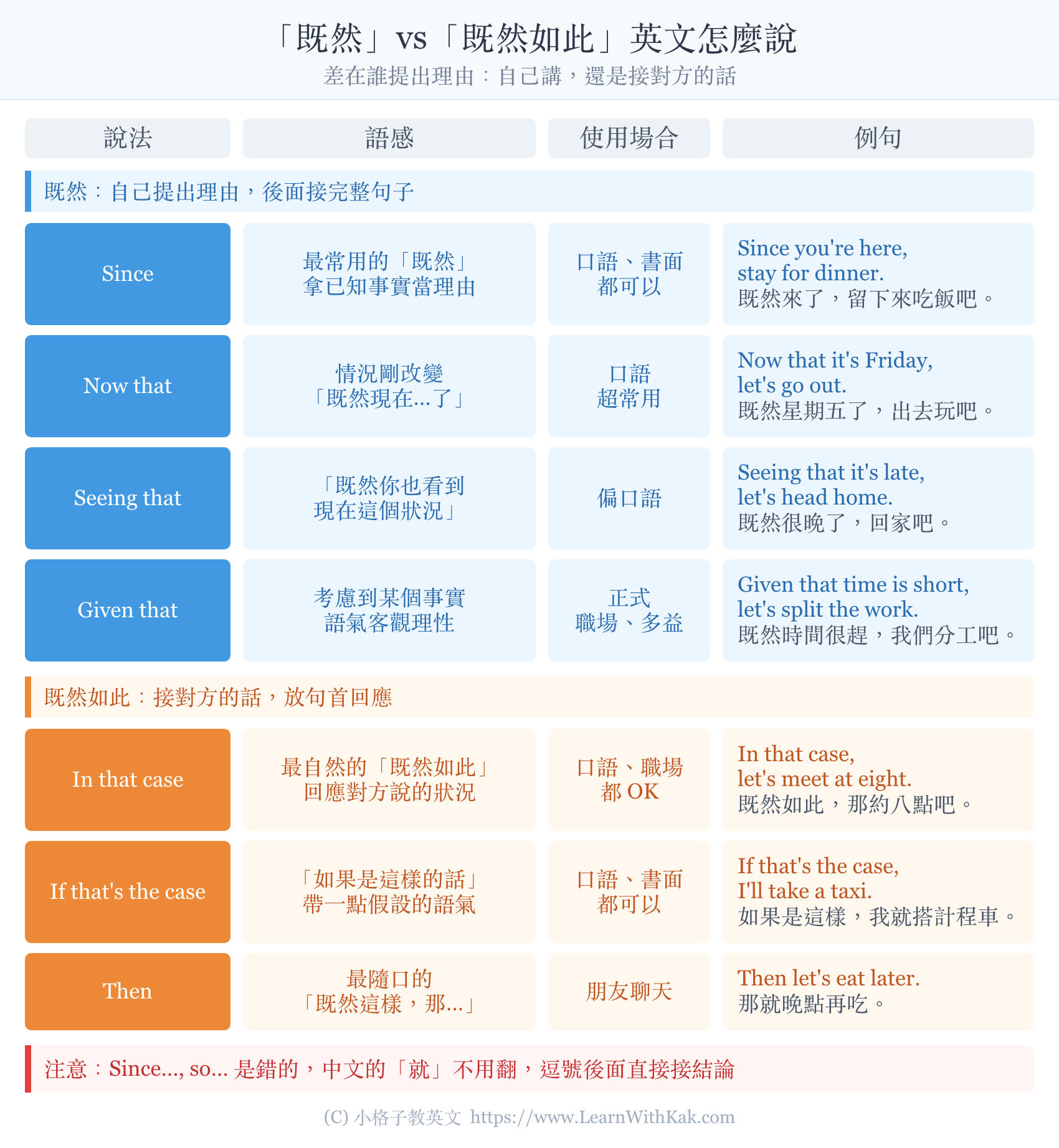
先講結論:「既然」英文用 Since、Now that、Seeing that、Given that;「既然如此」英文用 In that case、If that’s the case、Then。
這兩個中文看起來很像,差別在於「理由是誰講的」。「既然」是連接詞,後面要接一個原因,通常是你自己把前提講出來,再帶出結論,例如「既然下雨了,我們就別出門了」。「既然如此」則是在接話,「如此」指的是對方剛剛說的那件事,你根據那件事給回應。
所以英文的分工也很清楚。Since、Now that 這組後面一定要接完整句子,把理由講出來;In that case 這組自己就能放在句首,因為理由對方已經講過了,你直接說結論就好。
(1) Since it’s raining, let’s just order delivery tonight.
既然下雨了,我們今晚就叫外送吧。
(2)
A: I have to work late tonight.
A: 我今晚要加班。
B: In that case, let’s grab dinner another day.
B: 既然如此,那我們改天再吃飯吧。
(3) Now that you’ve got a car, you can drive us to Kenting this summer.
既然你有車了,今年夏天就可以載我們去墾丁了。
(4)
A: The café we wanted to go to is closed on Mondays.
A: 我們想去的那間咖啡廳週一公休。
B: Then let’s try the new brunch place near the MRT station.
B: 既然這樣,那就去捷運站附近那間新開的早午餐店吧。
Since
Since 是「既然」英文裡最常用、最萬用的說法。它後面接的通常是雙方都知道的事實,你拿這個事實當理由,帶出一個建議或決定。語氣很自然,聊天、傳訊息、寫 email 都可以用。
Since 放句首或句中都行。放句首時,理由講完加逗號,例如 Since you’re here, …;放句中就不用逗號,例如 Let’s leave early since traffic will be bad。
要注意的是,since 還有「自從」的意思。判斷方法很簡單:since 後面如果是時間點(since 2020、since last week),或整句用的是完成式,通常是「自從」;如果後面接的是一個理由,主要子句是建議或決定,那就是「既然」。像 I’ve lived here since I was ten 是「我從十歲就住這裡」,Since you’re free, help me move this weekend 則是「既然你有空,這週末來幫我搬家」。
(5)
A: I’m heading to 7-Eleven. Want anything?
A: 我要去 7-Eleven,你要買什麼嗎?
B: Since you’re going anyway, could you grab me an iced latte?
B: 既然你都要去了,可以幫我買一杯冰拿鐵嗎?
(6) Since we’re already in Tainan, we have to try the beef soup before we leave.
既然都來台南了,走之前一定要吃牛肉湯。
(7)
A: I finished all my reports early.
A: 我的報告全部提早做完了。
B: Since you have some free time, can you look over these slides for me?
B: 既然你有空,可以幫我看一下這份簡報嗎?
(8) Since nobody wants to cook, let’s just get hot pot.
既然大家都不想煮,那就去吃火鍋吧。
(9)
A: The meeting got moved to Thursday.
A: 會議改到星期四了。
B: Since we have more time, let’s add last month’s sales numbers too.
B: 既然多了一點時間,我們把上個月的業績數字也加進去吧。
Now that 用法
Now that 也是「既然」,但它多了一層意思:情況剛剛改變了。某件事完成了、某個狀態變了,你根據這個新狀況說接下來要怎麼做。中文可以想成「既然現在…了,那就…」。
很多人以為 Now that 比較正式,其實它在口語裡超常見,朋友聊天時一直會聽到。講快一點的時候,that 甚至常常直接省略,變成 Now you’ve got a car, …。
Now that 用法有兩個重點。一個是後面一定要接完整句子(主詞加動詞),不能只接名詞。另一個是前面講的事情通常是最近才發生的,例如拿到駕照、搬新家、專案結束。如果那件事一直都是這樣,沒有改變,用 Since 會比較自然。比較一下:Since you live near the office 只是單純說你住得近;Now that you live near the office 就帶有「你搬家之後」的感覺。
(10)
A: I finally got my driver’s license!
A: 我終於拿到駕照了!
B: Congrats! Now that you can drive, we should totally do a road trip this summer.
B: 恭喜!既然你會開車了,我們今年夏天一定要來個公路旅行。
(11)
A: How are things at the new apartment?
A: 新家住得怎麼樣?
B: Pretty good! Now that I live closer to work, I have so much more free time.
B: 還不錯!現在住得離公司近,多了超多空閒時間。
(12) Now that everyone’s here, let’s get started.
既然大家都到了,我們開始吧。
(13)
A: Did you tell your parents about the job offer?
A: 你有跟爸媽說工作錄取的事嗎?
B: Yeah. Now that they know, I feel so much better. Keeping it a secret was killing me.
B: 說了。既然他們都知道了,我整個輕鬆很多,一直瞞著真的好痛苦。
(14) Now that finals are over, I’m going to sleep for twelve hours straight.
既然期末考考完了,我要連睡十二個小時。
Seeing that、Given that
這兩個也都可以當「既然」,差別在使用場合。
Seeing that 比較口語,字面上是「看到…這件事」,帶有「既然你也看到現在這個狀況」的感覺。日常聊天還常會聽到更隨興的 seeing as,意思一樣。
Given that 就正式多了,意思是「考慮到…、既然…」。它很適合用在職場 email、報告或開會,先講出一個大家都認同的事實,再帶出結論,語氣客觀又有條理。多益閱讀也很常看到它。
兩個後面都接完整句子,放句首時,理由講完記得加逗號。
(15) Seeing that everyone’s tired, maybe we should call it a day.
既然大家都累了,我們今天就先到這裡吧。
(16)
A: I’ve used this app way more than you have.
A: 這個 app 我用得比你多太多了。
B: Seeing as you’re the expert, you can set it up for me.
B: 既然你是專家,那就交給你幫我設定吧。
(17) Given that the budget has been approved, we can start hiring next month.
既然預算已經通過了,我們下個月就可以開始招人。
(18)
A: The client wants the proposal by Friday.
A: 客戶要我們星期五前交提案。
B: Given that the deadline is so tight, let’s split the work between the three of us.
B: 既然時間這麼趕,我們三個人分工吧。
(19) Seeing that it’s your birthday, dinner’s on me tonight.
既然是你生日,今晚我請客。
既然…就,後面別加 so
這是台灣人講「既然」英文時最常犯的錯。中文習慣說「既然…就…」,所以很多人會直接翻成 Since…, so… 或 Since…, then…。
問題在於 Since 本身已經是連接詞,已經把兩個句子接在一起了,後面再加 so 等於用了兩個連接詞,文法上不成立。這跟「雖然…但是…」不能翻成 Although…, but… 是同一個道理,Although、Though 和 Despite 的用法也常卡在這裡。
記一個簡單原則:中文的「就」,英文不用翻出來。Since 那句講完,逗號後面直接接結論就好。
Since…, then… 也盡量別用。母語人士講話偶爾會冒出來,但聽起來有點拖,寫在 email 裡更容易被當成錯誤。如果你真的很想用 so,就把 Since 拿掉,改成 It’s raining, so let’s stay in,這樣完全沒問題。
(20)
不正確:Since you’re already here, so you can help me carry these boxes.
正確:Since you’re already here, you can help me carry these boxes.
既然你都來了,就幫我搬一下這些箱子吧。
(21)
不正確:Since the store is closed, then we’ll come back tomorrow.
正確:Since the store is closed, we’ll come back tomorrow.
既然店關了,我們明天再來吧。
(22)
A: I don’t really feel like going out tonight.
A: 我今晚不太想出門。
B: Since you’re staying in, want to binge that new Netflix show together?
B: 既然你要待在家,要不要一起追那部 Netflix 新劇?
(23) The concert tickets are sold out, so let’s just watch the livestream.
演唱會門票賣完了,那我們就看直播吧。
(24)
A: My flight got delayed by three hours.
A: 我的班機延誤三個小時。
B: Now that you’re stuck at the airport, you might as well get a proper meal.
B: 既然被困在機場,乾脆好好吃一頓吧。
In that case
In that case 中文就是「既然如此」、「既然這樣」、「那這樣的話」,它是「既然如此」英文裡最常用、最自然的說法。
In that case 的重點在於接話。對方先講了一個狀況,你用 In that case 開頭,意思是「根據你剛講的,那我們就…」,聽的人馬上知道你在回應他,不是突然換話題。
它的正式程度剛剛好,跟朋友聊天可以用,開會、回客戶 email 也完全不會怪。通常放在句首,後面加逗號,再接你的建議或決定。
那跟 So 差在哪?So 比較像一般的「所以」,接在自己的話後面也可以;In that case 一定是在回應某個狀況,而且那個狀況通常是新資訊,或是跟原本預期不一樣。
(25)
A: I’m running late. Traffic is terrible right now.
A: 我會晚到,現在塞車塞得很誇張。
B: In that case, let’s just push the meeting back 30 minutes.
B: 既然這樣,我們就把會議延後 30 分鐘吧。
(26)
A: I don’t eat meat.
A: 我不吃肉。
B: Oh! In that case, you have to try the mushroom risotto. It’s amazing.
B: 喔!這樣的話,你一定要試試蘑菇燉飯,超好吃。
(27)
A: My laptop charger broke and I can’t finish the presentation tonight.
A: 我的筆電充電器壞了,今晚沒辦法把簡報做完。
B: In that case, use mine. I’m not using it right now anyway.
B: 那用我的吧,反正我現在也沒在用。
(28)
A: The venue cancelled on us last minute.
A: 場地臨時取消了。
B: In that case, we should probably postpone the event instead of scrambling for a new place.
B: 既然如此,我們可能應該延期,不要急著找新場地。
(29)
A: I’ve never been to that restaurant before.
A: 我從來沒去過那間餐廳。
B: In that case, you’re in for a treat. Their pasta is incredible.
B: 那你有口福了,他們的義大利麵超讚。
If that’s the case、If so、Then
「如果是這樣的話」英文可以說 If that’s the case。它跟 In that case 意思很接近,但多了一點假設的味道:你不確定對方說的是不是真的,或那個狀況還沒發生,所以先說「如果真的是這樣,那就…」。這種帶條件的句子,時態搭配跟一般的 if 條件句一樣。
If so 更精簡,意思是「如果是的話」,常接在一個問題或不確定的事後面,職場 email 裡很常見。
Then 則是最隨口的「既然這樣,那…」。朋友聊天超好用,放在句首說 Then let’s… 就可以了,不過寫正式 email 時,還是用 In that case 比較好。
(30)
A: I heard the MRT might be down tomorrow morning.
A: 我聽說明天早上捷運可能會停駛。
B: If that’s the case, I’ll just take a taxi to work.
B: 如果是這樣的話,我就搭計程車去上班。
(31) The client may ask for a discount. If so, we can offer free shipping instead.
客戶可能會要求打折。如果是這樣,我們可以改成提供免運。
(32)
A: I’m not hungry yet.
A: 我還不餓。
B: Then let’s walk around the night market first and eat later.
B: 那就先逛一下夜市,晚點再吃。
(33)
A: I think I left my charger at the hotel.
A: 我好像把充電器忘在飯店了。
B: If that’s the case, let’s call the front desk and ask them to hold it for you.
B: 如果是這樣的話,我們打給櫃台,請他們先幫你收著。
(34) Please let me know if you’re joining us for dinner. If so, I’ll book a table for eight.
你會來吃晚餐的話跟我說一聲。如果會,我就訂八個人的位子。
That being said 不是既然如此
很多人會把 That being said 當成「既然如此」,因為它看起來也是在承接前面的話。但它的意思其實是「話雖如此、不過」,是轉折,不是因果。That said 和 Having said that 也是同樣的意思。
分辨方法很簡單:In that case 後面講的是「所以要怎樣」,That being said 後面講的是「但還有另一面」。方向完全相反,用錯的話,對方會搞不清楚你到底贊不贊成。
(35) I know you’re busy with work. That being said, you still need to make time for yourself.
我知道你工作很忙。話雖如此,你還是要留點時間給自己。
(36) The project has some challenges. That being said, I think it’s still worth doing.
這個專案有一些難關,不過我覺得還是值得做。
(37)
A: The hotel reviews aren’t great.
A: 這間飯店的評價不太好。
B: True. That being said, the location is perfect and the price is hard to beat.
B: 是沒錯。不過它地點超好,價格也很難找到更便宜的。
(38)
A: You said you wanted to save money this month.
A: 你不是說這個月要省錢嗎?
B: I know. That being said, this sale is too good to pass up. It’s 70% off!
B: 我知道。但這個特價太划算了,不買可惜,打三折欸!
常見問題
既然後面可以加 so 嗎?
不行。「既然」英文用 Since 的時候,Since 已經負責把兩句話接起來,後面再加 so 就重複了。中文的「就」不用翻,逗號後面直接講結論。
(39) Since it’s your first time here, let me show you around.
既然你第一次來,我帶你到處看看吧。
In that case 和 So 差在哪?
So 是一般的「所以」,自己講理由再接結論也能用。In that case 一定是在回應對方剛說的狀況,接話的感覺比較明顯。
(40)
A: The printer’s broken again.
A: 印表機又壞了。
B: In that case, I’ll just send everyone the PDF.
B: 既然這樣,我就直接把 PDF 寄給大家。
Since 是既然還是自從?
看後面接什麼。接時間點或搭配完成式,通常是「自從」;接一個理由,主要子句是建議或決定,就是「既然」。
(41) I haven’t seen her since graduation, but since she’s back in town, let’s all get together.
我從畢業後就沒見過她了,不過既然她回來了,我們大家聚一下吧。
「既然如此」英文可以只說 Then 嗎?
可以,而且朋友聊天時很常見。只是 Then 比較隨口,寫正式 email 或跟主管講話時,用 In that case 會比較得體。
(42)
A: I can’t make it on Saturday.
A: 我星期六沒辦法。
B: Then how about Sunday?
B: 那星期天呢?
下次想說「既然」,先想一下是你自己提出理由,還是在接對方的話,就知道要用 Since 還是 In that case 了。記得 Since 後面別再加 so,講起來會自然很多。
延伸閱讀:【Therefore 用法解析:跟 So、Thus 差在哪?別再搞混】
如果你喜歡這篇文章的話,可以追蹤我們的 Threads 和 Facebook 唷!