
「解決問題」英文最直覺的說法是 solve the problem,這樣講完全沒錯,只是真的在外商上班或跟老外聊天,會發現大家換字換得很勤。東西壞了說 fix,接到客訴說 handle,兩個部門吵起來要 resolve,寫給主管的報告則常看到 address。用對字,整句話的感覺差很多。下面把每個字的語感、常見搭配和台灣人最常犯的錯一個一個拆開來講,全部附上生活化的對話例句。
Solve:找出答案
Solve 的核心是「找到答案」,所以最適合用在有解法、有答案的事情,像 problem、puzzle(謎題)、mystery、case(案子)。日常講 “We need to solve this problem” 很自然,一點都不學術,講「解決問題」英文最基本的就是它。
不過 solve 跟 issue、complaint 這類字就沒那麼合。Issue 比較像「需要處理的狀況」,不一定有單一答案,老外通常會說 resolve an issue。客訴也一樣,你不是在「解題」,而是要把客人安撫好、把事情處理掉。
另外 problem 是可數名詞,前面要有冠詞或改成複數,solve the problem、solve a problem、solve problems 都可以,光講 solve problem 就少了東西。
(1)
A: My phone keeps freezing every time I open Instagram.
A: 我手機每次開 IG 就當住。
B: Try clearing the cache. That solved the problem for me.
B: 你清一下快取,我之前就是這樣解決的。
(2)
A: Have you guys finished that escape room yet?
A: 你們那個密室逃脫破關了沒?
B: Almost. We solved every puzzle except the last one.
B: 快了,除了最後一關,其他謎題都解開了。
(3)
A: Did the police ever solve that case?
A: 那個案子警察後來有破案嗎?
B: Yeah, they caught the guy last week.
B: 有啊,上禮拜抓到人了。
(4) Throwing more money at it won’t solve anything.
砸再多錢下去也解決不了任何事。
Fix:把壞掉的東西修好
Fix 就是「修好、改好」,很實際、很有動手感。東西壞了、系統當了、程式有 bug,用 fix 最直接。fix the problem 中文就是「把問題修好」,重點在讓壞掉的東西恢復正常。
Fix 也很常用在生活中的小麻煩,像打錯的資料、寄錯的檔案,一句 “I’ll fix it” 就是「我來改」。租房子時熱水器壞掉要跟房東報修,或住飯店冷氣不冷要請櫃台處理設備故障,fix 幾乎每句都會出現。
「排除問題」英文:troubleshoot
如果不是直接修好,而是一步一步找出哪裡出錯,英文會說 troubleshoot,也就是中文的「排除問題」或「故障排除」。IT 部門和客服最愛用這個字,過去式是 troubleshot。
(5)
A: The printer’s jammed again.
A: 印表機又卡紙了。
B: Ugh. I’ll fix it after lunch.
B: 唉,我吃完午餐再來弄。
(6)
A: The checkout button on our website isn’t working.
A: 我們網站的結帳按鈕壞了。
B: The engineers are on it. They should have it fixed within an hour.
B: 工程師在處理了,一個小時內應該會修好。
(7)
A: You spelled the client’s name wrong in that email.
A: 你那封 email 把客戶名字拼錯了。
B: Oh no, thanks! I’ll fix it before I hit send.
B: 糟糕,謝啦!我寄出前改掉。
(8)
A: My laptop won’t connect to the office Wi-Fi.
A: 我筆電連不上公司 Wi-Fi。
B: Let’s troubleshoot it. Have you tried restarting the router?
B: 我們來排除一下問題,你有試過重開路由器嗎?
(9) IT spent the whole morning troubleshooting the network issue.
IT 整個早上都在排除網路問題。
「處理問題」英文:handle 還是 deal with
「處理問題」英文最常聽到的就是 handle 和 deal with。這兩個字都不一定代表問題完全消失,重點在「去面對、去應付」。
Handle 帶有一種「交給我,我搞得定」的掌控感,特別適合用在突發狀況、客訴、難搞的人。這個字的用法其實很多,handle 除了處理還能指門把和 IG 帳號,這裡就專心講處理問題的用法。
Deal with 比較中性、比較口語,常常帶一點「這件事很煩,但總得面對」的無奈感。講到難搞的人、壓力、雜事,deal with 特別常見。
文法上要注意一件事:deal 後面一定要接 with,handle 後面則直接接受詞,不用加 with。
(10)
A: There’s a customer at the front desk yelling about a refund.
A: 櫃台有個客人在大吼要退款。
B: I’ll handle it. Can you watch my station for a sec?
B: 我來處理,你幫我顧一下位子。
(11)
A: Are you sure you can handle the launch event by yourself?
A: 發表會你一個人確定搞得定嗎?
B: Totally. I’ve already done three of these.
B: 沒問題,我已經辦過三場了。
(12)
A: She handled that awkward question from the CEO really well.
A: 執行長問那個尷尬問題,她回得超好。
B: Yeah, she didn’t even look nervous.
B: 對啊,她看起來一點都不緊張。
(13)
A: My roommate never washes his dishes.
A: 我室友從來不洗碗。
B: That’s so annoying. How do you deal with it?
B: 也太煩,那你都怎麼處理?
(14)
A: I can’t deal with this right now. Can we talk tomorrow?
A: 我現在沒辦法處理這件事,我們明天再講好嗎?
B: Sure, get some rest.
B: 好,你先休息。
(15) Every job has its annoying parts. You just have to deal with them.
每份工作都有煩人的地方,就是得面對。
Resolve:把事情徹底解決
「解決」英文如果要講「問題真的結束了、不會再回來」,resolve 是最有份量的字。它常跟 issue、conflict、complaint、dispute(糾紛)搭配,客服信和公司公告超常見,也是多益愛考的字,resolve the issue promptly 這種搭配一定要熟。
「化解」英文也常用 resolve,化解衝突就是 resolve a conflict。如果是化解誤會,口語比較常說 clear up a misunderstanding。
很多人會搜 solve resolve 差別,簡單講:solve 的重點是「解開」,找到答案;resolve 的重點是「落幕」,讓爭議或狀況結束。所以數學題用 solve,跟同事的爭執用 resolve。客人寫信來抱怨時,公司要 resolve the complaint(順帶一提,complain 是動詞、complaint 才是名詞,寫 email 很容易搞混)。
(16)
A: Did you and Jenny ever talk things out?
A: 你跟 Jenny 後來有把話講開嗎?
B: Yeah, we grabbed coffee and resolved everything.
B: 有,我們去喝了杯咖啡,事情都化解了。
(17)
A: I’ve emailed customer service three times about my missing package.
A: 我的包裹不見了,已經寫信給客服三次。
B: Did they resolve it?
B: 他們有解決嗎?
(18)
A: The two teams keep fighting over the budget.
A: 兩個團隊一直在吵預算。
B: Our manager wants to resolve it before the end of the quarter.
B: 我們經理想在這一季結束前把這件事解決。
(19) We apologize for the inconvenience and will resolve the issue as soon as possible.
造成不便很抱歉,我們會盡快解決這個問題。
(20) The landlord and the tenant resolved the dispute without going to court.
房東跟房客沒鬧上法院就把糾紛解決了。
Address:正式場合的處理
Address 當動詞是「針對某個問題採取行動」,正式又專業,開會、報告、公司聲明很常看到。它強調的是「正視這個問題」,不一定已經解決,但代表你有在處理、不是放著不管。
「改善問題」英文很多時候就是 address,例如 address the delays(處理延遲的問題)。想講「從根本解決問題」,可以用 address the root cause,或比較口語的 get to the root of the problem。用英文主持會議的時候,”I’d like to address…” 也是帶出議題的好用開頭。
(21)
A: Customers keep complaining that our app is too slow.
A: 客人一直抱怨我們的 app 太慢。
B: We’ll address that in the next update.
B: 下次更新會處理這個問題。
(22)
A: Is there anything else we need to cover in this meeting?
A: 這場會議還有什麼要討論的嗎?
B: Yes, I’d like to address the delays in the shipping schedule.
B: 有,我想談一下出貨進度延遲的問題。
(23)
A: Hiring more people is just a quick fix.
A: 多請人只是治標而已。
B: Agreed. We need to address the root cause.
B: 同意,我們得從根本解決。
(24) Thanks for raising your concerns. We’ll address each one by Friday.
謝謝你提出這些疑慮,我們週五前會一一處理。
Sort out、work out、figure out
跟朋友聊天或跟同事私下講話,老外超常用這三個片語動詞,聽起來輕鬆又自然。
Sort out 是把亂糟糟的事情整理好、搞定,英式英文特別愛用,但美國人也很常講。Work out 是事情「最後有好結果」或「想出辦法」,像 things worked out 就是事情順利解決了。Figure out 則是動腦想出答案或原因,跟推理、想通某件事的感覺很像。
(25)
A: Our flight just got canceled. What do we do?
A: 我們班機剛被取消,怎麼辦?
B: Don’t panic. I’ll talk to the airline and sort it out.
B: 別慌,我去跟航空公司講,把它搞定。
(26)
A: Did you sort out the problem with your bank account?
A: 你銀行帳戶的問題處理好了嗎?
B: Yeah, it was just a typo in my address.
B: 好了,只是地址打錯字而已。
(27)
A: How did the apartment hunt go?
A: 你找房子的事後來怎樣?
B: It all worked out. I found a place right by the MRT.
B: 都順利解決了,我找到捷運站旁邊的房子。
(28)
A: I still can’t figure out why my code won’t run.
A: 我還是想不通為什麼我的程式跑不動。
B: Send it over. Two heads are better than one.
B: 傳給我,兩個人一起看比較快。
(29) Don’t worry, we’ll work something out.
別擔心,我們會想出辦法的。
「問題解決了」英文怎麼說
跟主管回報、在群組通知大家,「問題解決了」英文有幾句很好用的固定說法,直接拿去用就對了:
- Problem solved! 輕鬆口語,有種「搞定收工」的爽感。
- It’s fixed now. 東西修好了,最日常的說法。
- It’s been resolved. 比較正式,客服回信、工作群組很常用。
- All sorted. 口語、簡短,英式英文味道比較重。
- We’re all set. 「都弄好了、沒問題了」,美國人超愛講。
這幾句很適合在回報工作進度的時候用,比只說 “Done” 清楚多了。
(30)
A: Is the projector working now?
A: 投影機好了嗎?
B: Yep, it’s fixed. It was just a loose cable.
B: 好了,只是線鬆掉而已。
(31)
A: Any update on the login issue?
A: 登入的問題有新進度嗎?
B: It’s been resolved. Users can log in normally again.
B: 已經解決了,使用者可以正常登入了。
(32)
A: I couldn’t find a charger, so I borrowed one from the front desk.
A: 我找不到充電器,就跟櫃台借了一個。
B: Problem solved!
B: 問題解決!
(33)
A: Did you get all your visa paperwork done?
A: 你簽證文件都弄好了嗎?
B: Yeah, I’m all set.
B: 好了,我都搞定了。
「解決方法」英文:solution、fix、workaround
「解決方法」英文最標準的是 solution,「解決方案」也是它。口語上 fix 也能當名詞,quick fix 就是治標不治本的快速解法。Workaround 則是「先繞過去的暫時解法」,問題還在,但先找條路避開,工程師超常講。
要注意 solution 後面接 to,是 a solution to the problem,不是 a solution of the problem。
(34)
A: We can’t fit everyone in one car.
A: 一台車坐不下所有人。
B: Easy solution. Let’s just get two Ubers.
B: 簡單,叫兩台 Uber 就好。
(35)
A: Is there a permanent fix for this bug?
A: 這個 bug 有真正的修法嗎?
B: Not yet, but we’ve got a workaround for now.
B: 還沒,但我們先有暫時的解法。
(36)
A: The library’s closed, and I need to print my resume.
A: 圖書館關了,可是我要印履歷。
B: There’s a way around that. The convenience store has printers.
B: 有別的辦法啊,便利商店就能印。
(37) I’m not looking for a quick fix. I want a real solution to the problem.
我要的不是暫時的解法,是能真正解決問題的方法。
台灣人最常犯的錯
中文一個「問題」,英文其實分好幾種。Problem 是麻煩、要解決的問題;question 是要回答的問題;issue 是需要處理的狀況或議題,語氣比 problem 委婉,所以職場上很愛用;trouble 是「麻煩、困擾」,通常不可數。下面這幾個錯誤,很多都是從中文直翻來的。
(38)
錯誤:I solved problem yesterday.
正確:I solved the problem yesterday.
我昨天把問題解決了。
(39)
錯誤:Can you solve my question?
正確:Can you answer my question?
你可以回答我的問題嗎?
(40)
錯誤:I’ll deal the problem tomorrow.
正確:I’ll deal with the problem tomorrow.
我明天再處理這個問題。
(41)
錯誤:She handled with the situation really well.
正確:She handled the situation really well.
她把狀況處理得很好。
(42)
錯誤:We need a solution of this.
正確:We need a solution to this.
我們需要一個解決辦法。
履歷和面試這樣寫
寫英文履歷的時候,動詞用過去式、直接放句首,不用寫 I。除了 resolved 和 troubleshot,tackle 也很好用,意思是「主動去處理棘手的問題」,聽起來很有行動力。另外 “Tell me about a time you solved a problem at work.” 這題在外商面試幾乎必考,回答時記得講清楚問題、你做了什麼、結果如何。
(43) Resolved 30+ customer complaints per week with a 95% satisfaction rate.
每週處理超過 30 件客訴,滿意度達 95%。
(44) Troubleshot network issues for an office of 80 employees.
為 80 人的辦公室排除網路問題。
(45) Tackled recurring shipping delays by redesigning the inventory process.
重新設計庫存流程,處理反覆出現的出貨延遲問題。
(46)
A: Tell me about a time you solved a problem at work.
A: 說說你在工作上解決問題的經驗。
B: Our team kept missing deadlines, so I set up weekly check-ins. We haven’t missed one since.
B: 我們團隊一直趕不上截止日,所以我設了每週進度會議,之後就沒再延誤過。
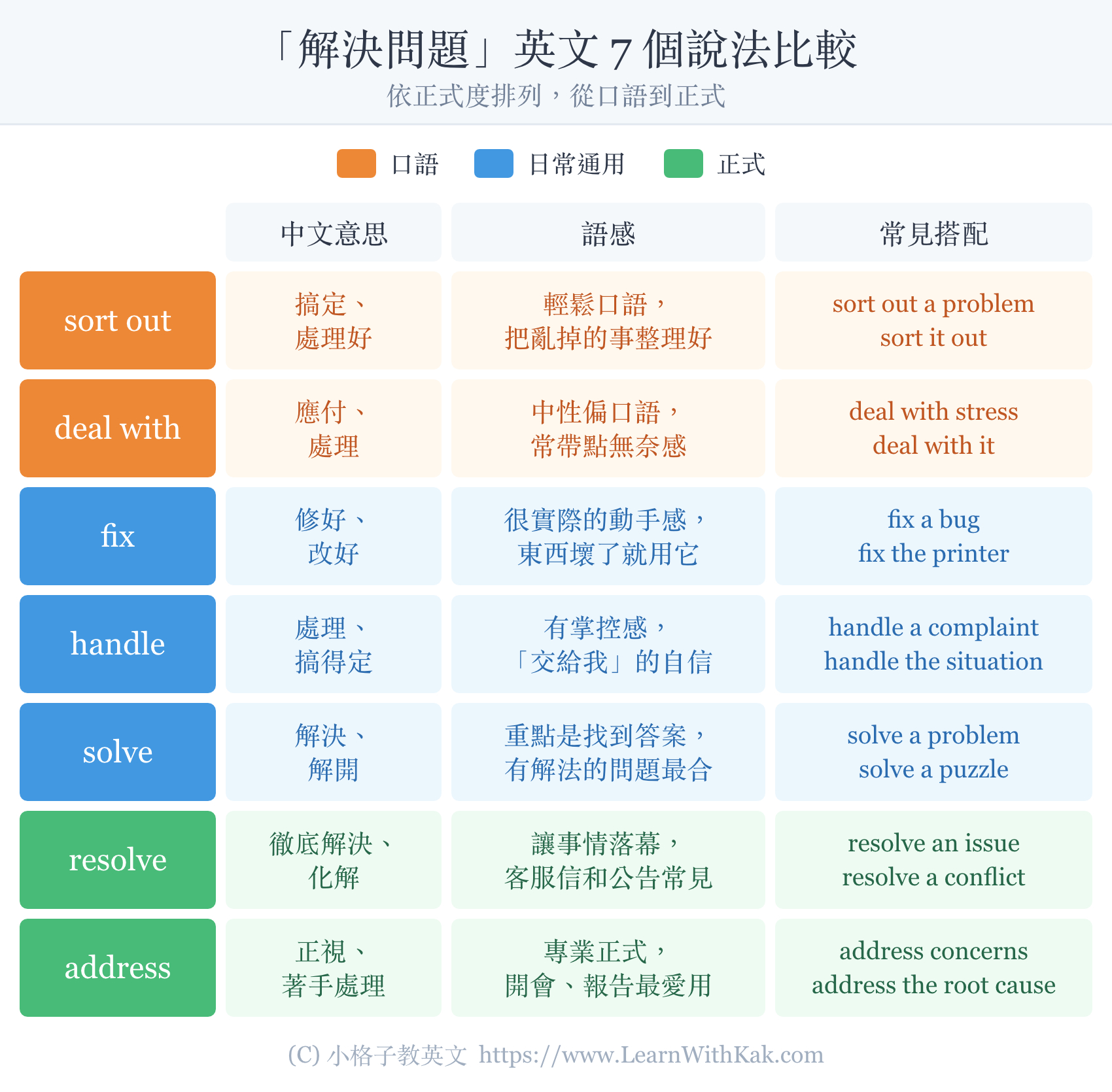
一張表比較
「解決」英文的說法這麼多,最簡單的分法就是看正式度:sort out 和 deal with 偏口語,fix、handle、solve 日常通用,resolve 和 address 比較正式。
常見問題
Solve 和 resolve 差在哪?
Solve 是找到答案,適合有解法的 problem、puzzle;resolve 是讓爭議或狀況結束,適合 issue、conflict、complaint。比較正式的場合,resolve 通常更自然。
「處理問題」英文用 handle 還是 deal with?
兩個都可以。Handle 有「我搞得定」的掌控感,適合工作場合;deal with 比較口語,常帶點無奈。記得 deal 後面要加 with,handle 不用。
「問題解決了」英文怎麼說?
口語可以說 Problem solved! 或 It’s fixed now.,正式一點用 It’s been resolved.,想表示一切都弄好了可以說 We’re all set.
挑對字的關鍵其實就是看場景:東西壞了用 fix,臨時狀況用 handle,吵架和客訴用 resolve,正式報告用 address。下次開口前先想一下你在處理什麼,自然就知道要用哪個字。
延伸閱讀:【Handle 中文不只「處理」!搞定、門把、IG帳號用法差超多】
如果你喜歡這篇文章的話,可以追蹤我們的 Threads 和 Facebook 唷!