
你是不是覺得 Rather than 跟 Instead of 可以隨便換?這兩個看起來都是「而不是」的意思,應該差不多吧?錯!其實 Rather than 和 Instead of 的差別超關鍵,一個強調「偏愛、選擇」,一個強調「取代、替換」,用錯的話意思會完全歪掉,超尷尬的。搞懂差異、文法小陷阱,還有台灣人最常犯的混用錯誤,讓你不再亂用、用得更精準!
Rather than — 強調「偏愛、選擇」的比較
Rather than 的意思是「寧可⋯而不要⋯」、「比起⋯更喜歡⋯」,重點在於強調「主動選擇」和「偏好」。
這個片語帶有很明顯的「我更傾向於A,所以不選B」的語感。你在比較兩個選項,然後表達你的 preference(偏好)。語氣是主觀的、有態度的,不是單純陳述事實。
比如說,”I prefer to walk rather than take the bus”(我寧可走路也不要搭公車),這句話強調的是「我的選擇」,我主動選擇走路,因為我比較喜歡走路,而不是被迫的或隨便的替換。
Rather than 常用在表達個人喜好、做決定、展現態度的時候。它讓聽的人知道「這是我經過比較後的選擇」,不是隨便說說。在職場上,用 Rather than 可以讓你的建議聽起來更有立場、更有思考過。
(1)
A: Should we email the client or call them?
A: 我們應該寄 email 給客戶還是打電話?
B: I’d rather call than email. It’s more personal and we can get immediate feedback.
B: 我寧可打電話也不要寄 email。比較有人情味,而且可以馬上得到回饋。
(2)
A: Why did you choose this approach?
A: 你為什麼選擇這個方法?
B: I’d rather take a slow, careful approach than rush and make mistakes.
B: 我寧可用緩慢、謹慎的方法,也不要匆忙然後犯錯。
(3) She prefers to work independently rather than in a team. That’s just her style.
她比較喜歡獨立工作而不是團隊合作。這就是她的風格。
(4)
A: Are you going to the networking event tonight?
A: 你今晚會去社交活動嗎?
B: Nah, I’d rather stay home and recharge than force small talk all evening.
B: 不了,我寧可待在家充電,也不要整晚硬聊天。
(5) I’d rather be honest and risk offending someone than lie to keep the peace.
我寧可誠實然後可能得罪人,也不要為了維持和平而說謊。
(6)
A: Do you want to present the findings or should I?
A: 你要報告發現還是我來?
B: You do it. I’d rather support from the sidelines than be in the spotlight.
B: 你來吧。我寧可在旁邊支援,也不要站在聚光燈下。
Instead of — 強調「取代、替換」的動作
Instead of 的意思是「代替」、「不是⋯而是⋯」,重點在於強調「用A取代B」的替換動作。它比較客觀、中性,只是在陳述「用這個不用那個」,沒有強烈的偏好語氣。
Instead of 用法很直接:Instead of + 名詞/動名詞,用來說明你做了什麼來取代原本的選項。它不太在乎你喜不喜歡,只是陳述事實上的替代方案。
比如說,”I had tea instead of coffee”(我喝茶而不是咖啡),這句話只是說明事實:我選擇了茶,沒選咖啡。它不強調我比較愛茶還是只是剛好選了茶,重點是「替換」這個動作。
Instead of 適合用在中性描述、陳述替代方案、說明改變的時候。它不帶個人色彩,就是客觀地說「這個代替那個」。在商業英文或正式場合,Instead of 聽起來更專業、更不帶情緒。
(7)
A: Did you drive to work today?
A: 你今天開車上班嗎?
B: No, I took the train instead of driving. Parking is such a hassle.
B: 沒有,我搭火車而不是開車。停車超麻煩的。
(8)
A: How should we handle this complaint?
A: 我們應該怎麼處理這個投訴?
B: Let’s offer a full refund instead of store credit. That’ll resolve it faster.
B: 我們提供全額退款而不是商店抵用券吧。這樣解決得比較快。
(9) The company decided to hire freelancers instead of full-time employees to save costs.
公司決定雇用自由工作者而不是全職員工來節省成本。
(10)
A: Why is this report in PowerPoint?
A: 為什麼這份報告是 PowerPoint 格式?
B: The client asked for slides instead of a written document. Easier to present, I guess.
B: 客戶要求投影片而不是書面文件。我猜比較好報告吧。
(11) Instead of complaining, why don’t we just come up with a solution?
與其抱怨,我們為什麼不直接想個解決方案?
(12)
A: You’re using the old template?
A: 你在用舊的模板?
B: Yeah, they told me to use this instead of the new one. Something about brand consistency.
B: 對,他們叫我用這個而不是新的。說什麼品牌一致性。
文法陷阱:後面接什麼動詞?
這是超多人搞混的文法點!Rather than 和 Instead of 在接動詞的時候規則不一樣。
Rather than 後面可以接原形動詞或動名詞(-ing),兩個都對。比如 “I prefer to walk rather than take the bus” 和 “I prefer walking rather than taking the bus” 都是對的。這個彈性讓 Rather than 用起來比較順,不會卡卡的。
但是 Instead of 後面一定要接名詞或動名詞(-ing),不能接原形動詞!所以只能說 “I walked instead of taking the bus”,不能說 “I walked instead of take the bus”,這樣是錯的。
還有一個常見錯誤:Rather than 後面不要加 to!不能說 “rather than to go”,只能說 “rather than go” 或 “rather than going”。很多人會誤以為要加 to,結果就錯了。
- 錯誤:I decided to call rather than to send an email.
- 錯誤:I decided to call instead of send an email.
- 正確:I decided to call rather than send an email. / I decided to call rather than sending an email.
- 正確:I decided to call instead of sending an email.
(13)
A: Did you take the bus to the interview?
A: 你搭公車去面試嗎?
B: No, I walked rather than take the bus. Wanted to clear my head a bit.
B: 沒有,我走路去而不是搭公車。想讓腦袋清醒一下。
(”rather than taking the bus” 也完全正確,兩種都可以用。)
(14)
A: Why didn’t you drive today?
A: 你今天為什麼沒開車?
B: I took the MRT instead of driving. Parking fees near the office are insane.
B: 我搭捷運而不是開車。公司附近的停車費貴到離譜。
台灣人最常踩的三個雷
學完基本用法,再來看看台灣人最常犯的錯,避開這些就能馬上用得更道地。
第一個是「I’d rather…rather than」的問題。這是這篇最值得特別提出來的錯誤。”I’d rather” 本身已經是 “I would rather”,意思已經包含了「寧可」,後面直接接 than 就好,不需要再說 “rather than”。說 “I’d rather go rather than stay” 等於 rather 說了兩次,語感非常奇怪。
錯誤:I’d rather go out rather than stay home.
正確:I’d rather go out than stay home.
我寧可出去也不要待在家。
第二個是把 Instead of 後面接了原形動詞。很多人受中文影響,會直接接動詞原形,但正確用法是接 -ing。
錯誤:She stayed home instead of go to the party.
正確:She stayed home instead of going to the party.
她待在家而不是去派對。
第三個是語感混用。當你想表達「這是我的偏好和主動選擇」,用 Rather than;純粹說「用A代替B」,用 Instead of。一個有立場有態度,一個只是陳述替換事實。在職場英文裡,選對了聽起來專業度差很多。
除了這兩個,還有哪些「而不是」的道地講法?
Rather than 和 Instead of 之外,英文還有幾個表達「而不是」的方式,語感和使用場合各不同。如果想讓表達更多元,搭配這幾種「換句話說」的道地說法一起學,職場和日常英文都能更靈活。
Far from 意思是「完全不是、遠非」,強調強烈的否定,用來糾正錯誤的認知或預期,語氣比較有力。說 “far from” 的時候,你是在反駁對方以為的狀況,有點「別誤會,根本不是那樣」的感覺。適合用在想直接打破對方假設的時候。
As opposed to 意思是「相對於、與⋯相反」,是比較正式的用法,常出現在學術文章、商業報告或正式演講裡。它用來對比兩個不同的事物,語氣客觀、專業,不帶個人情緒,用在要清楚區分兩個對象的場合很好用。
In lieu of 意思是「代替、替代」,非常正式,幾乎只用在書面語或很正式的場合。它跟 Instead of 意思很像,但聽起來更文雅、更正式。一般日常對話裡很少用,但在合約、公告、或商業正式文件裡常常看得到。
(15)
A: So the launch went smoothly?
A: 所以發布很順利?
B: Far from it. We had technical issues all day. It was a disaster.
B: 完全不是。我們整天都有技術問題。根本是場災難。
(16) The results were far from satisfactory. We need to completely rethink our approach.
結果遠遠不能令人滿意。我們需要完全重新思考我們的方法。
(17)
A: What’s the focus of this quarter?
A: 這季的重點是什麼?
B: We’re prioritizing customer retention as opposed to new customer acquisition.
B: 我們優先考慮留住客戶,而不是獲取新客戶。
(18) This policy applies to full-time employees as opposed to contractors and interns.
這個政策適用於全職員工,而不是承包商和實習生。
(19) In lieu of a cash bonus, employees will receive additional vacation days.
員工將獲得額外休假天數,以替代現金獎金。
(20)
A: The formal dress code seems outdated.
A: 正式的服裝規定好像過時了。
B: Agreed. In lieu of suits, we should allow business casual attire.
B: 同意。我們應該允許商務休閒裝,以替代西裝。
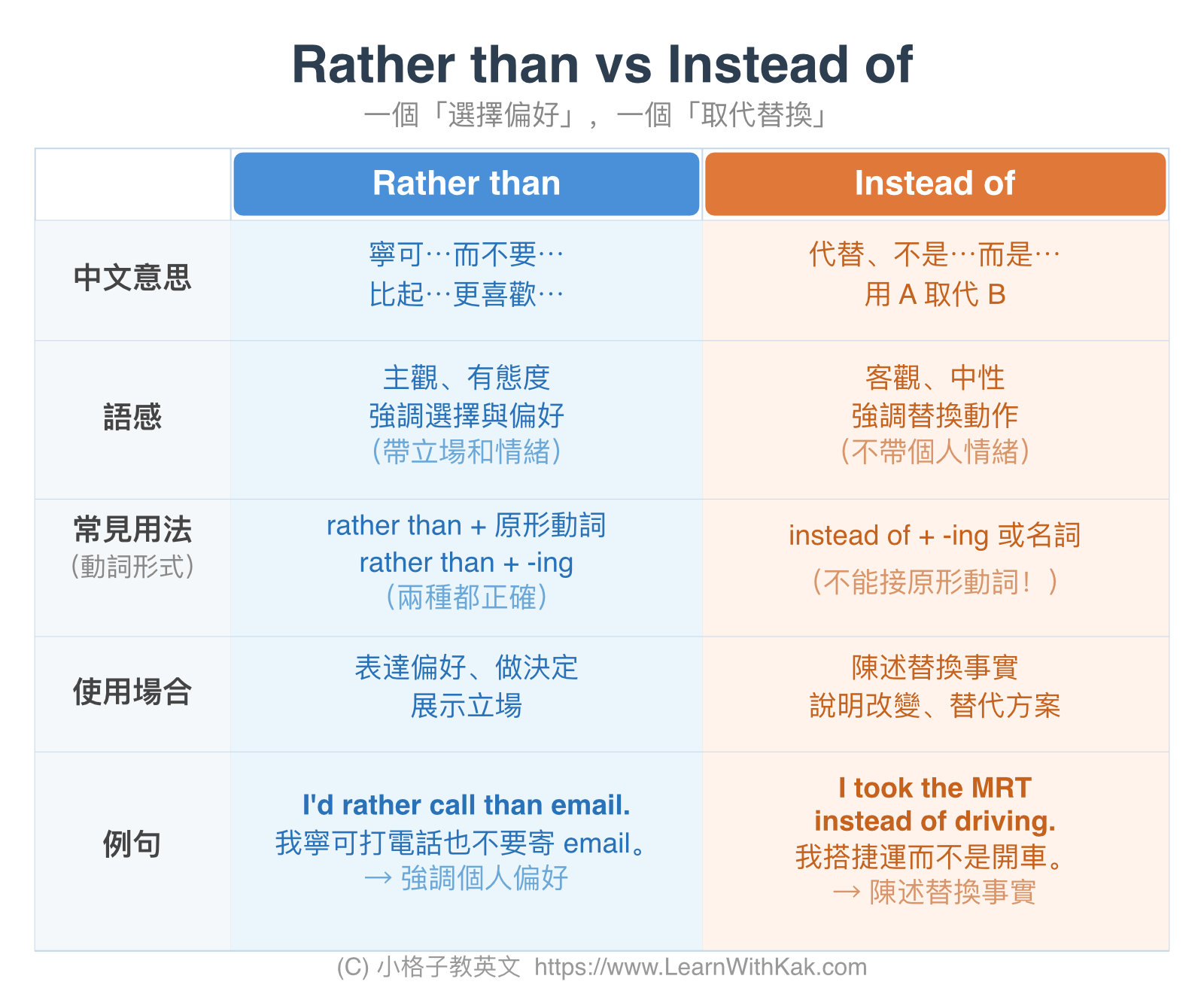
Rather than 和 Instead of 真的不是隨便可以換的!核心差異記住:Rather than 是「選擇、偏愛」,Instead of 是「取代、替換」。文法上,Rather than 後面可以接原形動詞或 -ing,Instead of 一定要接 -ing 或名詞。搞懂這些,英文就更精準、更道地了。
延伸閱讀:【換句話說英文不只 In other words!5 種說法語氣差很多,用對才道地】
如果你喜歡這篇文章的話,可以追蹤我們的Threads和Facebook唷!