
開會時常聽到 “Let’s go through the agenda”,這好懂。但如果有人說某個同事 “has a hidden agenda”,你還跟得上嗎?Agenda 中文最常見的意思確實是「議程」,但在職場上這個字用起來可複雜多了。今天就把它的三種用法一次說清楚。
Agenda 意思一:會議議程、議事日程
Agenda 最常見的意思是「議程」、「議事日程」,指的是會議中要討論的事項清單。
核心概念:會議開始前準備的討論主題列表,讓所有人知道會議要談什麼。
常見搭配詞:
- On the agenda = 在議程上、要討論的
- Meeting agenda = 會議議程
- Set the agenda = 設定議程(也可引申為「掌控討論方向」)
- Top of the agenda = 議程首要項目
(1)
A: Did you receive the meeting agenda for tomorrow?
A: 你收到明天的會議議程了嗎?
B: Yes, I got it this morning. There are five items on the agenda.
B: 收到了,今早收到的。議程上有五個項目。
(2)
A: What’s on the agenda for today’s meeting?
A: 今天會議的議程是什麼?
B: We’ll discuss the budget, marketing strategy, and the new product launch.
B: 我們要討論預算、行銷策略和新產品發表。
(3)
A: Can we add one more item to the agenda?
A: 我們可以在議程上加一個項目嗎?
B: Sure, but we’ll need to keep it brief. The meeting is already packed.
B: 可以,但要簡短。會議已經很滿了。
(4)
A: Who sets the agenda for board meetings?
A: 誰設定董事會議的議程?
B: Usually the chairman, but board members can suggest items.
B: 通常是主席,但董事會成員可以建議項目。
(5)
A: Is the salary review on the agenda?
A: 薪資審查有在議程上嗎?
B: Yes, it’s the last item. We’ll discuss it at the end.
B: 有,是最後一項。我們會在最後討論。
Agenda 意思二:計劃、日程安排
Agenda 也可以指「計劃」、「日程安排」、「待辦事項」,但比 schedule 更正式一點。
核心概念:個人或組織的計劃安排,通常指一整天或一段時間內要做的事情。
使用時機:
- 描述一天的行程安排
- 談論長期計劃或目標
- 比單純的 “schedule” 聽起來更有目的性
(6)
A: What’s on your agenda today?
A: 你今天有什麼計劃?
B: I have three client meetings and then I need to finish the report.
B: 我有三個客戶會議,然後需要完成報告。
(7)
A: Do you have time for lunch tomorrow?
A: 你明天有時間吃午餐嗎?
B: Let me check my agenda. Yes, I’m free from 12 to 1.
B: 讓我看一下我的日程。有,我12點到1點有空。
(8)
A: What’s on the company’s agenda for next year?
A: 公司明年的計劃是什麼?
B: Expansion into Asian markets is top of the agenda.
B: 拓展亞洲市場是首要計劃。
(9)
A: She always has a full agenda. How does she manage everything?
A: 她的日程總是滿滿的。她怎麼管理一切的?
B: She’s extremely organized and prioritizes well.
B: 她非常有條理,而且很會排優先順序。
(10) My agenda for this week includes finalizing the contract and training new staff.
我這週的計劃包括定案合約和培訓新員工。
Agenda 意思三:Hidden Agenda(隱藏意圖、別有用心)
Hidden agenda 是一個非常重要的片語,中文意思是「隱藏的意圖」、「別有用心」、「不可告人的目的」。
核心概念:表面上說一套,實際上另有打算。通常帶有負面含義,暗示某人不誠實或有不良企圖。
(11)
A: Why is David suddenly being so nice to everyone?
A: David 為什麼突然對每個人都這麼好?
B: I think he has a hidden agenda. He might be trying to get promoted.
B: 我覺得他別有用心。他可能想升職。
(12)
A: The consultant’s proposal sounds great, but something feels off.
A: 顧問的提案聽起來很棒,但感覺哪裡不對勁。
B: Trust your instincts. He might have a hidden agenda to sell us more services.
B: 相信你的直覺。他可能有隱藏意圖要賣我們更多服務。
(13)
A: She keeps offering to help with my project. Should I accept?
A: 她一直主動要幫我的專案。我該接受嗎?
B: Be careful. Make sure she doesn’t have a hidden agenda.
B: 小心點。確保她沒有別的目的。
(14)
A: Why did he vote against the proposal? I thought he supported it.
A: 他為什麼投反對票?我以為他支持的。
B: Maybe he had a hidden agenda all along.
B: 也許他一直都別有用心。
(15)
A: The new manager seems really interested in our processes.
A: 新經理似乎對我們的流程很感興趣。
B: Just be transparent. If you hide things, it looks like you have a hidden agenda.
B: 坦誠就好。如果你隱瞞,看起來就像你別有用心。
(16) I don’t trust politicians who have hidden agendas.
我不信任有隱藏意圖的政客。
相似詞彙比較
讓我們來看看 agenda 和其他類似詞彙的差別:
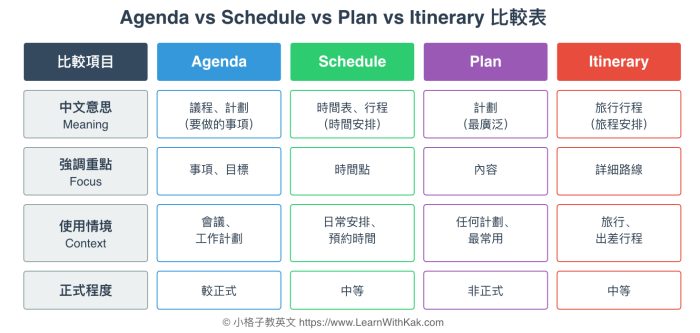
在職場上,agenda 可以是會議要討論的議程、你一天的工作計劃,或是某人隱藏的意圖。記住:meeting agenda = 會議議程、daily agenda = 每日計劃、hidden agenda = 別有用心。下次開會時看到 agenda,或是聽到有人說 “hidden agenda”,你就知道該怎麼理解和應對了!
延伸閱讀:【英文會議聽不懂? Minutes、Agenda、Action Items 等必備詞彙】
如果你喜歡這篇文章的話,可以追蹤我們的Threads和Facebook唷!