
同事在會議上講錯資料,你直接來一句 “You’re wrong!”,全場瞬間尷尬到爆。想指出別人的錯誤卻不知道怎麼說得體面?其實「你錯了英文」有超多種說法,從超委婉的 I’m afraid that’s not quite right 到比較直接的 You’ve got it wrong,禮貌程度差超多。今天就來教你 5 種不同的說法,讓你在職場、朋友間都能自然地「指出錯誤英文」,又不會得罪人。學會了,你的英文溝通技巧會提升一大截!
為什麼不能亂用 You’re wrong?
先來講為什麼 You’re wrong 這麼危險。
問題 1:太直接、太攻擊性
直接說 “You’re wrong” 就像用手指著對方的鼻子說「你錯了!」,超沒禮貌的。英文母語人士聽到會覺得:這個人是不是沒受過教育啊?
問題 2:容易破壞關係
工作上的夥伴、客戶、老闆,甚至朋友,被你這樣嗆一句,關係可能就裂了。就算你是對的,方式不對也是白搭。
問題 3:顯得缺乏社交技巧
在英語文化中,委婉表達是很重要的社交技巧。會用委婉說法的人,會被認為有教養、專業、成熟。
什麼時候絕對不能用 You’re wrong
- ❌ 對老闆、客戶、長輩(想被炒嗎?)
- ❌ 正式會議、商業場合(太不專業)
- ❌ 不熟的人(第一印象全毀)
- ❌ 想維持關係的任何時候(基本上就是大部分情況)
好,知道問題在哪了,現在來學怎麼說得體面!
超委婉說法(正式場合、職場必學)
這三種說法最禮貌,適合用在老闆、客戶、不熟的人身上。
說法 1: I’m afraid that’s not quite right(恐怕有點不太對)
這是最最最禮貌的說法!
為什麼這麼禮貌:
- I’m afraid 開頭讓語氣更軟
- not quite right 比 wrong 委婉超多
- 暗示是「小問題」而不是「大錯誤」
學會委婉地指出錯誤,是提升英文溝通能力的重要一環。這不只是語言問題,更是文化和社交技巧。
(1)
A: Our company produced 3,000 products two years ago, but why did we only produce 300 last year?
A: 我們公司兩年前生產了三千件產品,為什麼去年只生產三百件?
B: I’m afraid that’s not quite right, boss. According to this report, we produced 30,000 products last year.
B: 老闆,恐怕這個數字有點不太對。根據這份報告,我們去年生產了三萬件產品。
(2)
A: The deadline for this project is next Friday, right?
A: 這個專案的截止日期是下週五對吧?
B: I’m afraid that’s not quite right. The client actually needs it by this Wednesday.
B: 恐怕不太對喔。客戶其實這週三就要了。
(3)
A: We should invest all our budget in social media marketing.
A: 我們應該把所有預算都投在社群媒體行銷。
B: I’m afraid that’s not quite right. The data shows our customers prefer email marketing.
B: 恐怕這個方向不太對。數據顯示我們的客戶更喜歡電郵行銷。
說法 2: I’m afraid you’re mistaken(恐怕您誤解了)
Mistaken 比 wrong 禮貌在哪:
- Mistaken = 誤解、搞錯(可能是資訊問題)
- Wrong = 錯誤(感覺像是你的問題)
- 給對方台階下,保留面子
(4)
A: This is outrageous! My son said everyone has to donate $100 to the school every month!
A: 太誇張了!我兒子說每人每個月要捐一百塊給學校!
B: I’m afraid your son is mistaken. We never ask students to donate money.
B: 恐怕您兒子誤解了。我們從來沒要求學生捐錢。
(5)
A: I heard the company is closing down next month.
A: 我聽說公司下個月要倒閉了。
B: I’m afraid you’re mistaken. We’re actually opening a new branch next month.
B: 恐怕您聽錯了。我們下個月其實是要開新分店。
(6)
A: Didn’t you say the meeting was at 2 PM?
A: 你不是說會議是下午兩點嗎?
B: I’m afraid you’re mistaken. I said it’s at 2:30 PM.
B: 恐怕你記錯了。我說的是兩點半。
說法 3: I don’t think you’re right(我不認為你對)
這個說法的巧妙之處:
- 用否定句降低攻擊性
- 表達的是「我的看法」,不是「你的錯誤」
- 適合職場討論、意見交換
(7)
A: The fastest way to grow our company is by hiring more people.
A: 讓公司成長最快的方法就是多雇人。
B: I don’t think you’re right. We need more clients first, not more employees.
B: 我不認為你說得對。我們需要的是更多客戶,不是更多員工。
(8)
A: This marketing strategy will definitely work.
A: 這個行銷策略絕對會成功。
B: I don’t think you’re right. Our target audience doesn’t use that platform.
B: 我不認為這樣對。我們的目標受眾不用那個平台。
(9)
A: We should launch the product immediately.
A: 我們應該馬上推出產品。
B: I don’t think you’re right. We still need to do more testing first.
B: 我不覺得這樣對。我們還需要做更多測試。
比較直接的說法(朋友、熟人適用)
這兩種說法比較直接,但還是比 You’re wrong 好很多。適合朋友、熟人之間用。
說法 4: You’ve got it wrong(你搞錯了)
比 You’re wrong 好在哪:
- Got it wrong 感覺像「理解錯誤」
- 沒有 You’re wrong 那麼指責的感覺
- 朋友之間可以接受
(10)
A: I’m sure the Earth is flat.
A: 我確定地球是平的。
B: You’ve got it wrong, man. There’s tons of evidence that the Earth is round.
B: 老兄你搞錯了。有一大堆證據證明地球是圓的。
(11)
A: The movie starts at 8 PM, right?
A: 電影八點開演對吧?
B: You’ve got it wrong. I checked the ticket. It’s at 7:30 PM.
B: 你記錯了。我看了票,是七點半。
(12)
A: I thought we agreed to meet at Starbucks?
A: 我以為我們約在星巴克?
B: You’ve got it wrong. We said we’d meet at the library.
B: 你搞錯了啦。我們說的是圖書館。
(13)
A: Isn’t today Wednesday?
A: 今天不是週三嗎?
B: You’ve got it wrong. Today is Thursday.
B: 你記錯了。今天是週四。
說法 5: Where did you hear that?(你哪聽來的?)
這個說法的妙處:
- 沒有直接說對方錯
- 質疑資訊來源
- 暗示「你的消息不可靠」
- 朋友間用很自然
(14)
A: Jason and Kate broke up. They’re just pretending to be together for publicity.
A: Jason 和 Kate 分手了。他們只是為了公眾形象假裝在一起。
B: Where did you hear that? They’re getting married next month!
B: 你哪聽來的?他們下個月要結婚了好嗎!
(15)
A: I heard our boss is leaving the company.
A: 我聽說我們老闆要離職了。
B: Where did you hear that? He just signed a new contract.
B: 你哪聽來的?他才剛簽新合約欸。
(16)
A: This restaurant has terrible reviews online.
A: 這家餐廳網路評價超爛的。
B: Where did you hear that? It has 4.5 stars on Google!
B: 你在哪看的?Google 上有 4.5 顆星欸!
(17)
A: I heard they’re canceling the project.
A: 我聽說他們要取消這個專案了。
B: Where did you hear that? We just got approval to continue.
B: 你從哪聽來的?我們才剛拿到繼續的批准。
禮貌程度比較和使用時機
來看看這 5 種說法的禮貌程度差在哪:
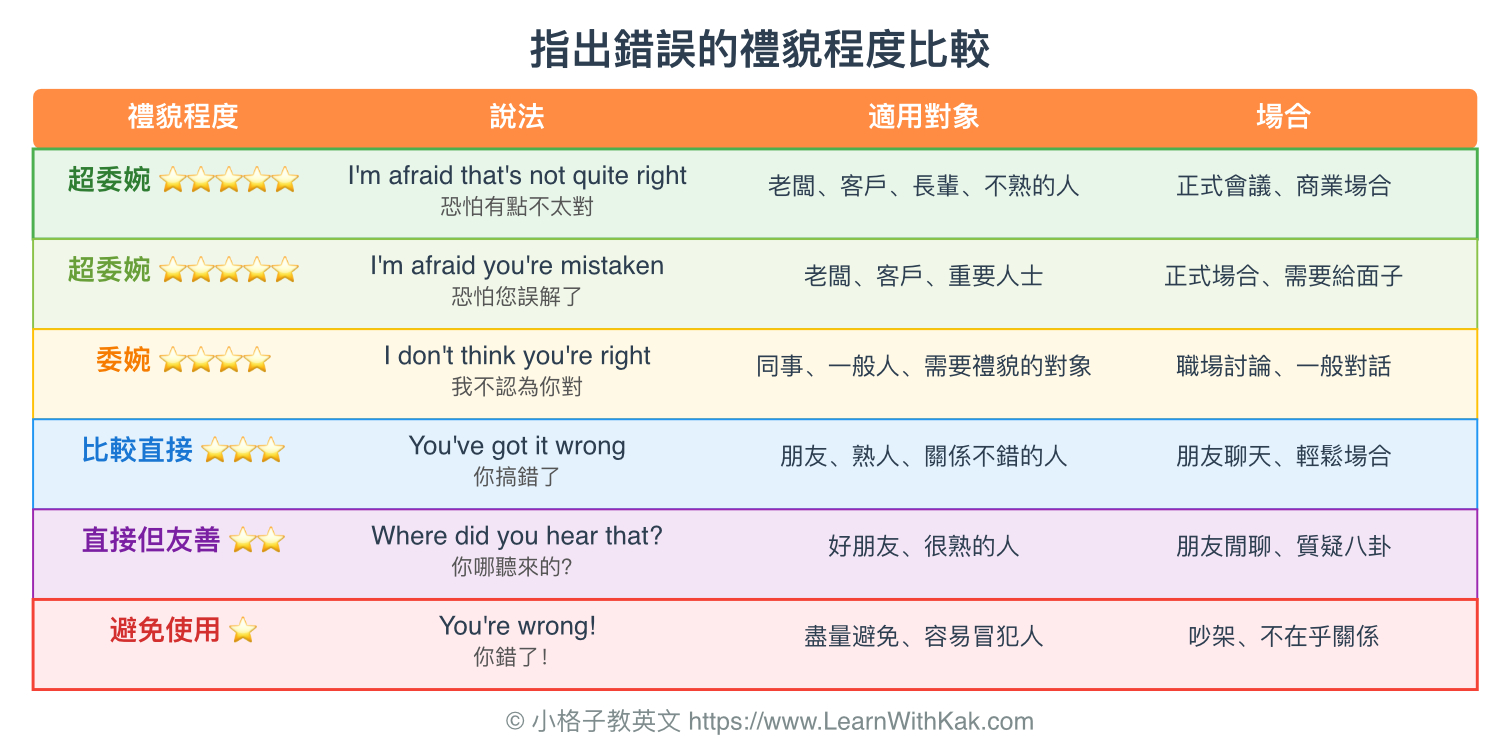
問自己三個問題:
1. 對方是誰?
- 老闆/客戶 → 用說法 1 或 2(超委婉)
- 同事/一般人 → 用說法 3(委婉)
- 朋友/熟人 → 用說法 4 或 5(比較直接)
2. 場合正式嗎?
- 正式會議/商業 → 說法 1、2、3
- 一般對話 → 說法 3、4
- 朋友閒聊 → 說法 4、5
3. 關係重要嗎?
- 很重要(想維持) → 越委婉越好
- 還好(無所謂) → 可以直接一點
在英文溝通中,禮貌和得體的表達非常重要,特別是在職場英文或正式場合。選對說法能讓你的專業度大幅提升,也能避免不必要的衝突。
指正後的後續話術(讓氣氛不尷尬)
指正完別人,記得要緩和一下氣氛,不然還是會很尷尬。指正別人之後,如何緩和氣氛也很重要。避免讓對方覺得被冒犯,溝通才能更順暢。除了知道怎麼說「你錯了」,有時候也要會說「別誤會」,兩者搭配使用效果更好。
緩和氣氛的說法
(18) It’s an easy mistake to make. I confused them before too.
這個錯誤很容易犯。我以前也搞混過。(讓對方覺得:原來不是只有我會錯)
(19) I can see why you might think that. The information was unclear.
我能理解你為什麼會這樣想。資訊確實不太清楚。(把問題歸咎於資訊,不是人)
(20) That’s a common misconception. A lot of people get that wrong.
這是常見的誤解。很多人都搞錯這個。(大家都會錯,沒什麼大不了)
提供正確資訊
(21)
A: I’m afraid that’s not quite right.
A: 恐怕有點不太對。
B: Oh, what’s the correct information then?
B: 喔,那正確的是什麼?
A: Let me explain. The actual deadline is next Tuesday, not Friday.
A: 讓我說明一下。實際的截止日期是下週二,不是週五。
指正錯誤和表達不同意見其實很類似,但又有些微妙的差異,有興趣可以看這篇: 不敢反對老闆?10個英文「表達不同意」的高情商說法
下次遇到需要指出錯誤的時候,想一下對方是誰、場合如何,選對說法,你的英文溝通會專業超多。掌握這些委婉表達後,你的英文溝通會更得體、更專業。不要再直接說 You’re wrong 然後得罪一堆人啦!
如果你喜歡這篇文章的話,可以追蹤我們的Threads和Facebook唷!