
給意見這件事,用中文都不一定說得好了,更別說用英文。很多人的第一反應是把中文直接翻成英文,結果說出來不是太直接,就是語氣怪怪的。其實 constructive criticism 中文可以理解為「建設性批評」,英文有一套說法,說完對方不只不生氣,有時候還會回你一句 “Thanks, that’s really helpful.”
Constructive Criticism 是什麼意思?
Constructive criticism 的中文意思是「建設性批評」或「建設性的意見」。Constructive 這個字有「有建設性的、有幫助的」的意思,所以 constructive criticism 不是要貶低對方,而是給出具體、有方向的意見,讓對方知道哪裡可以改進,怎麼改。
跟一般的「批評」最大的差別在於:普通批評說的是「你做錯了」,constructive criticism 說的是「這裡可以這樣調整,會更好」。前者是評判,後者是協助。
在職場上,這種溝通方式非常重要,不管是主管給下屬 feedback、同事互相 review 報告,還是多益(TOEIC)聽力 Part 3、4 常出現的績效面談場景,都會出現這類用語。
(1)
A: Can I give you some constructive criticism on your presentation?
A: 我可以給你一些關於簡報的建設性意見嗎?
B: Of course. I’d really appreciate that.
B: 當然,我很感激。
(2)
A: The feedback she gave me was actually really constructive. I know exactly what to fix now.
A: 她給我的意見其實很有建設性,我現在清楚知道要修改什麼了。
B: That’s rare. A lot of people don’t know how to give feedback without sounding harsh.
B: 這很難得。很多人給意見的時候都會聽起來很嚴厲。
(3)
A: I want to make sure my comments are constructive, not just critical.
A: 我想確保我的評語是建設性的,而不只是在批評。
B: That already shows you care. Most people don’t even think about that.
B: 光是這樣想就代表你很用心了,大多數人根本不會想到這點。
(4)
A: How do you usually handle performance reviews?
A: 你通常怎麼處理績效面談?
B: I try to frame everything as constructive criticism. It’s less about what went wrong and more about what can be better.
B: 我會盡量把所有事情都包裝成建設性批評。重點不在於哪裡出錯,而是哪裡可以更好。
給意見前先緩衝,這幾句先學起來
給意見英文說法裡,最容易出錯的一步是「開口的方式」。直接說 “Your report has a lot of problems.” 沒錯,但對方聽到的第一反應通常是防衛。先用緩衝句(softener)開場,不是在說謊,是讓對方的耳朵先打開。
常見的緩衝開場句型:
- “I really appreciate the effort you put into this, but I think there are a few things worth revisiting.”
- “This is a solid start. One thing I’d suggest looking at is…”
- “I think you’re on the right track. Could we look at [specific part] together?”
- “Overall this looks good. I do have a couple of thoughts, if that’s okay.”
這些句型的共同點是:先肯定對方的努力或方向,再帶出意見。不是假客套,是讓對話順利進行的技巧。
(5)
A: I appreciate the work you put into this proposal. I do have a few suggestions that might make it stronger.
A: 我很感謝你在這份提案上的心血。我有一些建議,也許能讓它更有說服力。
B: Sure, please go ahead.
B: 當然,請說。
(6)
A: This is a good first draft. One area I’d like us to look at more closely is the budget breakdown.
A: 這是個不錯的初稿。有一個部分我想我們可以更仔細看一下,就是預算明細。
B: Yeah, I felt that part was a bit rushed. What do you think is missing?
B: 對,我覺得那部分有點倉促。你覺得缺了什麼?
(7)
A: Overall I think the direction is right. I just want to flag a couple of things before we send this out.
A: 整體方向我覺得是對的,只是在送出去之前我想先提幾個點。
B: Good call. Better to catch it now.
B: 說得對,現在發現比較好。
(8)
A: I have some thoughts on the layout. Would now be a good time to go through them?
A: 我對版面配置有些想法,現在方便討論嗎?
B: Absolutely, let’s go through it.
B: 當然,我們來看看。
說出問題點,但對事不對人
這是給意見英文最關鍵的一步:把焦點放在「行為或結果」上,不要放在「人」上面。一字之差,對方感受差很多。
比較看看:
- “You forgot to include the data.” → 針對人,聽起來像在指責
- “The data section seems to be missing.” → 針對事,客觀陳述
其他常用的對事不對人句型:
- “I noticed that [specific thing] wasn’t included.”
- “It would be helpful if [specific change] were added.”
- “I found it a bit hard to follow the logic in this section.”
- “What if we tried [alternative approach]?”
- “I wonder if [suggestion] might work better here.”
用 “I noticed” 或 “I found” 這類「I statement」,是把觀察包裝成個人感受,而不是評判,對方比較容易接受。
(9)
A: I noticed the conclusion doesn’t quite tie back to the main argument. It might be worth revisiting that section.
A: 我注意到結論和主要論點沒有完全呼應,那個部分可能值得再看一下。
B: You’re right. I’ll go back and tighten that up.
B: 你說得對,我會回去把那部分整理得更清楚。
(10)
A: I found the timeline a bit hard to follow. Would it help to add a visual like a Gantt chart?
A: 我覺得時間表有點難跟,加一個視覺圖,像甘特圖,會不會有幫助?
B: That’s a great idea. I’ll put one together.
B: 好主意,我來做一個。
(11)
A: The email works, but I wonder if a shorter subject line might get a better open rate.
A: 這封 email 沒問題,但我在想短一點的主旨會不會有更好的開信率。
B: Good point. I’ll try a few different versions.
B: 好點子,我來試幾個不同的版本。
(12)
A: I think the tone in this section might come across as a bit too formal for our audience.
A: 我覺得這個部分的語氣對我們的受眾來說可能有點太正式了。
B: I see what you mean. I’ll soften it a bit.
B: 我懂你的意思,我會讓它輕鬆一點。
(13)
A: It would be helpful if the key metrics were highlighted at the top of the report.
A: 如果關鍵數據可以在報告最上方就呈現出來,會更有幫助。
B: Noted. I’ll restructure the opening section.
B: 了解,我會重新整理開頭的部分。
三明治給法:讓意見更容易被接受
Sandwich method(三明治回饋法)是職場上給 feedback 很常用的架構:
正面肯定 → 改進建議 → 正面收尾
這個方法不是要包裝謊言,也不是要把問題藏起來,而是把意見放在一個讓對方更願意聽的框架裡。在多益(TOEIC)職場溝通的閱讀和聽力題目裡,這種對話結構也很常出現,認識它不只對英文溝通有幫助,考試看到也會更快抓到重點。
結構範例:
- 正面開場: “You did a great job pulling together all the research.”
- 改進建議: “One thing I’d suggest is reorganizing the sections so the main point comes through earlier.”
- 正面收尾: “With that adjustment, I think this could be really compelling.”
(14)
A: The research in this report is impressive. I think if we restructure the flow a bit, the key findings will land even better. Overall, you’ve done a strong job with this.
A: 這份報告的研究資料很厲害。我覺得如果稍微調整一下結構,關鍵發現會更有衝擊力。整體來說,你做得很好。
B: Thanks. I’ll work on the structure this afternoon.
B: 謝謝,我今天下午來調整結構。
(15)
A: Your presentation style is really engaging. The one thing I’d tweak is the data slides — they feel a bit dense. But the storyline you built is solid.
A: 你的簡報風格很吸引人。我唯一會調整的是數據頁,資訊有點太密集了。但整體的故事線架構得很好。
B: Good to know. I’ll simplify those slides.
B: 了解,我會把那幾頁簡化。
(16)
A: I thought your handling of the Q&A was great. One area to work on might be speaking a bit more slowly when you’re explaining numbers. That said, you held the room really well.
A: 我覺得你處理問答環節的方式很好。可以再加強的地方是,解釋數字的時候可以說慢一點。話雖如此,你整場掌控得非常好。
B: Thanks for the specific feedback. That’s really helpful.
B: 謝謝你這麼具體的回饋,真的很有幫助。
(17)
A: The copy is clear and punchy — I like it. I think the call-to-action at the end could be stronger. But you’ve got the voice exactly right.
A: 文案簡潔有力,我很喜歡。我覺得最後的行動呼籲可以更有力一點。但整體語氣你抓得非常準。
B: Got it. I’ll rework the ending.
B: 了解,我來重新處理結尾。
給完意見,怎麼收尾才不尷尬
很多人給完意見就沉默了,對方反而會覺得更不舒服,不知道接下來要怎麼辦。好的收尾讓對方知道你是支持他的,也讓整個對話有個完整的結束。
常用收尾句型:
- “I’m happy to go through this with you if that helps.”
- “Let me know if you have any questions or want to talk it through.”
- “I know this is a lot to take in — feel free to come back to me.”
- “Take your time with the revisions. No rush.”
- “I’m here if you need a second opinion on the changes.”
這些句子傳達的訊息是:我給意見不是要讓你難受,是想幫你。這樣的收尾,對方聽完通常會說謝謝,而不是沉默走開。在職場上,特別是要寫英文 email 給意見或回覆 feedback 的時候,收尾句也一樣重要。
(18)
A: Those are my thoughts. Let me know if you’d like to go through any of it together.
A: 這些是我的想法,如果你想一起討論任何部分,告訴我。
B: I will. Thanks for taking the time.
B: 好的,謝謝你花時間給我意見。
(19)
A: I know that’s a lot of feedback at once. Take your time, and feel free to come back to me with questions.
A: 我知道一次給了很多意見。慢慢來,有問題隨時可以來找我。
B: Thank you, I really appreciate it.
B: 謝謝你,我真的很感激。
(20)
A: I’m here if you need a second opinion once you’ve made the changes.
A: 你改好之後如果需要再看一遍,我在這裡。
B: That means a lot. I’ll send it over when it’s ready.
B: 這對我很有幫助,弄好了我就傳給你。
(21)
A: Those are just suggestions, not hard rules. Ultimately it’s your call.
A: 這些只是建議,不是硬性規定,最終還是你決定。
B: I appreciate that. I’ll think it over.
B: 謝謝,我會好好考慮。
收到 Feedback 時,英文怎麼回
給意見的英文說完了,但如果有一天是你在接受 feedback,你知道怎麼回應嗎?回應得好,對方會覺得你成熟、有自我意識;回應得不好,就算對方說得多好,你也可能讓場面變尷尬。
職場上收到意見時,這幾句很好用,也是表達不同意或有疑問時的起點,先接住對方的意見,再決定要不要進一步討論。
(22)
A: I think the report could use a clearer structure.
A: 我覺得這份報告的結構可以更清楚一點。
B: Thanks for pointing that out. I’ll take another look at the flow.
B: 謝謝你提出來,我會再看一下整體的結構。
(23)
A: Your tone in the meeting came across as a bit defensive.
A: 你在會議上的語氣聽起來有點防衛性。
B: I appreciate the feedback. I wasn’t aware of that — I’ll pay more attention next time.
B: 謝謝你的回饋,我不知道自己是這樣,下次會多注意。
(24)
A: I felt the deadline was a bit tight because we didn’t have enough lead time.
A: 我覺得截止日期有點趕,因為我們沒有足夠的前置時間。
B: That’s a fair point. Could you give me an example so I can avoid that next time?
B: 這說得有道理。你可以舉個例子嗎,這樣我下次才能避免?
(25)
A: I think you could be more concise in your emails.
A: 我覺得你的 email 可以再簡潔一點。
B: Noted. I’ll work on that. Is there a specific email you’re referring to?
B: 了解,我會改進的。你是指哪一封 email 嗎?
多益 TOEIC 考試會怎麼考這類場景?
給意見和收到 feedback 的情境在多益(TOEIC)裡很常見,特別是 Part 3(對話題)和 Part 7(閱讀題)。常出現的場景包括:績效面談(performance review)、同事互評(peer feedback)、主管給下屬建議等。
幾個在考試裡常見的相關詞彙值得記一下:
- constructive:建設性的
- performance review:績效考核
- areas for improvement:可以改進的地方
- strengths and weaknesses:優缺點
- follow up:後續追蹤
- actionable:可執行的、具體可操作的
- takes feedback well:能接受回饋(通常是在評價一個人)
這些詞彙不只考試會用到,在真實職場的年底考績討論和日常溝通裡也很高頻。
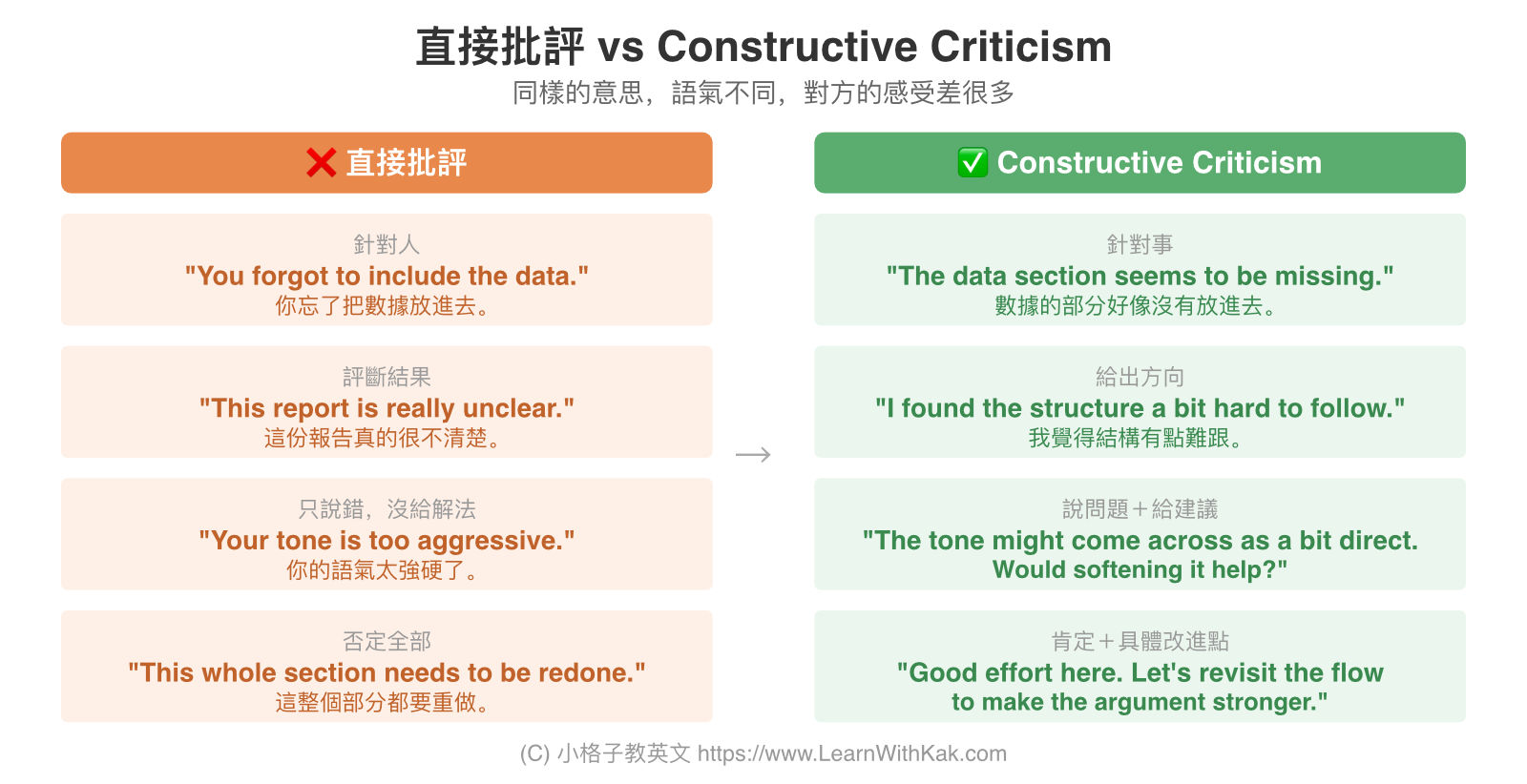
給意見不難,難的是說得讓對方聽進去。Constructive criticism 的重點不是把批評包裝得好聽,而是讓對方清楚知道可以怎麼改,同時感覺到你是在幫他。掌握這些給意見英文的說法,職場溝通會順很多。
延伸閱讀:【表達不同意英文別說 I disagree!10 種高情商職場說法完整解析】
如果你喜歡這篇文章的話,可以追蹤我們的Threads和Facebook唷!