
在路上偶然遇到老朋友、在書店無意中發現一本好書、整理房間時翻到舊照片,這些情境的「遇到」,英文完全不會只有 meet。遇到英文其實有好幾種說法,run into、bump into、come across 都可以用,但用法和情境差很多,用錯真的會讓母語人士聽起來怪怪的。這篇把三個片語的差別整理清楚,從遇到人到發現物品都幫你分好,還有常見錯誤和例句對話,讓你之後講「遇到」更精準、更有自信。
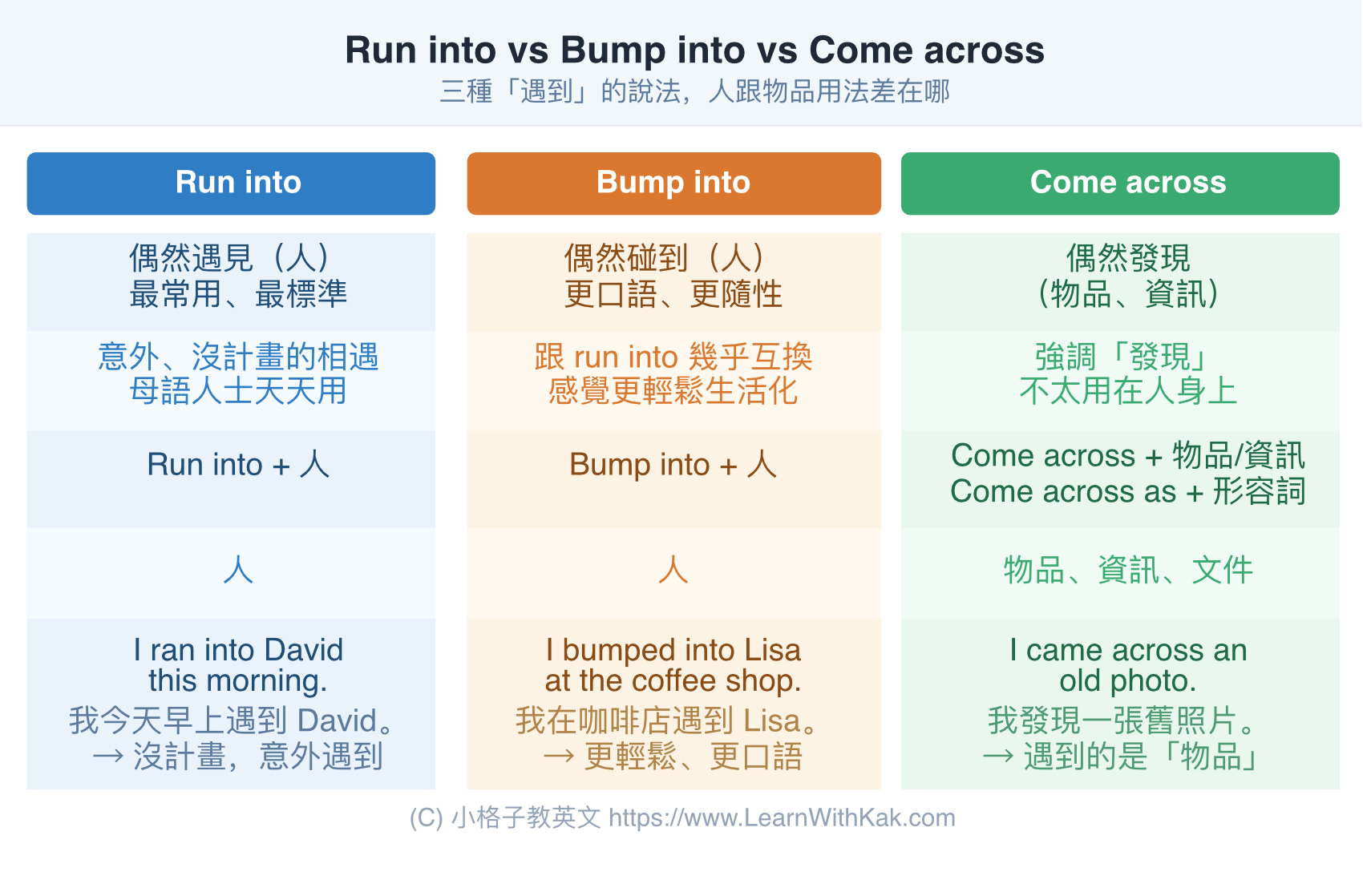
Run into:偶然遇見(人),最常用
Run into 的中文意思是「偶然遇見」、「碰巧遇到」,專門用在遇到「人」。
核心概念是什麼?Run into 強調「意外」、「沒計畫」的相遇,就是你本來沒想到會遇到這個人,結果突然就碰到了。這是最自然、最常用的說法,母語人士天天都在用。
為什麼叫 run into?想像一下你在跑步或走路時,突然撞上某個人,那種意外、突然的感覺。Run into 就是這樣,表示意外的、沒預期到的相遇。
什麼時候會用到?任何意外遇到認識的人的場合都可以用。在街上碰到老朋友、在超市遇到同事、去旅行時遇到認識的人、在咖啡店巧遇前同事,這些都是 run into 的情境。重點是「沒計畫」、「巧合」、「意外」。要是遇到的是好久不見的老朋友,除了 run into,你接下來大概還會想接一句「好久不見」的道地說法,而不是只會講 long time no see。
文法很簡單:Run into + 人。
(1)
A: Guess who I ran into at the mall yesterday?
A: 猜猜我昨天在商場遇到誰?
B: Who? Tell me!
B: 誰?快說!
A: My ex-girlfriend! It was so awkward.
A: 我前女友!超尷尬的。
(2)
A: I ran into David on my way to work this morning.
A: 我今天早上上班路上遇到 David。
B: Really? I haven’t seen him in ages. How’s he doing?
B: 真的嗎?我好久沒看到他了。他還好嗎?
(3)
A: What a small world! I ran into our old professor at the airport.
A: 世界真小!我在機場遇到我們以前的教授。
B: No way! Were you guys on the same flight?
B: 不會吧!你們搭同一班飛機嗎?
(4)
A: I keep running into my neighbor everywhere I go.
A: 我去哪裡都一直遇到我鄰居。
B: Maybe it’s a sign that you should get to know them better!
B: 也許這是個訊號,你該更了解他們!
(5)
A: I’m nervous about going to that party. What if I run into my ex?
A: 我對去那個派對很緊張。如果我遇到我前任怎麼辦?
B: Don’t worry. It’s a big party. You probably won’t even see them.
B: 別擔心。派對很大。你可能根本不會看到他們。
(6)
A: You’ll never believe who I ran into at the gym today.
A: 你絕對不會相信我今天在健身房遇到誰。
B: Let me guess, someone from high school?
B: 讓我猜,高中同學?
(7) I rarely run into people I know when I’m traveling abroad, but it happened last week in Paris.
我在國外旅行時很少遇到認識的人,但上週在巴黎就遇到了。
(8) If you run into Sarah, tell her I said hi.
如果你遇到 Sarah,跟她說我問好。
Bump into:偶然遇見(人),更口語、更輕鬆
Bump into 的中文意思是「偶然碰到」、「巧遇」,也是用在遇到「人」,是很多人查 bump into 中文的時候最常搞混的一個片語,因為它跟 run into 意思幾乎一樣,但語感不太一樣。
核心概念跟 run into 很像,都是意外的相遇。但 bump into 比 run into 更口語、更隨性,感覺更輕鬆、更生活化。如果說 run into 是標準說法,bump into 就是更 casual 的版本。
為什麼叫 bump into?Bump 是「撞到」、「碰撞」的意思,像是你走路時不小心撞上某人,那種物理上的碰撞感。所以 bump into someone 就是「撞上某人」,也就是「偶然遇到某人」。
Run into 和 bump into 有什麼差別?老實說,幾乎可以互換,意思一樣。如果硬要說差別,bump into 稍微更口語一點點,但兩個都很常用,都很自然。選哪個都可以,看你當下想用哪個。
什麼時候會用到?跟朋友聊天時、輕鬆的對話場合、日常生活情境。基本上任何 run into 能用的地方,bump into 也都能用。
文法:Bump into + 人。
(9)
A: I bumped into Lisa at the coffee shop this morning.
A: 我今天早上在咖啡店遇到 Lisa。
B: Oh, how is she? I haven’t talked to her in forever.
B: 喔,她還好嗎?我好久沒跟她講話了。
(10)
A: Guess what? I bumped into your brother at the concert last night.
A: 你猜怎樣?我昨晚在演唱會遇到你哥。
B: He was there? He didn’t tell me he was going!
B: 他在那?他沒跟我說他要去!
(11)
A: I always bump into people I know when I look my worst.
A: 我看起來最糟的時候總是會遇到認識的人。
B: That’s Murphy’s Law!
B: 那就是墨菲定律!
(12)
A: We bumped into each other at the bookstore. What are the odds?
A: 我們在書店遇到彼此。機率有多高?
B: It must be fate!
B: 一定是命運!
(13)
A: I hope I don’t bump into my boss on my day off.
A: 我希望我休假時不要遇到我老闆。
B: Just avoid the places you know he goes to!
B: 就避開你知道他會去的地方!
(14) I bumped into an old classmate at the supermarket, and we ended up chatting for an hour.
我在超市遇到一個老同學,結果我們聊了一個小時。
Come across:偶然發現(物、資訊)
Come across 的中文意思是「偶然發現」、「無意中遇到」,主要用在遇到「物品、資訊、文件」,跟前面兩個片語最大的差別,就是它幾乎不用在人身上。
核心概念是什麼?Come across 強調「發現」、「找到」,通常是你在做某件事時,無意中發現了某個東西或某個資訊。重點是用在「物」或「資訊」,不太用在「人」。
為什麼不用在人?這是很多學生會搞錯的地方。雖然文法上 “I came across John” 是對的,但聽起來超級怪,有點像你「發現」John 的屍體或把 John 當成一個物品。母語人士幾乎不會這樣說。如果要說遇到人,用 run into 或 bump into 就對了。Come across 留給物品和資訊。
什麼時候會用到?整理東西時發現舊照片、上網時發現有趣文章、在書店發現好書、找資料時發現有用資訊、翻閱文件時發現重要內容,這些都用 come across。
Come across 還有一個特殊用法:Come across as(給人的印象)。這個完全不同的意思,表示某人「看起來」、「給人的感覺是」。例如 “She comes across as confident”(她給人自信的印象)、”He comes across as arrogant”(他看起來很傲慢)。
常見錯誤要注意!很多人會說 “I came across John at the store”,這是錯的!應該說 “I ran into John at the store”。記住:人用 run into/bump into,物品資訊用 come across。
文法:Come across + 物品/資訊。
(15)
A: Where did you find this recipe?
A: 你在哪找到這個食譜的?
B: I came across it while browsing a cooking blog.
B: 我在瀏覽烹飪部落格時發現的。
(16)
A: This book looks interesting. How did you hear about it?
A: 這本書看起來很有趣。你怎麼聽說的?
B: I came across it at a used bookstore downtown.
B: 我在市區一家二手書店發現它的。
(17)
A: I was cleaning out my desk and came across your old notes from college.
A: 我在清理書桌時發現了你大學時的舊筆記。
B: Really? I thought I lost those years ago!
B: 真的嗎?我以為我好幾年前就弄丟了!
(18)
A: I came across some useful information about scholarships online.
A: 我在網路上發現一些關於獎學金的有用資訊。
B: Can you send me the link?
B: 你能把連結傳給我嗎?
(19)
A: Have you seen my passport? I can’t find it anywhere.
A: 你看到我的護照嗎?我到處都找不到。
B: I came across it in the kitchen drawer yesterday.
B: 我昨天在廚房抽屜發現它。
(20)
A: She comes across as really friendly in person.
A: 她本人給人感覺真的很友善。
B: Yeah, she’s much nicer than I expected.
B: 對啊,她比我預期的好多了。
(21)
A: How did you find this video?
A: 你怎麼找到這個影片的?
B: I came across it randomly on YouTube. It’s hilarious!
B: 我在 YouTube 上隨機發現的。超好笑!
(22) I came across an interesting article about climate change while doing research for my paper.
我在做報告研究時發現一篇關於氣候變遷的有趣文章。
其他「遇到」的英文說法
除了 run into、bump into、come across,還有一些其他說法可以表達「遇到」。
Encounter 是比較正式的說法,常用在書面語或正式場合。它可以用在遇到人,但更常用在遇到困難、問題、危險這些抽象的東西。例如 “We encountered some technical difficulties”(我們遇到一些技術困難)、”She encountered a bear while hiking”(她健行時遇到一隻熊)。
Meet by chance 是「偶然遇見」的完整說法,比較正式。在口語中,run into 或 bump into 更自然,但如果你想講得比較完整或正式,可以說 meet by chance。例如 “We met by chance at the airport”(我們在機場偶然遇見)。
Cross paths 是比喻性的說法,強調「命運的交會」、「人生軌跡的交叉」。有點文學性、浪漫化的感覺。例如 “Our paths crossed again after ten years”(十年後我們再次相遇)、”I hope our paths will cross again someday”(我希望有一天我們會再次相遇)。
Run across 跟 run into 很像,也是「偶然遇到」的意思,可以用在人或物。但比較少人用,run into 更常見。例如 “I ran across an old friend”(我遇到一個老朋友)、”I ran across this article”(我發現這篇文章)。
(23) We encountered several obstacles while trying to complete the project on time.
我們在試圖準時完成專案時遇到好幾個障礙。
(24) It was wonderful to meet you by chance at the conference.
在研討會上偶然遇見你真好。
(25) I never thought our paths would cross again after graduation.
我從沒想過畢業後我們會再次相遇。
(26) I ran across your name in an old yearbook while cleaning out the attic.
我在清理閣樓時在舊年鑑裡看到你的名字。
常見問題:遇到英文到底怎麼分
Bump into 中文跟 run into 中文差在哪?
其實意思一樣,都是「偶然遇到人」,差別只在語感。Bump into 中文語感比較口語、比較隨性,run into 則是最標準、最常見的說法。兩個都可以用在朋友、同事、家人身上,選哪個都不會錯。
(27)
A: Did you bump into anyone interesting at the party?
A: 你在派對上有遇到什麼有趣的人嗎?
B: Yeah, I ran into my old roommate! We haven’t talked in years.
B: 有,我遇到我的老室友!我們好幾年沒講話了。
Come across 中文可以用在人身上嗎?
不建議。Come across 中文雖然文法上可以接人,但聽起來很怪,母語人士幾乎不會這樣用。人用 run into 或 bump into,come across 留給物品、資訊、文件。
(28)
A: I came across this old letter while packing.
A: 我在打包時發現這封舊信。
B: Whose is it?
B: 那是誰的?
遇到英文除了這三個片語,還有更正式的說法嗎?
有,encounter 就是比較正式的版本,常出現在書面或工作場合,特別是遇到困難、問題這類抽象情境。
(29)
A: We encountered a few issues during the software update.
A: 我們在軟體更新時遇到一些問題。
B: Did you manage to fix them?
B: 你們有解決嗎?
Run into 意思可以用在物品上嗎?
可以,但比較少見,通常指遇到抽象的狀況,例如 “run into trouble”(遇到麻煩)、”run into problems”(遇到問題),這時候意思比較接近 encounter,而不是遇到具體物品。
(30)
A: We ran into some trouble finding parking downtown.
A: 我們在市區找停車位時遇到一些麻煩。
B: That area is always packed on weekends.
B: 那一區週末都超擠的。
下次在路上遇到朋友,記得說 “I ran into…” 而不是 “I met…”,在書店發現好書,說 “I came across…” 而不是 “I found…”。這些小細節會讓你的英文聽起來更自然、更道地,現在就去試試看吧!
延伸閱讀:【會議被打斷、電話突然來?用這幾句英文,對話無縫接回去】
如果你喜歡這篇文章的話,可以追蹤我們的 Threads 和 Facebook 唷!