
開會到一半有人敲門,接完電話回來,全場安靜不知從哪裡繼續?「Where were we?」的中文意思是「我們說到哪了?」,是對話被打斷後最直覺的接話方式。但職場上還有幾個更好用的說法,這篇一次全教完,再碰到對話被打斷,不用再尷尬地等別人先開口。
“Where were we?” 說到哪了?
這句話字面上看起來像在問地點,其實跟地點完全沒關係。where were we 中文的意思是「我們說到哪裡了?」,用在對話或討論被打斷之後,想繼續接回去的時候。
語氣上非常口語,日常對話和職場開會都能用,沒有特別正式或非正式之分。通常搭配 “Sorry about the interruption” 或 “Sorry about that” 一起說,最自然。
(1)
A: Sorry, I had to take that call. Where were we?
A: 抱歉,我剛才要去接電話。我們說到哪了?
B: You were just about to tell me about the new project timeline.
B: 你剛好要跟我說新專案的時間表。
(2)
A: The fire alarm went off, but we’re back now. Where were we?
A: 剛才火災警報響了,但我們回來了。說到哪了?
B: We were reviewing the Q3 numbers.
B: 我們在看第三季的數字。
(3)
A: Sorry about that interruption. Where were we?
A: 抱歉剛才被打斷了。我們說到哪了?
B: We were discussing whether to launch in Q1 or Q2.
B: 我們在討論是第一季還是第二季要上線。
(4)
A: Ok, I think everyone’s back from the break. Where were we?
A: 好,我想大家都回來了。我們說到哪了?
B: We were talking about the budget for next year.
B: 我們在討論明年的預算。
(5) “Alright, we got a bit sidetracked. Where were we?”
「好,我們有點跑題了。說到哪了?」
讓對方繼續說下去:You were saying?
這句跟 “Where were we?” 不一樣的地方是:這句是讓「對方」繼續,不是自己接。
“You were saying?” 帶有「你剛說到哪了?請繼續」的意思,常用在對方說話被打斷,你想讓他繼續說下去的情況。語調要稍微上揚,才有邀請對方繼續的感覺。”Sorry, you were saying?” 或 “Please, you were saying?” 都很常見。
(6)
A: I was thinking maybe we should—
A: 我在想也許我們應該——
(電話鈴聲響)
B: Sorry about that. You were saying?
B: 抱歉。你剛說到哪了?
A: I was saying we should push the deadline back by a week.
A: 我說我們應該把截止日期延後一個禮拜。
(7)
A: So the reason I wanted to meet today was—
A: 所以我今天想約你們開會的原因是——
(有人敲門)
B: Come in! Sorry about that. You were saying?
B: 進來!抱歉,你剛說到?
A: I wanted to talk about the client feedback we got last week.
A: 我想說我們上週收到的客戶回饋。
(8)
A: You were saying earlier that you had some concerns about the plan?
A: 你剛才說你對這個計畫有些疑慮?
B: Right, I think the timeline is too tight.
B: 對,我覺得時間表太緊了。
(9)
A: Sorry, I didn’t mean to cut you off. You were saying?
A: 抱歉,我不是故意打斷你的。你剛說到?
B: No worries. I was saying we need more people on this.
B: 沒關係。我說的是我們需要更多人手。
把跑掉的話題拉回來:Let’s get back to…
這句是把偏掉的話題拉回來的好用說法。開會時,話題常常聊著聊著就跑掉了,有人開始說週末去哪,或者突然跑去討論另一件事,這時候就可以用 “Let’s get back to…” 把大家拉回來。
句型很簡單:Let’s get back to + 名詞 / 主題
可以說 “Let’s get back to the main topic”、”Let’s get back to what we were discussing”,或更具體的主題。開會時如果有準備會議議程,直接說 “Let’s get back to the agenda” 也很實用。
(10)
A: Ok, I think we’re getting a bit off track. Let’s get back to the main topic.
A: 好,我覺得我們有點跑題了。讓我們回到主題。
B: Sure. We were talking about the marketing plan.
B: 好。我們在說行銷計畫。
(11)
A: Let’s get back to what we were discussing before the break.
A: 讓我們繼續休息前討論的話題。
B: Right, we were going over the client’s requirements.
B: 對,我們在看客戶的需求。
(12)
A: That’s an interesting point, but let’s get back to the budget for now.
A: 這是個有趣的觀點,但我們現在先回到預算這件事。
B: Of course. So the total is around 500K.
B: 當然。所以總共大概是五十萬。
(13)
A: Sorry to interrupt, but can we get back to the original question?
A: 抱歉打斷一下,我們可以回到原本的問題嗎?
B: Sure, go ahead.
B: 當然,你說。
(14)
A: Ok, we’ve covered a lot. Let’s get back to the agenda and see what’s next.
A: 好,我們討論了很多。讓我們回到議程,看看接下來要說什麼。
B: We still have two more items to go through.
B: 我們還有兩個項目要講。
隔天繼續開會這樣說:Let’s pick up where we left off
這個說法是「讓我們從上次停下來的地方繼續」,比 “Where were we?” 稍微正式一點,也更有明確感。
“Pick up” 在這裡是「接續、繼續」的意思,”where we left off” 是「我們停下來的地方」。合起來就是從上次中斷的地方繼續下去。這個說法特別適合隔了一段時間後繼續討論、用在 email 開頭,或者打電話斷線後重新接通的情況。
(15)
A: Good morning, everyone. Let’s pick up where we left off yesterday.
A: 早安大家。讓我們從昨天停下來的地方繼續。
B: We were going through the project roadmap.
B: 我們在看專案路線圖。
(16) Email 開頭:
“Hi Mark, let’s pick up where we left off. You mentioned that the delivery date might need to change?”
「嗨 Mark,讓我們繼續上次的話題。你提到交貨日期可能需要更改?」
(17)
A: Sorry, my phone died. Let’s pick up where we left off.
A: 抱歉,我手機沒電了。讓我們繼續剛才的話題。
B: No problem. We were talking about the venue for the event.
B: 沒關係。我們在說活動場地的事。
(18)
A: We ran out of time last week, but let’s pick up where we left off.
A: 上週時間不夠,但讓我們繼續上次的話題。
B: Sure. We still need to finalize the design.
B: 好。我們還需要確定設計。
職場最常聽到的說法:Circle back
最近幾年,”circle back” 這個說法在職場英文裡出現的頻率越來越高。circle back 中文意思是「回頭討論」或「稍後跟進」,通常用在現在沒辦法處理某件事,約定之後再回來討論的情況。
這跟 “get back to” 有個細微差別:
- Let’s get back to… → 現在立刻把話題拉回來
- Let’s circle back to… → 現在先放一邊,之後再回來處理
circle back 在 TOEIC Part 3 的辦公室和會議情境裡滿常出現,是很值得記的職場用語。除了口語,email 裡也很常見。
(19)
A: That’s a good question, but let’s circle back to it after we go through the numbers.
A: 這是個好問題,但讓我們把數字看完之後再回頭討論。
B: Sure, I’ll make a note of it.
B: 好,我先記下來。
(20)
A: I don’t have all the information right now. Can we circle back to this tomorrow?
A: 我現在沒有全部的資料。我們可以明天再回頭討論嗎?
B: Of course. I’ll send you what I have in the meantime.
B: 當然。我先把我有的資料傳給你。
(21)
A: We’re running low on time. Let’s circle back to item 3 at the next meeting.
A: 時間快不夠了。讓我們在下次會議再回頭討論第三點。
B: Ok, I’ll add it to next week’s agenda.
B: 好,我會把它加到下週的議程。
(22) Email:
“I’ll circle back to you once I have more details from the team.”
「等我從團隊那邊拿到更多細節後,我再跟你回報。」
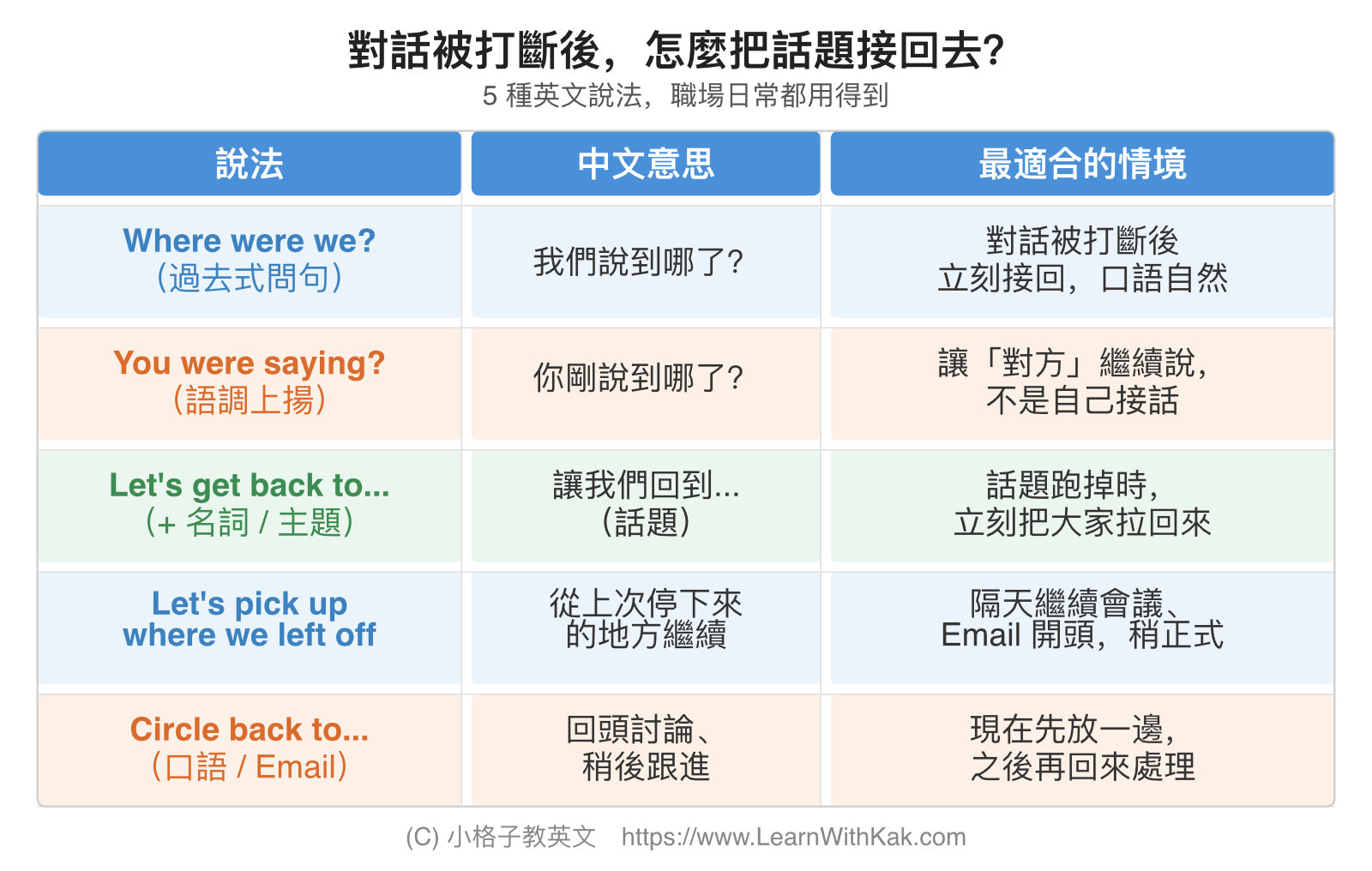
對話被打斷是職場和日常生活每天都會遇到的事,有這幾句備著,不管是開會、電話,還是普通聊天,都能輕鬆接回去,不用再等別人先開口。
延伸閱讀:【英文裡的「by the way」、「anyway」、「actually」要怎麼用才自然?】
如果你喜歡這篇文章的話,可以追蹤我們的Threads和Facebook唷!