
說到生氣英文,大家第一個想到的通常就是 angry 或 mad,但如果你實際跟母語人士聊天,會發現他們幾乎不會直接說 “I’m angry”。英文裡有超多生動的說法可以表達生氣,而且每一種的強度和場合都不太一樣。這篇整理 10 個道地用法,從有點不爽到氣到爆炸,通通幫你分類清楚。
Pissed off:超不爽、氣炸了
Pissed off 是非常口語的說法,表示很生氣、很不爽,比 angry 更強烈,還帶有一種「受夠了」的感覺。這個說法有點粗俗,正式場合或對長輩最好避免。另外要注意,美式英文裡 pissed 通常是 pissed off 的簡稱,但在英式英文裡 pissed 是指「喝醉了」,完全不同的意思。
(1)
A: What’s wrong with Jake? He seems upset.
A: Jake 怎麼了?他看起來很不高興。
B: He’s really pissed off. Someone took credit for his idea in the meeting.
B:他超不爽的。有人在會議上把他的點子說成是自己的。
(2)
A: Why did you leave the restaurant so quickly?
A: 你怎麼那麼快就離開餐廳了?
B: The waiter was incredibly rude, so I got pissed off and just walked out.
B: 那個服務生超級沒禮貌,我氣到直接走人。
(3)
A: Did you hear about the new parking policy?
A: 你有聽說新的停車政策嗎?
B: Yeah, everyone’s pissed off about it. We have to pay twice as much now.
B: 有啊,大家都氣炸了。我們現在要付兩倍的錢。
Lose your temper:發脾氣、失控
Lose your temper 是指失去冷靜、發脾氣,通常代表原本還能控制情緒,但後來忍不住爆發了。這個說法比較中性,各種場合都能用。
(4)
A: How did the negotiation go?
A: 談判進行得如何?
B: Not well. John lost his temper when they refused our terms, and things got heated.
B: 不太好。當對方拒絕我們的條件時,John 發脾氣了,場面變得很火爆。
(5)
A: I’ve never seen you lose your temper like that before.
A: 我從沒看過你那樣發脾氣。
B: I know, I’m sorry. I just couldn’t take it anymore after he insulted my work.
B: 我知道,抱歉。他侮辱我的工作之後,我真的受不了了。
(6)
A: Your dad seems pretty calm most of the time.
A: 你爸看起來大部分時候都很冷靜。
B: Yeah, he rarely loses his temper, but when he does, everyone knows to stay out of his way.
B: 對啊,他很少發脾氣,但他一發火,大家都知道要閃遠點。
Blow up / Blow a fuse:暴怒、爆炸
Blow up 和 blow a fuse 都是形容突然暴怒、像炸彈一樣爆炸的狀態。Blow a fuse 這個說法來自電路保險絲燒斷的意思,形容人的情緒突然「短路」了。
(7)
A: Did you tell your mom about the car accident?
A: 你跟你媽說車禍的事了嗎?
B: Yeah, she totally blew up at me. I’m grounded for a month.
B:說了,她對我大發雷霆。我被禁足一個月。
(8)
A: How did the client react to the delay?
A: 客戶對延遲有什麼反應?
B: He blew a fuse. Started yelling about how unprofessional we are.
B: 他整個爆炸。開始大吼說我們有多不專業。
(9)
A: I heard your neighbor confronted you about the noise.
A: 我聽說你鄰居因為噪音來找你理論。
B: Yeah, he blew up over nothing. We were just having a normal conversation.
B: 對啊,他為了小事就暴怒。我們只是在正常聊天而已。
See red:氣到失去理智
See red 這個說法來自鬥牛看到紅色布會發狂的概念,形容氣到失去理智、無法冷靜思考的狀態,是非常強烈的憤怒。
(10)
A: Why did Tom punch the wall?
A: Tom 為什麼打牆?
B: He saw red when he found out his girlfriend cheated on him.
B: 他發現女友劈腿時氣到失去理智。
(11)
A: I can’t believe you stayed so calm during the argument.
A: 我不敢相信你在爭吵時還能保持冷靜。
B: Trust me, I was seeing red inside, but I didn’t want to make things worse.
B: 相信我,我內心氣炸了,但我不想讓情況更糟。
(12)
A: What happened at the meeting yesterday?
A: 昨天會議上發生什麼事了?
B: Someone accused Sarah of stealing ideas, and she just saw red. It took forever to calm her down.
B: 有人指控 Sarah 偷點子,她整個氣瘋了。花了好久才讓她冷靜下來。
Hit the roof / Hit the ceiling:勃然大怒
Hit the roof 和 hit the ceiling 都是形容非常生氣,氣到好像要衝破屋頂或天花板一樣,使用範圍很廣,從輕微生氣到暴怒都可以用。
(13)
A: Did you tell your dad you failed the driving test?
A: 你跟你爸說你駕照考試沒過嗎?
B: Not yet. He’s going to hit the roof when he finds out.
B:還沒。他知道的話一定會氣炸。
(14)
A: How did your boss react to the mistake?
A: 你老闆對那個錯誤有什麼反應?
B: She hit the ceiling. I’ve never seen her that angry before.
B: 她氣瘋了。我從沒看過她那麼生氣。
(15)
A: Why is everyone being so quiet?
A: 為什麼大家都這麼安靜?
B: The manager hit the roof this morning because someone forgot to lock up last night. We’re all laying low.
B: 經理今天早上大發雷霆,因為有人昨晚忘了鎖門。我們都在低調行事。
Bent out of shape:不爽、心情不好
Bent out of shape 算是比較溫和的不爽英文說法,形容因為某件事而不高興、心情不好,但還不到暴怒的程度,而且帶有一點「小題大作」的暗示。
(16)
A: Is Mark okay? He seems upset.
A: Mark 還好嗎?他看起來不太開心。
B: Yeah, he’s just bent out of shape because we forgot to invite him to lunch.
B: 他只是不爽而已,因為我們忘了約他吃午餐。
(17)
A: Why are you getting so bent out of shape over this? It’s not a big deal.
A: 你幹嘛為了這件事這麼不爽?這又不是什麼大事。
B: It is to me! You promised you’d be there.
B: 對我來說就是大事!你答應過會到的。
Be livid:氣到臉色發青
Livid 這個字原本是形容臉色發青或鉛灰色,但用在情緒上表示非常非常生氣,比 angry 強烈得多,通常用來形容極度憤怒的狀態。
(18)
A: How did the principal react to the vandalism?
A: 校長對破壞行為有什麼反應?
B: She was absolutely livid. She called an emergency assembly to address it.
B: 她氣炸了。她召開緊急集會來處理這件事。
(19)
A: I made a huge mistake at work today.
A: 我今天在工作上犯了大錯。
B: What happened?
B: 發生什麼事?
A: I accidentally deleted an important file. My manager was livid.
A: 我不小心刪了一個重要檔案。我經理氣瘋了。
Have a short fuse:脾氣暴躁、一點就炸
Have a short fuse 是形容一個人脾氣很暴躁,很容易生氣,就像保險絲很短,一下子就燒斷了。這個說法是在描述一個人的性格特質,而不是單次的生氣情緒。
(20)
A: How’s your new boss?
A: 你的新老闆怎麼樣?
B: He’s okay, but he has a really short fuse. You have to be careful what you say around him.
B:還可以,但他脾氣很暴躁。你在他面前說話要很小心。
(21)
A: Why doesn’t anyone want to work with Dave?
A: 為什麼沒人想跟 Dave 共事?
B: Because he has such a short fuse. One small mistake and he’ll explode.
B: 因為他脾氣太暴躁了。一個小錯誤他就會爆炸。
(22)
A: Your dad seems pretty intense.
A: 你爸看起來蠻嚴肅的。
B: Yeah, he’s always had a short fuse. We learned early on not to push his buttons.
B: 對啊,他一直都脾氣很暴躁。我們很早就學會不要惹他生氣。
Go ballistic:暴怒、失控
Go ballistic 原本是軍事用語,形容飛彈發射後的狀態,後來被用來形容人突然暴怒、完全失控的樣子,帶有一種「火力全開」的感覺。
(23)
A: Did you tell your roommate about breaking his laptop?
A: 你跟你室友說你弄壞他筆電的事了嗎?
B: Yeah, he went ballistic. I’ve never heard him yell like that before.
B: 說了,他整個暴怒。我從沒聽過他那樣大吼。
(24)
A: How did your wife react when you said you forgot your anniversary?
A: 你跟你太太說你忘了結婚紀念日時,她有什麼反應?
B: She went absolutely ballistic. I’m sleeping on the couch for a week.
B: 她徹底暴怒。我要睡沙發一個禮拜了。
Ticked off / Teed off:惹毛、不爽
Ticked off(或 teed off)也是常見的不爽英文說法,表示被惹怒、不高興,但還沒到暴怒的程度,比 pissed off 溫和一些,在各種場合都可以使用。
(25)
A: Why is Jessica avoiding you?
A: Jessica 為什麼在躲你?
B: She’s ticked off because I forgot to return her book. I’ll apologize later.
B: 她不爽因為我忘了還她的書。我等等會道歉。
(26)
A: Did you hear what happened at the meeting?
A: 你聽說會議上發生什麼事了嗎?
B: Yeah, I heard they cancelled the project. Everyone’s pretty ticked off.
B: 聽說了,他們取消了那個專案。大家都蠻不爽的。
職場上表達生氣要更收斂一點
同樣是生氣,職場上直接說 pissed off 或 go ballistic 會顯得很不專業。工作場合比較適合用 lose your temper、livid 這種語氣中性偏正式的說法,或是換一個角度,用「這樣不太能接受」取代「我很生氣」,聽起來更專業也更有說服力。
(27)
A: How did the client react when we missed the deadline?
A: 客戶知道我們錯過期限時反應如何?
B: He was quite upset. He said the delay was completely unacceptable.
B: 他相當不滿。他說這樣的延遲完全無法接受。
(28)
A: Should I tell my manager I’m frustrated with the workload?
A: 我該跟主管說我對工作量感到不滿嗎?
B: Yeah, just say it calmly. Something like “I’m finding the current workload quite challenging.”
B: 可以啊,冷靜表達就好。可以說「我覺得目前的工作量蠻有挑戰性的」。
(29)
A: The vendor sent the wrong parts again.
A: 廠商又送錯零件了。
B: That’s the third time. I’m going to have to escalate this.
B: 已經第三次了。我得往上呈報這件事了。
(30)
A: Did you say anything when they changed the plan without telling us?
A: 他們沒通知就改計畫,你有說什麼嗎?
B: I just said it would’ve been helpful to be looped in earlier.
B: 我只說如果能早點被通知會更好。
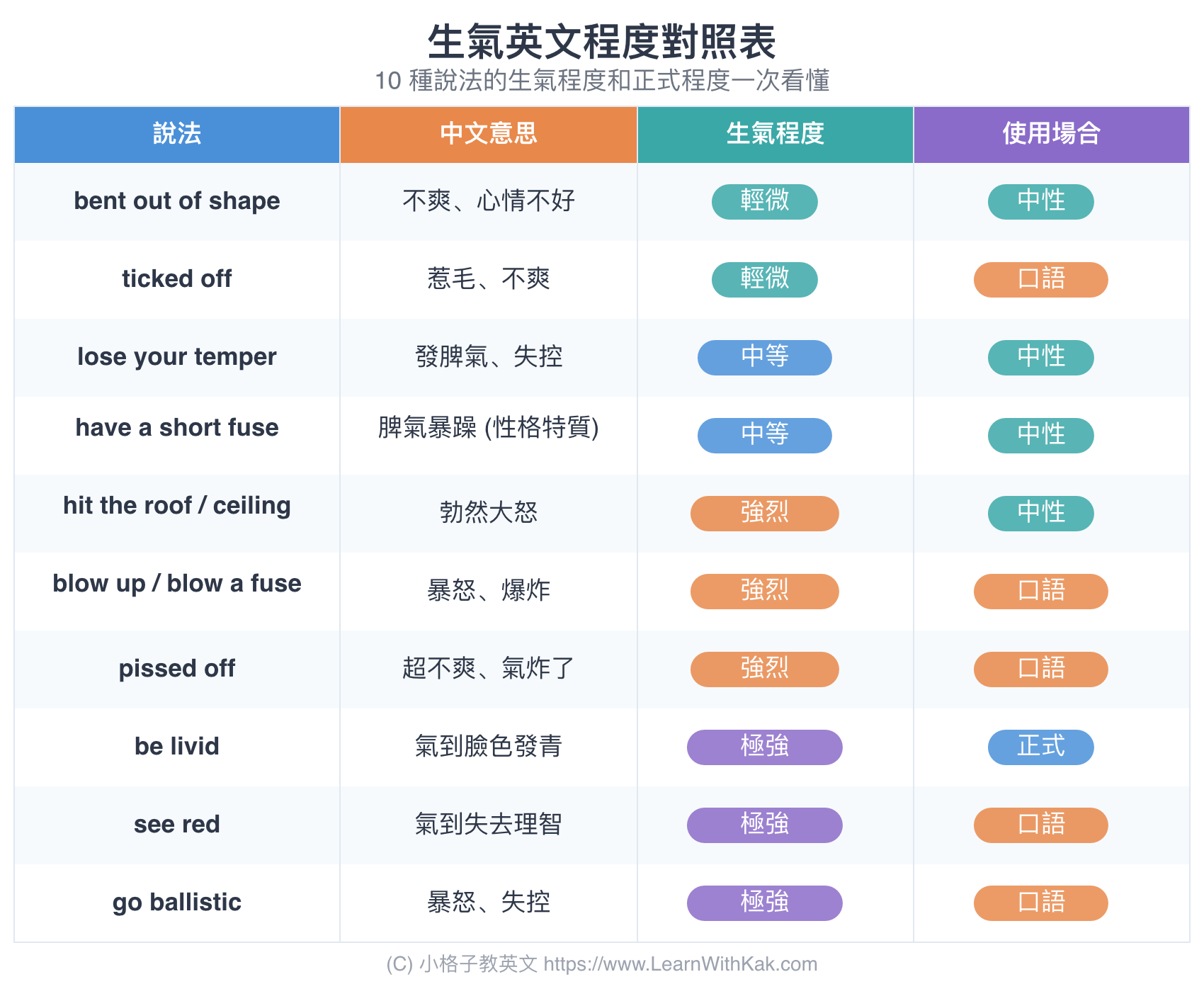
記住,母語人士很少直接說 “I’m angry”,他們會根據情境和生氣程度選擇不同的表達方式。下次想表達生氣的情緒時,不妨試試這些更自然、更生動的說法。
延伸閱讀:【情緒失控英文怎麼說?從朋友吵架到開會失控都會遇到的關鍵片語】
如果你喜歡這篇文章的話,可以追蹤我們的 Threads 和 Facebook 唷!