
你朋友問你週末要不要一起出去,你想了想說「不一定」,這時候除了 maybe,你還會講什麼?其實英文裡光是「不一定英文怎麼說」就有一大堆道地講法,從機率各半到職場報告都用得到,這篇整理給你,順便帶你看多益常出的陷阱題。
機率各半怎麼講
講「機率一半一半」,你是不是也只會想到 fifty-fifty?其實這種一半一半英文的說法還有幾種,語感稍微不太一樣,用對場合會讓你講話更自然。
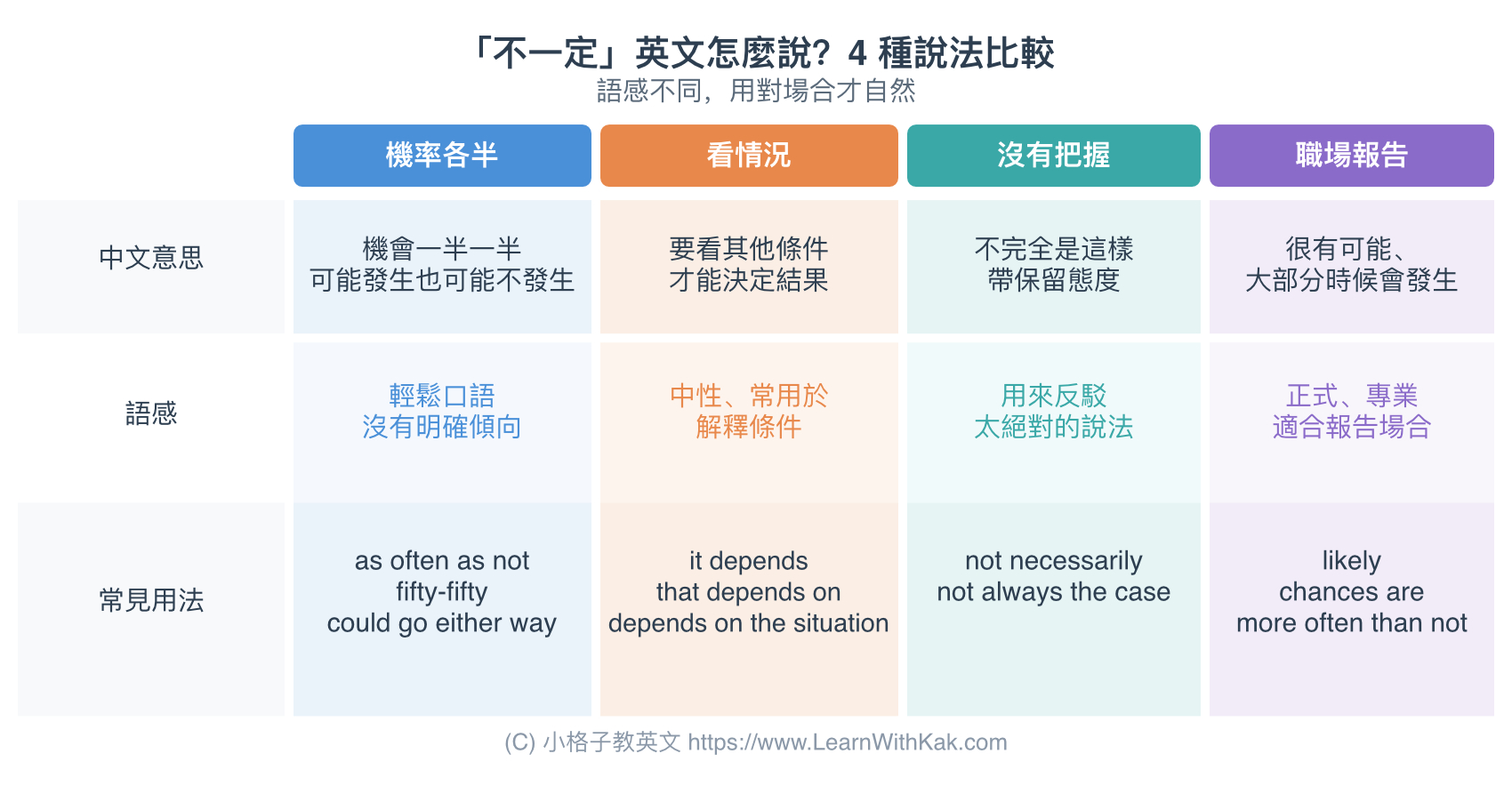
as often as not 是最道地的一種,意思是「差不多一半機會會發生」,語氣比較輕鬆,適合聊天用。fifty-fifty 大家都熟,但其實可以當形容詞也可以當副詞用,彈性很大。could go either way 則更強調「兩種結果都有可能,講不出來哪個機率高」,通常用在你真的沒把握預測結果的時候。
(1)
A: Do you think he’ll show up to the party?
A: 你覺得他會出現在派對嗎?
B: Honestly, as often as not he cancels last minute.
B: 老實說,他常常會臨時取消,機率大概一半一半。
(2)
A: Is the flight going to be delayed?
A: 這班飛機會延誤嗎?
B: It’s fifty-fifty at this point, the weather’s not looking great.
B: 現在大概一半一半,天氣看起來不太妙。
(3)
A: Will the client sign the contract this week?
A: 客戶這週會簽約嗎?
B: It could go either way, they’ve been going back and forth.
B: 說不準,他們一直在猶豫。
(4) We’re not sure if the event will be outdoors or indoors, it’s fifty-fifty depending on the weather.
我們不確定活動是室內還是室外,看天氣一半一半。
(5)
A: Do you think she’ll get the promotion?
A: 你覺得她會升職嗎?
B: As often as not, these decisions come down to timing more than skill.
B: 這種決定常常是看時機,不完全是看能力,機率真的一半一半。
看情況怎麼講才自然
有些時候「不一定」不是機率各半,而是要看其他條件才能決定,這時候用 it depends 系列會更貼切。這也是很多人學過但用起來還是卡卡的說法,重點是後面接的東西怎麼接才自然,很多人會直接照中文邏輯翻譯,結果講出來的句子外國人聽了要想一下才聽懂,其實只要記住幾個固定搭配,講起來就會順很多。
it depends 本身就可以單獨當一句話用,語氣很輕鬆,朋友之間聊天很常見。that depends on + 名詞則是更完整的句子,適合說明具體要看什麼條件。depends on the situation 則是比較泛用的說法,不想講太具體的時候可以用這句帶過去。
(6)
A: Should I bring an umbrella tomorrow?
A: 我明天要帶雨傘嗎?
B: It depends, the forecast keeps changing.
B: 看情況,天氣預報一直在變。
(7)
A: Are we going to hit our sales target this quarter?
A: 我們這季會達標嗎?
B: That depends on how the last two weeks go.
B: 要看最後兩週的表現。
(8)
A: Will you be free this weekend?
A: 你這週末有空嗎?
B: Depends on the situation at work, I might have to go in.
B: 要看工作狀況,我可能要進公司。
(9) Whether the trip happens or not really depends on how the budget approval goes.
這趟出差到底會不會成行,真的要看預算審核的結果。
(10)
A: Can we finish this project by Friday?
A: 我們星期五能完成這個專案嗎?
B: It depends, if the client stops sending last-minute changes.
B: 看情況,要是客戶不要再臨時改東西的話就可以。
沒有把握的講法
還有一種「不一定」是帶著保留態度,意思是「不完全是這樣」或「不能百分之百確定」,這種語感跟前面兩種又不一樣,用 not necessarily 或 not always the case 會更精準。
not necessarily 用來反駁一個太絕對的說法,意思接近「不一定是這樣喔」。not always the case 則更正式一點,常常出現在職場或報告裡,用來說明「這件事不是每次都成立」。
(11)
A: Bigger companies always pay better, right?
A: 大公司薪水一定比較好對吧?
B: Not necessarily, it depends on the industry too.
B: 不一定喔,還要看產業。
(12)
A: So more experience always means a higher salary?
A: 所以經驗越多薪水就一定越高?
B: That’s not always the case, especially in fast-moving industries.
B: 不一定,尤其是變動快的產業更是這樣。
(13) Just because a product is expensive doesn’t necessarily mean it’s better quality.
產品貴不一定代表品質比較好。
(14)
A: Working overtime always gets noticed by the boss, doesn’t it?
A: 加班一定會被老闆注意到吧?
B: Not necessarily, sometimes it just means poor time management.
B: 不一定,有時候反而代表時間管理不好。
(15) A high test score doesn’t always mean the person is fluent in real conversations.
考試分數高不一定代表這個人日常對話很流利。
職場報告最常用的說法
在職場上要表達「不一定」,通常會換一種比較專業的講法,畢竟跟老闆或客戶報告的時候,直接說 maybe 聽起來會有點不夠專業。likely、chances are、more often than not 這幾個說法在報告進度或預估結果的時候很好用。
likely 可以直接放在句子前面當副詞,也可以用 it’s likely that 這種句型,聽起來比較有把握又不會太武斷。chances are 是很口語但也很專業的講法,意思接近「很有可能」。more often than not 則跟前面提到的 as often as not 很像,但語感更強調「大部分時候都是這樣」,機率超過一半,不是單純的一半一半。
(16)
A: Will the launch date slip again?
A: 上線日期會不會又延?
B: It’s likely, we’re still waiting on two approvals.
B: 很有可能,我們還在等兩個核准。
(17)
A: Do you think the client will renew the contract?
A: 你覺得客戶會續約嗎?
B: Chances are they will, they’ve been happy with the results so far.
B: 應該會,目前為止他們對結果都還滿意。
(18) More often than not, delays like this come from unclear requirements at the start.
這種延誤大部分時候都是因為一開始需求沒講清楚。
(19)
A: Should we plan for the worst-case scenario?
A: 我們要不要為最糟的情況做準備?
B: Likely, yes, given how the numbers are trending.
B: 應該要,看目前的數字趨勢的話。
(20) Chances are the meeting will run over, so don’t schedule anything right after.
這場會議很有可能會拖時間,所以之後別排太緊的行程。
如果你常常要在會議或 email 裡回報進度、預測結果,除了這幾個講法,回報進度的英文說法也整理了不少實用句型,順利、延遲、卡關的狀況都能用得上。
多益陷阱題整理
這幾組說法在多益裡也很容易被拿來出陷阱題,因為它們長得很像,但意思剛好相反或程度不同,考生常常一看到 often 就直覺選錯。
最容易搞混的就是 as often as not 跟 more often than not。as often as not 是機率大概一半一半,more often than not 則是機率超過一半,大部分時候都會發生,兩個差一個字但意思差很多。另外 not necessarily 常常會跟 not always 放在同一組選項裡考,這兩個意思其實很接近,但 not always the case 通常出現在比較正式的段落,as often as not 這種一半一半英文的說法反而更常出現在口語對話題型裡。
(21) The exam often tests as often as not against more often than not, so pay attention to whether it’s about equal chance or majority chance.
考試常常會拿 as often as not 跟 more often than not 做對比,要注意題目問的是機率各半還是大部分時候會發生。
(22) In the listening section, chances are and it’s likely often show up in workplace conversations about project timelines.
在聽力題裡,chances are 和 it’s likely 常常出現在跟專案時程有關的職場對話裡。
有時候多益考的不只是意思,還會考語感跟正式程度的差別,這點跟平常學文法規則的邏輯有點不一樣,需要多看例句累積語感。另外要提醒一下,這些說法在口語跟寫作裡出現的頻率也不太一樣,as often as not 跟 could go either way 比較常出現在對話題型,likely 跟 chances are 則是聽力和閱讀都很常見,尤其是跟工作進度、預測結果有關的段落,考生可以特別留意這幾個字出現的上下文,通常都跟「猜測」或「預估」有關,而不是在講已經發生的事實。
一次記住這 6 種說法可能有點多,但其實只要抓住每一種背後的語感差異,之後用起來就會很順手,不管是聊天還是寫報告都不會再卡在 maybe。
延伸閱讀:【英文回報進度不只會 on track!順利、延遲、卡關 10 種說法讓你更專業】
如果你喜歡這篇文章的話,可以追蹤我們的 Threads 和 Facebook 唷!