
朋友拜託你幫忙,但你真的沒辦法搞定;同事問你能不能處理某件事,你也沒那個權限。這種時候只說 “I can’t” 或 “Sorry” 感覺太草率,但又不知道怎麼說更到位。其實「無能為力英文」有好幾種說法,每一種的語感和適合的情境都不一樣,用對了溝通起來更清楚,也更自然。
“There’s nothing I can do”:說了就收尾
「無能為力英文」最直接的一種,字面是「我沒有任何辦法」,語感帶點無奈,說完就收尾,不需要額外解釋。日常對話和職場都可以用,口語或書面都沒問題,算是最安全的選項。
有時候前面加一句 “I understand” 或 “I’m sorry to hear that”,語氣會更好聽,不會顯得太冷漠。如果情境輕鬆一點,想用口語說「沒辦法」,No can do 也是很常見的說法,語氣更隨性一點。
(1)
A: Can you do something about the noise coming from upstairs? It’s driving me crazy.
A: 你可以對樓上的噪音做點什麼嗎?快把我逼瘋了。
B: I understand how you feel, but there’s nothing I can do. You’ll need to talk to the building manager.
B: 我理解你的感受,但我也無能為力,你需要去找大樓管理員。
(2)
A: The refund request got rejected again. Can you override the system?
A: 退款申請又被拒絕了,你可以強制覆蓋系統嗎?
B: I’m sorry, there’s nothing I can do once the system locks the transaction.
B: 很抱歉,一旦系統鎖定交易,我就無能為力了。
(3)
A: My flight got cancelled. Can you get me on the next one?
A: 我的班機取消了,你可以幫我排上下一班嗎?
B: The next flight is fully booked. There’s nothing I can do right now, but I can put you on the waitlist.
B: 下一班已經全滿了,我現在也無能為力,但我可以幫你登記候補。
(4)
A: My boss has been micromanaging everyone on the team lately.
A: 我老闆最近一直在對整個團隊過度管控,很煩。
B: That sounds exhausting. But there’s nothing I can do about that. That’s just how he operates.
B: 聽起來很累。但這件事我也無能為力,他就是這樣的管理方式。
“My hands are tied”:有心無力
“My hands are tied” 字面上是「我的雙手被綁住了」,引申為「想幫但有限制」,這個限制通常是規定、政策、上面的決定,或是某種你無法控制的外部因素。
不少人搜尋 my hands are tied 意思時,會以為跟 “There’s nothing I can do” 完全一樣,但兩者最大的差別在語氣:my hands are tied 帶有「我本來想幫但被卡住了」的感覺,比較有同理心,說起來不像在敷衍對方。
在職場特別好用,遇到客戶投訴、被要求違反規定幫忙、或是上面的決定你自己也沒辦法改,都可以用這句話。My hands are tied 意思最接近的中文是「有心無力」,比「無能為力」多了一點委屈感。遇到同時需要表達歉意的情境,搭配一些比 “Sorry” 更有層次的道歉說法,效果更好。
(5)
A: Can you give me a discount? I’ve been a loyal customer for years.
A: 你可以給我折扣嗎?我已經是多年的老客戶了。
B: I really appreciate that, but my hands are tied when it comes to pricing. I’m not authorized to change it.
B: 我真的很感謝,但在定價方面我也有心無力,我沒有授權可以修改。
(6)
A: We really need more time on this project. Can you push the deadline back?
A: 我們這個專案真的需要更多時間,你可以把截止日期往後移嗎?
B: I wish I could, but my hands are tied. The client already confirmed the delivery date.
B: 我希望可以,但我也有心無力,客戶已經確認了交付日期了。
(7)
A: Why didn’t you say anything in the meeting? You knew the plan had problems.
A: 你為什麼在會議上什麼都沒說?你知道那個計畫有問題的。
B: My hands were tied. The director had already approved it before anyone else was consulted.
B: 我也有心無力,主管在徵詢其他人意見之前就批准了。
(8)
A: Can’t you just let me return this after 30 days? It’s only one week past the deadline.
A: 你就不能讓我在 30 天後退貨嗎?只超過一個星期而已。
B: I really want to help, but my hands are tied. Store policy doesn’t allow it.
B: 我真的很想幫忙,但我也無能為力,店的規定不允許這樣做。
(9)
A: Did you fight for the team’s budget increase this quarter?
A: 這季你有為團隊爭取增加預算嗎?
B: I tried, but my hands were tied. Finance had already finalized the numbers for the whole year.
B: 我試過了,但我也有心無力,財務部已經敲定了全年的數字。
“Out of my hands”:已經不在我這邊了
“Out of my hands” 跟 “My hands are tied” 都跟「手」有關,但語感不一樣:
My hands are tied:我被規定或某些因素限制,動不了
Out of my hands:這件事已經離開我的掌控,移交出去了
“Out of my hands” 強調的是「事情已經進入下一個流程,現在輪不到我決定了」,有一種「我已經盡力了,但接下來不由我」的感覺,通常用在事情已經發展到某個階段的時候。
(10)
A: Has the hiring decision been made yet?
A: 招聘決定做出來了嗎?
B: It’s out of my hands now. HR has passed everything to the department head.
B: 這已經不在我的掌控了,人資已經把所有資料交給部門主管了。
(11)
A: Can you stop the shipment? We need to change the order.
A: 你可以攔截貨物嗎?我們需要修改訂單。
B: I’m afraid it’s out of my hands. The warehouse dispatched it this morning.
B: 恐怕這已經不是我能控制的了,倉庫今天早上已經出貨了。
(12)
A: Did you manage to fix the situation with the client?
A: 你有設法解決客戶那邊的問題嗎?
B: I tried, but it’s out of my hands now. It’s been escalated to upper management.
B: 我試過了,但現在已經不在我這邊了,已經交給高層管理了。
(13)
A: Why didn’t they accept our proposal?
A: 他們為什麼沒有接受我們的提案?
B: Honestly, it was out of my hands. The final call was made by the board, not our team.
B: 老實說,這不是我能決定的,最終決定是董事會做的,不是我們團隊。
“Not my call” / “That’s not up to me”:決定不是我做的
這兩個說法都是在說「決定權不在自己身上」。
“Not my call” 偏口語,語氣輕鬆,對話中直接說就行。”That’s not up to me” 也很口語,稍微更通用,兩個意思幾乎一樣,可以互換。
TOEIC 聽力 Part 3 的職場對話裡,很常出現這類表達,通常是員工被問到能不能批准某件事,或是否能替客戶做決定的情境。聽到這類句子,就代表說話者沒有那個權限,答題時是個很關鍵的細節。
在職場如果需要同時委婉地表達不同意,這幾個說法也可以搭配使用。
(14)
A: Should we go with the cheaper supplier?
A: 我們應該選便宜一點的供應商嗎?
B: That’s not my call. You’ll need to bring it up with the procurement manager.
B: 這不是我能決定的,你需要去跟採購經理提。
(15)
A: Can you approve the extra overtime hours for the team this week?
A: 你可以批准本週團隊的額外加班時間嗎?
B: It’s not my call. That has to go through payroll and the department head.
B: 這不是我能決定的,必須經過薪資部門和部門主管。
(16)
A: Do you think we should reschedule the product launch?
A: 你覺得我們應該重新安排產品發布的時間嗎?
B: Honestly, that’s not up to me. The marketing director makes those decisions.
B: 老實說,這不是我說了算,行銷總監負責做這些決定。
(17)
A: Why can’t you just tell me if I got the job?
A: 你為什麼不能直接告訴我有沒有錄取?
B: I wish I could, but that’s not up to me. The final decision comes from the hiring committee.
B: 我希望可以,但這不是我說了算,最終決定來自招聘委員會。
“Above / Beyond my pay grade”:超出我的職責
這是職場俚語,字面上是「超出我的薪資級別」,實際意思是「這超出我的職責範圍」,也可以拿來說「這不是我懂的領域,你去問別人比較好」。
“Above my pay grade” 在美式英文裡最常見,”Beyond my pay grade” 語感幾乎一樣,稍微更正式一點。兩個都屬於口語,正式書信裡不適合出現。
(18)
A: Can you explain why the algorithm keeps producing incorrect outputs?
A: 你可以解釋為什麼這個演算法一直輸出錯誤的結果嗎?
B: That’s honestly above my pay grade. You’d need to ask the senior developer.
B: 老實說這超出我的能力範圍,你需要去問資深工程師。
(19)
A: Do you think this contract clause is legally enforceable?
A: 你覺得這個合約條款在法律上可以執行嗎?
B: That’s beyond my pay grade. We should run it by the legal team first.
B: 這超出我的職責範圍,我們應該先讓法務團隊看一下。
(20)
A: Why did the company decide to restructure the whole department?
A: 公司為什麼決定要重組整個部門?
B: Honestly, I have no idea. That’s way above my pay grade.
B: 老實說我不知道,那遠超出我的職責範圍了。
(21)
A: Should we move forward with the acquisition now or wait for the market to stabilize?
A: 我們現在應該推進收購計畫,還是等市場穩定再說?
B: That’s above my pay grade. You’ll want to talk to the CFO about that.
B: 這超出我的職責範圍,你要去找財務長談。
“I’m not in a position to…”:正式場合這樣說
這是最正式的一種說法,後面接原形動詞,意思是「我沒有立場或權限去做某件事」。在職場的正式場合、商務書信,甚至多益閱讀測驗裡都會看到這個表達。
常見搭配:
- I’m not in a position to comment(沒有立場評論)
- I’m not in a position to approve(沒有立場批准)
- I’m not in a position to disclose(沒有立場透露)
- I’m not in a position to make that decision(沒有立場做這個決定)
這個說法有「即使想做也無法做」的感覺,可以是職位上沒有那個權限,也可以是因為職業規範。如果反過來,你的同事說他能幫你處理,你可能會聽到“I’ll see to it”(包在我身上),那正好是這句話完全相反的情境。
(22)
A: Can you tell us why the project was suddenly cancelled?
A: 你可以告訴我們這個專案為什麼突然被取消嗎?
B: I’m not in a position to comment on internal decisions at this stage.
B: 我現在沒有立場對內部決定發表評論。
(23)
A: Can you give us a sneak peek at the new product before the official announcement?
A: 在官方公告之前,你可以讓我們先看一下新產品嗎?
B: I’m afraid I’m not in a position to disclose that information yet.
B: 恐怕我現在還沒有立場透露那些資訊。
(24)
A: We need an answer now. Can you approve the budget change?
A: 我們現在需要答覆,你可以批准這個預算更改嗎?
B: I’m not in a position to approve that without the CFO’s sign-off.
B: 沒有財務長的批准,我沒有立場批准這件事。
(25)
A: Can you confirm whether the merger is going ahead?
A: 你可以確認合併是否會繼續進行嗎?
B: I’m not in a position to make any official statements at this time.
B: 我現在沒有立場發表任何官方聲明。
六種說法,語感怎麼分
這六種說法都可以表達「我沒辦法幫到你」,但用在不同情境會給對方完全不同的感受。用錯了,對方可能以為你在推卸責任,或搞不清楚你是沒辦法還是沒權限。下面這張比較表整理了每種說法的語感和使用場合:
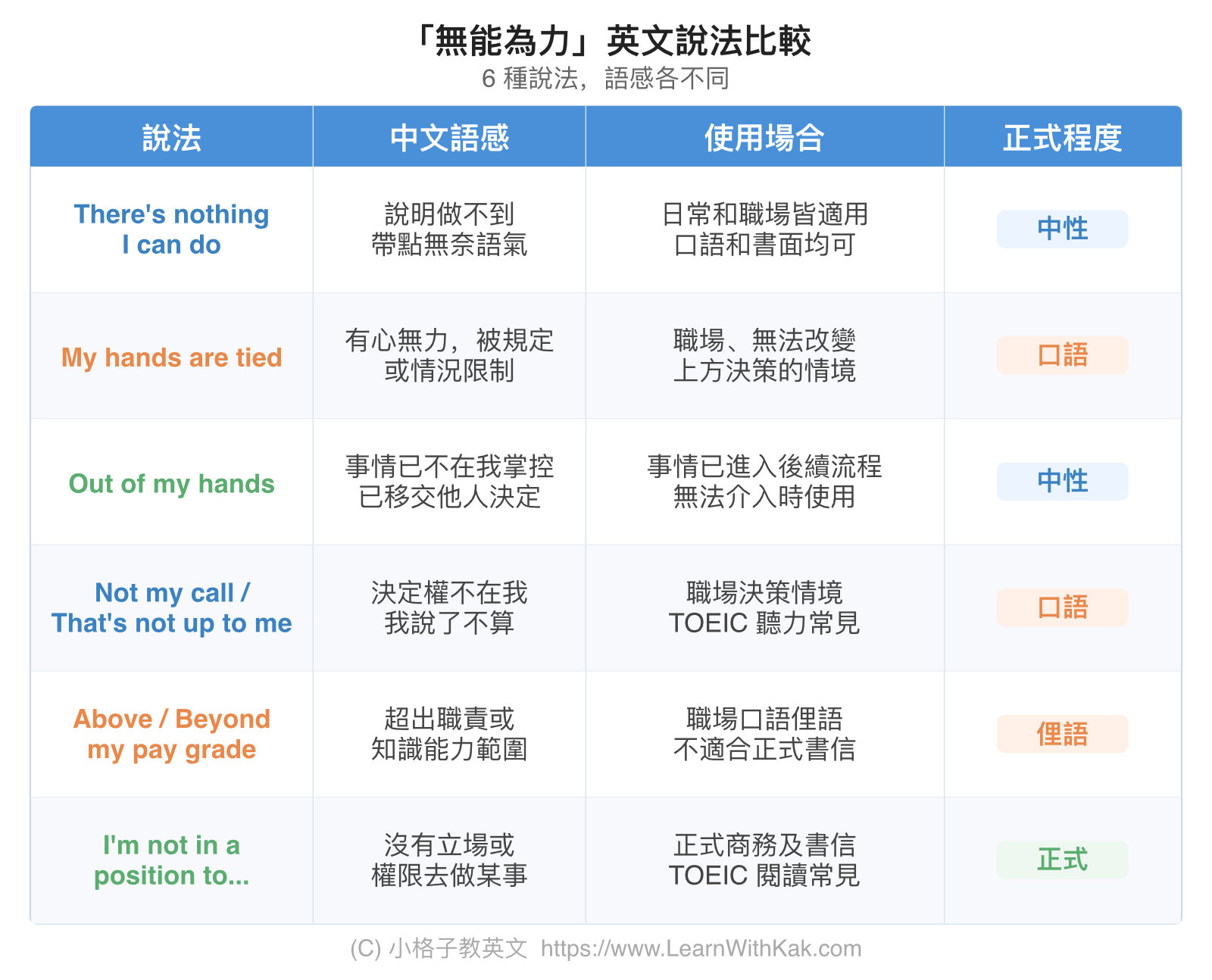
選對說法比記得說法更重要。遇到有規定限制的情況就說 my hands are tied,事情已移交出去就說 out of my hands,正式場合需要表明立場就換成 I’m not in a position to。多一個說法,少一點誤會。
延伸閱讀:【No can do 是什麼意思?從中式英文變道地俚語,用法、由來一次搞懂】
如果你喜歡這篇文章的話,可以追蹤我們的Threads和Facebook唷!