
不管是日常生活還是職場,多少都會遇到有人出言不遜的情況,罵人英文其實有好幾種說法,每一種語感和嚴重程度都不一樣。搞清楚這些差別,不只能聽懂對方在說什麼,描述這類情況的時候也會更精準。
Call Someone Names/Name-calling:叫綽號、嘲笑羞辱
Call someone names 是指用貶義詞或綽號稱呼對方,目的是嘲笑、羞辱或欺凌對方,是很常見的霸凌行為描述方式。名詞形式是 name-calling,指這種嘲笑叫綽號的行為本身。
這裡要特別說一下:call someone names 跟 call someone by name 意思完全不一樣。後者是「用名字稱呼某人」,比如電影《以你的名字呼喚我》的英文原名 Call Me by Your Name,就是這個意思,指用對方的名字叫自己,帶有親密的感覺。兩句差一個字,意思差很遠。
(1)
A: Why does Kevin always sit alone at lunch?
A: Kevin 為什麼午餐都自己坐?
B: Some kids in his class call him names. He doesn’t want to deal with it.
B: 班上有幾個同學一直嘲笑他,他不想面對。
(2)
A: Did you hear what happened at the team meeting?
A: 你有聽說會議發生什麼事嗎?
B: Yeah. Mark basically called Sarah names in front of everyone. It was really unprofessional.
B: 聽說了,Mark 當著所有人的面羞辱 Sarah,真的很不專業。
(3) The HR department issued a warning about name-calling in the workplace, saying it would be treated as a form of harassment.
人資部門就職場中嘲笑辱罵的行為發出警告,表示這將被視為騷擾。
(4)
A: My little sister came home crying today.
A: 我妹妹今天哭著回家。
B: What happened?
B: 怎麼了?
A: Some girls at school have been calling her names. She’s been dealing with it for weeks.
A: 學校有幾個女生一直嘲笑她,她已經撐了好幾個星期了。
Insult:侮辱、冒犯
Insult 的範圍比 call someone names 更廣,可以當動詞也可以當名詞,指的是用言語或行為讓對方感到被羞辱或冒犯,不一定是叫綽號,也可以是一句話、一個態度,甚至一個動作。
Insult 作為名詞時,常見搭配是 an insult to someone(對某人的侮辱)或 hurl insults at someone(對某人口出惡言)。這個字在職場英文和多益(TOEIC)閱讀測驗中都算常見,出現在職場衝突或公關危機的情境裡。
(5)
A: Did you see what the client said in the email?
A: 你有看到客戶在信裡說的話嗎?
B: Yeah, I did. He basically insulted our entire team’s work. The manager is furious.
B: 看到了,他基本上是在羞辱我們整個團隊的成果,主管氣壞了。
(6)
A: I can’t believe he said that during the presentation.
A: 我不敢相信他在簡報中說了那種話。
B: I know. It was a direct insult to everyone who worked on the project.
B: 我知道,那根本是在直接羞辱所有參與這個專案的人。
(7) She felt deeply insulted when her manager dismissed her idea without even listening to it.
當主管連聽都沒聽就否定她的想法,她覺得被深深地羞辱了。
(8)
A: How did the negotiation go?
A: 談判進行得怎麼樣?
B: Terrible. The other party kept hurling insults instead of talking about the actual terms.
B: 很糟,對方一直口出惡言,根本沒在討論正事。
Belittle:貶低、輕視
Belittle 的語感跟前兩個不一樣。它不一定是大聲罵,而是用言語或態度讓對方覺得自己的努力、想法或能力不值一提,是一種更隱性的打壓。很多時候說的人不覺得自己在罵人,但聽的人就是會覺得被貶低了。
職場裡這種情況特別多,常見搭配有:belittle someone’s work(貶低某人的工作成果)、belittle someone’s efforts(否定某人的努力)、belittle someone’s ideas(輕視某人的想法)。這也是多益和職場英文測驗中出現頻率較高的詞彙。
(9)
A: I finally shared my proposal in the meeting, but my supervisor kept interrupting and questioning everything.
A: 我終於在會議上提了我的提案,但主管一直打斷我,質疑每一點。
B: That sounds like he was trying to belittle your work in front of everyone.
B: 聽起來他是在當眾貶低你的成果。
(10)
A: She worked on that report for two weeks and he just said “this is basic stuff.”
A: 她花了兩個星期做那份報告,他就說「這很基本啊」。
B: That’s such a classic way to belittle someone’s efforts without technically saying anything mean.
B: 這就是那種表面上沒罵人,但實際上在貶低對方努力的經典說法。
(11) A good leader challenges their team without belittling anyone’s contributions.
好的領導者會挑戰團隊,但不會貶低任何人的貢獻。
(12)
A: My dad always says my job isn’t a “real job.”
A: 我爸總說我的工作不算「真正的工作」。
B: That’s belittling. It doesn’t matter what industry you’re in.
B: 那就是在貶低你,不管你在哪個行業工作都一樣。
Put Down/Talk Down To:挖苦、用高高在上的語氣說話
Put someone down 是指當場用一句話挖苦或貶低對方,通常比較直接,是那種讓你當下就覺得很難堪的說法。名詞形式 a put-down 指的就是這種挖苦的話。
Talk down to someone 則是一種態度問題,指用一種「我在跟小孩說話」的語氣跟對方說話,讓對方覺得自己很蠢或很低等。兩者的差別在於:put down 是具體的一句話,talk down to 是一種持續的說話方式和態度。職場上這兩種行為都很常見,表達不同意的時候,語氣拿捏不好就很容易踩到這條線。
(13)
A: Did Jason just say “oh, you didn’t know that?” in front of the whole team?
A: Jason 剛才有沒有當著整個團隊的面說「你連這個都不知道?」
B: Yeah. That was such a put-down. I felt bad for her.
B: 有,那就是在挖苦人,我替她覺得難受。
(14)
A: I hate presenting to that client. He always talks down to us like we’ve never done this before.
A: 我很不喜歡向那個客戶做簡報,他總是用一種我們什麼都不懂的語氣跟我們說話。
B: I noticed that too. It’s really demoralizing.
B: 我也有注意到,真的很讓人洩氣。
(15) He has a habit of putting people down when they disagree with him, which makes team discussions really uncomfortable.
他有個習慣,每當有人不同意他,他就會挖苦對方,讓團隊討論變得很不舒服。
(16)
A: Why does she always explain things so slowly to me?
A: 她為什麼每次跟我解釋事情都講得這麼慢?
B: She talks down to basically everyone. Don’t take it personally.
B: 她對每個人都是這樣,不要往心裡去。
Trash Talk:嗆聲、說對手壞話
Trash talk 的語感比較口語,帶有挑釁和競爭的意味,常見於運動賽事、電玩遊戲,或是職場上有競爭關係的情境。跟前面幾個字不同,trash talk 有時候帶著一點玩鬧性質,不一定是真的在侮辱對方,但說過頭就會變成真正的冒犯。
(17)
A: Did you watch the game last night? The players were going at it.
A: 你有看昨晚的比賽嗎?球員們打得很激烈。
B: Yeah, there was so much trash talk on the court. I’m surprised the ref didn’t step in sooner.
B: 對,場上的嗆聲真的很多,我很驚訝裁判沒有早點介入。
(18)
A: Our competitor’s sales team keeps badmouthing us to clients.
A: 競爭對手的業務團隊一直在客戶面前說我們壞話。
B: That’s just trash talk. If our product speaks for itself, we don’t need to respond.
B: 那只是嗆聲而已,如果我們的產品夠好,不需要回應。
(19) Some players use trash talk as a strategy to get inside their opponent’s head and throw them off their game.
有些選手把嗆聲當作策略,目的是擾亂對手的心理,讓對方發揮失常。
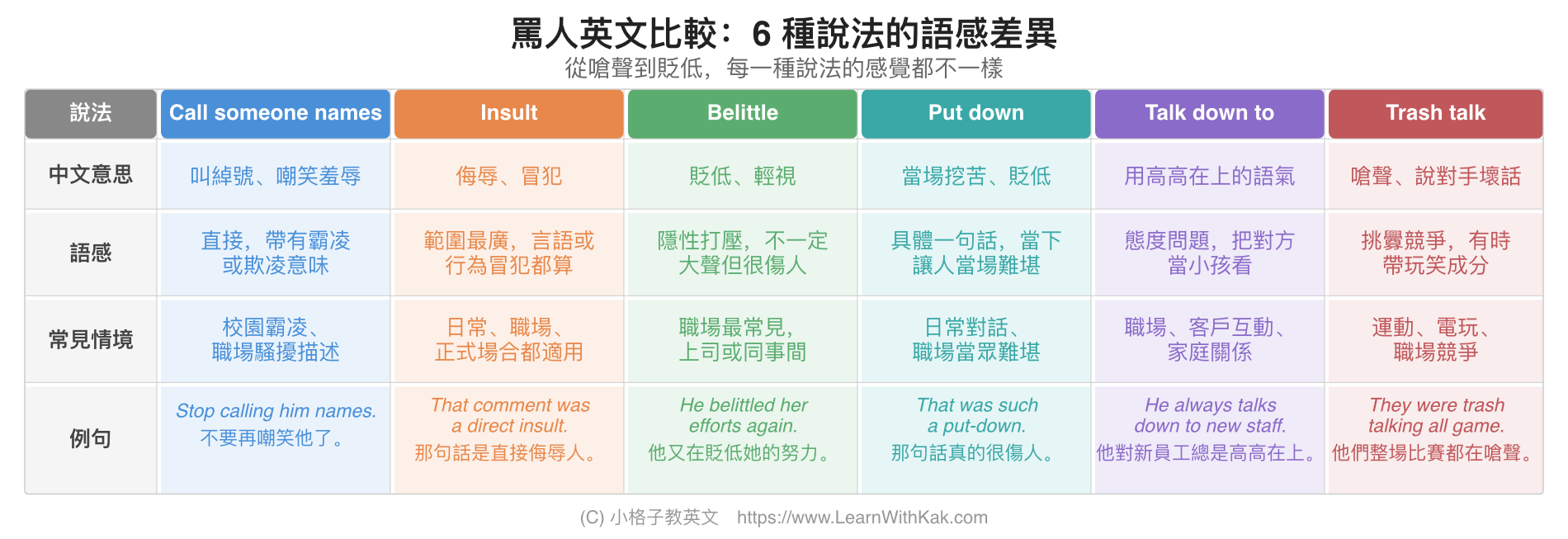
這幾個詞放在一起比較,語感差異最明顯的地方在於「主動程度」和「嚴重性」。Trash talk 偏競爭性、有時候帶玩笑;call someone names 和 name-calling 是直接叫綽號羞辱;insult 範圍最廣,可以是言語也可以是行為;belittle 是那種表面不粗魯、但讓人覺得自己渺小的說法;put down 和 talk down to 則偏向態度和語氣帶來的傷害。自以為是的人特別容易做出這幾種行為,也很值得學幾個精準的說法來描述。
這幾個字在多益(TOEIC)的閱讀和聽力部分都有機會出現,尤其是 insult 和 belittle,在職場情境的短文裡算是滿常見的詞彙。
下面的比較圖整理了各種說法的重點差異,可以一次對照清楚。
有時候被人說了難聽的話,最難的不是找字反擊,而是知道怎麼精準描述那個情況。這幾個詞學起來,下次遇到類似情況,至少能說得清楚。
延伸閱讀:【「自以為是」英文怎麼說?這幾個講法真的有夠傳神】
如果你喜歡這篇文章的話,可以追蹤我們的 Threads 和 Facebook 唷!