
說八卦這件事,英文比你想的還有趣。Spill the beans 中文大家都知道是「說出秘密」,但同樣是「說秘密」,是不小心說漏的?還是故意爆料的?還是輾轉聽來的?每個情況英文都有不同說法,而且差很多。這篇一次整理 8 個最常用的,從爆料到保密全都有。
Spill the Beans vs. Spill the Tea
這兩個最多人搞混,因為都跟「說出秘密」有關,但用起來的語感差很多。
Spill the beans 中文是「洩漏秘密、說漏嘴」,比較通用,可能是故意說,也可能不是,口語和稍微正式一點的場合都能用。Spill the tea 則是從網路流行語來的,tea 在這裡指的是八卦或勁爆消息,語感更輕、更有「我要爆料了!」的感覺,但在正式場合就不太適合。
(1)
A: Did you hear about Jake and his boss?
A: 你有聽說 Jake 和他老闆的事嗎?
B: No! Spill the beans!
B: 沒有!快說!
(2)
A: Someone spilled the beans about the surprise party. Now she knows.
A: 有人把驚喜派對的事說出去了。她現在知道了。
B: Oh no. Who told her?
B: 不會吧。是誰告訴她的?
(3)
A: Come on, spill the tea! What happened at the party last night?
A: 快說嘛!昨晚派對上發生了什麼事?
B: Okay but you did not hear it from me.
B: 好,但你不是從我這裡聽來的喔。
(4)
A: My manager spilled the tea about the restructuring plan before the official announcement.
A: 我主管在正式公告前就把公司重組計畫的料爆出來了。
B: That is a big deal.
B: 這事情很大條。
Let the Cat Out of the Bag
這個跟 spill the beans 很像,都是「說出秘密」,但 let the cat out of the bag 特別強調「不小心說漏嘴」,通常是意外洩漏,不是故意說的。
簡單分:如果有人故意把秘密說出去,用 spill the beans 比較自然;但如果是一不小心說溜嘴,let the cat out of the bag 更貼切。
(5)
A: Did you tell Sarah about the promotion?
A: 你有告訴 Sarah 升職的事嗎?
B: Not exactly. I kind of let the cat out of the bag by accident.
B: 不算有。我好像不小心說漏了。
(6)
A: Who let the cat out of the bag about the merger?
A: 是誰把合併的消息說出去的?
B: I think it was Kevin. He mentioned it during a client call.
B: 我覺得是 Kevin。他在一個客戶電話裡提到的。
(7)
A: Careful, don’t let the cat out of the bag. It’s supposed to be a secret.
A: 小心,別說漏嘴。這應該是保密的。
B: Got it, I won’t say anything.
B: 了解,我什麼都不說。
(8)
A: Ugh, I let the cat out of the bag. I accidentally told Mia that we’re throwing her a birthday party.
A: 唉,我說漏嘴了。我不小心告訴 Mia 我們要幫她辦生日派對。
B: How did that happen?!
B: 這是怎麼發生的?!
Dish the Dirt
Dish the dirt 是「爆料、說人壞話或說八卦」的意思,感覺比 spill the tea 更有「挖出醜事」的味道,通常帶有一點「這料有點重」的感覺,但朋友之間輕鬆聊也很常用。
Dish 在這裡是動詞,有「分享、傳遞」的意思;dirt 就是「骯髒的東西」,合起來就是「把骯髒的料爆出來」。職場八卦、朋友圈的醜聞都很適合用這個,是聊八卦英文裡很傳神的一個說法。
(9)
A: I heard you know what really happened between Tom and Lisa.
A: 我聽說你知道 Tom 和 Lisa 之間到底發生了什麼。
B: Come over later and I will dish the dirt.
B: 晚點過來,我再跟你爆料。
(10)
A: She called me for an hour just to dish the dirt about her coworkers.
A: 她打了一個小時的電話給我,就是為了說她同事的八卦。
B: That sounds exhausting.
B: 聽起來很累人。
(11)
A: Okay, dish the dirt. What did you find out?
A: 好,快爆料。你發現了什麼?
B: You are not going to believe this.
B: 你不會相信的。
(12)
A: I don’t really want to dish the dirt about my old company, but things were pretty rough there.
A: 我不太想說我前公司的壞話,但那裡的狀況真的蠻糟的。
B: You can tell me. I won’t say anything.
B: 你可以跟我說。我不會講出去的。
A Little Bird Told Me
這個片語超有趣,意思是「我聽說了,但我不想透露是誰告訴我的」。就是那種有料但不想說出處的感覺,神秘感滿點。
在職場或朋友圈,如果你不想點名說是誰告訴你消息,但又想讓對方知道你知道了,a little bird told me 就是最道地的說法。這也是很多人學聊八卦英文時第一個愛上的片語。
(13)
A: How did you know about the meeting?
A: 你怎麼知道那個會議的事?
B: A little bird told me.
B: 消息靈通嘛,就是知道了。
(14)
A: A little bird told me you are thinking about leaving the company.
A: 我聽說你在考慮離職。
B: Who told you that?
B: 誰告訴你的?
A: I can’t say.
A: 我不能說。
(15)
A: How did you know it was my birthday?
A: 你怎麼知道今天是我生日?
B: A little bird told me. Happy birthday!
B: 消息靈通嘛。生日快樂!
(16)
A: A little bird told me the boss is planning a company trip to Japan.
A: 我聽說老闆在計畫公司旅遊去日本。
B: Really? Where did you hear that?
B: 真的嗎?你從哪裡聽來的?
A: I have my sources.
A: 我有我的情報來源。
Hear It Through the Grapevine
這個是「輾轉聽說、風聲傳來」的意思,就是那種消息不知道從哪傳來,可能已經傳了好幾手的感覺。
Grapevine 是葡萄藤,想像消息像葡萄藤一樣到處蔓延,傳來傳去,最後你也不知道原始出處是誰,這就是 hear it through the grapevine 的畫面感,這個片語在正式和非正式的英文裡都常出現。
(17)
A: I heard through the grapevine that the company might be moving offices.
A: 我聽說公司可能要搬辦公室。
B: Where did you hear that?
B: 你從哪聽來的?
A: I’m not sure, it’s just been going around.
A: 我也不確定,反正這個消息一直在流傳。
(18)
A: I heard through the grapevine that you and Mike are dating.
A: 我聽說你和 Mike 在交往。
B: Oh wow, that went around fast.
B: 哇,消息傳得好快。
(19)
A: I heard through the grapevine that there are going to be layoffs.
A: 我聽說公司要裁員。
B: I hope that’s just a rumor.
B: 希望那只是謠言。
(20)
A: How did everyone find out?
A: 大家怎麼都知道了?
B: It just spread through the grapevine. That’s how these things go.
B: 就是風聲傳出去的。這種消息就是這樣。
Straight from the Horse’s Mouth
前面幾個講的都是「消息不知道哪來的、可能已經傳了好幾手」,這個完全相反。Straight from the horse’s mouth 是「第一手可靠消息」,消息直接來自當事人本身,不是道聽塗說。
為什麼是「馬的嘴巴」?這個說法跟賽馬圈有關,相傳「直接問馬本人」才是最準確的消息,所以就被拿來表示「最可信的第一手資訊」。
(21)
A: How do you know the boss is quitting?
A: 你怎麼知道老闆要辭職?
B: I got it straight from the horse’s mouth. He told me himself.
B: 這是第一手消息。他親口告訴我的。
(22)
A: Is it true that the project got cancelled?
A: 那個專案真的被取消了嗎?
B: Yes, straight from the horse’s mouth. The director confirmed it in the meeting.
B: 是的,最可靠的消息。總監在會議上親口確認的。
(23)
A: I heard you’re moving to Taipei?
A: 我聽說你要搬去台北?
B: Yes! I didn’t tell anyone yet though. How did you find out?
B: 對!但我還沒告訴任何人。你怎麼知道?
A: A little bird told me.
A: 消息靈通嘛。
(24)
A: I don’t trust those rumors. I want to hear it straight from the horse’s mouth.
A: 我不相信那些謠言。我要直接從當事人那裡聽到消息。
B: Then go ask him yourself.
B: 那你自己去問他吧。
Keep It Under Wraps
聊完八卦,總會有人說一句「不要說出去喔」,這就是 keep it under wraps 最完美的出場時機。意思是「保密、不要讓消息外洩」,wraps 是「包裹、包裝」,把東西包起來就是不讓人看見。
這個在職場特別常用,像是公告前的計畫、還沒宣布的人事變動,都會有人說 keep it under wraps。學會這個,讓你的聊八卦英文從說料到收場都很完整。
(25)
A: Can I tell people about the new product launch?
A: 我可以告訴別人新產品發布的事嗎?
B: Not yet. We need to keep it under wraps until the official announcement.
B: 還不行。在正式公告之前要保密。
(26)
A: So you are expecting? Congratulations!
A: 所以你懷孕了?恭喜!
B: Yes, but please keep it under wraps for now. We’re not ready to tell everyone.
B: 是的,但請先保密。我們還沒準備好告訴所有人。
(27)
A: Did you hear about the merger?
A: 你有聽說合併的消息嗎?
B: Yes, but the boss wants to keep it under wraps. Don’t say anything.
B: 有,但老闆想先保密。不要說出去喔。
(28)
A: I heard there is going to be a big announcement next week.
A: 我聽說下週會有重大公告。
B: Yeah, but I can’t say more. It’s being kept under wraps.
B: 對,但我不能多說。現在還在保密中。
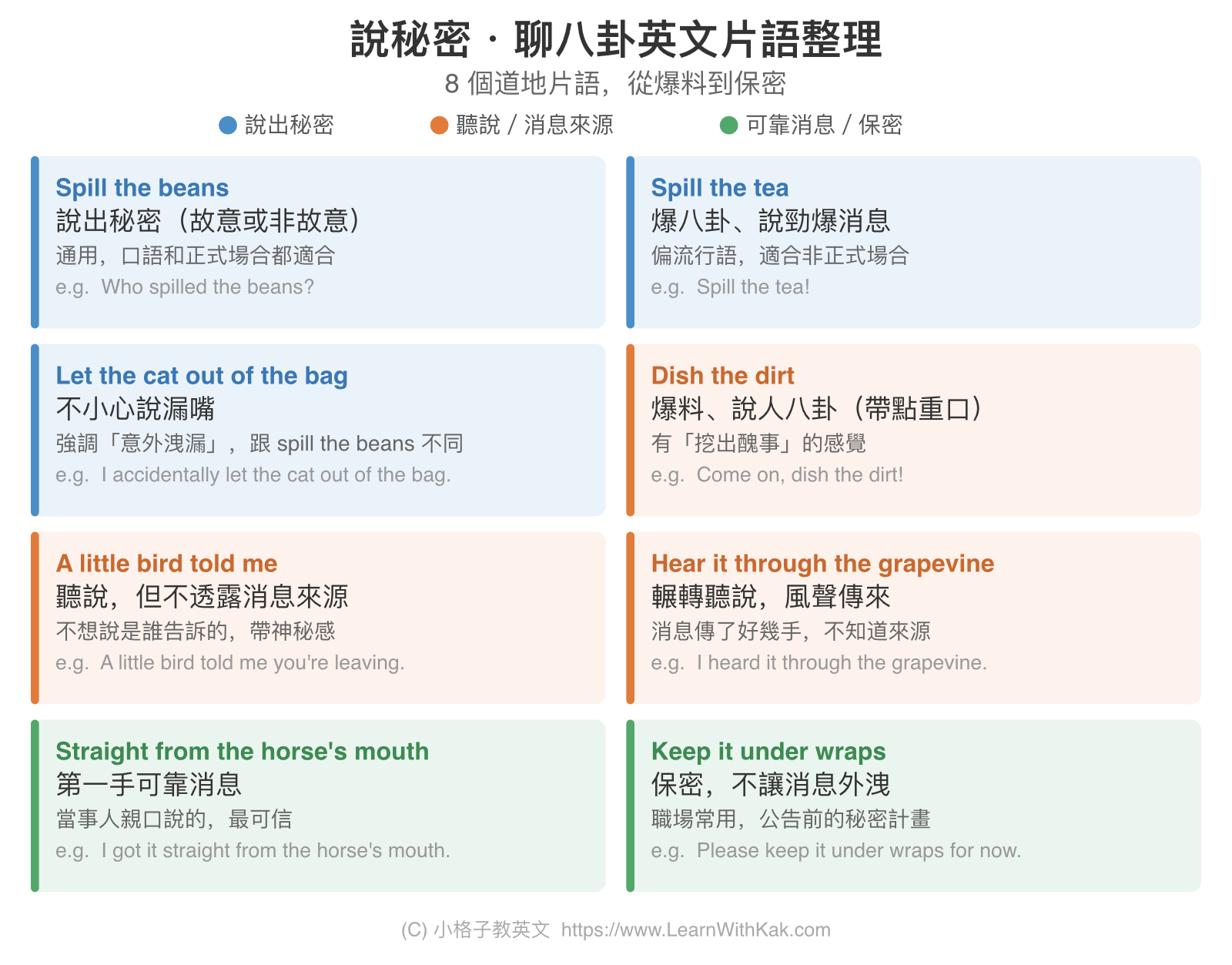
這 8 個片語幾乎涵蓋了聊八卦的完整流程,從聽說消息、爆料、判斷消息可不可信,到最後說「不要說出去喔」都有。下次和朋友聊天或在職場遇到八卦時,試著換一個說法,不用全部一次用,一個就夠了。
延伸閱讀:【Take you for a ride 不是兜風、Break a leg 不是斷腿! 10 個英文俚語實際意思跟你想的完全不同】
如果你喜歡這篇文章的話,可以追蹤我們的Threads和Facebook唷!