
考多益之前,最讓人頭痛的不是單字量,而是那些「到底要配哪個介系詞」的題目。In charge of 還是 in charge for?Responsible of 還是 responsible for?光這幾個就夠讓人懷疑人生了。這篇整理了多益 Part 5 最常考的介系詞片語,每個都有例句,讓你考試的時候不用全靠直覺猜。
「負責」不只一種說法:In charge of vs. Responsible for
這兩個片語都可以翻成「負責」,但語感不太一樣,考試也常常把它們一起出。
In charge of 偏向管理、監督的意思,指的是你對某個團隊、部門或專案有主導權,重點在「你管的範圍」。
Responsible for 則是負責某件具體的事,強調任務的執行或結果的責任歸屬,重點在「這件事交給你了」。
(1)
A: Who’s in charge of the new product launch?
A: 新品上市是由誰負責的?
B: Sarah is. She’s been in charge of the whole campaign since last month.
B: Sarah 啊,她上個月就開始負責整個活動了。
(2)
A: Are you responsible for the social media accounts?
A: 你是負責社群媒體帳號的嗎?
B: Yes, I’m responsible for all the content and scheduling.
B: 對,我負責所有內容和發文排程。
(3)
A: Who should I contact if there’s a problem with the system?
A: 系統出問題的話我應該找誰?
B: Talk to Marcus. He’s in charge of the IT department.
B: 去找 Marcus,他管 IT 部門。
(4)
A: The delivery was late again.
A: 貨又晚到了。
B: Who’s responsible for coordinating with the supplier?
B: 誰負責跟供應商協調的?
(5)
A: I heard the team leader got reassigned.
A: 我聽說那個組長被調走了。
B: Yeah, he was responsible for the project that went over budget last quarter.
B: 對啊,他就是負責上季超預算那個案子的人。
跟這個介系詞搭配很類似的還有 accountable,accountable to 和 accountable for 的差別和這裡的邏輯很像:to 後面接人,for 後面接事,職場英文裡很常用。
「知道 / 熟悉」那幾個:Familiar with、Aware of、Informed about
這三個都跟「掌握某種資訊或知識」有關,但程度和語感有明顯差別,考試最常出現在職場溝通的情境。
Familiar with 是「熟悉」,指你對某件事有一定程度的了解或使用經驗,不只是聽說過而已。
Aware of 是「知道某件事的存在」,不代表你很了解,只是你知道它在那裡。
Informed about 則是「被告知、掌握最新動態」,常出現在職場 email 或正式報告中。
(6)
A: Are you familiar with the new software we’re using?
A: 你熟悉我們在用的新軟體嗎?
B: A little. I used something similar at my last job.
B: 有一點,我之前的工作用過類似的東西。
(7)
A: Did you know about the policy change?
A: 你知道有政策變動嗎?
B: I was aware of it, but I didn’t have the full details yet.
B: 我知道有這件事,但還不清楚完整細節。
(8)
A: Please keep me informed about any updates on the project.
A: 有任何專案進度更新,請隨時告知我。
B: Of course. I’ll send you a report every Friday.
B: 沒問題,我每週五會寄報告給你。
(9)
A: Is the new intern familiar with our client database?
A: 新來的實習生熟悉我們的客戶資料庫嗎?
B: Not yet. We’re still getting her up to speed.
B: 還沒,我們還在帶她熟悉。
(10)
A: Are all the managers aware of the budget cuts?
A: 所有主管都知道預算削減的事嗎?
B: Yes, they’ve all been informed about the changes.
B: 對,所有人都已經被告知了。
「申請 / 適用」最容易寫錯:Apply for vs. Apply to
這組是多益 Part 5 超常出的陷阱,介系詞換一個,意思就跑掉了。
Apply for 後面接你申請的「目標物」,例如工作、獎學金、簽證、補助。
Apply to 後面接你申請的「對象」,例如公司、學校,另外也可以表示「適用於某人或某情況」。
(11)
A: Have you applied for the job yet?
A: 你有去應徵那份工作嗎?
B: Not yet. I’m still working on my cover letter.
B: 還沒,我還在寫求職信。
(12)
A: Which companies did you apply to?
A: 你投了哪些公司?
B: I applied to three companies in Taipei and one in Taichung.
B: 我投了三家台北的公司和一家台中的。
(13)
A: Can I apply for the scholarship if I’m not a full-time student?
A: 我不是全職學生也可以申請那個獎學金嗎?
B: I think the scholarship only applies to full-time students.
B: 我覺得那個獎學金只適用於全職學生。
(14)
A: I’m planning to apply for a work visa.
A: 我打算申請工作簽證。
B: You should apply to the embassy directly. It’s faster.
B: 你應該直接向大使館申請,比較快。
(15)
A: Does this discount apply to online orders?
A: 這個折扣適用於線上訂單嗎?
B: Yes, it applies to all orders over 500 dollars.
B: 可以,所有超過 500 元的訂單都適用。
「遵守 / 符合」:Comply with、Conform to、Adhere to
這三個都有「按照規定做」的意思,但語氣和使用場合有差。多益的商業情境最常見到 comply with,但另外兩個也不難,記住各自的語感就好。
Comply with 最常用,指遵守法規、公司政策、客戶要求,語氣正式但很自然。
Conform to 是「符合某個標準、規範或期望」,強調和某個基準保持一致。
Adhere to 語氣最強,帶有「嚴格遵守、不偏離」的感覺,常用在程序、原則、指引相關的情境。
(16)
A: Our products have to comply with international safety standards.
A: 我們的產品必須符合國際安全標準。
B: I know. The compliance team is reviewing everything right now.
B: 我知道,法規部門現在正在審查所有東西。
(17)
A: The new employee kept showing up in casual clothes.
A: 新員工一直穿便服來上班。
B: Yeah, he just refuses to comply with the dress code.
B: 對啊,他就是不遵守服裝規定。
(18)
A: Does this design conform to the brand guidelines?
A: 這個設計符合品牌規範嗎?
B: Mostly, but the font doesn’t conform to our standards.
B: 大部分符合,但字型不符合我們的標準。
(19)
A: Why is the project taking so long?
A: 這個專案為什麼要這麼久?
B: We have to adhere to strict testing procedures before we can launch.
B: 上線之前我們必須嚴格遵守測試程序。
(20)
A: Can we skip the approval process this time?
A: 這次可以跳過審核流程嗎?
B: No, we need to adhere to company policy no matter what.
B: 不行,無論如何都要遵守公司規定。
「原因 / 結果」那組:Result in、Result from、Account for
這三個是多益常考的邏輯關係詞,最容易出錯的地方是把 result in 和 result from 的方向搞反。
Result in 是「導致某個結果」,後面接發生了什麼事(結果)。
Result from 是「由某個原因引起」,後面接造成這件事的原因。
Account for 有兩個常見意思:一是「佔某個比例」,二是「解釋某件事的原因或去向」。
(21)
A: What caused the system to go down?
A: 系統為什麼當機?
B: It resulted from a power outage at the data center.
B: 是資料中心停電引起的。
(22)
A: Will the delay result in any extra costs?
A: 這次延誤會造成額外費用嗎?
B: It could result in a penalty fee if we miss the deadline.
B: 如果錯過截止日期,可能會有罰款。
(23)
A: Why did sales drop so much last quarter?
A: 上季業績為什麼掉這麼多?
B: It mainly resulted from the economic slowdown and rising costs.
B: 主要是因為經濟放緩和成本上升。
(24)
A: How much of our revenue comes from overseas?
A: 我們有多少營收來自海外?
B: Overseas clients account for about 40% of our total revenue.
B: 海外客戶大約佔我們總營收的 40%。
(25)
A: Can you account for the missing items in the inventory?
A: 你能解釋遺失的庫存是怎麼回事嗎?
B: I’m still looking into it. I’ll have a report ready by tomorrow.
B: 我還在查,明天前會整理好報告。
其他高頻片語快速整理
除了以上幾組,還有幾個英文介系詞片語也頻繁出現在多益和職場英文裡,快速過一下:
Consist of(由⋯所組成):後面接組成的「內容」或「成員」,不能換成 consist with 或 consist from。
(26)
The project team consists of five engineers, two designers, and one project manager.
這個專案團隊由五名工程師、兩名設計師和一名專案經理組成。
Refer to(指的是;查閱):可以是「這個詞指的是什麼」,也可以是「請查閱某份文件」。
(27)
A: What does “ETA” refer to in this email?
A: 這封 email 裡的「ETA」指的是什麼?
B: It refers to the estimated time of arrival for the shipment.
B: 它指的是貨物的預計到達時間。
Depend on(取決於;依賴):後面接影響結果的條件或人。
(28)
A: When will the new feature be ready?
A: 新功能什麼時候會好?
B: It depends on how quickly we can get the final approval.
B: 要看我們多快能拿到最終確認。
Contribute to(對⋯有貢獻;助長):可以是正面的貢獻,也可以是加劇某個負面情況。
(29)
Poor communication can contribute to serious misunderstandings within a team.
溝通不良可能導致團隊內部出現嚴重誤解。
Specialize in(專精於;以⋯為主業):描述某人或某公司的專業領域。
(30)
A: What does your company do exactly?
A: 你們公司主要是做什麼的?
B: We specialize in logistics software for small and medium businesses.
B: 我們專門做中小企業的物流軟體。
介系詞死背沒用?考場上這樣判斷
很多人碰到英文介系詞題都是靠感覺,有時猜對,有時猜錯。其實有幾個判斷邏輯可以幫你縮小範圍。
固定搭配要記,不要找邏輯
像 comply with、result in、consist of 這類介系詞片語,介系詞是固定搭配,硬要找邏輯很浪費時間。最有效的記法是透過例句,讓整個搭配一起進大腦,而不是單獨背一個 with 或 in。
動詞的方向感有時候能幫忙
有些介系詞的選擇和動作方向有關。Result in 是「指向某個結果」,所以用 in;result from 是「來自某個原因」,所以用 from。這個邏輯不是每次都管用,但碰到不確定的時候可以試試。
刪去法
碰到不確定的選項,先把明顯錯的介系詞刪掉。例如 “responsible ___ the report” 後面只可能是 for,不可能是 of 或 at,刪到剩一個就好了。
同樣的邏輯也能應用在 arrive in 和 arrive at 的選擇上,這也是多益 Part 5 的熱門考點,差別在於地方的空間大小。
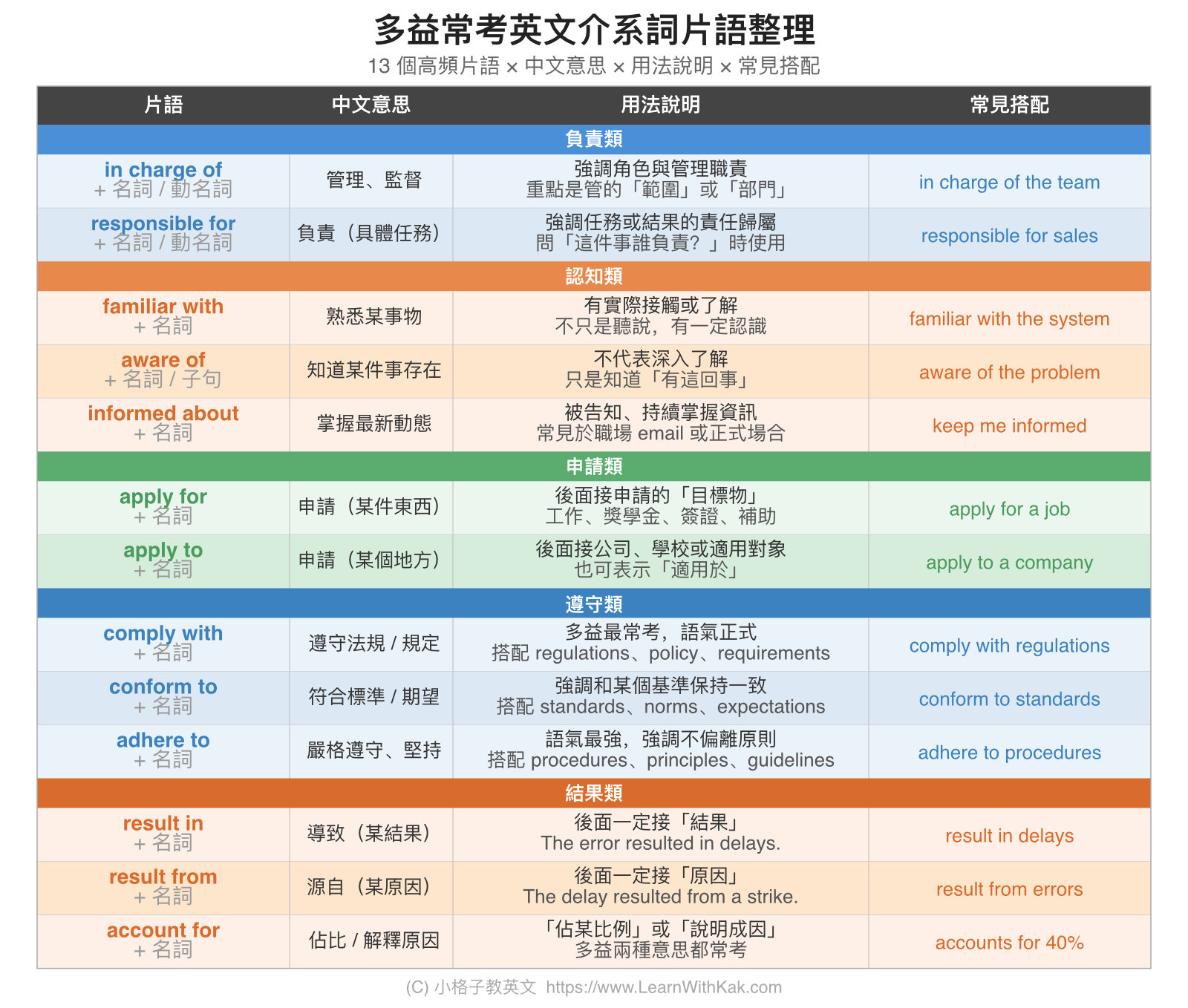
介系詞這種東西,說難不難,說容易也沒有,就是需要一點時間讓它變成反射動作。這篇整理的片語,多益 Part 5 出現率都很高,有空多看幾遍例句,考場上自然就會有感覺了。
延伸閱讀:【Arrive in 還是 Arrive at?多益必考介系詞,一個原則就搞定】
如果你喜歡這篇文章的話,可以追蹤我們的Threads和Facebook唷!