
“Everybody is” 還是 “Everybody are”?這兩個寫法光用猜的,猜錯的機率其實蠻高的。很多人搞不清楚 Everyone 是單數還是複數,因為感覺意思上是「所有人」,應該用複數吧?但答案會讓你很意外!這個文法規則超多人搞錯,今天就來搞懂!
文法規則:Everybody 和 Everyone 永遠是單數!
先講結論:Everybody 和 Everyone 在文法上永遠是單數!
對,你沒看錯,雖然意思上是「每個人」、「所有人」,感覺是一大群人,但文法上就是單數。所以要配 is、has、was,不能用 are、have、were。
為什麼呢?因為 every 這個字本身就是「每一個」的意思,是單數的概念。你想想看,every book 是「每一本書」,every student 是「每一個學生」,所以 everybody 就是「每一個人」,當然是單數啦!
(1)
A: Is everyone ready to go?
A: 大家都準備好要走了嗎?
B: Yes, everybody is ready!
B: 對,每個人都準備好了!
(2) Everybody loves pizza.
每個人都愛披薩。(用 loves,不是 love)
(3)
A: Where is everybody?
A: 大家都在哪裡?
B: Everybody is in the meeting room.
B: 每個人都在會議室。
(4)
A: Does everyone understand?
A: 大家都懂了嗎?
B: Yes, everybody understands.
B: 對,每個人都懂了。
(5) Everyone knows the answer.
每個人都知道答案。(用 knows,不是 know)
代名詞的矛盾:用 they 還是 he/she?
好啦,這裡就開始 confusing 了。雖然 everybody 是單數,但代名詞要怎麼用呢?
傳統文法會說用 he 或 his,像 “Everybody has his own opinion”。但欸,這樣就只有男生嗎?女生呢?所以現在這種用法被認為有性別歧視,已經不太用了。
那用 he or she 呢?像 “Everybody has his or her own opinion”。這個文法上沒錯,但超級囉嗦,講話或寫作都很煩。
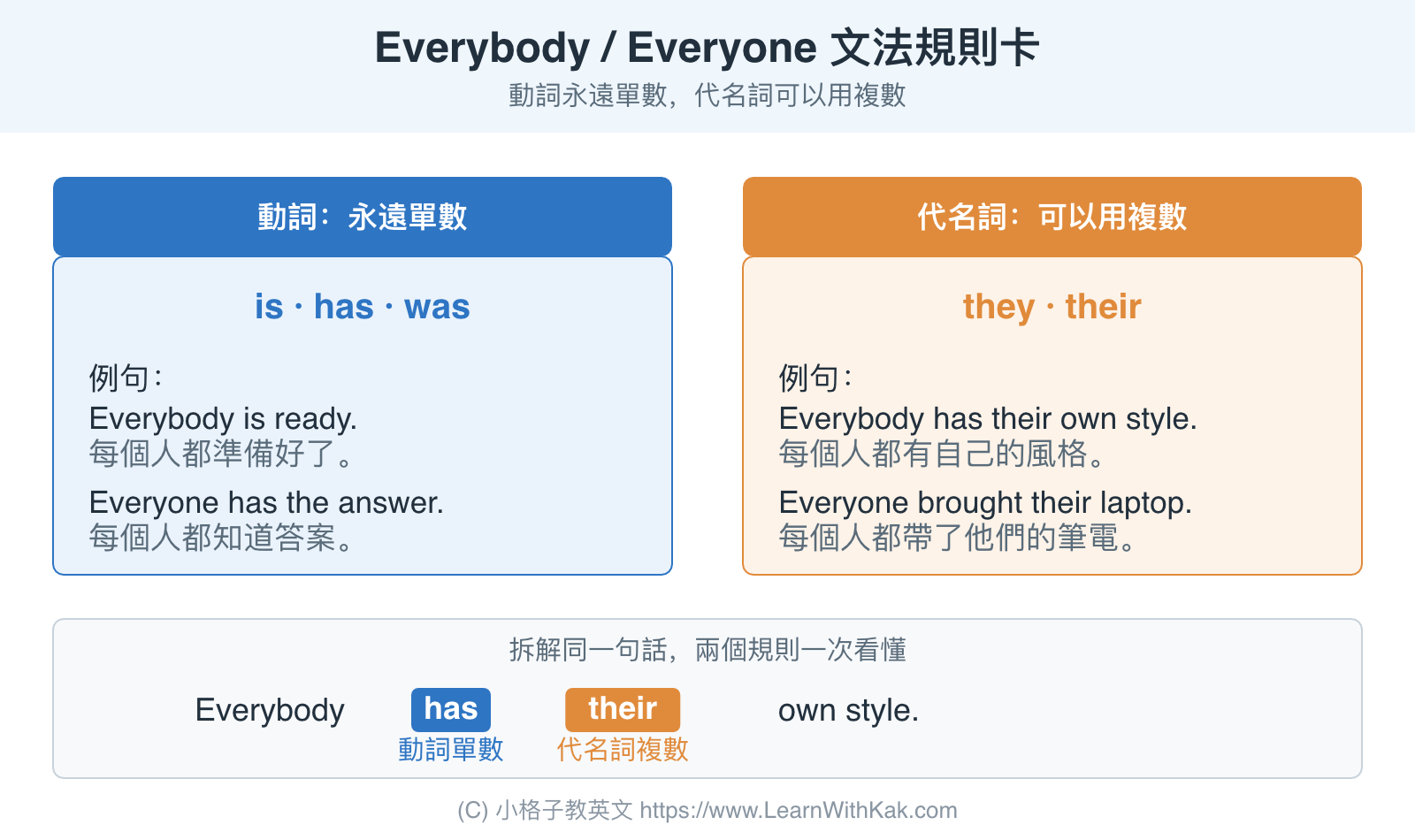
現代的標準用法是:用 they 和 their!
對,雖然 everybody 是單數,但代名詞用複數的 they/their 已經被廣泛接受了。這個用法現在是標準英文,連字典和文法書都認可了。而且 everyone 用法也是一樣的規則喔!
所以記住:Everybody is(動詞單數)…they(代名詞複數)
(6) Everybody has their own style.
每個人都有自己的風格。(用 their,不是 his)
(7)
A: Did everyone bring their laptops?
A: 大家都帶筆電了嗎?
B: Yes, everybody has their laptop with them.
B: 對,每個人都帶了他們的筆電。
(8)
A: Is everyone happy with their decision?
A: 大家對自己的決定都滿意嗎?
B: Yeah, everybody seems satisfied with their choice.
B: 對啊,每個人好像都對自己的選擇很滿意。
(9) Everybody needs to bring their ID to the event.
每個人都需要帶他們的身分證件來活動。
(10)
A: Has everybody submitted their report?
A: 大家都交報告了嗎?
B: Not yet. Some people haven’t finished theirs.
B: 還沒,有些人還沒完成他們的。
(11) Everybody thinks they’re right.
每個人都覺得自己是對的。
這幾句是不是也曾經寫錯過?
規則講起來簡單,但實際寫的時候,動詞跟代名詞很容易打架,尤其是句子拉長之後,一不小心就順手打成 are 或 have。這幾個是最常見的地雷,看看有沒有中過招。
(12) ❌ Everybody are welcome to join us.
✅ Everybody is welcome to join us.
每個人都歡迎加入我們。(用 is,不是 are)
(13) ❌ Everybody have already signed the form.
✅ Everybody has already signed the form.
大家都已經簽好表格了。(用 has,不是 have)
(14)
A: Is everybody done with the survey?
A: 大家都做完問卷了嗎?
B: Almost everyone has finished, just two more people left.
B: 差不多大家都做完了,還剩兩個人。
(15) ❌ Everybody were late to the meeting today.
✅ Everybody was late to the meeting today.
今天大家開會都遲到了。(用 was,不是 were)
句子越長,越容易被中間的名詞帶偏方向,比如看到 “the people in the room” 這種複數字眼,手就不自覺打出 are。訣竅是回頭看主詞本身,只要主詞是 everybody 或 everyone,動詞就鎖定單數,不管中間夾了什麼。
Everybody 跟 Everyone 差在哪?
講到這裡你可能會想,那 everybody 是單數還是複數?答案跟 everyone 一模一樣,動詞單數、代名詞可以用 they/their,規則完全共用。既然文法上零差別,那幹嘛還要分兩個字?
差別在語感,不在文法。Everyone 感覺稍微正式一點,比較常出現在書面、演講、正式信件;everybody 比較口語,日常對話用得更自然。實際上兩個字幾乎可以互換,選哪個比較看場合,不是看對錯。
(16) Everyone in the class passed the exam.
班上每個人都通過了考試。(正式一點的說法,常見於書面)
(17)
A: Is everybody staying for dinner?
A: 大家都要留下來吃晚餐嗎?
B: I think everyone’s staying, actually.
B: 我想大家應該都要留下來耶。
(18) In formal emails, everyone sounds a bit more polished than everybody.
在正式的信件裡,everyone 聽起來比 everybody 稍微正式一點。
(19)
A: Should I say everybody or everyone in this speech?
A: 這場演講我該說 everybody 還是 everyone?
B: Either works, but everyone might sound a touch more formal for a speech like this.
B: 兩個都可以,不過像這種演講場合,everyone 聽起來會稍微正式一點。
Everything、Someone、Nobody 也一樣!
這個規則不只適用於 everybody 和 everyone,所有 -body、-one、-thing 結尾的字都一樣!
- Everyone, Everybody, Everything = 單數動詞
- Someone, Somebody, Something = 單數動詞
- Anyone, Anybody, Anything = 單數動詞
- No one, Nobody, Nothing = 單數動詞
通通配 is、has、was 這些單數動詞,然後代名詞通通用 they、their。這樣你就不用一個一個記啦,記住這個規則就全部搞定!至於 someone 跟 anyone 這種語意上該選哪個字的問題,就是不定代名詞的選字邏輯要處理的另一件事了,跟這篇講的單複數規則是不同層面,不要搞混。
(20)
A: Is anyone home?
A: 有人在家嗎?
B: No, nobody is here right now.
B: 沒有,現在沒人在這裡。
(21) Nobody knows where they put the keys.
沒人知道他們把鑰匙放哪了。
(22)
A: Does anybody have a pen I can borrow?
A: 有人有筆可以借我嗎?
B: Someone over there has one. You can ask them.
B: 那邊有人有,你可以問他們。
(23) Anyone can join if they want to.
任何人想加入都可以。
(24)
A: Is something bothering you?
A: 有什麼事在困擾你嗎?
B: No, everything is fine. Thanks for asking.
B: 沒有,一切都好,謝謝你問。
(25) Somebody called earlier, but they didn’t leave their name.
剛剛有人打來,但他們沒留名字。
常見問題
Everyone 是單數還是複數?
永遠是單數。動詞要配 is、has、was,但代名詞可以用 they、their,這是現代標準用法。
Everybody 是單數還是複數?
跟 everyone 規則完全一樣,永遠是單數,動詞一律配單數形式。
Everybody 後面可以接 they 嗎?
可以。雖然 everybody 文法上是單數,但代名詞用 they、their 已經是廣泛接受的標準用法,比 his or her 更簡潔也更中性。
Everybody 跟 everyone 差在哪?
文法規則完全一樣,差別只在語感。Everyone 稍微正式一點,everybody 比較口語,實際使用上大多可以互換。
記住喔,Everybody、Everyone 和所有 -body/-one/-thing 結尾的字在文法上都是單數,要配單數動詞像 is、has、was,代名詞用 they、their 就對了,多看幾次例句,很快就會變成直覺反應,不用每次都特別想。
延伸閱讀:【不定代名詞怎麼用?Someone、Anyone、Everyone、No one 選對的邏輯一次搞懂】
如果你喜歡這篇文章的話,可以追蹤我們的 Threads 和 Facebook 唷!