
跟朋友抱怨完工作很無聊,對方突然臉色一沉,覺得你在炫耀有工作?這時候超需要一句「別誤會」來救場!其實「別誤會」英文說法有很多,今天就來教你三種最簡單的說法,學會了,就不怕說話被誤解啦!
Don’t get me wrong(最常用、最口語)
「Don’t get me wrong」是最自然、最常用的說法,朋友之間、同事之間都可以用。
Don’t get me wrong 有個很特別的模式:負面陳述 + Don’t get me wrong + 正面補充
你會先說一句聽起來有點負面的話,然後怕對方誤會,立刻補上 “Don’t get me wrong”,接著再說一句比較正面的補充說明。
什麼時候用:
- 朋友、同事之間
- 日常輕鬆對話
- 說了可能被誤解成負面的話
- 需要快速澄清
來看例句就秒懂了:
(1)
A: How’s your new job?
A: 你的新工作怎麼樣?
B: My work is really boring. Don’t get me wrong, I’m grateful to have a job right now.
B: 我的工作真的很無聊。別誤會啊,我是很感恩現在有工作做。
(2)
A: What do you think of the new neighbors?
A: 你覺得新鄰居怎麼樣?
B: Their kids are so noisy. Don’t get me wrong, I like kids, but these ones are too loud.
B: 他們小孩超吵的。別誤會,我喜歡小孩,但這幾個實在太大聲了。
(3)
A: You’ve been working out a lot lately.
A: 你最近常健身耶。
B: Yeah, but I’m not seeing much progress. Don’t get me wrong, I’m not giving up. I just need to adjust my routine.
B: 對啊,但沒什麼進步。別誤會,我不是要放棄。只是需要調整一下訓練方式。
(4)
A: How was the party?
A: 派對怎麼樣?
B: It was okay. Don’t get me wrong, the host was nice, but the music was terrible.
B: 還可以啦。別誤會,主辦人人很好,但音樂真的很糟。
(5)
A: I heard you quit the gym.
A: 我聽說你退健身房了?
B: Yeah, I did. Don’t get me wrong, I still want to work out. I just prefer running outside.
B: 對,我退了。別誤會,我還是想運動。只是比較喜歡在外面跑步。
(6)
A: You never come to our team dinners anymore.
A: 你都不來我們的團隊聚餐了。
B: I know. Don’t get me wrong, I enjoy hanging out with you guys. I’m just really busy with my side project.
B: 我知道。別誤會,我很喜歡跟你們出去。只是最近做副業真的很忙。
Don’t misunderstand me(比較正式)
這個說法比 Don’t get me wrong 正式一點,通常用在比較需要表達尊重的場合。
Don’t misunderstand me 通常放在說話之前,先預防可能的誤解,再說明你的想法。
- Misunderstand = 誤解(動詞)
- 比較正式、比較禮貌
- 先預防,再說明
什麼時候用:
- 正式場合
- 對不太熟的人
- 需要表達尊重
- 討論比較嚴肅的話題
(7)
A: What do you think of my presentation?
A: 你覺得我的簡報怎麼樣?
B: Please don’t misunderstand me, but I think your slides have too much text.
B: 請別誤會,但我覺得你的投影片文字太多了。
(8)
A: Should I apply for this position?
A: 我應該申請這個職位嗎?
B: Don’t misunderstand me, but I think you might be overqualified for this role.
B: 別誤會,但我覺得你可能太資深了,這職位可能不太適合你。
(9)
A: Why didn’t you choose my proposal?
A: 為什麼不選我的提案?
B: Please don’t misunderstand me. Your idea was good, but we needed something more cost-effective.
B: 請別誤會。你的想法很好,但我們需要更符合成本效益的方案。
(10)
A: Do you think I should take this job offer?
A: 你覺得我應該接受這個工作機會嗎?
B: Don’t misunderstand me, but I don’t think the salary is competitive enough for your experience.
B: 別誤會,但我覺得以你的經驗來說,這個薪水不夠有競爭力。
(11)
A: How’s my English pronunciation?
A: 我的英文發音怎麼樣?
B: Please don’t misunderstand me, but you might want to work on your intonation.
B: 請別誤會,但你可能需要加強一下語調。
Don’t take it the wrong way(最委婉)
這是三種說法裡最委婉、最小心翼翼的,特別適合談論敏感話題。
Take it the wrong way = 往錯的方向理解
當你要說的話特別容易冒犯人(談外表、能力、私人問題),用這個說法最安全。
什麼時候用:
- 給建議或批評
- 談論外表、能力
- 討論私人或敏感話題
- 特別怕傷到對方感情
(12)
A: How do I look today?
A: 我今天看起來怎麼樣?
B: Please don’t take it the wrong way, but you look very tired lately.
B: 請別誤會,但你最近看起來很累。
(13)
A: Can I bring my kids to your party?
A: 我可以帶小孩來你的派對嗎?
B: Don’t take it the wrong way, but this is an adults-only event.
B: 請別誤會,但這是只限成人的活動。
(14)
A: What do you think of my new haircut?
A: 你覺得我新髮型怎麼樣?
B: Don’t take it the wrong way, but I preferred your old hairstyle.
B: 別誤會,但我比較喜歡你之前的髮型。
(15)
A: Should I wear this to the interview?
A: 我應該穿這個去面試嗎?
B: Please don’t take it the wrong way, but I think something more formal would be better.
B: 請別誤會,但我覺得穿正式一點會比較好。
(16)
A: How’s my cooking?
A: 我煮的菜怎麼樣?
B: Don’t take it the wrong way, but it’s a bit too salty for me.
B: 別誤會,但對我來說有點太鹹了。
(17)
A: Do you think I should get this expensive phone?
A: 你覺得我應該買這支很貴的手機嗎?
B: Don’t take it the wrong way, but I think it’s beyond your budget right now.
B: 別誤會,但我覺得這超出你現在的預算了。
三種說法的差異比較
來看看這三種說法到底差在哪:
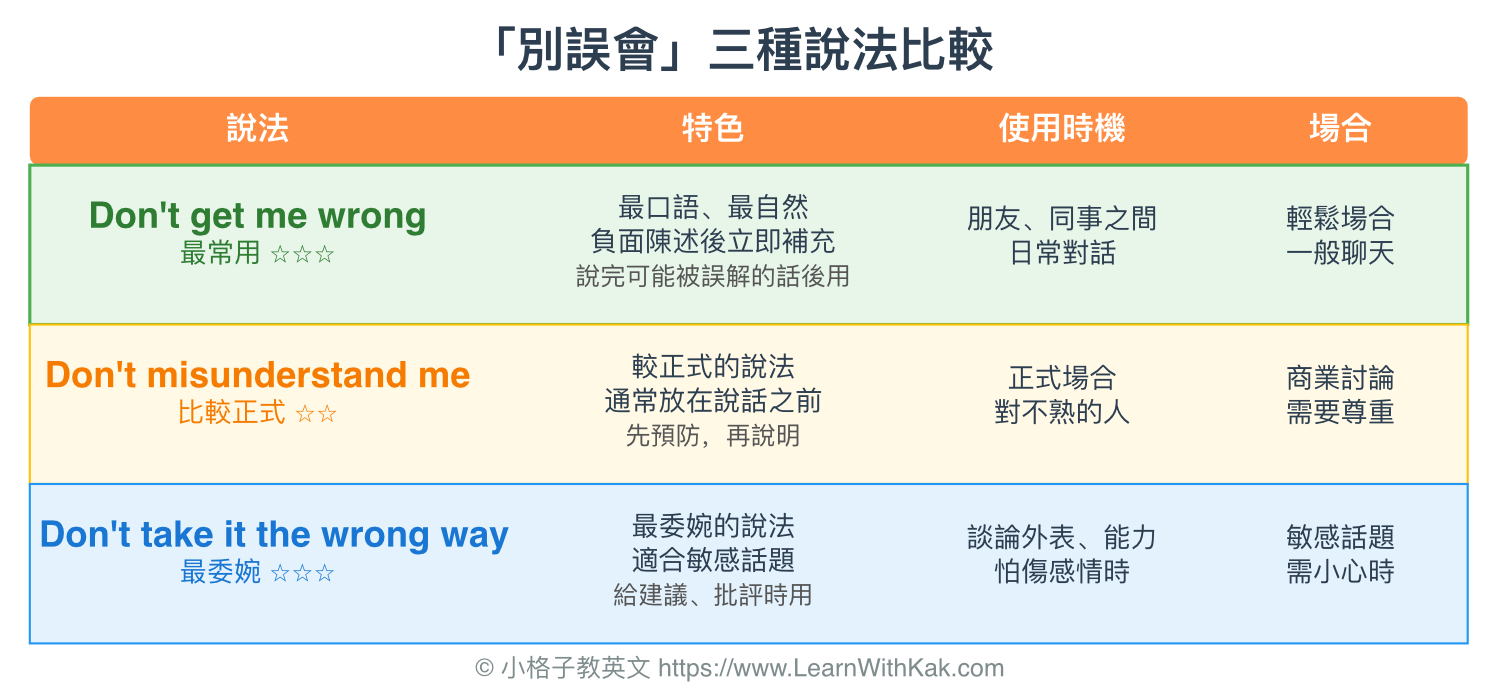
問自己三個問題:
1. 對方是誰?
- 朋友、熟人 → Don’t get me wrong
- 一般人、不太熟 → Don’t misunderstand me
- 任何人(敏感話題)→ Don’t take it the wrong way
2. 場合正式嗎?
- 輕鬆聊天 → Don’t get me wrong
- 正式場合 → Don’t misunderstand me
- 敏感話題 → Don’t take it the wrong way
3. 話題敏感嗎?
- 一般話題 → Don’t get me wrong
- 需要尊重 → Don’t misunderstand me
- 超敏感(外表、能力、私事)→ Don’t take it the wrong way
選對說法不只是語言問題,更關係到溝通的效果。就像指正別人錯誤一樣,委婉表達能避免不必要的衝突。
其他相關表達
除了上面三種主要說法,還有一些類似的表達可以學起來:
(18)
A: You never help with the housework!
A: 你從來不幫忙做家事!
B: Don’t take it personally. I’ve just been really busy at work.
B: 你想太多,我只是最近工作真的很忙。
(19)
A: Your idea might not work.
A: 你的想法可能行不通。
B: No offense, but I think it’s worth trying.
B: 不要介意喔,但我覺得值得試試看。
(20)
A: I don’t think you should invest in that.
A: 我不認為你應該投資那個。
B: Let me clarify – I’m not saying it’s a bad investment. I just think it’s too risky for you.
B: 讓我澄清一下——我不是說這是爛投資。只是覺得對你來說風險太高。
當你被誤會時
(21)
A: So you think I’m stupid?
A: 所以你覺得我很笨?
B: No, no! You’ve got me wrong. I never said that.
B: 不不不!你誤會我了。我從來沒這樣說。
(22)
A: Are you saying I’m lazy?
A: 你是在說我很懶嗎?
B: I think there’s been a misunderstanding. I was talking about the process, not you.
B: 我想有誤會了。我在講流程,不是在講你。
在職場英文中,這種委婉表達特別重要,能幫助你更有效地溝通。
好啦,學會這三種說「別誤會」的英文了嗎? 下次說話怕被誤會的時候,想一下對方是誰、場合如何、話題敏不敏感,選對說法,你的英文溝通會順暢超多。掌握「別誤會」的各種說法後,你的英文溝通會更細膩、更到位。不要再只會一種說法啦!
如果你喜歡這篇文章的話,可以追蹤我們的Threads和Facebook唷!