
跟一群人聊天,明明有話想說,卻不知道怎麼切進去——等到找到開口機會,話題已經跑掉了。或者在開會的時候硬插嘴,感覺又怪怪的。其實插嘴英文有很多種說法,不是每次都要說 “Sorry to interrupt”,選對了既自然又有禮貌,完全不會讓氣氛變奇怪。
“Sorry to interrupt” 有什麼問題?
沒有問題,文法完全正確——但問題是語感太重了。你跟朋友聊天聊到一半說 “Sorry to interrupt”,對方可能會以為你要說什麼很嚴肅的事情,整個對話的輕鬆感就消失了。
插嘴英文大概分兩種:一種是輕鬆版,用在朋友、家人、日常聊天;一種是正式版,用在開會、討論、比較有距離感的場合。同一句話用在不同情境,語感差很多。
朋友聊天、輕鬆場合
這類情況,說法要夠自然、不能太刻意。最好用的插嘴英文就是 “Can I jump in?” — jump in 中文是「插進來、加入」的意思,跟中文的「我插個話」感覺很像,輕鬆又不失禮貌。
(1)
A: — and then she said she didn’t even know about the party, which is so weird because—
A: ——然後她說她根本不知道有派對,這很奇怪,因為——
B: Wait, can I jump in for a sec? I actually heard something about that too.
B: 等等,我可以插一句嗎?我也有聽說那件事。
(2)
A: We were thinking of going to that new hotpot place on Saturday.
A: 我們在想週六去那家新開的火鍋店。
B: Oh, sorry to jump in — that place is fully booked on weekends. We tried last week.
B: 哦,插個話——那家週末都訂滿了。我們上週試過了。
(3)
A: I’m trying to figure out which laptop to buy. I’ve been looking at—
A: 我在研究要買哪台筆電,我一直在看——
B: Actually, wait — I just got a new one. Can I jump in with some recommendations?
B: 等等,我剛買了一台新的,我可以插個話推薦一下嗎?
(4)
A: So basically the whole thing was a mess and I don’t even know how it happened—
A: 總之整件事就是一團糟,我也不知道怎麼搞成這樣——
B: Sorry, just quickly — did you tell your manager yet?
B: 不好意思,打斷一下——你有告訴你主管了嗎?
開會、討論、正式場合
這時候開口的方式就要有點架式,讓對方知道你想說話,但不搶話、不壓過別人。這類插嘴英文也很適合在你想補充意見、或是對方說到一半你有不同看法的時候用。
跟表達不同意英文一樣,切入的方式決定對方怎麼接收你的話——輕一點,對方更願意聽。
(5)
A: So the plan is to launch in Q3 and focus on the domestic market first—
A: 所以計畫是在第三季上線,先專注國內市場——
B: If I could just add something here — we might want to reconsider the timeline given the new regulatory changes.
B: 我可以補充一點嗎——考慮到最新的法規變動,我們可能需要重新考慮時程。
(6)
A: I think the main issue is the budget allocation—
A: 我覺得主要問題是預算分配——
B: Could I jump in for a moment? I have some data that might be relevant here.
B: 我可以插個話嗎?我有一些數據可能跟這裡有關。
(7)
A: Building on what Sarah said — I think the user research really supports that direction.
A: 延伸 Sarah 說的——我覺得用戶調研確實支持那個方向。
B: Agreed. I’d like to add to that — the data from last quarter also shows the same trend.
B: 同意。我想補充一下——上季的數據也顯示同樣的趨勢。
(8)
A: Any other thoughts before we move on?
A: 在繼續之前,大家還有什麼想法嗎?
B: Actually, I do have one point — can I squeeze in quickly?
B: 其實我有一個點——我可以快速說一下嗎?
線上開會:撞話和被切斷
線上開會最尷尬的兩件事:一是兩個人同時開口,不知道誰先說;二是網路卡掉,說到一半被切斷。這些情況的插嘴英文跟面對面不太一樣,而且 jump in 中文雖然是「插進來」,但在線上會議裡也常用來說「重新加入討論」的意思。
(9)
A: So I was saying—
A: 所以我剛才在說——
B: Sorry, I think we spoke at the same time. Please go ahead.
B: 不好意思,我們好像同時開口了。你先說吧。
(10)
A: — and that’s why I think we should—
A: ——所以我覺得我們應該——
B: Sorry, I think I got cut off. Can I finish my point?
B: 不好意思,我好像被切掉了,我可以把我的話說完嗎?
(11)
A: Before we close, any final thoughts?
A: 結束之前,有沒有什麼最後的想法?
B: Can I go back to something from earlier? I didn’t get to finish my thought on the timeline.
B: 我可以回到剛才的一個點嗎?我沒說完對時程的想法。
(12)
A: —so those are the three options we’re considering.
A: ——所以這是我們在考慮的三個選項。
B: Sorry to jump back in, but I missed part of what you said — could you quickly recap option two?
B: 不好意思再插進來,但我漏聽了一部分——可以快速重說一下選項二嗎?
插嘴之後,讓對方說完
這個很多人沒想到——你插話之後,讓對方繼續說完,才是完整的禮貌。打斷了人家,說完自己的話,就直接接下去聊,那才真的失禮。
這種場合就跟「別誤會」的英文說法的邏輯一樣——說一句補救的話,氣氛立刻不同。
(13)
A: Sorry, I didn’t mean to cut you off — what were you saying?
A: 不好意思,我不是要打斷你——你剛說到哪了?
B: Oh no worries. I was just saying that the deadline might be too tight.
B: 沒關係,我只是在說截止日可能太緊了。
(14)
A: Wait, go ahead and finish your thought first. I’ll add on after.
A: 等等,你先把你的想法說完,我之後再補充。
B: Thanks. So what I was trying to say is…
B: 謝謝,我想說的是……
(15)
A: You go — I interrupted you.
A: 你說,是我打斷你的。
B: It’s fine! I was almost done anyway.
B: 沒關係,我快說完了。
這幾句聽起來禮貌,但要小心
最後提幾個用起來容易出問題的插嘴英文——不是說不能用,而是語氣比你想像的重,用錯了反而讓氣氛變奇怪。
“Excuse me, but…” — 這句在朋友圈用,會讓人覺得你很不爽,感覺像在糾正人家。正式場合還 OK,日常盡量少用。
“Let me just say…” — 帶有一種「不管你說什麼我要說我的」的感覺,容易讓人覺得你在搶話。
“Actually, …” — 單獨用一次沒問題,但如果你每次插話都以 actually 開頭,對方會開始覺得你很愛反駁。
(16)
A: I think we should go with the cheaper option.
A: 我覺得應該選比較便宜的選項。
B: Excuse me, but that’s not really practical given our timeline.
B: 不好意思,考慮到我們的時程,那不太實際。(語氣偏重,感覺像在指責)
更好的說法:
B: If I could add — it might be tricky given our timeline. What do you think?
B: 我可以補充一點嗎——考慮到我們的時程可能有點難。你們覺得呢?(更輕、更開放)
(17)
A: I feel like we’ve been overthinking this.
A: 我覺得我們想太多了。
B: Actually, actually, actually — there are a few things we still need to figure out.
B: 其實,其實,其實——還有幾件事我們還沒想清楚。(重複 actually 讓人覺得你在一直反駁)
更好的說法:
B: That’s fair — though there are still a couple of things worth ironing out first.
B: 有道理——不過有幾件事還是先整理清楚比較好。
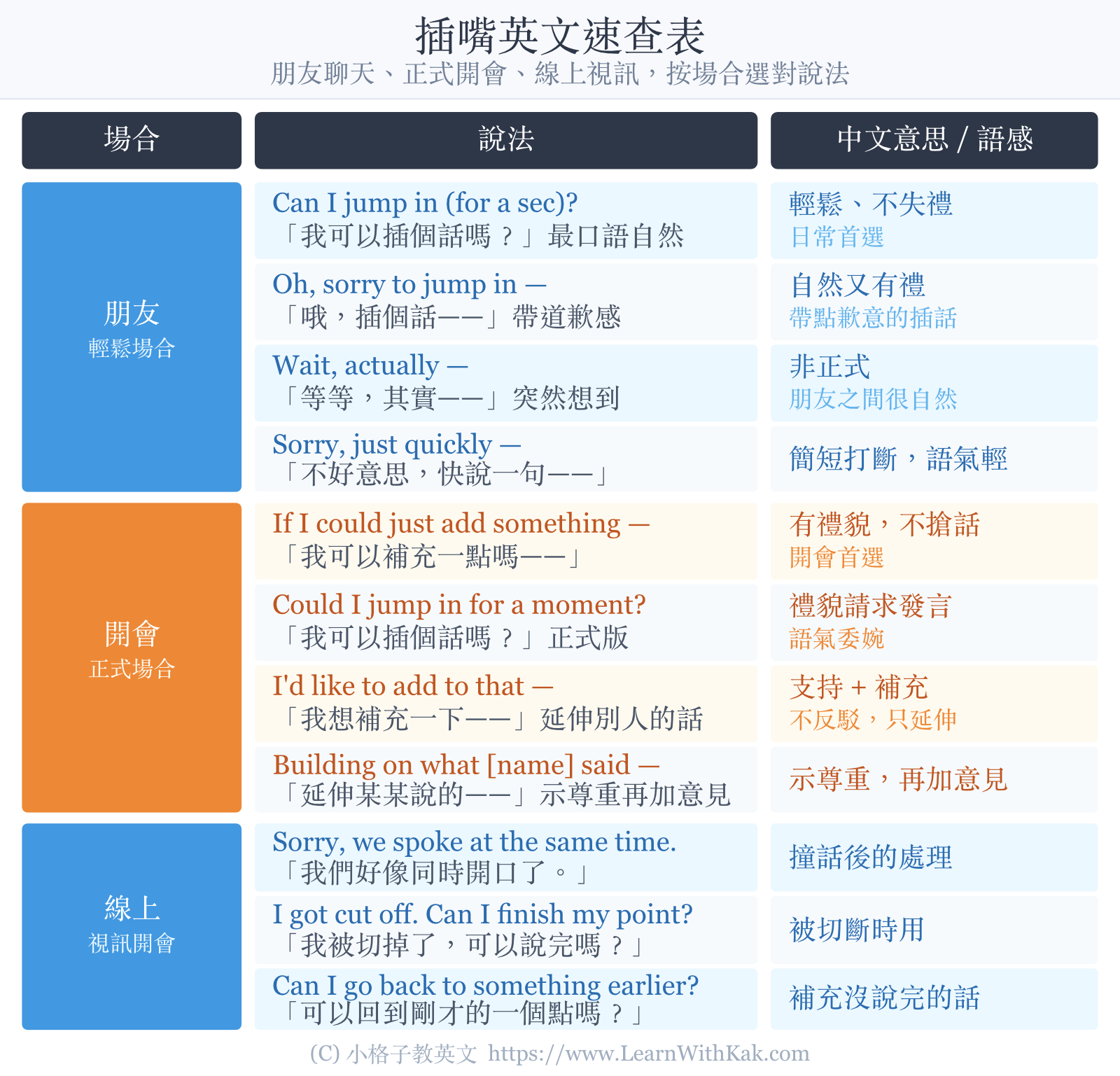
插嘴不是壞事,是參與對話的表現。只要選對說法,你既不會讓人覺得失禮,也不會錯過想說的話。下次想切入話題,先想想是輕鬆場合還是正式場合,挑個適合的說法就對了。
延伸閱讀:【別再只用 I think!更自然的表達意見和想法的方式】
如果你喜歡這篇文章的話,可以追蹤我們的Threads和Facebook唷!