
事情的發展跟計劃不一樣,最後變成另一個樣子 — 這種情況英文有幾種說法,wind up 就是其中一個,意思大概是「最後竟然變成這樣」。但很多人只知道 end up,不知道 wind up 和 turn out 也能表達類似的結果,而且語感各有一點不同。
Wind up 怎麼用
Wind up 中文是「最後(出乎意料地)變成某個狀況」,用的時候通常帶有一點「繞了一圈才到這裡」的感覺,不一定是壞事,但有時候有點意外或諷刺。
發音要注意:wind up 的 wind 不是「風」那個 wind(/wɪnd/),是 /waɪnd/,跟 wine 的發音很接近。過去式是 wound up,不是 winded up。
Wind up 有幾個用法,最常見的是「結果變成某個狀態」:
(1)
A: Whatever happened to that startup you joined?
A: 你加入的那間新創公司後來怎樣了?
B: It wound up closing down after six months. The funding ran out.
B: 六個月後就倒了。資金用完了。
(2)
A: We were planning to go to the night market, but it started raining.
A: 我們本來要去夜市,但開始下雨了。
B: So what did you end up doing?
B: 那你們最後怎樣?
A: We wound up just ordering delivery and watching a movie at home.
A: 最後就叫外送,在家看電影。
(3)
A: How was the interview?
A: 面試怎麼樣?
B: I was so nervous I wound up forgetting everything I prepared.
B: 我緊張到把準備的東西全忘了。
Wind up 的第二個意思是「結束某件事」,通常用在比較正式的場合:
(4)
A: Let’s wind up this meeting. We’re running over time.
A: 我們結束會議吧,已經超時了。
B: Agreed. I’ll send a summary to everyone afterwards.
B: 同意,我之後會把摘要發給大家。
End up 怎麼用
End up 中文也是「最後是、結果是」,跟 wind up 意思非常接近,但更常見、更口語,美式英文特別常用。End up 後面可以接 -ing、in、at,說明「最後在哪裡」或「最後做了什麼」。
(5)
A: Did you manage to book the restaurant?
A: 你有訂到餐廳嗎?
B: No, it was fully booked. We ended up going to the place around the corner instead.
B: 沒有,訂滿了。最後去了轉角那家。
(6)
A: How did you end up in Tainan? I thought you were based in Taipei.
A: 你怎麼跑去台南了?我以為你在台北。
B: My company transferred me. I ended up staying longer than expected and actually love it here.
B: 公司把我調過來的。結果待得比預期久,現在其實很喜歡這裡。
(7)
A: I only meant to take a short nap.
A: 我只是想小睡一下。
B: Let me guess — you ended up sleeping for three hours?
B: 我猜——你睡了三個小時?
(8)
A: The project budget kept increasing.
A: 專案預算一直在增加。
B: Yeah, we ended up spending twice what we originally planned.
B: 對,最後花了原本計劃的兩倍。
Wind up vs End up 有什麼差別?
兩個可以互換的情況很多,但有些細微差別:
Wind up 比較常出現在英式英文,而且帶有「意外轉折」的語感,有時候隱含「沒想到會這樣」的感覺。
End up 美式英文更常用,語氣更中性,說的就是「最後的結果」,不一定有意外感。
(9)
中性結果 → End up 更自然:
We ended up choosing the second option.
我們最後選了第二個選項。
意外結果 → Wind up 更傳神:
We wound up choosing the exact option we said we’d never pick.
我們最後竟然選了那個我們說絕對不會選的選項。
(10)
A: Where did everyone go after the party?
A: 派對結束後大家去哪了?
B: Half of them wound up at a karaoke bar nearby. I have no idea how that happened.
B: 一半的人跑去附近的卡拉 OK。完全不知道怎麼發展到那裡的。
(11)
A: I tried a bunch of different careers before this.
A: 我做這份工作之前試過很多不同的東西。
B: Same. I ended up in marketing almost by accident.
B: 我也是。幾乎是意外才走進行銷這行的。
Turn out 又是什麼?
Turn out 中文是「結果(是)、原來是」,跟 wind up / end up 有點像,但強調的是「跟預期不同的結果呈現出來」,常帶有一點驚訝感,或是在說「事情最後證明是這樣」。
It turned out that… 和 turn out to be 是最常見的用法。
(12)
A: How was the movie? I heard it wasn’t great.
A: 電影怎麼樣?我聽說不太好看。
B: It actually turned out to be really good. I was surprised.
B: 其實出乎意料地好看,我也嚇了一跳。
(13)
A: Did the new hire work out?
A: 那個新人怎麼樣?
B: It turned out he had way more experience than his résumé showed.
B: 結果發現他的經驗比履歷上寫的多很多。
(14)
A: What happened with the event? I heard there were problems.
A: 活動怎麼樣?我聽說出了問題。
B: It turned out fine in the end. The venue was changed last minute but everything worked out.
B: 最後沒事,場地臨時換了,但一切都順利解決了。
(15)
A: How did you know that was the right decision?
A: 你怎麼知道那個決定是對的?
B: I didn’t. It just turned out that way.
B: 我也不知道,就那樣發展了。
Wind down 補充
Wind down 跟 wind up 不是反義詞 — wind down 的意思是「慢慢收尾、漸漸結束」,通常有「降溫、放慢節奏」的感覺。
(16) The conference is winding down. Most speakers are done.
研討會快結束了,大多數講者都講完了。
(17)
A: How do you unwind after a long day?
A: 你忙了一天之後怎麼放鬆?
B: I usually wind down with a podcast or some light reading before bed.
B: 我通常睡前聽播客或讀點輕鬆的東西來慢慢收尾一天。
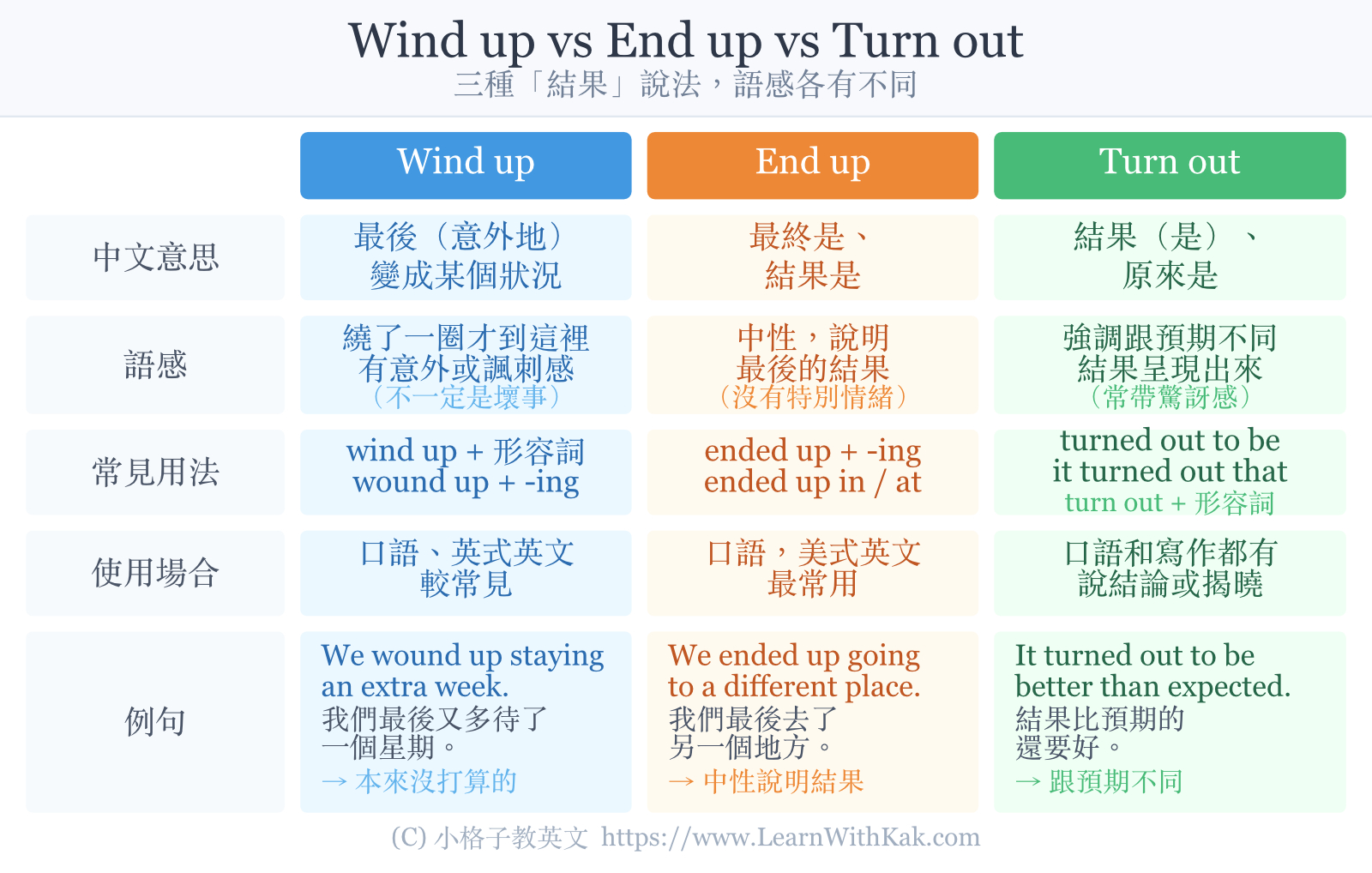
Wind up 和 end up 說的都是「最後變成的結果」,wind up 多一點意外轉折感,end up 更中性日常;turn out 則是在說「事情最後呈現出來的樣子」,常有跟預期不同的含義。三個都很好用,看情境挑對一個就好。
延伸閱讀:【英文片語意思差很多!Get lost、Break down、Pick up 等超容易搞混的雙重意思片語】
如果你喜歡這篇文章的話,可以追蹤我們的Threads和Facebook唷!