
英文比較兩件事,腦袋常常卡在同一個地方:這裡該加 -er 還是用 more?as…as 又是什麼時候出現?其實英文比較級的邏輯很清楚,搞懂規則之後就不用每次靠猜的。
比較級在說什麼
英文比較級(comparative)是用來比較兩個人、兩件事、兩個選項的時候用的結構。跟中文的「比較⋯⋯」概念很接近,但英文的形容詞本身會變形,這是台灣人學英文比較級時最容易卡住的地方。
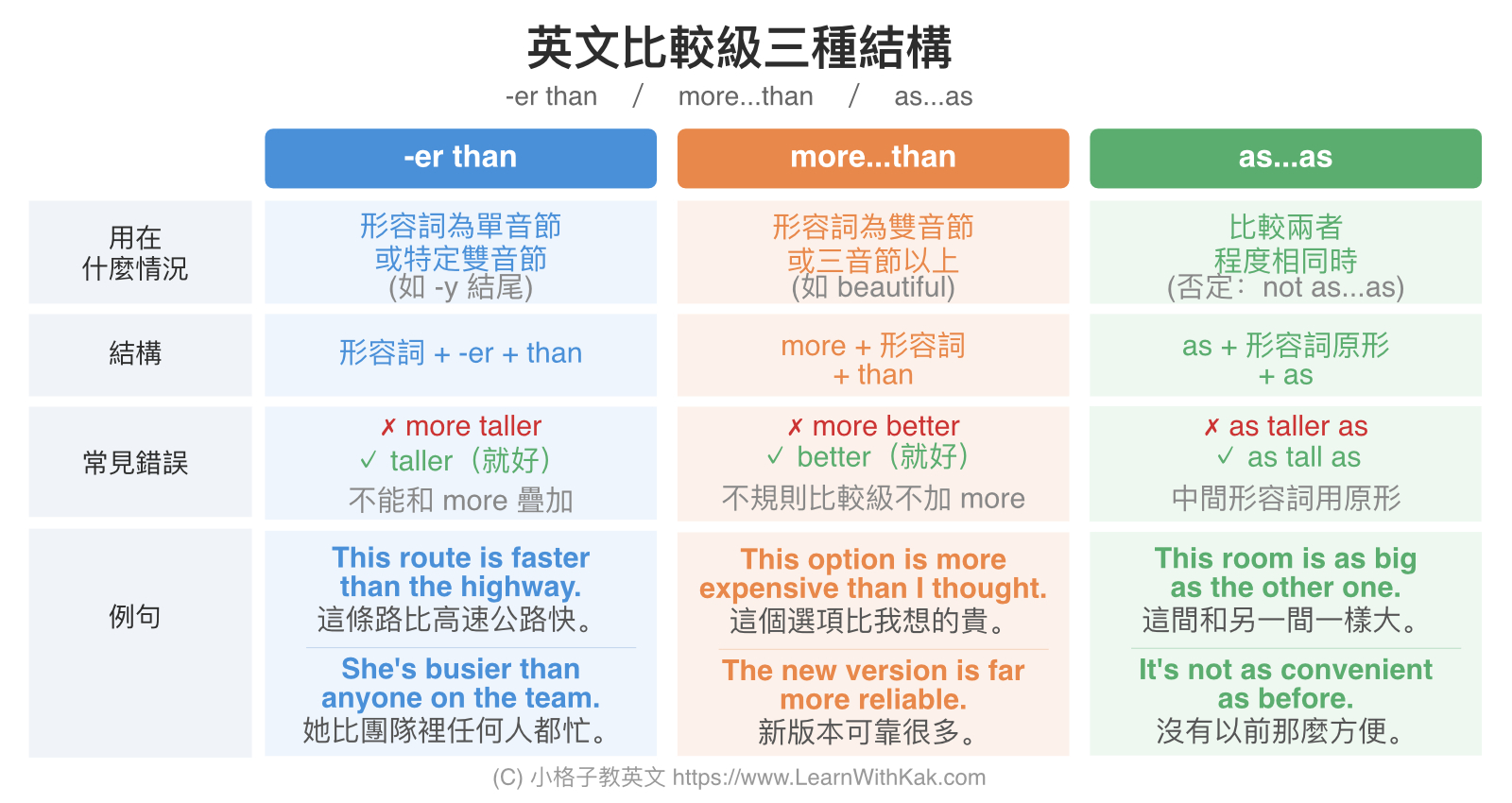
比較級主要有三種形式:
- 形容詞加 -er(搭配 than)
- 形容詞前加 more(搭配 than)
- as…as 結構(表示兩者一樣)
三種各有使用時機,不是隨便選一個都可以。下面一個一個拆解。
-er 還是 more?這樣判斷
很多人學英文比較級規則,只記得「短的加 -er,長的用 more」,但實際上判斷方式是看音節數,而不是字母數。
單音節形容詞 → 加 -er
tall → taller、fast → faster、hard → harder、cheap → cheaper
如果結尾是「短母音 + 單子音」,最後的子音要先重複再加 -er:
big → bigger、hot → hotter、thin → thinner
如果結尾是 -e,直接加 -r:
large → larger、nice → nicer、safe → safer
雙音節形容詞 → 視情況而定
這裡是最多人搞混的地方。雙音節形容詞有些可以加 -er,有些要用 more,關鍵是看結尾:
結尾是 -y:把 y 改成 i 再加 -er
happy → happier、busy → busier、easy → easier、angry → angrier
結尾是 -er、-ow、-le:通常直接加 -er
clever → cleverer、narrow → narrower、gentle → gentler、simple → simpler
其他雙音節大多用 more:
more boring、more careful、more recent、more useful
三音節以上 → 一律用 more
beautiful → more beautiful、important → more important、expensive → more expensive、interesting → more interesting
(1)
A: Which laptop do you think is better for design work?
A: 你覺得哪台筆電比較適合做設計?
B: The MacBook is more expensive, but the display is much better.
B: MacBook 比較貴,但螢幕好很多。
(2)
A: Is the new office farther from the MRT?
A: 新辦公室離捷運比較遠嗎?
B: A bit. But the rent is cheaper, so it’s worth it.
B: 有一點。但租金比較便宜,所以還是划算的。
(3)
A: Between these two suppliers, which one responded faster?
A: 這兩家供應商,哪一家回覆比較快?
B: The second one. They also quoted a lower price.
B: 第二家。他們報價也比較低。
不規則比較級:這幾個只能背
英文比較級規則有例外,有些形容詞的比較級完全不照規則走,只能硬記:
- good -> better
- bad -> worse
- far -> farther/further
- little -> less
- many/much -> more
far 有兩個比較級:farther 指實際距離,further 指程度或抽象意義(例如 further discussion)。little 的比較級 less 跟 fewer 的用法差別,也是很多人會混的地方。
(4)
A: How did the presentation go?
A: 簡報進行得怎麼樣?
B: Worse than I expected. The client had a lot of questions we weren’t prepared for.
B: 比我預期的還要糟。客戶問了很多我們沒準備到的問題。
(5)
A: Is the new version better than the old one?
A: 新版本比舊版本好嗎?
B: Much better. The loading time is also way less than before.
B: 好多了。載入時間也比以前少很多。
more 比較級用法:這樣用才對
more 比較級用法 最常見的錯誤是「疊加」,也就是在已經加了 -er 的形容詞前面又加 more:
錯誤:This bag is more cheaper than that one.
正確:This bag is cheaper than that one.
錯誤:The new system is more better.
正確:The new system is better.
-er 和 more 只能選一個,不能同時用。
想要加強比較的程度,可以在比較級前面加 much、far、a lot、even、slightly:
This option is much cheaper.(便宜很多)
The deadline is far more reliable.(可靠很多)
(6)
A: Should we go with Vendor A or Vendor B?
A: 我們要選供應商 A 還是 B?
B: Vendor B is far more reliable. Their delivery has always been on time.
B: 供應商 B 可靠很多。他們的交貨一直都很準時。
(7)
A: Is the revised proposal much longer than the original?
A: 修改後的提案比原版長很多嗎?
B: Not really, just slightly longer. Maybe two more pages.
B: 不算,只有稍微長一點點。大概多兩頁。
(8)
A: The new system seems a lot faster.
A: 新系統感覺快很多。
B: It is. Processing time is even shorter than what they promised.
B: 對啊。處理時間比他們承諾的還要短。
(9)
A: How does this quarter compare to last quarter?
A: 這季跟上季相比怎麼樣?
B: Revenue is slightly higher, but costs are also a lot more than we budgeted.
B: 營收稍微高一點,但成本也比我們預算的多很多。
as…as 用法和例句
as…as 用來說「兩者一樣」,結構是:
as + 形容詞原形 + as
注意:as…as 中間的形容詞不能變形,一定是原形。
This room is as big as the other one.(這間房和另一間一樣大)
She works as hard as anyone on the team.(她跟團隊裡任何人一樣努力)
否定用 not as…as,意思是「沒有⋯⋯那麼」:
This version is not as stable as the previous one.(這個版本沒有上一版穩定)
The new office is not as convenient as the old one.(新辦公室沒有舊的那麼方便)
as…as 例句 在職場上很常用,特別是在比較兩個方案、兩份報告、兩個時程的時候:
(10)
A: Is the budget for this project as high as last year’s?
A: 這個專案的預算跟去年一樣高嗎?
B: Not quite. It’s about 20% lower.
B: 沒有完全一樣。大概少了兩成。
(11)
A: Do you think Option B is as risky as Option A?
A: 你覺得方案 B 跟方案 A 一樣有風險嗎?
B: Not as risky, but the timeline is much tighter.
B: 沒那麼有風險,但時程緊很多。
(12)
A: The new hire seems really capable.
A: 新來的同事感覺很有能力。
B: Yeah, she’s already as productive as someone who’s been here for two years.
B: 對,她的產出已經跟待了兩年的人一樣了。
(13)
A: Is this hotel as nice as the one we stayed at last time?
A: 這間飯店跟我們上次住的一樣好嗎?
B: Not as nice, but it’s way cheaper. Good enough for a business trip.
B: 沒那麼好,但便宜很多。出差住夠了。
職場英文:比較兩件事怎麼說
開會、寫信、報告進度的時候,比較兩個選項是超高頻情境。下面是幾個實際職場對話,混合了 -er、more 和 as…as 三種結構:
(14)
A: Which timeline works better for the team?
A: 哪個時程對團隊比較合適?
B: The second one is more realistic. Three weeks is too tight.
B: 第二個比較實際。三週太趕了。
(15)
A: Is the new CRM system easier to use than the old one?
A: 新的 CRM 系統比舊的好用嗎?
B: Much easier. The old one was way more complicated than it needed to be.
B: 好用很多。舊的比它需要的還要複雜很多。
(16)
A: How does the cost compare between the two vendors?
A: 兩家供應商的費用比起來怎麼樣?
B: Vendor A is about 15% cheaper, but Vendor B’s quality is far more consistent.
B: 供應商 A 大概便宜 15%,但供應商 B 的品質穩定很多。
(17)
A: Should we go with the shorter report or the full version?
A: 我們要交短版報告還是完整版?
B: The client asked for as much detail as possible, so we should go with the full version.
B: 客戶要求盡量詳細,所以我們應該交完整版。
多益常考比較級句型
多益 Part 5 和 Part 6 都會考比較級,最常出現的有這幾種:
比較級 + than(最基本,但常考介系詞選填)
The new model is more energy-efficient than the previous one.
The + 比較級, the + 比較級(越⋯⋯越⋯⋯)
The earlier you submit, the better.(越早交越好)
The more data we have, the more accurate the results will be.(資料越多,結果越準確)
比較級加強語氣(much / far / even / slightly / a lot)
多益常考的陷阱是:這些加強詞要放在比較級前面,不是後面。
正確:The new system is much faster.
錯誤:The new system is faster much.
形容詞比較級和副詞的差別(例如 easier 和 more easily)在多益也是常考考點,兩個看起來很像但用法完全不同。
英文比較級最高級的部分(best、worst、most 等)考的比例稍低,但如果多益考題同時出現比較級和最高級的選項,判斷方式是看句子在比較「兩個」還是「三個以上」,兩個用比較級,三個以上用最高級。
(18)
A: Which section of the report needs the most work?
A: 報告哪個部分還需要最多修改?
B: The financial projections. The numbers aren’t as solid as the rest.
B: 財務預測那部分。數字沒有其他部分那麼紮實。
(19)
A: The more we simplify the process, the fewer errors we get.
A: 我們把流程簡化越多,錯誤就越少。
B: Exactly. Let’s see which steps we can cut.
B: 對。來看看哪些步驟可以刪掉。
比較級不難,但細節很多。掌握 -er、more、as…as 三種結構的選法,再記住 much/far/even 這類加強詞的位置,大部分的情況都能應付。
延伸閱讀:【「這個比較簡單」是 Easier 還是 More easily?Easy 比較級搞清楚,不用再猜】
如果你喜歡這篇文章的話,可以追蹤我們的 Threads 和 Facebook 唷!