
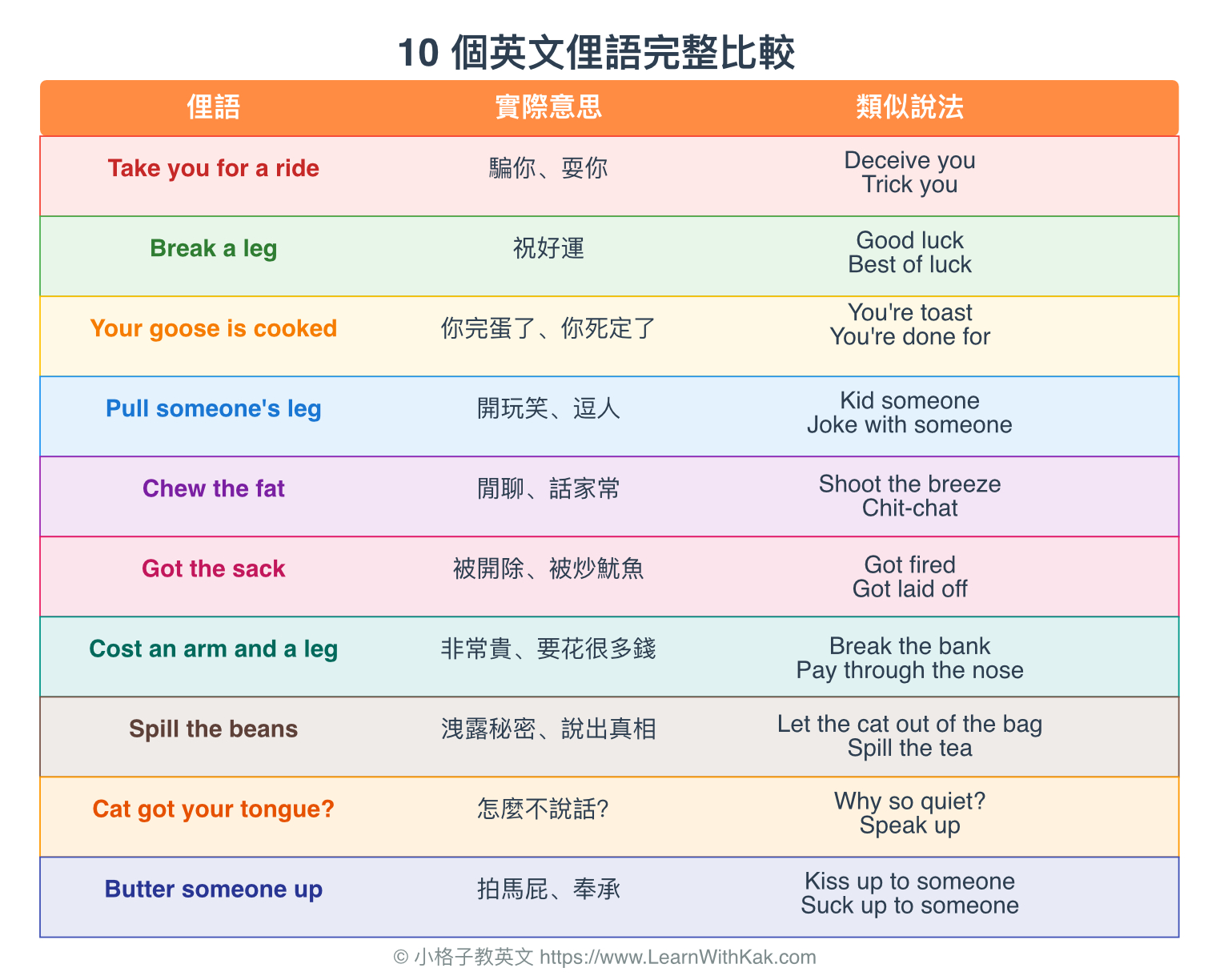
老外說 “Break a leg” 你以為他要你斷腿?朋友說 “Your goose is cooked” 你以為他要煮鵝?英文有很多俚語字面意思跟實際意思完全不同,不懂的話會造成超大誤會。今天就來完整教你 10 個超容易搞錯的英文俚語,從字面意思到實際意思、由來到使用情境,讓你搞懂老外到底在說什麼,不再被字面意思騙!
Take you for a ride
字面意思:載你去兜風
實際意思:騙你、耍你、誤導你
Take you for a ride 有兩個意思,要看上下文判斷。如果真的有車、真的在討論開車,那就是字面意思「載你兜風」。但如果沒有車的情境,就是「騙你」的意思,而且通常是惡意的欺騙。
(1)
A: Jason asked me for $1000 last week. He said it was for your birthday gift.
A: Jason 上禮拜跟我要了一千塊錢,他說是要買你的生日禮物。
B: What? My birthday was six months ago. He took you for a ride.
B: 什麼?我生日是半年前的事了,他騙你的。
(2)
A: I can’t believe you sold your house for $100,000. It’s worth at least twice as much.
A: 你十萬塊就賣掉房子,真不敢相信,你的房子至少值兩倍。
B: I know. After I signed the deal, I felt like I had been taken for a ride.
B: 我知道,我簽約後才發現好像被騙了。
(3)
A: That salesman promised me this car was brand new, but I found out it had 50,000 miles on it.
A: 那個業務跟我保證這台車是全新的,但我發現它已經跑了五萬英里。
B: Sounds like he took you for a ride. You should get your money back.
B: 聽起來他騙你了,你應該要退款。
Break a leg
字面意思:斷腿
實際意思:祝好運(尤其是演出前)
Break a leg 是劇場界的迷信用語。傳統上認為在演出前直接說 “Good luck” 會帶來厄運,所以反著說 “Break a leg” 才能帶來好運。現在這個說法已經不限於劇場,考試前、面試前、比賽前都可以用。
(4)
A: I have my piano recital tonight. I’m so nervous!
A: 我今晚有鋼琴演奏會,我好緊張!
B: Break a leg! You’re going to do great.
B: 祝你好運!你一定會表現很好。
(5)
A: My job interview is in an hour.
A: 我一小時後要面試。
B: Break a leg! Let me know how it goes.
B: 祝你好運!記得告訴我結果怎麼樣。
(6)
A: Thanks for coming to my show! Wish me luck!
A: 謝謝你來看我的表演!祝我好運!
B: Break a leg out there!
B: 祝你演出順利!
Your goose is cooked
字面意思: 你的鵝被煮了
實際意思: 你完蛋了、你死定了、大事不妙
Your goose is cooked 源自 16 世紀,意思是鵝一旦被煮了就沒救了,引申為「處境危險、大事不妙、沒救了」。通常用在被抓到、麻煩大了、或者沒有退路的情況。
(7)
A: The boss just found out you’ve been coming in late every day this week.
A: 老闆剛發現你這週每天都遲到。
B: Oh no. My goose is cooked.
B: 糟了,我完蛋了。
(8)
A: Did you study for the exam?
A: 你有準備考試嗎?
B: No, I forgot it was today. My goose is cooked!
B: 沒有,我忘記今天考試了,我死定了!
(9)
A: You forgot to submit the report that was due yesterday?
A: 你忘記交昨天該交的報告?
B: Yeah. When the client finds out, my goose is cooked.
B: 對啊,客戶發現的話我就完蛋了。
Pull someone’s leg
字面意思:扯人的腿
實際意思:開玩笑、耍人、逗人
Pull someone’s leg 表示開玩笑或逗人,通常是友善的玩笑,不是惡意的欺騙。這跟 “take you for a ride” 不同:Pull your leg 是開玩笑(友善),Take you for a ride 是欺騙(惡意)。常見的問句是 “Are you pulling my leg?”(你在開玩笑嗎?)
(10)
A: I just won the lottery! I’m a millionaire now!
A: 我剛中樂透!我現在是百萬富翁了!
B: Are you pulling my leg? Show me the ticket!
B: 你在開玩笑嗎?給我看彩券!
(11)
A: The boss said we all get a month off for Christmas.
A: 老闆說聖誕節我們全部放一個月假。
B: You must be pulling my leg. That’s not possible.
B: 你一定在開玩笑,這不可能。
(12)
A: I’m thinking about quitting my job to become a professional gamer.
A: 我在考慮辭職當職業玩家。
B: Are you serious, or are you just pulling my leg?
B: 你是認真的,還是在開玩笑?
Chew the fat
字面意思:嚼肥肉
實際意思: 閒聊、聊天、話家常
Chew the fat 源自水手或農夫在工作時邊嚼東西邊聊天的習慣。這個俚語表示輕鬆的閒聊,不是正式的討論或嚴肅的對話。類似的說法還有 “shoot the breeze” 或 “have a chat”。
(13)
A: Do you have time for a coffee? I haven’t seen you in ages.
A: 你有時間喝杯咖啡嗎?我好久沒看到你了。
B: Sure! Let’s chew the fat and catch up.
B: 好啊!我們來聊聊天、聊聊近況。
(14)
A: What are you guys doing?
A: 你們在做什麼?
B: Just chewing the fat. Want to join us?
B: 只是在閒聊,要加入我們嗎?
(15)
A: I saw you and Mike talking for hours yesterday.
A: 我昨天看到你跟 Mike 聊了好幾個小時。
B: Yeah, we were just chewing the fat about old times.
B: 對啊,我們只是在聊聊以前的事。
Got the sack
字面意思: 拿到袋子
實際意思: 被開除、被炒魷魚、失業
Got the sack 源自工人被開除時要把工具裝進袋子帶走的習慣。這個說法表示被開除,通常是因為表現不好或犯錯。注意:Got the sack(被動,被開除)和 Give someone the sack(主動,開除某人)意思不同。
(16)
A: I heard Tom got the sack yesterday.
A: 我聽說 Tom 昨天被開除了。
B: Really? What happened?
B: 真的嗎?發生什麼事?
A: He was always late and missed too many deadlines.
A: 他老是遲到,錯過太多截止日期。
(17)
A: How’s your new job going?
A: 你的新工作怎麼樣?
B: Not great. I’m worried I might get the sack if I don’t improve my performance.
B: 不太好,我擔心如果表現不改善可能會被開除。
(18)
A: Did you hear? The company just gave half the sales team the sack.
A: 你聽說了嗎?公司剛開除了一半的業務團隊。
B: That’s terrible! What are they going to do now?
B: 太糟了!他們現在要怎麼辦?
Cost an arm and a leg
字面意思:花費一隻手臂和一條腿
實際意思:非常貴、要花很多錢
Cost an arm and a leg 源自二戰時期,士兵失去手腳的代價極大,引申為「付出極大代價」或「非常昂貴」。類似的說法還有 “break the bank”、”pay through the nose” 或 “a fortune”。
(19)
A: I love your new car! How much did it cost?
A: 我喜歡你的新車!多少錢?
B: It cost me an arm and a leg, but it’s worth it.
B: 花了我一大筆錢,但很值得。
(20)
A: Have you seen the rent prices in this neighborhood?
A: 你看過這個社區的租金嗎?
B: Yeah, they cost an arm and a leg! I can’t afford to live here.
B: 有啊,超級貴!我住不起這裡。
(21)
A: I need to get my car repaired, but the mechanic quoted me $3,000.
A: 我要修車,但技師報價三千美金。
B: That’s going to cost you an arm and a leg! Maybe get a second opinion.
B: 那會花你一大筆錢!也許找第二家問問。
Spill the beans
字面意思:灑豆子
實際意思:洩露秘密、說出真相、爆料
Spill the beans 源自古希臘用豆子投票的習俗,不小心打翻豆子就會洩露投票結果。現在這個俚語表示洩露秘密、說出真相,或者不小心說溜嘴。類似的說法有 “let the cat out of the bag”。
(22)
A: Don’t tell anyone, but we’re planning a surprise party for Sarah.
A: 別告訴任何人,我們在計劃幫 Sarah 辦驚喜派對。
B: Don’t worry, I won’t spill the beans.
B: 別擔心,我不會說出去的。
(23)
A: How did everyone find out about my promotion? It was supposed to be confidential.
A: 大家怎麼知道我升職的事?這應該是機密。
B: Sorry, I accidentally spilled the beans to Mike, and he told everyone.
B: 抱歉,我不小心跟 Mike 說了,他告訴所有人。
(24)
A: Come on, spill the beans! What did he say about me?
A: 快說!他說了我什麼?
B: Okay, okay. He said he thinks you’re amazing.
B: 好啦好啦,他說他覺得你很棒。
Cat got your tongue?
字面意思:貓抓住你的舌頭了嗎?
實際意思:你怎麼不說話?為什麼不回答?
Cat got your tongue 用來問為什麼對方突然不說話或不回答問題,通常帶有一點調侃或催促的意味。這個俚語可能源自古埃及的懲罰(割舌頭餵貓),或者是孩子害羞時大人說的話。語氣可以是開玩笑,也可以是催促回答。
(25)
A: So, what do you think about my proposal?
A: 那,你覺得我的提案怎麼樣?
B: [silence]
B: [沉默]
A: What’s the matter? Cat got your tongue?
A: 怎麼了?怎麼不說話?
(26)
A: Did you break the vase?
A: 你打破花瓶了嗎?
B: [no response]
B: [沒回應]
A: Well? Cat got your tongue? I know it was you.
A: 怎樣?不說話嗎?我知道是你。
(27)
A: You were so talkative earlier. What happened? Cat got your tongue?
A: 你剛才話那麼多,現在怎麼了?怎麼不說話了?
B: Sorry, I’m just tired.
B: 抱歉,我只是累了。
Butter someone up
字面意思:在某人身上塗牛油
實際意思:拍馬屁、奉承、討好某人
Butter someone up 源自古印度在神像上塗油以求好運的習俗,引申為討好別人。這個俚語表示奉承或討好某人,通常是為了得到好處,帶有一點負面的意味。類似的說法有 “kiss up to someone” 或 “suck up to someone”。
(28)
A: Why are you being so nice to the boss today?
A: 你今天為什麼對老闆這麼好?
B: I’m trying to butter him up before I ask for a raise.
B: 我想在要求加薪前先拍拍馬屁。
(29)
A: Mike keeps complimenting everything you do. What’s going on?
A: Mike 一直稱讚你做的每件事,怎麼回事?
B: I think he’s trying to butter me up so I’ll help him with his project.
B: 我覺得他想討好我,這樣我就會幫他做專案。
(30)
A: You don’t need to butter me up. Just tell me what you want.
A: 你不用拍馬屁,直接告訴我你想要什麼。
B: Okay, fine. Can I borrow your car this weekend?
B: 好吧,我這週末可以借你的車嗎?
如果你喜歡這篇文章的話,可以追蹤我們的Threads和Facebook唷!