
看到 “It could be true” 和 “It could have been true” 不知道差在哪?明明都有 could,為什麼意思完全不同?其實關鍵在時間點:Could be 講的是現在或未來的可能性,Could have been 講的是過去本來可能但沒發生的事。用錯時態,意思就差很多!今天就來完整解析這兩個用法的差異,從基本概念到條件句應用、常見錯誤對比,讓你搞懂什麼時候該用哪個,表達更精準!
核心差異:時間點不同
最關鍵的差別就是時間。
Could have been = 過去的可能性(但沒發生)
- 談論過去的事
- 本來可能發生,但實際上沒發生
- 常表達遺憾、後悔
- 用完成式 have been
Could be = 現在或未來的可能性
- 談論現在或未來的事
- 還有可能發生
- 表達推測、可能性
- 用原形 be
記住:
- 過去(已發生/沒發生)→ Could have been
- 現在/未來(還未發生)→ Could be
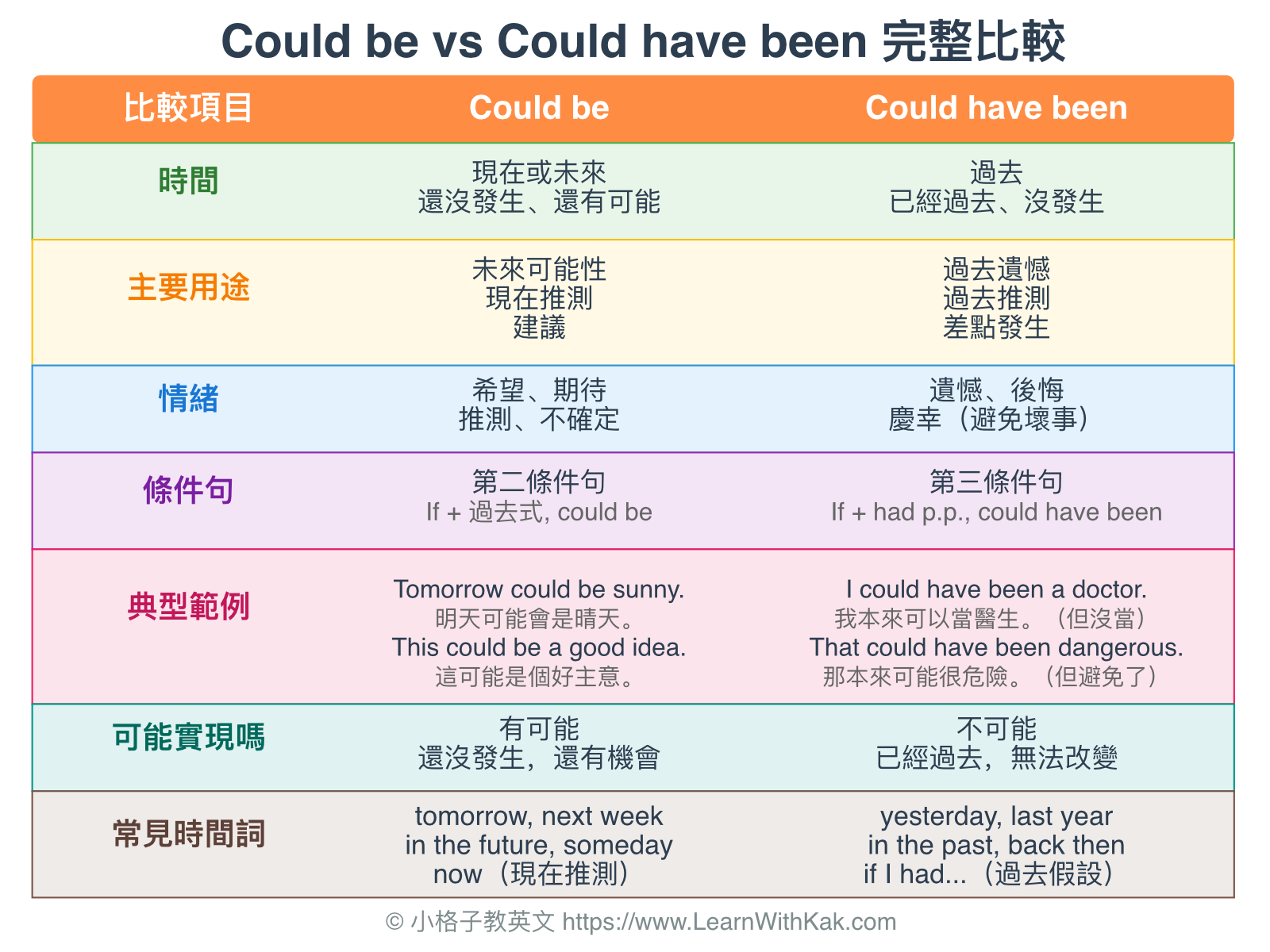
Could have been 的用法(過去)
Could have been 用來談論過去,表示本來可能發生但沒發生的事。
主要用法 1:過去沒發生的事(遺憾、後悔)
這是最常見的用法,表達對過去的遺憾。常搭配第三條件句使用。
(1)
A: I could have been a doctor if I had studied harder.
A: 如果我當時更用功,我本來可以當醫生的。
B: It’s never too late to go back to school.
B: 回去讀書永遠不會太遲。
(2)
A: If I had invested in Bitcoin in 2010, I could have been a millionaire by now.
A: 如果我 2010 年投資比特幣,我現在可能已經是百萬富翁了。
B: Yeah, but who knew back then?
B: 對啊,但當時誰知道呢?
(3)
A: We could have been at the beach right now if we had left earlier.
A: 如果我們早點出發,我們現在可能已經在海邊了。
B: I know. The traffic is terrible.
B: 我知道,交通糟透了。
(4)
A: That could have been a great opportunity for us.
A: 那本來可以是個很好的機會。
B: Why didn’t we take it?
B: 我們為什麼沒把握?
(5)
A: If I had known you were coming, I could have been more prepared.
A: 如果我知道你要來,我本來可以準備得更好。
B: Don’t worry. This is perfect.
B: 別擔心,這樣很好了。
(6)
A: She could have been a professional dancer if she hadn’t injured her knee.
A: 如果她沒有膝蓋受傷,她本來可以成為職業舞者。
B: That’s so sad. She was so talented.
B: 太難過了,她那麼有天分。
主要用法 2:過去的推測
推測過去可能發生的情況,但不確定。
(7)
A: Who ate my cake?
A: 誰吃了我的蛋糕?
B: It could have been your roommate.
B: 可能是你室友。
(8)
A: The package never arrived.
A: 包裹沒送到。
B: It could have been lost in transit.
B: 可能在運送過程中遺失了。
(9)
A: Why didn’t she come to the party?
A: 她為什麼沒來派對?
B: She could have been sick.
B: 她可能生病了。
主要用法 3:差點發生(幸運避免)
表示差點發生壞事,但幸運避免了。
(10)
A: That car almost hit me!
A: 那台車差點撞到我!
B: You could have been seriously injured!
B: 你可能會受重傷!
(11)
A: I forgot to set my alarm.
A: 我忘記設鬧鐘。
B: You could have been late for the exam!
B: 你可能會考試遲到!
(12)
A: The brakes failed, but luckily I was driving slowly.
A: 煞車失靈了,但幸好我開很慢。
B: That could have been a disaster.
B: 那可能會是場災難。
(13)
A: I almost sent that email to the wrong person.
A: 我差點把那封 email 寄給錯的人。
B: That could have been embarrassing.
B: 那可能會很尷尬。
(14)
A: Thank goodness you caught that mistake.
A: 謝天謝地你抓到那個錯誤。
B: Yeah, it could have been a huge problem.
B: 對啊,那可能會是個大問題。
(15)
A: The building was evacuated just in time.
A: 大樓及時疏散了。
B: People could have been trapped inside.
B: 人們可能會被困在裡面。
(16)
A: I’m so glad we didn’t take that flight.
A: 我很慶幸我們沒搭那班飛機。
B: Why? What happened?
B: 為什麼?發生什麼事?
A: It was delayed for 8 hours. We could have been stuck at the airport all day.
A: 延誤了 8 小時,我們可能會整天困在機場。
Could be 的用法(現在/未來)
Could be 用來談論現在或未來,表示可能會發生的事。
主要用法 1:未來的可能性
談論未來可能發生的事,還有機會實現。
(17)
A: If I study hard, I could be a doctor someday.
A: 如果我用功讀書,我有朝一日可能成為醫生。
B: That’s a great goal!
B: 這是個很棒的目標!
(18)
A: This investment could be very profitable in the future.
A: 這筆投資未來可能會很賺錢。
B: But it’s also risky, right?
B: 但也很有風險對吧?
(19)
A: If we leave now, we could be there by 6 PM.
A: 如果我們現在出發,我們可能 6 點前到。
B: Let’s go then!
B: 那我們走吧!
(20)
A: This could be a great opportunity for you.
A: 這對你來說可能是個很好的機會。
B: I’m definitely going to apply.
B: 我一定會申請。
(21)
A: If the weather improves, tomorrow could be a perfect day for hiking.
A: 如果天氣好轉,明天可能是爬山的完美日子。
B: Let’s check the forecast.
B: 我們來看氣象預報。
(22)
A: With more practice, you could be really good at this.
A: 多練習的話,你可能會變得很厲害。
B: Thanks for the encouragement!
B: 謝謝你的鼓勵!
主要用法 2:現在的推測
推測現在的情況,但不確定。
(23)
A: Where’s Sarah?
A: Sarah 在哪?
B: She could be at the library.
B: 她可能在圖書館。
(24)
A: What’s that noise?
A: 那是什麼聲音?
B: It could be the neighbors.
B: 可能是鄰居。
(25)
A: Is this information accurate?
A: 這個資訊準確嗎?
B: It could be, but we should verify it.
B: 可能準確,但我們應該確認一下。
(26)
A: Who’s calling?
A: 誰打來的?
B: It could be your boss.
B: 可能是你老闆。
主要用法 3:建議或可能的選擇
提供建議或表達可能的選項。
(27)
A: I’m not sure what to do about this problem.
A: 我不確定這個問題該怎麼辦。
B: Taking a break could be a good idea.
B: 休息一下可能是個好主意。
(28)
A: We need a new approach.
A: 我們需要新方法。
B: This strategy could be the answer.
B: 這個策略可能是答案。
(29)
A: Should we try the new restaurant?
A: 我們要試試新餐廳嗎?
B: That could be fun!
B: 那可能會很有趣!
(30)
A: I’m thinking about switching careers.
A: 我在考慮轉換職涯。
B: That could be a positive change for you.
B: 那對你來說可能是正面的改變。
條件句中的用法
Could be 和 Could have been 在條件句中的用法不同,搭配的時態也不同。Could be 用於第二條件句,Could have been 用於第三條件句。
第二條件句(未來假設)+ Could be
談論未來不太可能但仍有可能的情況。
結構:If + 過去式, … could be …
(31)
A: If I won the lottery, I could be rich.
A: 如果我中樂透,我可能會很有錢。
B: What would you do with the money?
B: 你會拿錢做什麼?
(32)
A: If I had more time, this project could be much better.
A: 如果我有更多時間,這個專案可能會好很多。
B: Can you get an extension?
B: 你能延期嗎?
第三條件句(過去假設)+ Could have been
談論過去沒發生的事,表達遺憾或假設。
結構:If + had + 過去分詞, … could have been …
(33)
A: If I had won the lottery last year, I could have been rich by now.
A: 如果我去年中樂透,我現在可能已經很有錢了。
B: But you didn’t buy a ticket, did you?
B: 但你沒買彩券對吧?
(34)
A: If we had left earlier, we could have been on time.
A: 如果我們早點出發,我們本來可以準時的。
B: I told you we should have left at 8!
B: 我就跟你說我們應該 8 點出發!
(35)
A: If she had studied medicine, she could have been a doctor like her father.
A: 如果她讀醫學,她本來可以像她父親一樣當醫生。
B: But she chose to follow her own path.
B: 但她選擇走自己的路。
常見錯誤和對比
很多人會混用這兩個,導致時態錯誤。
錯誤 1:時態混用
(36)
❌ If I studied harder last year, I could be a doctor now.
(用過去的假設搭配現在的結果,時態不一致)
✓ If I had studied harder, I could have been a doctor.
(過去假設 + 過去結果)
或
✓ If I had studied harder, I could be a doctor now.
(Mixed conditional – 過去假設 + 現在結果,但這樣才對)
錯誤 2:用在不對的時間
(37)
❌ Yesterday could be sunny.
(yesterday 是過去,不能用 could be)
✓ Yesterday could have been sunny.
(過去要用 could have been)
✓ Tomorrow could be sunny.
(未來用 could be)
錯誤 3:遺憾用錯形式
(38)
❌ I could be rich if I invested in Apple 20 years ago.
(談過去的遺憾卻用 could be)
✓ I could have been rich if I had invested in Apple 20 years ago.
(過去遺憾要用 could have been)
錯誤 4:推測時間搞錯
(39)
❌ He could have been at home now.
(now 是現在,不該用 could have been)
✓ He could be at home now.
(推測現在用 could be)
✓ He could have been at home yesterday.
(推測過去用 could have been)
記住:Could be 講未來可能、Could have been 講過去遺憾。看時間點選對用法,表達就更精準!
如果你喜歡這篇文章的話,可以追蹤我們的Threads和Facebook唷!