
had better 用法常常被誤會成 would better,其實兩者差一個字,意思差很多。這篇整理正確用法、常見誤用,還有跟 I’d rather 之間容易搞混的地方。
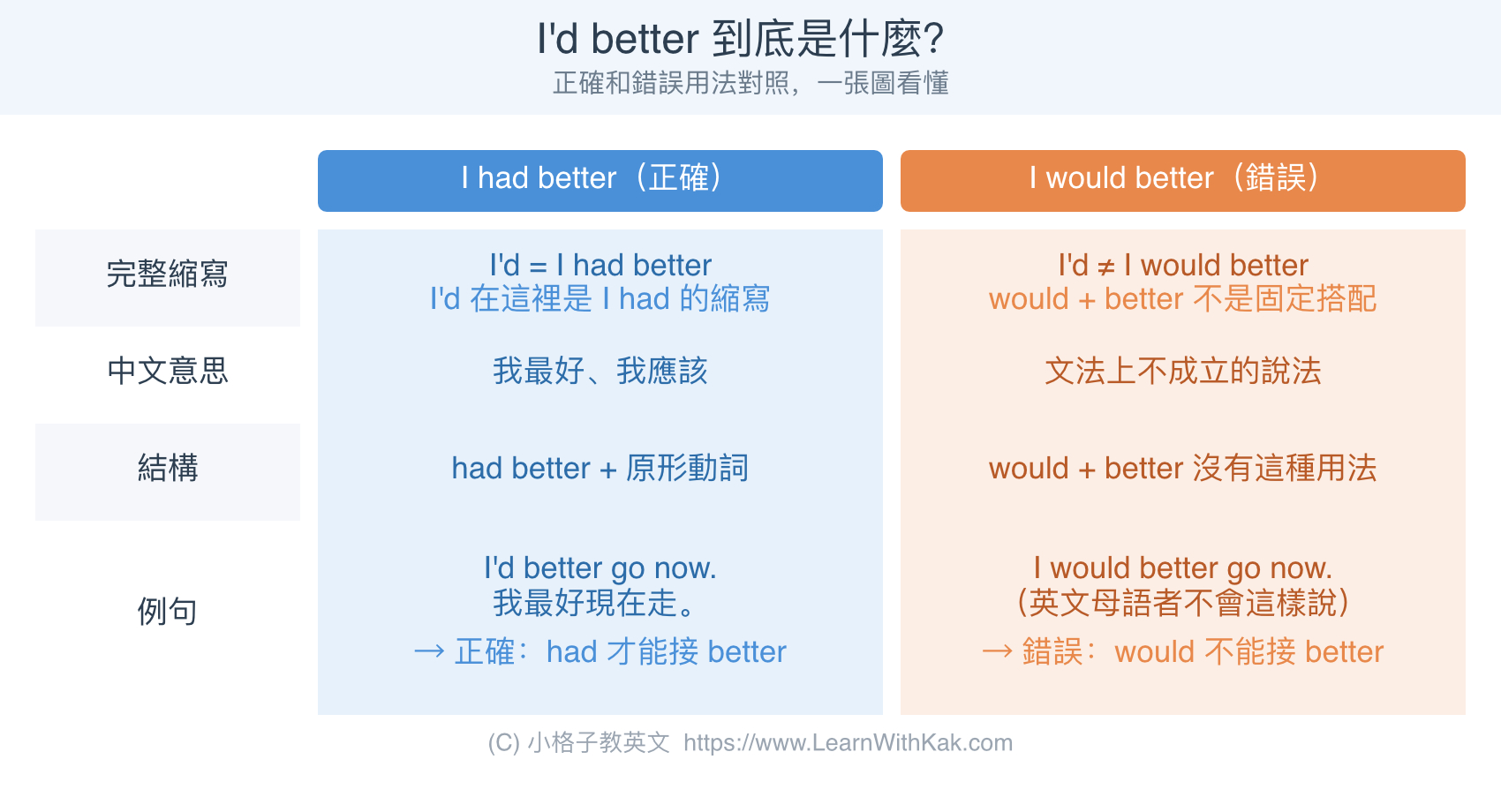
I’d better 到底是 I would 還是 I had?
I’d 這個縮寫最麻煩的地方,就是它可以代表兩種完全不同的字:I would 或 I had。看到 I’d 的時候,不能直接假設是 I would,要看後面接的是什麼字,才能判斷正確意思。這也是為什麼很多人打字或打句子的時候會卡住,因為腦中同時浮出兩個可能的展開方式,一時分不清楚該選哪一個。
(1)
I’d better leave now.
我最好現在出發。
這裡的 I’d 是 I had 的縮寫,完整寫法是 I had better,跟 would 一點關係都沒有。
(2)
I’d like to go with you.
我想跟你一起去。
這裡的 I’d 才是 I would 的縮寫,後面接 like、love、hate 這類動詞時,通常都是 I would 的縮寫。
也就是說,I would better 這種說法在文法上根本不成立,因為 better 前面要接的固定搭配是 had,不是 would。很多人會打成 I would better,其實是把兩種縮寫的規則搞混了,以為所有 I’d 都可以還原成 I would,結果套用到 had better 上就出錯。判斷方式其實不難,只要記住一個原則:只要句子的意思是「最好、應該」,I’d 就一定是 I had 的縮寫,不會有例外,因為 would better 這種組合從來就不存在於正常英文裡。
另外要注意的是,had better 雖然帶有 had 這個過去式的字,但講的其實是現在或未來要做的事,跟過去式一點關係都沒有,這也是很多人容易誤會的地方。把 had better 想成一個固定片語會比較好記,不要拆開來一個字一個字翻譯,不然反而容易搞混時態。
had better 用法:什麼時候用?
had better 用來給建議或警告,語氣裡帶著「如果不這麼做,可能會有不好的後果」,比單純說 should 更有急迫感,也更適合用在有時間壓力的情境。結構很簡單:had better 加原形動詞,中間不用加 to。
(3)
A: What time does your flight leave?
A: 你的班機幾點起飛?
B: At 6 AM. I’d better go to bed early tonight.
B: 早上六點。我今晚最好早點睡。
(4)
A: The meeting starts in ten minutes.
A: 會議十分鐘後開始。
B: Oh no, I’d better hurry then.
B: 糟糕,那我最好快點。
(5)
A: It’s getting dark outside.
A: 外面天要黑了。
B: You’re right, I’d better head home now.
B: 你說得對,我最好現在回家。
(6)
A: I haven’t packed anything for the trip yet.
A: 我行李還完全沒收。
B: You’d better start now, we’re leaving in an hour.
B: 你最好現在開始收,我們一小時後就要出發了。
(7)
A: My throat has been hurting for days.
A: 我喉嚨痛好幾天了。
B: You’d better see a doctor before it gets worse.
B: 你最好去看醫生,不要等到更嚴重。
(8) I’d better finish this report today, or my boss will be upset.
我最好今天完成這份報告,不然老闆會不高興。
從這些例子可以看出,had better 常常出現在有明確時間點或後果的對話裡,像是趕飛機、開會遲到、身體不舒服這類情境,講的人心裡通常已經有一個「不做就會怎樣」的畫面,所以語氣才會比一般建議更強烈一點。用在職場上也很自然,例如提醒同事截止日快到了,或是提醒自己該趕快處理某件事,都可以用 had better 表達這種帶點急迫感的建議。
值得一提的是,had better 幾乎只用在口語或比較輕鬆的書面溝通裡,正式的商業郵件或報告比較少見,因為語氣偏直接,甚至帶點命令的味道,用在對上位者身上要特別小心,對平輩或晚輩、或是自己對自己說的時候最自然。
有些人會拿 had better 跟 should 或 must 比較,覺得三個都是在給建議,隨便用哪一個都可以。其實語氣強度不太一樣。should 比較中性,單純是提出建議,沒有特別強調後果;must 語氣最強,帶有義務或規定的意味;had better 則是介於中間,通常暗示如果不照做,接下來會發生具體的壞結果,像是遲到、生病加重、來不及之類的,這種帶有畫面感的後果,正是 had better 用法最大的特色。
had better not 的否定用法
否定形式是 had better not,一樣後面接原形動詞,表示「最好不要」,一樣帶有如果做了可能會有不好後果的暗示。
(9)
A: Let’s order one more round of drinks.
A: 我們再點一輪飲料吧。
B: I’d better not, I’m driving home tonight.
B: 最好不要,我今晚要開車回家。
(10)
A: Should we tell him what really happened?
A: 我們應該告訴他真相嗎?
B: We’d better not, it might hurt his feelings.
B: 我們最好不要,這可能會傷到他的感情。
(11)
A: Can I borrow your laptop for the weekend?
A: 我可以借你的筆電過週末嗎?
B: You’d better not, I need it for a presentation on Monday.
B: 最好不要,我星期一要用它做簡報。
(12)
A: I’m thinking about skipping the gym today.
A: 我在想今天要不要不去健身房。
B: You’d better not skip too many days in a row.
B: 你最好不要連續好幾天都不去。
(13) You’d better not forget your passport this time.
你這次最好不要忘記帶護照。
否定句的重點是 not 要放在 better 後面,不是放在 had 後面,寫成 hadn’t better 是錯誤用法,這點常常被搞混,寫作或口說的時候特別容易寫錯位置,多練習幾次自然就會抓到語感。另外要注意,had better not 雖然語氣是「最好不要」,但通常還是帶著提醒或警告的味道,不是單純陳述事實,跟中文「最好不要」給人的感覺其實蠻接近的,可以直接用中文語感去理解,不用硬背文法規則。
I’d better vs I’d rather,別搞混了
I’d better 和 I’d rather 常常被放在一起討論,因為兩個縮寫看起來一模一樣,都是 I’d 開頭,但完整展開後意思完全不同:had better 是建議或警告,帶有後果的暗示;would rather 則是單純表達個人偏好,跟後果沒有直接關係,比較像是在兩個選項之間做選擇。
(14) I’d better stay home tonight.
我今晚最好待在家。
這句話暗示有某種原因讓我應該待在家,例如明天要早起,或是身體不太舒服。
(15) I’d rather stay home tonight.
我今晚比較想待在家。
這句話單純是我的個人偏好,沒有特別的後果或壓力,只是比較想這樣做而已。
如果常常搞不清楚這兩者的差異,I’d better 不是 I would better!搞懂 I’d rather 和 I’d better 的差別這篇文章有更完整的對比整理,從基本用法到否定句都拆解得很清楚,值得看一下,尤其是常常兩個縮寫混著用的人,看完應該能分清楚兩者的核心差別。
其實只要抓住一個判斷方向就不容易出錯:先問自己這句話是在給建議、警告,還是單純表達喜好。如果答案是前者,通常就是 had better;如果是後者,那就是 would rather。這個判斷順序比死記文法規則更實用,尤其是在對話中臨場反應的時候,用意思去判斷會比用文法去判斷快很多,久了自然就會養成語感,不需要每次都停下來想文法規則。
下次看到 I’d 開頭的句子,先想想後面接的是什麼意思,就能馬上判斷是 had better 還是 would rather,不會再搞混了。
延伸閱讀:【虛擬語氣是在幹嘛?Wish、If only、Would rather 到底差在哪】
如果你喜歡這篇文章的話,可以追蹤我們的 Threads 和 Facebook 唷!