
a lot of 用法乍看很簡單,不就是「很多」的意思嗎?但實際開口或寫作的時候,還是有不少細節很容易出錯,像是 thanks a lot 後面到底能不能加 of,或是它跟 lots of 有沒有差別。這篇把 a lot of 的用法和常見的地雷一次整理好,也會聊到它什麼時候其實不太適合用。
A lot of 的基本用法
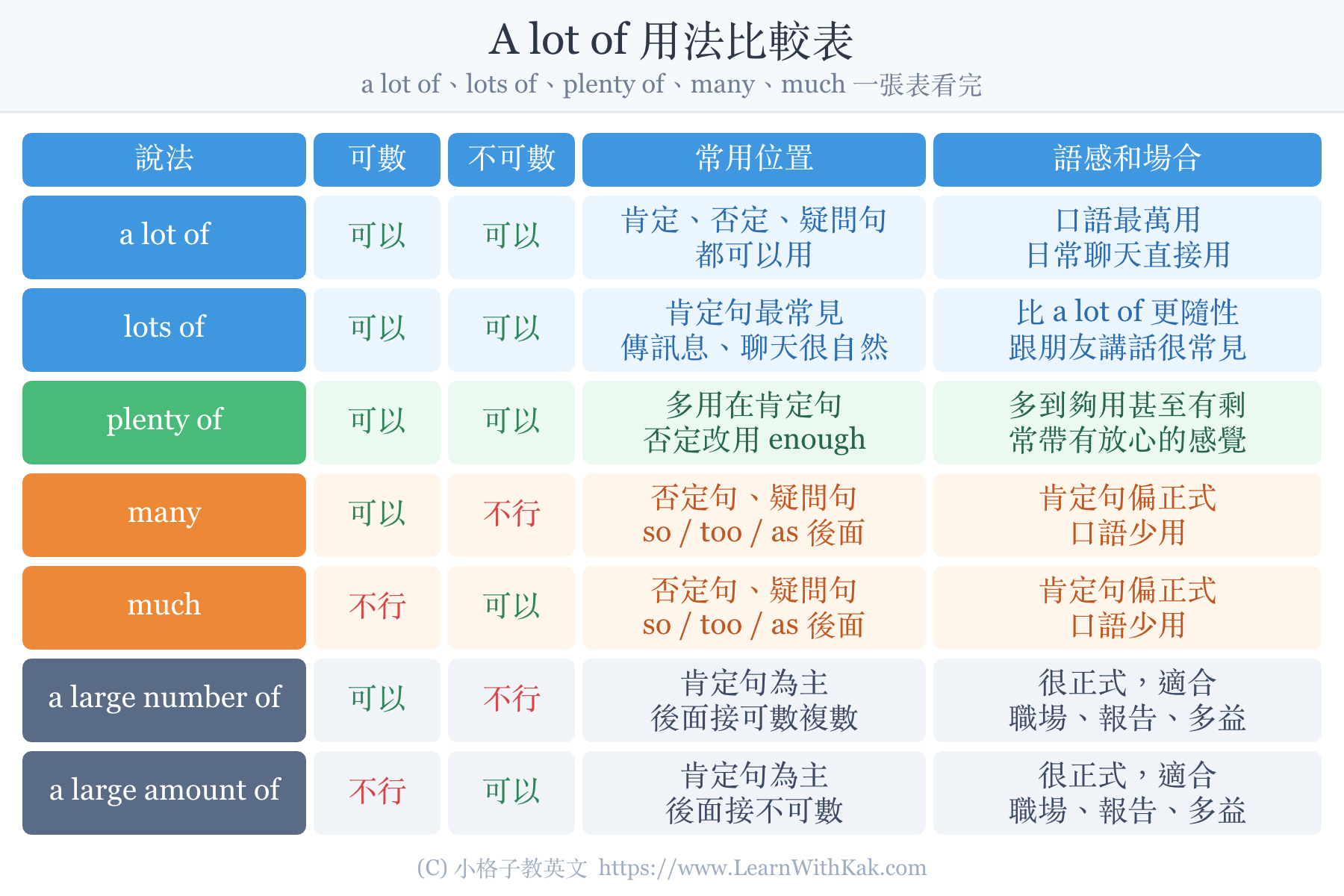
先講結論,a lot of 是英文裡最好用的「很多」,後面接可數複數名詞或不可數名詞都可以,肯定句、否定句、疑問句也都行得通。所以一時想不到該用 much 還是 many 的時候,直接用 a lot of 通常不會出錯,這也是 a lot of 用法最方便的地方。
動詞要怎麼配?看 of 後面那個名詞,不要看 a lot。後面是 people 這種複數就用 are,後面是 traffic、water 這種不可數就用 is。
(1)
A: Why do you look so tired?
A: 你看起來怎麼這麼累?
B: I had a lot of meetings this week.
B: 我這禮拜開了超多會。
(2)
A: Is there a lot of traffic on the way to the airport?
A: 去機場的路上車很多嗎?
B: Not really. There isn’t a lot of traffic this early.
B: 還好,這麼早沒什麼車。
(3)
A: Did you spend a lot of money on the trip?
A: 你這趟旅行花了很多錢嗎?
B: Yeah, a lot of money went to food.
B: 對啊,很多錢都花在吃上面。
(4) A lot of people are waiting outside the store.
店外面有很多人在排隊。
(5) A lot of water is wasted when you leave the tap on.
水龍頭開著不關,會浪費很多水。
A lot 和 A lot of 別搞混
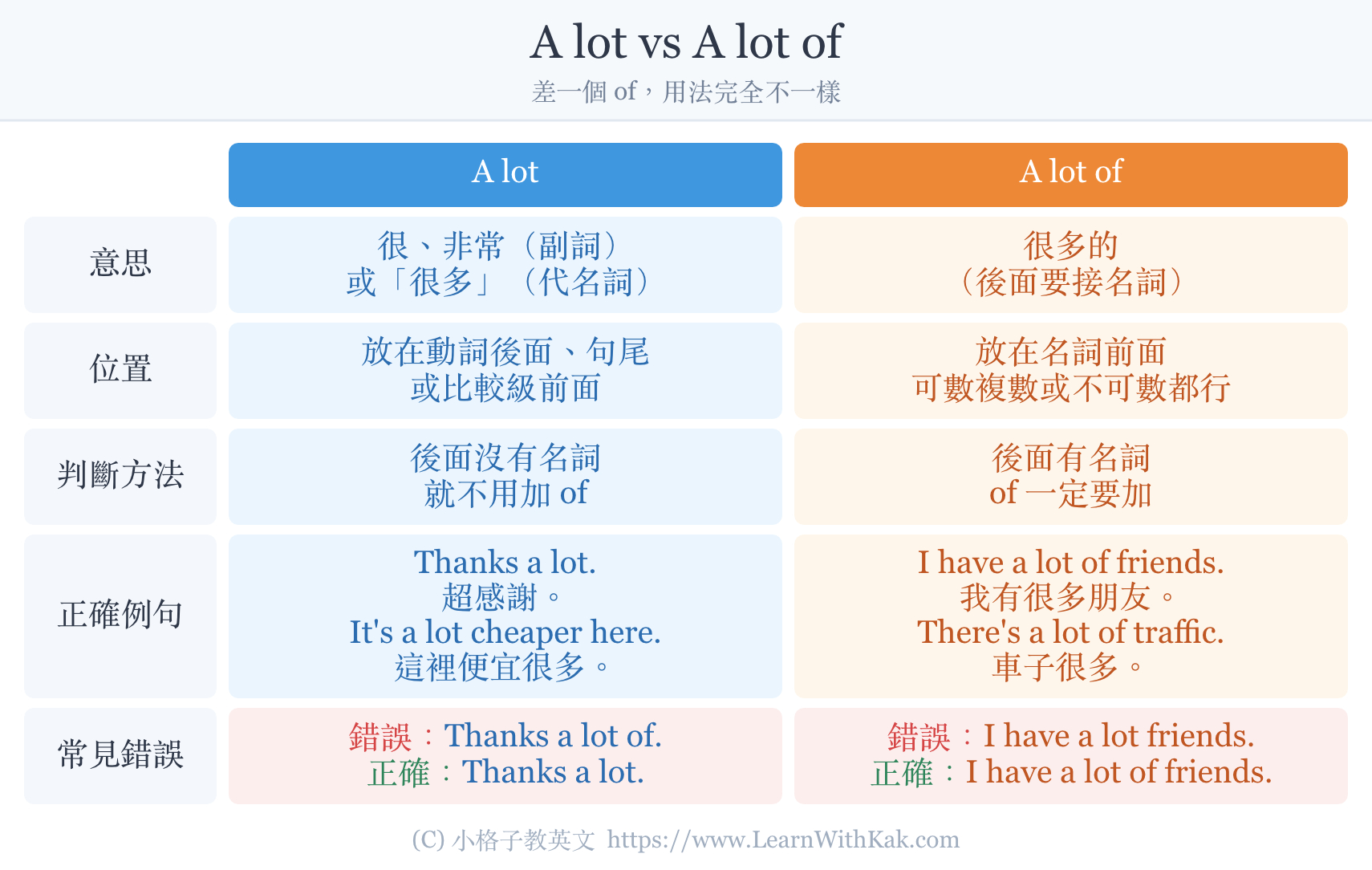
差一個 of,用法就完全不同。a lot 是單獨使用,可以當副詞,意思是「很、非常」,像 I like it a lot。也可以當代名詞,意思是「很多」,像 We don’t need a lot。重點是它後面不會直接接名詞。a lot of 則是一整組,後面一定要有名詞,沒有名詞就不能加 of。
還有一個很實用的用法,a lot 可以放在比較級前面加強語氣,a lot cheaper、a lot better 都是這樣用,同樣不用加 of。
(6)
A: I made dinner for everyone.
A: 我幫大家煮了晚餐。
B: Wow, thanks a lot!
B: 哇,超感謝你!
(7)
A: Do you like living in Taipei?
A: 你喜歡住在台北嗎?
B: I like it a lot, but the rent is crazy.
B: 很喜歡啊,但房租太誇張了。
(8)
A: Do you need help with dinner?
A: 你煮晚餐需要幫忙嗎?
B: Nope, it doesn’t take a lot.
B: 不用,也沒花什麼功夫。
(9)
A: Is the new phone more expensive?
A: 新手機比較貴嗎?
B: No, it’s a lot cheaper than the old one.
B: 不會,比舊的便宜很多。
(10) 【錯誤】I have a lot friends in Taichung.
【正確】I have a lot of friends in Taichung.
我在台中有很多朋友。
(11) 【錯誤】Thanks a lot of for the ride.
【正確】Thanks a lot for the ride.
謝謝你載我,超感謝。
Much 和 Many 什麼時候用
a lot of 這麼萬用,那 much 和 many 還需要學嗎?需要,因為有些位置它們比 a lot of 更自然。
- 問數量的時候,how many 搭可數,how much 搭不可數
- 否定句,例如 I don’t have many friends here
- so、too、as 後面,例如 so much、too many、as many as
至於怎麼判斷可數還是不可數,跟no 後面該用單數還是複數是同一套邏輯,能一個一個數的搭 many,數不出來的搭 much。
肯定句就不太一樣了。I have much homework 文法沒有錯,但聽起來很正式,口語幾乎沒人這樣講,換成 a lot of homework 就自然多了。所以 a lot of 用法最有優勢的地方就是肯定句,其他情況交給 much 和 many 就好。
(12)
A: How many people are coming to the party?
A: 派對會有幾個人來?
B: Not many. Maybe five or six.
B: 不多,大概五六個吧。
(13)
A: How much is this jacket?
A: 這件外套多少錢?
B: It’s 2,000 NT dollars.
B: 兩千元。
(14)
A: Did you get much sleep last night?
A: 你昨晚有睡多少嗎?
B: Not much. I was up until 3 a.m.
B: 沒什麼,我熬夜到三點。
(15) I don’t have much time before my train leaves.
火車開之前,我沒剩多少時間。
(16) There were too many people at the night market.
夜市的人太多了。
Lots of 和 A lot of
先講結論,a lot of lots of 差別真的很小。文法規則幾乎一模一樣,後面可數不可數都能接,動詞一樣看後面的名詞。真要說差在哪,就是語氣。lots of 更隨性,傳訊息、跟朋友聊天特別常見,寫正式 email 的時候比較少用。
lots 也可以單獨當代名詞,像 We have lots to do。再往口語走,還有 tons of 和 loads of,語氣更誇張,tons of 美國人比較常講,loads of 則是英國人比較愛用。
(17)
A: How was Japan?
A: 日本好玩嗎?
B: Amazing! We ate lots of ramen.
B: 超棒!我們吃了超多拉麵。
(18)
A: Do you have plans for the long weekend?
A: 連假你有什麼計畫嗎?
B: Not really. I have lots of laundry to catch up on.
B: 沒什麼,我有一堆衣服要洗。
(19) I got tons of messages from my group chat while I was in a meeting.
我開會的時候,群組跳出超多訊息。
(20)
A: Are there any good cafes around here?
A: 這附近有不錯的咖啡廳嗎?
B: Yeah, there are loads of them near the station.
B: 有啊,車站附近超多的。
(21)
A: Why are you still at the office?
A: 你怎麼還在公司?
B: I’ve got lots to do before the deadline.
B: 截止日前我還有一大堆事要做。
Plenty of 的意思和用法
plenty of 中文是「很多、充足、綽綽有餘」,重點不只是量多,而是多到夠用,甚至還有剩。很多人會直接查 plenty 中文,單獨的 plenty 也可以當代名詞用,意思一樣是「大量、充足」,像 We have plenty。
a lot of 只是告訴你量很多,plenty of 則多了一層「不用擔心」的感覺。所以安慰別人、叫人放心的時候,plenty of 特別好用。plenty of 用法有一個小限制,它多半出現在肯定句,想說「不夠」的時候不會說 not plenty of,而是改用 not enough。
另一個常見的 plenty of 用法是慣用語 plenty of fish in the sea,用來安慰剛失戀的朋友。
(22)
A: Are we going to miss the train?
A: 我們會趕不上火車嗎?
B: Relax. We have plenty of time.
B: 放輕鬆,時間很充裕。
(23)
A: Should I bring snacks?
A: 我要帶零食嗎?
B: No need. There’s plenty of food at my place.
B: 不用啦,我這邊吃的很夠。
(24)
A: Is there room for one more in your car?
A: 你的車還坐得下一個人嗎?
B: Sure, plenty of room!
B: 當然,位子多得是!
(25)
A: Do you want another bowl of rice?
A: 你要不要再來一碗飯?
B: No thanks, I’ve had plenty.
B: 不用了,我已經吃很夠了。
(26) Don’t feel bad about the breakup. There are plenty of fish in the sea.
分手不要難過,天涯何處無芳草啦。
職場和多益的正式說法
寫 email、報告或簡報的時候,a lot of 有點太口語,可以換成比較正式的說法。
- a large number of + 可數複數名詞
- a large amount of + 不可數名詞
- a great deal of + 不可數名詞
number 用在數得出來的東西,amount 用在數不出來的東西,跟fewer 和 less的分法是同一個邏輯。
多益很愛考 a number of 和 the number of,兩個後面接的動詞完全不同。a number of 是「一些」,動詞用複數。the number of 是「……的數量」,真正的主詞是 number,所以動詞用單數。判斷方式跟主詞與動詞一致一樣,先找出真正的主詞。
(27)
A: Why is the report delayed?
A: 報告怎麼延遲了?
B: We received a large number of customer complaints, so we had to handle them first.
B: 我們收到大量客訴,所以得先處理。
(28)
A: Is the server okay?
A: 伺服器還好嗎?
B: A large amount of data is being uploaded right now.
B: 現在有大量資料正在上傳。
(29) Our team spent a great deal of time testing the new app.
我們團隊花了很多時間測試新的 app。
(30) A number of employees have asked for remote work options.
有不少員工詢問過遠距工作的選項。
(31) The number of applicants has doubled since last year.
申請人數比去年多了一倍。
(32)
A: Should I write “a lot of clients” in this email?
A: 這封 email 我可以寫 a lot of clients 嗎?
B: You can, but “a large number of clients” sounds more professional.
B: 可以,不過 a large number of clients 聽起來比較專業。
下次想說「很多」的時候,先看場合。跟朋友聊天就放心用 a lot of,寫 email 再換成比較正式的說法。多用幾次,自然就會變成反射動作。
延伸閱讀:【多益易混淆單字: Considerable、Substantial、Significant、Sizable、Extensive、Appreciable 到底差在哪】
如果你喜歡這篇文章的話,可以追蹤我們的 Threads 和 Facebook 唷!