
本來只是茶水間聊天,卻突然聽到消息說公司要重組?聽到消息英文的說法其實不只一種,語感差很多,這篇整理常用的幾種給你,講英文的時候可以選對詞,不用再亂猜,講出來也更自然道地。
意外聽到、風聲走漏:get wind of / catch wind of
get wind of something 用來形容「意外得知、無意間聽到」某件事,通常帶點「這消息本來不見得該讓你知道」的味道,很常出現在公司內部消息、還沒正式公佈的計畫、或是別人的八卦裡。catch wind of 意思很接近,語感上更強調「剛聽到風聲、還不確定是不是真的」,兩個可以互換,catch wind of 感覺再口語一點。搜尋 get wind of something 中文 的時候,多半查到的解釋都停在字面翻譯,但實際用起來,重點是這個「意外」的語感,不是隨便一句「聽到消息」都能替換。
(1)
A: Did you hear the news? Management got wind of the plan to merge our department.
A: 你聽說了嗎?管理層已經得知我們部門要合併的計畫了。
B: Seriously? I thought that was still a secret.
B: 真的假的?我以為那還是個秘密耶。
(2)
A: How did you catch wind of this so fast?
A: 你怎麼這麼快就聽到風聲了?
B: A friend in HR mentioned something at lunch.
B: 人資的朋友吃午餐的時候提到了一下。
(3)
The company got wind of the leak before it even hit the news.
消息還沒上新聞,公司就已經先得知這個外洩事件了。
(4)
A: If the boss gets wind of this mistake, we’re in trouble.
A: 如果老闆知道這個失誤,我們就慘了。
B: Let’s fix it before anyone finds out.
B: 那我們趕快在被發現之前修好吧。
(5)
She caught wind of the surprise party and pretended not to know.
她已經聽到風聲知道驚喜派對的事,但假裝不知情。
(6)
A: How did rumors about the layoffs start?
A: 裁員的謠言到底是怎麼傳出來的?
B: Someone must have gotten wind of the budget meeting.
B: 一定是有人聽到預算會議的消息了。
輾轉聽說、小道消息:hear through the grapevine
hear through the grapevine 字面上是「透過葡萄藤聽到」,據說是以前電報線像葡萄藤一樣纏繞交錯,消息經過層層轉述才傳到你耳裡,語感是「間接聽說、消息來源不一定準確」,很常用在辦公室八卦或朋友圈流言。跟 get wind of 不一樣的地方在於,grapevine 強調的是「消息經過層層轉手,來源已經很模糊」,get wind of 強調的是「意外聽到不該知道的事」。如果想強調消息是直接、可靠的來源,而不是輾轉聽說,英文還有另一個說法可以形容「消息直接來自當事人」,之前也整理過類似主題的可靠消息說法,兩者可以搭配著看,會更清楚語感上的差異。
(7)
A: I heard through the grapevine that Anna is quitting.
A: 我輾轉聽說 Anna 要離職了。
B: Really? She didn’t mention anything to me.
B: 真的嗎?她完全沒跟我提過耶。
(8)
A: Where did you hear that from?
A: 你這消息哪裡聽來的?
B: Just through the grapevine, nothing official yet.
B: 就是輾轉聽說的,還沒正式公佈啦。
(9)
I heard through the grapevine that the restaurant downstairs is closing.
我聽說樓下那家餐廳要收掉了,是輾轉聽來的消息。
(10)
A: Is it true the CEO is leaving?
A: CEO真的要離開了嗎?
B: That’s what I heard through the grapevine, but nothing’s confirmed.
B: 這是我輾轉聽說的,但還沒確定啦。
消息傳開了:word gets out
word gets out 強調的是「消息傳開、走漏出去」這個過程,通常本來是秘密或還沒公開的事,結果不知道怎麼就傳出去了。可以把它想成是 get wind of 的下一步:先是有人意外聽到風聲,接著 word gets out,最後大家都知道了。這個說法很適合用在形容「本來想保密,結果還是傳開了」的無奈情境。
(11)
A: How did word get out about the acquisition?
A: 收購案的消息到底是怎麼傳出去的?
B: No idea, but it’s all over the office now.
B: 不知道耶,現在整個辦公室都在傳了。
(12)
A: We need to keep this quiet until the announcement.
A: 公告之前我們要保密。
B: Too late, word’s already out.
B: 太遲了,消息已經傳出去了。
(13)
Once word got out about the layoffs, morale dropped fast.
裁員的消息一傳出去,士氣馬上就下滑了。
(14)
A: Did you tell anyone about the surprise trip?
A: 你有跟誰說驚喜旅行的事嗎?
B: No, but word somehow got out anyway.
B: 沒有,但消息還是不知道怎麼就傳出去了。
有沒有被通知:in the loop / out of the loop
in the loop 用來形容「有被告知最新狀況、被納入消息圈」,很常用在職場情境。跟前面幾個說法不太一樣的地方是,這個片語比較中性,沒有「意外聽到」或「消息傳開」的味道,單純講「你有沒有被通知」。out of the loop 就是相反,表示「狀況外、沒被告知」,常常是因為請假、換部門,或單純被忽略而錯過重要資訊。
(15)
A: Can you keep me in the loop on this project?
A: 這個專案可以隨時讓我知道最新狀況嗎?
B: Sure, I’ll cc you on all the updates.
B: 沒問題,我會把你加進更新的副本裡。
(16)
A: I feel so out of the loop after being on vacation.
A: 休假回來後我覺得完全狀況外。
B: Don’t worry, I’ll fill you in later.
B: 別擔心,我等等跟你說明一下。
(17)
She likes to stay in the loop on all the department news.
她喜歡隨時掌握部門裡所有的最新消息。
(18)
A: Why wasn’t I told about the schedule change?
A: 行程改了怎麼沒人跟我說?
B: Sorry, we thought you were already in the loop.
B: 抱歉,我們以為你已經知道了。
(19)
A: I feel like management keeps us out of the loop on big decisions.
A: 我覺得管理層在做重大決定的時候都不讓我們知情。
B: Same here, we always find out last.
B: 我也是,我們每次都最後才知道。
被告知細節:be filled in on something
be filled in on something 意思是「被告知詳細內容、被補充說明」,通常用在你錯過了一段時間,需要別人幫你補上資訊的情境。跟 in the loop 有點像,但 be filled in 更強調「有人主動花時間跟你講清楚」,而不只是單純「有沒有被通知」。如果對方是不小心把不該講的秘密講出來,而不是好心跟你說明狀況,那又是另一個常聽到的說法,之前也整理過洩漏秘密相關的片語,可以對照著看語感上的差別。
(20)
A: I missed the meeting, can someone fill me in?
A: 我錯過會議了,有人可以跟我說一下狀況嗎?
B: Sure, let me fill you in over coffee.
B: 沒問題,我等等邊喝咖啡邊跟你說。
(21)
A: What did I miss while I was out sick?
A: 我請病假的時候錯過了什麼?
B: Not much, I’ll fill you in during lunch.
B: 沒什麼大事,午餐時間跟你說明一下。
(22)
He was fully filled in on the situation before the client call.
在跟客戶通話之前,他已經被完整告知了整個狀況。
(23)
A: Has anyone filled you in on the new policy?
A: 有人跟你說明新政策的內容了嗎?
B: Not yet, I’m still waiting for the email.
B: 還沒,我還在等信件通知。
這幾種說法差在哪
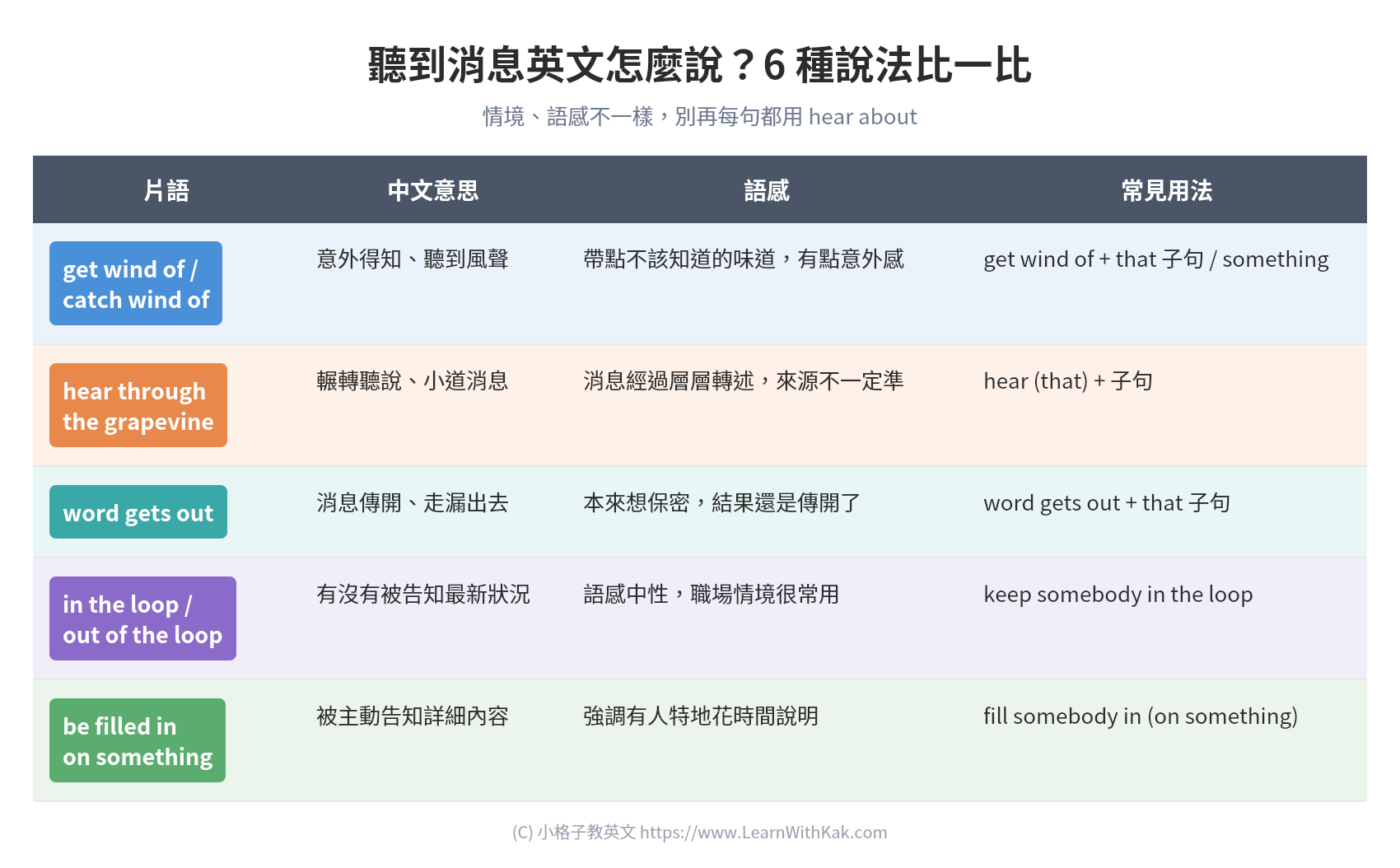
看完這幾種說法,可以發現聽到消息英文的表達方式其實分得很細:get wind of 是意外聽到不該知道的事,hear through the grapevine 是輾轉聽說、來源不一定準確,word gets out 是消息自己傳開了,in the loop 是有沒有被告知最新狀況,be filled in 則是有人特地跟你說明細節。搜尋 get wind of something 中文 的時候,其實真正想確認的通常是這個片語跟其他說法差在哪裡,而不只是字面上的翻譯。下面這張表整理了六種說法的中文意思、語感和常見搭配,可以幫你快速對照,講英文的時候不用再猜哪個才對。
其實這幾個說法平常不用刻意背,遇到情境的時候,回想一下自己是「意外聽到」、「輾轉聽說」還是「被主動告知」,通常就能挑到對的詞。下次在辦公室聽到八卦,或是想確認自己有沒有跟上進度,就從這幾個說法裡挑一個用用看,講出來會自然許多。
延伸閱讀:【Wind up 中文是什麼?Wind up、End up、Turn out: 三種「結果」說法的差別】
如果你喜歡這篇文章的話,可以追蹤我們的 Threads 和 Facebook 唷!