
你有沒有在看財經新聞時,看到 “The company faces strong headwinds” 或 “benefiting from tailwinds”,然後心裡想「headwind?tailwind?這是在講風嗎?」其實這兩個字原本是航空用語,但在商業和財經英文中被廣泛用作比喻,用來描述企業面臨的阻力或助力。想要看懂英文財經新聞、商業報告,一定要搞懂 headwind 中文意思和 tailwind 用法!
Headwind 中文意思是什麼?
Headwind 的字面意思是「逆風」、「頂頭風」,但在商業和財經領域,它比喻為「阻力」、「逆境」、「不利因素」。英文解釋的話,headwind 就是 a factor or condition that slows down progress or growth,也就是「讓進展變慢的因素」。
字面意思:逆風
Headwind 原本是航空術語,指飛機正面迎來的風,會減慢飛行速度。
(1)
A: Why is the flight taking longer than expected?
A: 為什麼飛行時間比預期長?
B: We’re facing strong headwinds. It’s slowing us down.
B: 我們正面對強烈逆風。它讓我們減速了。
(2)
A: How was your bike ride?
A: 你騎腳踏車騎得怎麼樣?
B: Exhausting! I had to fight headwinds the whole way.
B: 累死了!我一路都要對抗逆風。
(3)
A: The runner looks like he’s struggling.
A: 那個跑者看起來很掙扎。
B: Yeah, running into a headwind is really tough.
B: 對啊,迎著逆風跑真的很辛苦。
比喻用法:阻力、逆境
在商業和財經英文中,headwind 用來比喻企業、經濟或計畫面臨的困難、挑戰或不利因素。
(4)
A: How’s the tech sector performing this quarter?
A: 科技業這季表現如何?
B: It’s facing significant headwinds due to rising interest rates and inflation.
B: 由於利率上升和通貨膨脹,正面臨重大阻力。
(5)
A: Why did the company lower its profit forecast?
A: 公司為什麼下調獲利預測?
B: They’re dealing with several headwinds, including supply chain disruptions and higher labor costs.
B: 他們正在應對幾個不利因素,包括供應鏈中斷和更高的勞動成本。
(6)
A: What challenges is the retail industry facing?
A: 零售業面臨什麼挑戰?
B: Major headwinds include changing consumer behavior and increased competition from e-commerce.
B: 主要阻力包括消費者行為改變和來自電商的競爭加劇。
(7)
A: The startup is struggling to grow.
A: 這家新創公司成長陷入困境。
B: Yes, they’re facing regulatory headwinds in their target markets.
B: 對,他們在目標市場面臨監管方面的阻力。
(8) Economic headwinds are making it difficult for businesses to expand.
經濟逆境讓企業難以擴張。
常見搭配
Headwind 在財經新聞中有一些常見的搭配用法:
- face headwinds – 面臨阻力
- strong headwinds – 強烈阻力
- economic headwinds – 經濟逆境
- regulatory headwinds – 監管阻力
(9) The airline industry continues to face headwinds from high fuel prices.
航空業持續面臨高油價帶來的阻力。
(10) Despite strong headwinds, the company managed to maintain profitability.
儘管面臨強烈阻力,公司仍設法維持獲利。
Tailwind 是什麼意思?
Tailwind 的字面意思是「順風」、「尾風」,在商業和財經領域,它比喻為「助力」、「有利因素」、「推動力」。用英文解釋的話,tailwind 就是 a factor or condition that helps something grow or move forward more easily,也就是「推著事情往前走的有利條件」。
字面意思:順風
Tailwind 原本也是航空術語,指從飛機尾部吹來的風,會加快飛行速度。
(11)
A: We arrived 20 minutes early!
A: 我們提早 20 分鐘到達!
B: Lucky us! We had strong tailwinds the entire flight.
B: 我們很幸運!整趟飛行都有強勁順風。
(12)
A: You finished the bike race so fast!
A: 你完成自行車比賽好快!
B: I had tailwinds for most of the course. It really helped.
B: 大部分賽程我都有順風。真的很有幫助。
(13)
A: The sailing was much easier on the way back.
A: 回程的航行輕鬆多了。
B: That’s because we had a nice tailwind pushing us along.
B: 那是因為我們有順風推著我們前進。
比喻用法:助力、有利因素
在商業和財經英文中,tailwind 用來比喻對企業、經濟或計畫有利的因素或條件。
(14)
A: Why is the company’s stock price soaring?
A: 公司股價為什麼飆升?
B: They’re benefiting from several tailwinds, including strong consumer demand and favorable exchange rates.
B: 他們受益於幾個有利因素,包括強勁的消費需求和有利的匯率。
(15)
A: The renewable energy sector is booming.
A: 再生能源產業正在蓬勃發展。
B: Yes, they have significant tailwinds from government subsidies and environmental policies.
B: 對,他們有來自政府補貼和環保政策的重大助力。
(16)
A: How is the tourism industry recovering?
A: 旅遊業復甦情況如何?
B: It’s experiencing strong tailwinds as travel restrictions ease and pent-up demand is released.
B: 隨著旅行限制放寬和被壓抑的需求釋放,正經歷強勁助力。
(17)
A: What’s driving the tech company’s growth?
A: 什麼在推動這家科技公司的成長?
B: They’re riding tailwinds from the digital transformation trend.
B: 他們正乘著數位轉型趨勢的助力。
常見搭配
Tailwind 在商業英文中也有一些常見的搭配用法:
- benefit from tailwinds – 受益於有利因素
- favorable tailwinds – 有利的助力
- strong tailwinds – 強勁助力
- secular tailwinds – 長期結構性助力
(18) The company is riding powerful tailwinds from demographic trends.
公司正乘著人口趨勢帶來的強大助力。
(19) Lower interest rates are providing tailwinds for the housing market.
較低的利率為房市提供助力。
Headwind vs Tailwind 差在哪?
搞懂個別意思後,很多人還是會在句子裡搞混,尤其是財經新聞常常一句話裡兩個字一起出現。其實 headwind vs tailwind 的差別很單純:一個是「拖你後腿」的阻力,一個是「推你一把」的助力,方向完全相反。可以把它想成一場比賽,headwind 是逆風讓你跑得慢,tailwind 是順風讓你跑得快。
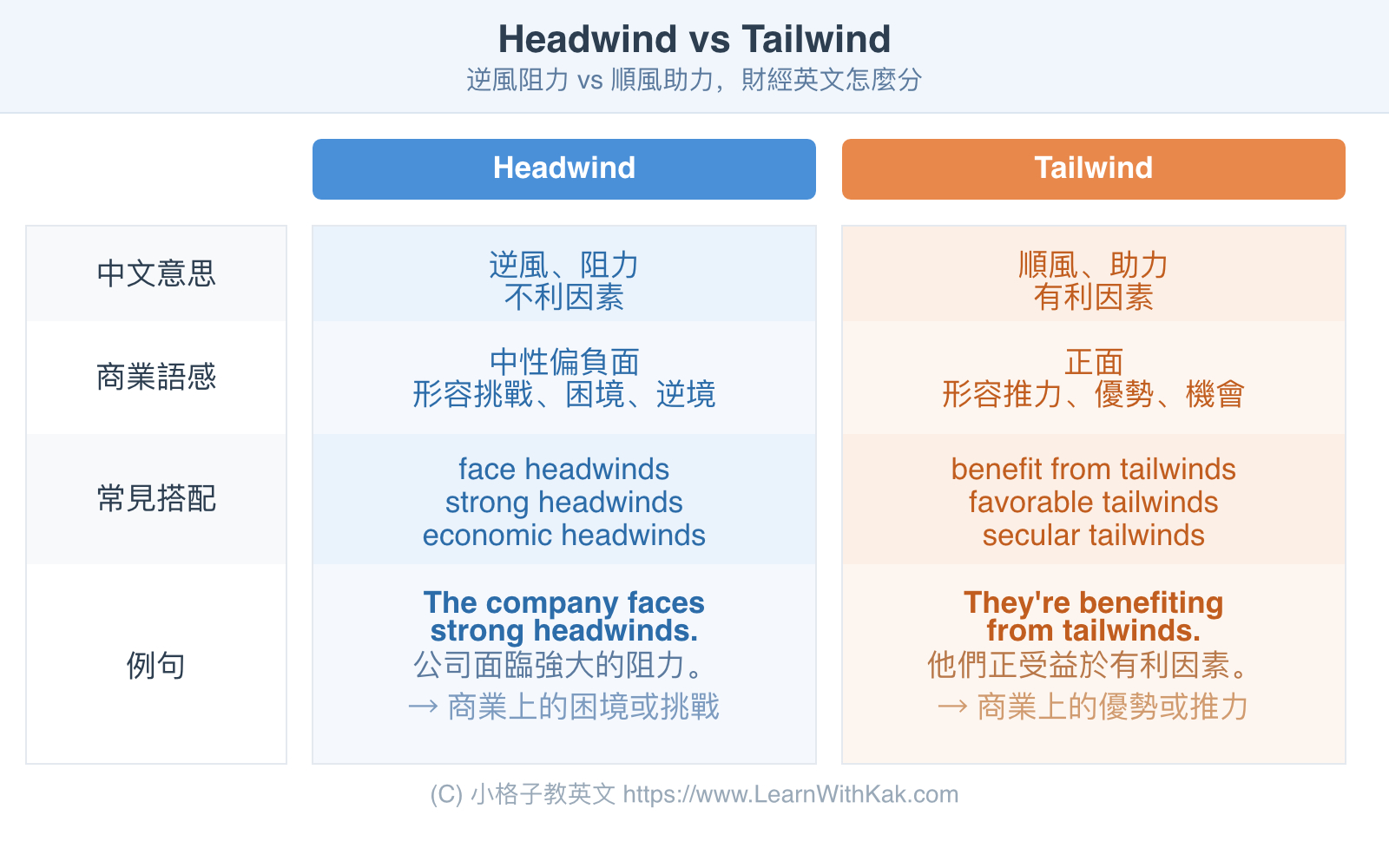
常見的誤用是把兩個字的方向搞反,比如看到公司獲利成長,卻寫成 “facing headwinds”,這樣邏輯就不通了。記住一個小技巧:headwind 開頭的 head 可以聯想成「迎面而來」,擋在你前面;tailwind 的 tail 則是「從後面推」,推著你走。方向一對,就不容易選錯字。
| 比較項目 | Headwind | Tailwind |
|---|---|---|
| 中文意思 | 逆風、阻力、不利因素 | 順風、助力、有利因素 |
| 商業語感 | 中性偏負面,形容挑戰、困境 | 正面,形容推力、優勢 |
| 常見搭配 | face headwinds、strong headwinds、economic headwinds | benefit from tailwinds、favorable tailwinds、secular tailwinds |
| 例句 | The company faces strong headwinds.(公司面臨強大的阻力。) | They’re benefiting from tailwinds.(他們正受益於有利因素。) |
判斷 headwind vs tailwind 哪個才對,關鍵就看句子講的是「變難」還是「變順」。如果新聞在講升息、通膨、供應鏈中斷這種讓公司變慘的事,通常用 headwind;如果在講需求成長、政策補貼、匯率有利這種讓公司變好的事,通常用 tailwind。這個分辨方式在職場開會討論財報、或準備多益閱讀測驗看到商業文章時都用得上,搞懂之後看新聞、看報告就不會再霧煞煞。
職場上其實也很常直接借用這兩個字,不一定要限定在財經新聞。像開會報告專案進度時,如果進度卡關,可以說 “We’re facing some headwinds on this project” 來取代單純講 “It’s difficult”;如果最近有政策或資源上的支援讓事情變順利,也可以說 “We have some tailwinds helping us here”。搞懂 headwind 中文意思背後的邏輯,不只看得懂新聞,講起商業英文也會更道地、更有畫面感。
有時候一篇報告或一場會議裡,兩個字還會一起出現,拿來說明公司同時面對好壞兩種因素。
(20)
A: So is the outlook positive or negative overall?
A: 所以整體展望是正面還是負面?
B: A bit of both. We have tailwinds from strong demand, but also headwinds from rising costs.
B: 兩者都有一點。我們有來自強勁需求的助力,但也有成本上升帶來的阻力。
搞懂了嗎? Headwind 就是「阻力」、「逆境」,指那些讓企業、經濟或計畫變困難的因素;Tailwind 就是「助力」、「有利因素」,指那些推動前進、讓事情變容易的條件。下次看到財經新聞說某公司 “facing headwinds” 就知道它在面臨困難,看到 “benefiting from tailwinds” 就知道它正享有有利條件。這兩個字在商業英文和財經報導中超常出現,學會了就能更輕鬆看懂英文財經新聞!
延伸閱讀:【複雜英文搞懂了嗎?Complex 跟 Complicated 傻傻分不清,用錯真的超尷尬】
如果你喜歡這篇文章的話,可以追蹤我們的 Threads 和 Facebook 唷!