
「他超會 social 的」、「今晚出去 social 一下」、「我不太 social 那種人」——這些說法你一定聽過,甚至自己也在用。但 social 中文意思其實比你想的複雜很多,在台灣人之間聽起來沒問題的說法,老外聽了有時候會愣一下。這篇從頭說清楚。
如果你是打「soshow」搜到這裡的,沒事,大家都拼錯過,你要找的就是 social。
Social 是形容詞,不是動詞
這是最基本、最重要的一件事:social 是形容詞,意思是「與社會、群體、他人互動相關的」。它沒有動詞用法,所以「去 social 一下」在英文語法上是有問題的。
表達「社交」這個動作,要用動詞 socialize,這是搞懂 social 中文意思的第一步。
(1)
A: Are you coming to the office party?
A: 你要來辦公室派對嗎?
B: Definitely. It’s a great chance to socialize with people from other departments.
B: 當然去。這是跟其他部門的人社交的好機會。
(2)
A: You’ve been working from home for months. Do you miss the office?
A: 你在家工作好幾個月了,懷念辦公室嗎?
B: Honestly, yes. I miss being able to socialize with my coworkers in person.
B: 說真的,有。我懷念能夠面對面跟同事互動的感覺。
(3)
A: What do you usually do at networking events?
A: 你在交流活動通常都做什麼?
B: I walk around and try to socialize. The first few minutes are always awkward, but it gets easier.
B: 我到處走走,試著跟人交流。前幾分鐘總是有點尷尬,但會越來越自然。
(4)
A: My neighbor never says hello. Should I be offended?
A: 我鄰居從不打招呼,我應該覺得被冒犯嗎?
B: Not necessarily. Some people just aren’t that comfortable socializing with people they don’t know.
B: 不一定。有些人對不熟的人就是不太自在。
「很會 Social」對不對?
來說這個台灣人最愛用的說法。
「他很會 social」在中英混用的語境裡大家都懂,但在純英文句子裡,social 是形容詞,不能直接當動詞用,嚴格來說這樣講是不對的。
根據你想表達的意思,有幾種道地的說法:
想說這個人「外向、善於社交」——用形容詞形容人:
He’s very sociable. / She’s really outgoing.
想說這個人「很會跟人互動、交際手腕好」——用動詞:
He’s great at socializing. / She knows how to work a room.
(5)
A: Have you met the new guy in sales?
A: 你認識業務部那個新來的嗎?
B: Yeah! He’s super sociable. He already knows everyone’s name after just one week.
B: 認識!他超會跟人相處。才一個星期就把大家的名字都記住了。
(6)
A: I’m nervous about going to the work dinner alone.
A: 我有點緊張要一個人去公司晚宴。
B: You’ll be fine. You’re actually really good at socializing when you loosen up.
B: 你沒問題的。你放鬆的時候其實很會跟人交流的。
(7)
A: My sister can walk into a room full of strangers and leave with ten new friends.
A: 我姐可以走進一屋子陌生人,然後帶著十個新朋友離開。
B: That’s a real skill. Not everyone’s that outgoing.
B: 那真的是一種天賦,不是每個人都那麼外向的。
(8)
A: Do you enjoy going to networking events?
A: 你喜歡去交流活動嗎?
B: Not really. I’m not the most sociable person. I find small talk exhausting.
B: 還好。我不是那種很善於社交的人,閒聊對我來說很消耗能量。
(9)
A: How do you know so many people in this industry?
A: 你怎麼認識業界這麼多人?
B: Just years of showing up and socializing at events. It adds up.
B: 就是多年來一直出席活動、跟人交流慢慢累積起來的。
Social 當「社會的」
除了日常口語,social 中文意思在新聞、學術和政治場合最常用到的是「與社會有關的」這個定義,這也是字典上列的第一個解釋。
常見搭配:social issues(社會議題)、social class(社會階級)、social welfare(社會福利)、social justice(社會正義)、social responsibility(社會責任)。
(10)
A: What’s your major?
A: 你主修什麼?
B: Social psychology. I’m interested in how group dynamics affect behavior.
B: 社會心理學。我對群體動態怎麼影響行為很感興趣。
(11)
A: Do you think companies should speak out on social issues?
A: 你覺得公司應該就社會議題表態嗎?
B: It depends. Some companies do it genuinely, others just for PR.
B: 看情況。有些公司是真心的,有些只是為了公關。
(12)
A: What do you think the government should prioritize right now?
A: 你覺得政府現在應該優先處理什麼?
B: Social welfare. A lot of people are struggling financially.
B: 社會福利。很多人在經濟上都很辛苦。
(13)
A: What do you do?
A: 你做什麼工作?
B: I work in social policy. I help design programs for low-income families.
B: 我在做社會政策,幫助設計針對低收入家庭的計畫。
Social 形容活動和場合
Social 也可以用來形容「社交性質的」活動或場合,也就是說,這個活動的主要目的是讓人們互動、認識彼此,而不是工作或開會。
常見搭配:social event(社交活動)、social gathering(社交聚會)、social function(社交場合)。
在很多職場環境裡,What do you do? 幾乎是每個 social event 的第一句話,所以這兩件事通常一起出現。
(14)
A: Is this a business meeting or a social gathering?
A: 這是商務會議還是社交聚會?
B: It’s more social. Just a chance for the team to relax and get to know each other.
B: 比較偏社交性質。讓大家放鬆、多認識彼此的機會。
(15)
A: Why do I have to attend these social events? Can’t I just do my work?
A: 我為什麼要參加這些社交活動?我做好自己的工作不行嗎?
B: I get it, but showing up matters. People notice who’s there and who isn’t.
B: 我懂,但出席這件事是有意義的。誰出現、誰不出現,大家都看在眼裡。
(16)
A: Do you want to join the company social club?
A: 你想加入公司的聯誼社嗎?
B: What do they do?
B: 他們都做什麼?
A: Happy hours, sports days, team dinners. It’s a chance to hang out outside of work.
A: 歡樂時光、運動日、團隊晚餐。就是在工作以外的時間大家聚一聚的機會。
(17)
A: The company party is next Friday. Are you going?
A: 公司派對下週五,你去嗎?
B: I’ll stop by. Social functions like that are good for building relationships with people you don’t normally work with.
B: 我會去露個臉。這種社交場合對跟平常不常合作的人建立關係很有幫助。
Socialize、Sociable、Antisocial:這幾個字要認識
學了 social,一定要把幾個相關字一起搞懂,不然用到一半卡住。
- Socialize(動詞)= 與人交際、社交(這是動詞)
- Sociable(形容詞)= 善於社交的、友善的(形容人比直接用 social 更自然)
- Antisocial(形容詞)= 不合群的 / 反社會的(有兩個意思,差很多)
Antisocial 要特別注意:用來說某人「不愛社交、比較宅」,是溫和的意思;但它也有「反社會的、危害他人的」嚴重意思。語境不同,意思差很多,用的時候要清楚你在說哪一種。
第一次在社交場合碰到人,往往不確定對方是「認識的人」還是「只是聽說過的人」,這個細節英文也有區別,可以參考 know 和 know of 的差別。
(18)
A: Why don’t you ever come to the team lunches?
A: 你為什麼從不來參加團隊午餐?
B: Sorry, I’m not being antisocial. I just need some alone time during the day to recharge.
B: 抱歉,我不是不合群。只是我需要白天有一些獨處時間來充電。
(19)
A: Would you describe yourself as introverted?
A: 你覺得自己內向嗎?
B: A bit. I can be sociable when I need to be, but I also need a lot of alone time.
B: 有一點。需要的時候我可以很善於社交,但我也需要很多獨處時間。
(20)
A: My neighbor never waves or says hello.
A: 我鄰居從不揮手或打招呼。
B: Some people are just naturally less sociable. Doesn’t mean they’re unfriendly.
B: 有些人天生就比較不善於社交,不代表他們不友善。
(21)
A: Is it normal to feel drained after socializing?
A: 社交之後感到精疲力竭正常嗎?
B: Totally. It’s one of the main traits of introverts. They need time alone to recover after socializing.
B: 完全正常。這是內向者的主要特點之一,社交後需要獨處時間來恢復。
幾個常見的錯誤用法
最後,幾個跟 social 用法有關的經典錯誤:
(22)
不正確: I’m not good at social.
正確: I’m not good at socializing.
我不擅長社交。
(social 是形容詞,不能放在 good at 後面當名詞用)
(23)
不正確: I need to improve my social.
正確: I need to improve my social skills.
我需要提升我的社交能力。
(24)
不正確: Let’s go social tonight.
正確: Let’s go out and socialize tonight.
我們今晚出去社交吧。
(25)
A: My boss says I need to work on my social. What does that even mean?
A: 我老闆說我需要改善我的 social。那到底是什麼意思?
B: I think he means your social skills — things like small talk, being approachable, and reading the room.
B: 我覺得他的意思是你的社交技巧——像是閒聊、讓人感覺你容易接近,還有觀察場合氣氛。
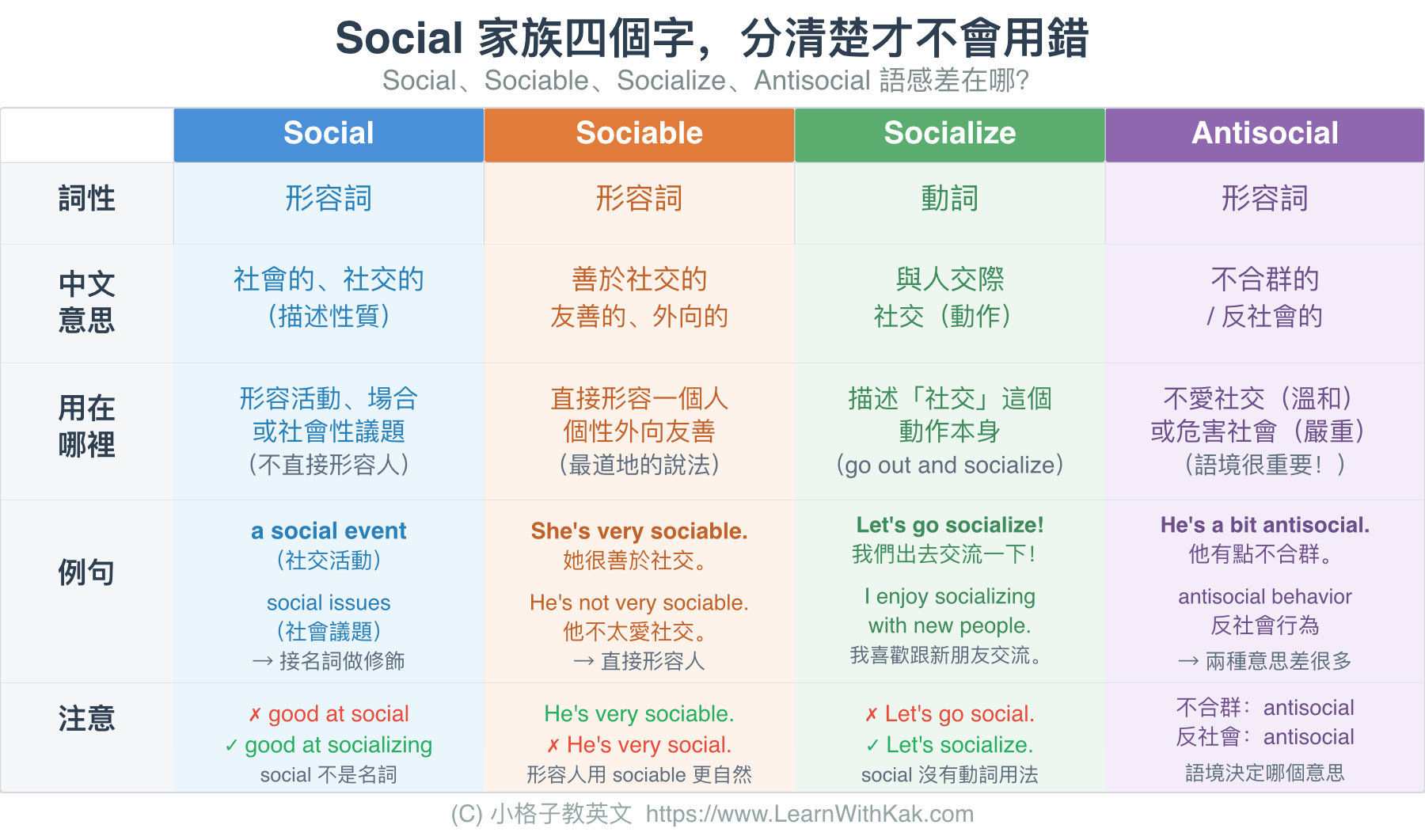
Social 這個字很常用,但現在你知道它不是萬能的。形容人用 sociable,說動作用 socialize,不合群是 antisocial,把這幾個搞清楚,你的英文就比大多數台灣人道地一截了。
延伸閱讀:【Hang out 只是「出去玩」?6 個「無所事事」英文說法,學完你才知道自己有多閒】
如果你喜歡這篇文章的話,可以追蹤我們的Threads和Facebook唷!