
有人對你說 “You’re so slow”,你的第一反應是不是覺得對方嫌你動作慢?等等,先別急著解釋,因為 slow 意思其實不只這一種。同樣這句話,在不同情境下可以差很多,有時候甚至不是在說速度的事。這篇帶你一次搞清楚 slow 的 5 種常見意思。
動作慢、速度慢
這是大家最熟悉的用法,slow 就是字面上的「慢」,可以用來形容人、車、網路、任何東西的速度。
(1)
A: Come on, we’re going to miss the bus!
A: 快點,我們要趕不上公車了!
B: Sorry, I’m walking as fast as I can.
B: 抱歉,我已經走很快了。
A: You’re so slow. I’ve never seen anyone walk this slow.
A: 你動作也太慢了,我沒看過走路走這麼慢的人。
(2)
A: Why is the internet so slow today?
A: 今天網路為什麼這麼慢?
B: There’s probably too many people online. Try restarting the router.
B: 可能同時上線的人太多了,試試重新啟動路由器。
(3)
A: How was traffic on the way here?
A: 你來的路上塞車嗎?
B: So bad. Everything was moving at a snail’s pace on the highway.
B: 很慘。高速公路上所有車子都在爬行。
(4) The printer at the office is painfully slow. It takes five minutes just to print one page.
辦公室的印表機慢到一個不行,印一頁就要五分鐘。
(5) I always take the slow train home on Fridays — no rush, just enjoy the ride.
我每個週五都坐慢車回家,不急,就享受一下過程。
腦袋轉得慢、有點笨
這個意思台灣人比較少用到,但在英文裡非常普遍。說某人 slow,可以是在說他反應慢、理解能力差,或者比較委婉地說一個人不太聰明。”Are you slow?” 這句話問出來,其實是在質疑對方是不是搞不清楚狀況,語氣可以從開玩笑到有點嗆都有,要看關係和語氣。
(6)
A: Wait, so we have to pay first, and then they’ll deliver the item?
A: 等等,所以我們要先付錢,然後他們才會送貨?
B: Yes, that’s how online shopping works…
B: 對,網購就是這樣運作的…
A: Oh right. I’m a bit slow today, sorry.
A: 哦對,我今天腦袋有點不靈光,抱歉。
(7)
A: He’s been explained the same thing three times and still doesn’t get it.
A: 同樣的事情解釋了三次,他還是不懂。
B: I think he’s just a bit slow. Be patient with him.
B: 我覺得他只是反應比較慢,耐心一點。
(8)
A: Are you slow? I literally just told you the meeting got cancelled.
A: 你沒聽懂嗎?我剛才才說會議取消了。
B: Sorry, I wasn’t paying attention.
B: 抱歉,我剛才沒在聽。
(9) She’s not slow — she just takes her time to process things before responding.
她不是反應慢,只是習慣想清楚再回應。
(10) I felt so slow in that meeting. Everyone else seemed to understand right away.
那場會議讓我覺得自己很遲鈍,其他人好像馬上就聽懂了。
生意冷清、淡季
這個用法在職場或商業情境很常見,slow 可以用來形容生意、市場、業績「冷清」或「不旺」。台灣人可能比較少這樣用,但你在英文新聞或跟外國同事聊天時很容易遇到,值得記下來。
(11)
A: How’s business been lately?
A: 最近生意怎麼樣?
B: Pretty slow, honestly. It’s always like this after the holidays.
B: 老實說很淡,節假日過後通常都這樣。
(12)
A: The restaurant was completely empty when we walked by.
A: 我們走過去的時候餐廳完全沒有人。
B: It’s a slow Tuesday. Things usually pick up on weekends.
B: 星期二本來就比較淡,週末通常會熱鬧一點。
(13)
A: Did you hit your sales targets this month?
A: 你這個月的業績達標了嗎?
B: Not quite. The market has been really slow since Q3.
B: 差一點,從第三季開始市場就很冷清。
(14) January is always slow for us. Most clients are still recovering from the holiday spending.
一月對我們來說向來是淡季,大多數客戶節假日花了太多錢,這時候還在緩一緩。
(15) Things slowed down a lot after the new competitor entered the market.
新的競爭對手進來之後,生意冷清了很多。
無聊、沒什麼事
這個用法比較口語,形容一個地方、一段時間、或某個情況「沉悶」、「沒有什麼事發生」。你可能會聽到有人抱怨某個地方 “too slow”,不是說交通,而是說那裡很無聊、沒有什麼活動。
(16)
A: How was your weekend?
A: 你週末過得怎樣?
B: So slow. I literally just stayed home the whole time.
B: 無聊死了,我真的就在家待了整個週末。
(17)
A: Do you like living in a small town?
A: 你喜歡住在小鎮嗎?
B: It’s peaceful, but a bit too slow for me. I miss the city vibe.
B: 很安靜,但對我來說有點太無聊了,我還是比較懷念城市的感覺。
(18)
A: How’s the new job?
A: 新工作怎麼樣?
B: Honestly kind of slow. I finish everything by noon and then just wait for the day to end.
B: 老實說有點悶,我中午前就做完所有事,然後就等下班。
(19) The first week of the project was really slow — lots of planning, not much action.
專案的第一週很無聊,大部分時間都在規劃,沒什麼實際在動。
Take it slow — 放慢步調
“Take it slow” 是 slow 最常出現的片語之一,意思是「不要急、慢慢來、放慢步調」。感情上可以用,工作上可以用,身體在康復的時候也可以用。如果你想跟人說「不用急」,除了 Take your time 和 No rush,”Take it slow” 也是很自然的選擇。
(20)
A: We just started dating. I don’t want to rush into anything.
A: 我們剛開始交往,我不想把什麼事都搞得很快。
B: I totally agree. Let’s just take it slow and see where things go.
B: 我完全同意,我們就慢慢來,看看事情會怎麼發展。
(21)
A: I just got out of the hospital. The doctor said I can go back to work.
A: 我剛出院,醫生說我可以回去上班了。
B: Don’t push yourself. Take it slow for the first week back.
B: 別逼自己,剛回去的第一個星期慢慢來就好。
(22)
A: I’m thinking of launching the product next month.
A: 我在考慮下個月就推出產品。
B: That might be too soon. Why not take it slow and do more testing first?
B: 可能太快了,何不放慢步調先多做一些測試?
(23) After burning out last year, I decided to take things slow and actually enjoy what I’m doing.
去年過勞之後,我決定放慢步調,真正去享受手上在做的事。
(24) Taking it slow doesn’t mean giving up — it means being strategic about how you move forward.
慢慢來不是放棄,而是有策略地往前走。
Slow 相關片語
光是 slow 本身就有這麼多意思了,搭配其他字用起來又更豐富。以下幾個片語在日常英文裡很常出現。
Slow down
最直接的片語,可以是叫人「減速」,也可以是叫人「冷靜一下」或「不要這麼急」。跟催人加快步調相反,slow down 是要對方踩個煞車。
(25)
A: Slow down! You’re driving way too fast.
A: 慢下來!你開太快了。
B: Relax, the speed limit is 100.
B: 放鬆,時速限制是 100。
(26)
A: I’ve been working 14-hour days for the past month.
A: 我過去一個月每天工作 14 個小時。
B: You really need to slow down before you burn out completely.
B: 你真的要放慢一點,不然你會完全崩潰的。
Slow burn
Slow burn 字面上是「慢燃燒」,用來形容情緒或感情「慢慢累積、慢慢燒起來」、「慢熱」的感覺,不是一下子爆發,而是越來越強烈。也可以用來形容劇情發展很慢、但越看越有味道的影集或電影。
(27) Their relationship was a slow burn — they started as colleagues and gradually fell for each other over two years.
他們的感情是慢慢升溫的那種,從同事開始,花了兩年時間才慢慢互生情愫。
(28)
A: Did you like that show?
A: 你喜歡那部影集嗎?
B: It’s a slow burn, but once it picks up, you can’t stop watching.
B: 前面節奏比較慢,但一旦帶起來你就停不下來。
Slow clap
Slow clap 是「慢速鼓掌」,通常帶有嘲諷意味,用來表示「哇,厲害喔(才怪)」。不過有時候也可以是真誠地表達欽佩,要看情境和語氣。
(29)
A: I told my boss I needed a raise and then accidentally cc’d him on the email to HR.
A: 我跟老闆說我需要加薪,然後不小心把他加進我寄給人資的 email。
B: Slow clap for that one.
B: 這個操作真的厲害,給你掌聲。
(30)
A: He spent three hours explaining why he was right and everyone else was wrong.
A: 他花了三個小時解釋為什麼只有他是對的,其他人都是錯的。
B: And? Did anyone slow clap him at the end?
B: 然後呢?最後有人冷場鼓掌嗎?
In slow motion
形容某件事感覺像在「慢動作」播放,通常是在描述一個讓人印象深刻、或讓人覺得時間變慢的瞬間。
(31) I watched the whole accident happen in slow motion. I couldn’t do anything to stop it.
我看著整個意外發生,感覺像慢動作一樣,但我什麼都做不了。
(32)
A: How was your first skydive?
A: 你第一次跳傘感覺怎樣?
B: The first few seconds felt like they happened in slow motion. It was surreal.
B: 前幾秒感覺像慢動作,整個人有點不真實。
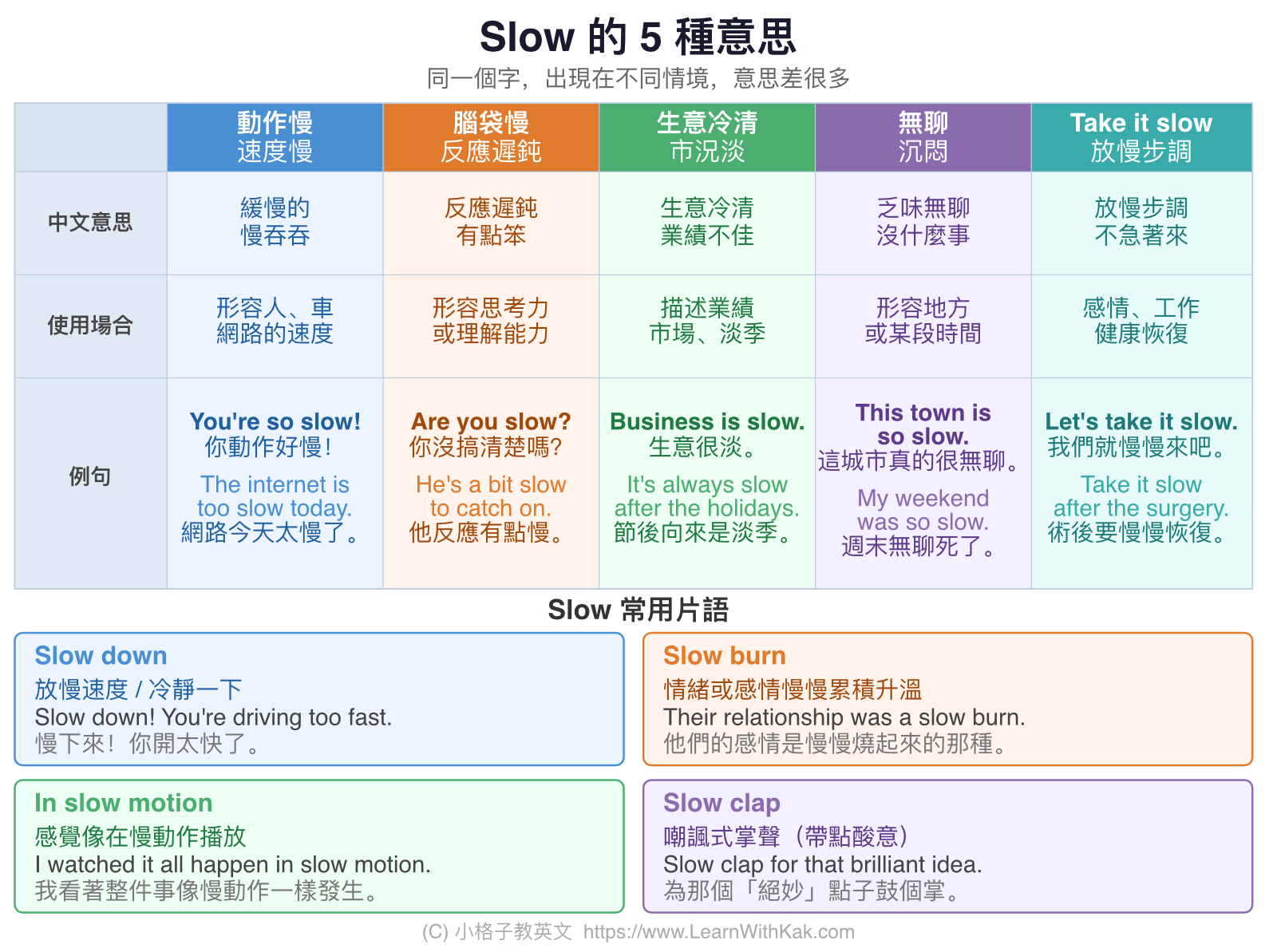
Slow 是個看起來很簡單的字,但藏的意思比大家想的多。下次聽到有人說 “Are you slow?” 或者 “Business is slow”,先想一下前後情境,再確認對方說的到底是哪個意思。
延伸閱讀:【不用急英文怎麼說?從 Take your time 到 No rush,8 種說法完整教學】
如果你喜歡這篇文章的話,可以追蹤我們的Threads和Facebook唷!