
跟人解釋事情到一半,對方一臉困惑,你想重新整理一下再說,腦海裡第一個冒出來的「換句話說英文」是 in other words?這個沒有錯,但其實光是這件事,英文就有好幾種說法,語氣、場合都不太一樣,用錯了反而讓人覺得怪。
In other words
“In other words” 是換句話說最經典的說法,口語和書面都能用。功能很純粹:把剛說的內容換個方式重新說一次,讓對方更好理解。語氣中性,沒有特別的情緒色彩,用它不會錯。
In other words 中文直接翻就是「換句話說、也就是說」,在職場 email、簡報、對話裡都很常出現,是這幾個說法裡正式程度最高、最安全的選擇。
(1)
A: The project is behind schedule and we’re over budget.
A: 專案進度落後,而且超出預算了。
B: In other words, we’re in trouble.
B: 換句話說,我們麻煩大了。
(2)
A: She didn’t show up for the third time this week.
A: 她這週第三次沒出現了。
B: In other words, she’s not coming back.
B: 換句話說,她根本不打算回來了。
(3)
A: The new policy requires everyone to log in with two-factor authentication.
A: 新政策要求所有人登入時都要做雙重驗證。
B: In other words, we all need to set up an authenticator app.
B: 換句話說,大家都要安裝驗證程式。
(4) The system only works when connected to the internet. In other words, you can’t use it offline.
這個系統只有在連網的情況下才能運作。換句話說,你沒辦法離線使用。
To put it another way / To put it simply
這兩個跟 in other words 功能類似,但語感稍微不同。”To put it another way” 更像「讓我換個切入點說」,適合對方聽不太懂的時候換個角度解釋。”To put it simply” 則帶有「我把它說得更白話一點」的意味,暗示前面說的可能比較複雜。
兩個都比 in other words 更口語,開會、解釋概念、或跟朋友聊天的時候都蠻常用。
(5)
A: The algorithm prioritizes recency and engagement signals.
A: 這個演算法優先考慮近期資料和互動信號。
B: To put it simply, newer and more popular posts show up first.
B: 簡單來說,越新、互動越多的貼文排越前面。
(6)
A: I don’t think this relationship has a future.
A: 我不覺得這段關係有未來。
B: To put it another way, you want to break up?
B: 換個說法,你是想分手嗎?
(7)
A: The budget constraints make it difficult to proceed with the original plan.
A: 預算限制讓我們很難按原計劃進行。
B: To put it simply, we can’t afford it.
B: 簡單說就是,我們負擔不起。
(8) To put it another way, if you don’t start saving now, you’ll regret it later.
換個說法,如果你現在不開始存錢,以後一定後悔。
I mean — 最口語,但用法不只一種
“I mean” 是換句話說裡面最口語的說法,日常對話裡出現頻率超高。但它其實有三種用法,很多人只知道其中一種。
解釋前一句話
說完一句話後,用 I mean 補充說明或給理由,類似中文的「就是說」、「我是說」。
(9)
A: She’s kind of intense, you know?
A: 她有點強烈,你懂嗎?
B: I mean, she corrected my grammar in front of everyone.
B: 就是說,她在所有人面前糾正我的文法。
(10) He’s really dedicated. I mean, he finished the whole project by himself in three days.
他非常拚。我是說,他三天內一個人把整個專案做完了。
馬上更正自己說錯的話
說錯了想馬上改口,I mean 可以當「啊不是,我是說…」用。
(11)
A: Are you free on Saturday?
A: 你週六有空嗎?
B: Sure! Wait — I mean Sunday. Saturday I have plans.
B: 有啊!等一下 — 我是說週日。週六我有事。
(12) Let’s meet at 3 — I mean 4. Sorry, I got confused.
我們三點見 — 我是說四點。抱歉,我搞混了。
當語氣詞,類似「就是說」
口語裡 I mean 也常當 filler 用,說話者在整理思路的時候自然冒出來,甚至沒有太具體的意思,就是讓句子聽起來更自然。
(13)
A: Do you like your new job?
A: 你喜歡新工作嗎?
B: I mean… it pays well, but the hours are crazy.
B: 就是說… 薪水還不錯啦,但工時超誇張的。
(14)
A: Would you ever move abroad?
A: 你會考慮搬去海外嗎?
B: I mean, maybe? I’d have to think about it.
B: 就是說,也許吧?我要想一想。
What I mean is / What I’m trying to say is
這兩個句型都是「我的意思是…」,適合用在你覺得對方誤解你、或是你想重新把話說清楚的時候。跟 in other words 不同,這兩個帶有「你可能沒聽懂、讓我再說一次」的語感,更像是在針對誤解做回應。
兩個細微的差別:
- “What I mean is” 比較直接,就是「我的意思是這樣」。
- “What I’m trying to say is” 語氣更軟一點,帶有「我在努力解釋,你可能還沒完全理解」的感覺,當你想避免對方誤會的時候特別好用。
(15)
A: Are you saying I’m lazy?
A: 你是說我很懶?
B: No! What I mean is you should take more breaks.
B: 不是!我的意思是你應該多休息。
(16)
A: So you think my idea is bad?
A: 所以你覺得我的想法很爛?
B: Not exactly. What I mean is we need to think about the budget first.
B: 也不是這樣。我的意思是我們要先考慮預算。
(17)
A: I don’t really understand what you’re saying.
A: 我不太懂你在說什麼。
B: What I’m trying to say is that we need to completely change our approach.
B: 我想說的是,我們需要徹底改變做法。
(18)
A: You don’t trust me?
A: 你不信任我?
B: What I’m trying to say is I need more time before I can make a decision.
B: 我想說的是,我需要更多時間才能做決定。
(19) What I mean is, even if you fail, at least you tried. That counts for something.
我的意思是,就算失敗,至少你嘗試過。這本身就有意義。
All I’m saying is
“All I’m saying is” 乍看和上面很像,但語氣完全不同。它帶有一種「我就只是這個意思,你自己想」的感覺 — 說話者不打算再多作解釋,有點不想被繼續追問。中文裡比較接近「我只是說說而已」或「就只是這樣,沒別的意思」。
這個說法偶爾也帶點撇清責任的語氣,有點像「我沒有說他做了什麼,我只是說…」這種感覺,跟 “what I mean is” 的「想讓對方理解」是完全不同的方向。
(20)
A: Are you saying I should quit?
A: 你是說我應該辭職?
B: All I’m saying is you don’t look happy there.
B: 我只是說你在那裡看起來不開心。
(21)
A: Did you just imply that he’s lying?
A: 你是在暗示他在說謊嗎?
B: All I’m saying is the numbers don’t add up.
B: 我只是說,數字對不起來。
(22)
A: So you don’t like my cooking?
A: 所以你不喜歡我做的菜?
B: All I’m saying is maybe we could try something different next time.
B: 我只是說,下次也許可以換個口味試試。
(23)
A: You think I should apologize first?
A: 你覺得我應該先道歉?
B: All I’m saying is it couldn’t hurt.
B: 我只是說,道歉又不會怎樣。
千萬別這樣說
這幾個直譯錯誤在台灣學生裡非常普遍,看起來好像沒問題,但英文母語者聽了會愣住。
(24)
❌ My meaning is we should leave early.
✅ What I mean is we should leave early.
我的意思是我們應該早點離開。
(25)
❌ My idea is that you should apologize.
✅ What I’m saying is you should apologize.
我的意思是你應該道歉。
(26)
❌ What I want to express is that this is unfair.
✅ What I’m trying to say is that this is unfair.
我想說的是,這樣不公平。
(27)
❌ I want to explain my meaning.
✅ Let me clarify. / Let me explain what I mean.
讓我說清楚我的意思。
“My meaning is” 和 “my idea is” 在英文裡幾乎不會這樣用,聽起來非常不自然。想說「我的意思是」,直接用 “What I mean is” 或口語的 “I mean” 就好。
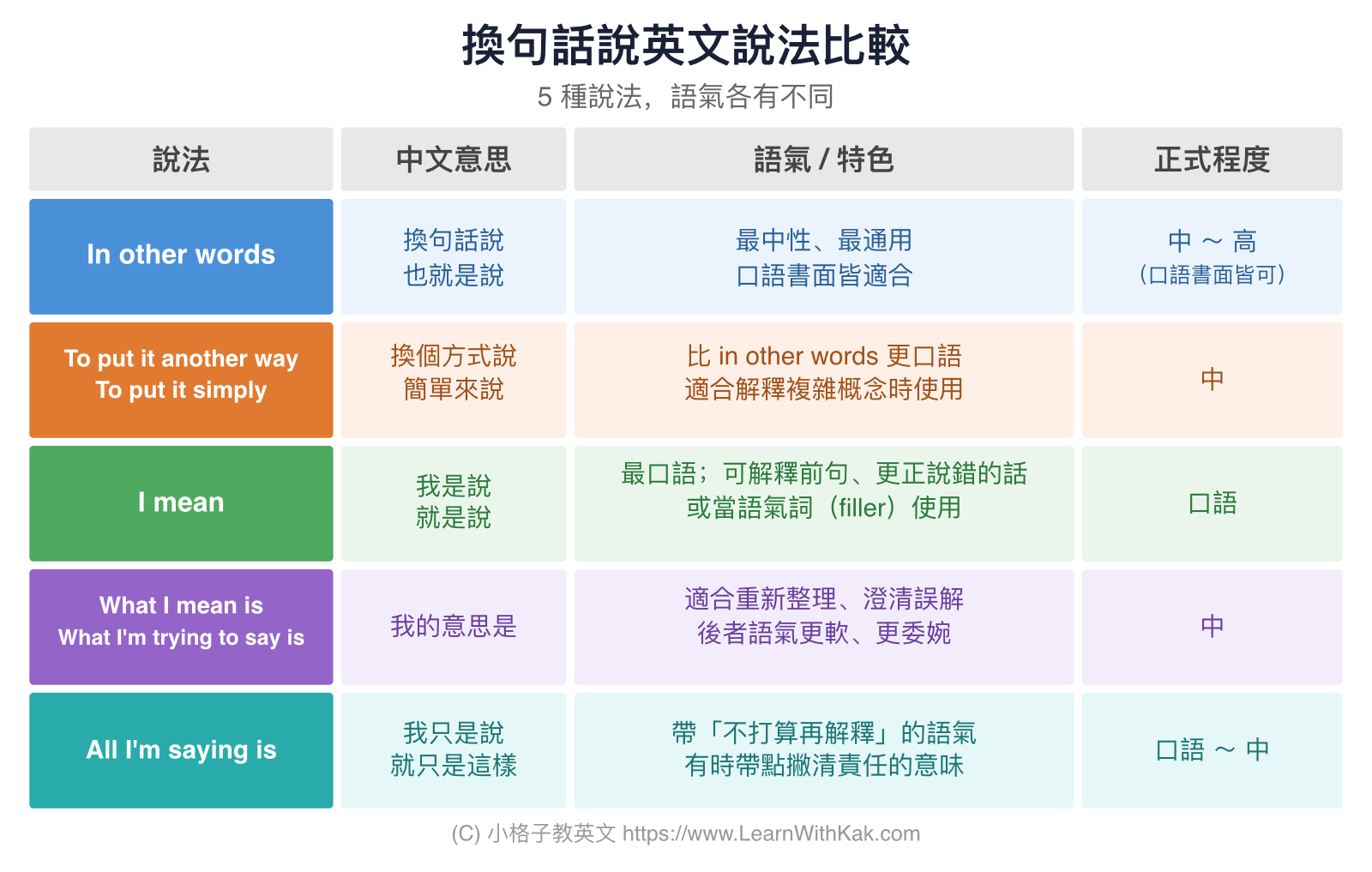
換句話說英文說法不少,每個語氣都有自己的味道。In other words 中性穩妥、I mean 口語自然、All I’m saying is 帶點「我說完了你自己想」的語感。下次說到一半被誤解,不用再只靠一句 in other words 撐場面了。
延伸閱讀:【別誤會英文不只 Don’t misunderstand!教你最自然的 3 種說法】
如果你喜歡這篇文章的話,可以追蹤我們的Threads和Facebook唷!