
你知道 compliment 中文是什麼意思嗎?很多人打字打太快,把稱讚打成 complement,整句話意思整個跑掉,對方看了滿臉問號。這兩個字長得超像,唸起來也差不多,但意思差了十萬八千里,搞懂這個小地方,寫信、聊天都不會出糗。
Compliment(有 i):讚美、恭維、客氣話
先講 compliment,有 i 的這個,這才是「讚美」、「恭維」的意思,中文常常翻成客氣話。compliment 中文意思很單純,就是別人說你好話的時候用的字。
名詞用法:讚美、恭維
Compliment 當名詞就是「讚美」,是可數名詞,可以說 a compliment(一個讚美),也可以說 compliments(很多讚美)。
常見搭配有:give a compliment 給讚美、pay someone a compliment 向某人致意(比較正式)、receive a compliment 收到讚美、return a compliment 回讚,就是對方誇你,你也誇回去。
還有一個很有畫面的:backhanded compliment,表面是讚美其實帶刺,像是「你今天氣色特別好耶,跟平常差好多」,聽起來怪怪的對吧,那就是了。這種說法在中文裡也有,就是所謂的「暗酸」,講出來的話乍聽是好話,細想一下才發現在虧人,聊天的時候要特別小心分辨,不然一不小心就會被句子裡藏的刺傷到還不自知。
(1)
A: You look amazing in that dress!
A: 你穿那件洋裝超美的!
B: Aw, thanks for the compliment! You just made my day.
B: 哇謝謝誇獎,你讓我今天心情都變好了。
(2)
A: My boss never gives compliments. It’s kind of exhausting.
A: 我老闆從來不誇人,有點累。
B: That sucks. Everyone needs a little recognition sometimes.
B: 真的很扯,每個人偶爾都需要被肯定一下。
(3)
A: She said my presentation was the best one today.
A: 她說我今天的簡報是最好的。
B: That’s a huge compliment coming from her!
B: 她這樣講超級是稱讚耶!
(4)
A: Was that a compliment or an insult? I honestly can’t tell.
A: 那到底是稱讚還是嘲諷?我真的分不出來。
B: Definitely a backhanded compliment. She’s shady like that.
B: 絕對是帶刺的讚美,她就是這種人。
(5) He paid her a genuine compliment about how she handled the client.
他真心稱讚她處理客戶的方式。
(6) I’m terrible at receiving compliments, I always freeze up and don’t know what to say.
我超不會接受別人的稱讚,每次都不知道要回什麼。
被稱讚的時候到底該怎麼回應才不會一直只說 thank you,回應讚美英文其實有更多說法,職場上用起來也更自然。
動詞用法:讚美、恭維
Compliment 也可以當動詞,意思是「稱讚某人」,用法是 compliment someone on something,稱讚某人某方面。這個用法比較正式,不像直接說 “You’re awesome!” 那麼隨性。
(7)
A: Did your client say anything about the proposal?
A: 你的客戶對提案有說什麼嗎?
B: Yeah, she complimented me on the detailed analysis. Huge relief!
B: 有欸,她稱讚我分析做得很細,我鬆了一口氣。
(8)
A: He complimented you on your presentation skills? That’s sweet.
A: 他稱讚你的簡報能力?好貼心喔。
B: I know, I wasn’t expecting that at all.
B: 對啊,我完全沒想到。
(9)
A: The chef came out and complimented us on the wine pairing.
A: 主廚特別出來稱讚我們選的配酒。
B: Wow, that sounds fancy.
B: 哇聽起來好高級。
(10) She complimented him on his attention to detail, and it really boosted his confidence.
她稱讚他注重細節,這讓他自信心大增。
Compliments of…(免費贈送)
Compliments of + 人或公司,意思是「由…免費提供」、「…招待」。餐廳常聽到 compliments of the house,就是「本店招待」。With compliments 則是「附贈」的意思。
(11)
A: We didn’t order this dessert.
A: 我們沒點這個甜點耶。
B: It’s compliments of the chef. He wanted to thank loyal customers.
B: 這是主廚招待的,他想感謝老顧客。
(12)
A: How much do I owe you for the coffee?
A: 咖啡要算我多少錢?
B: Nothing, it’s compliments of the house. Enjoy!
B: 不用啦,店家招待,請享用!
(13) The author signed the book “With compliments” before giving it away.
作者在書上簽了「附贈」之後才把書送出去。
Complement(有 e):補充、互補、補足
再來講 complement,有 e 的這個,意思是「補充」、「互補」,跟讚美完全沒關係。很多人打錯字,把要表達「稱讚」的句子打成 complement,讀起來語意就整個怪掉,收到訊息的人可能還要想一下才知道你想說什麼。搞懂 compliment complement 差在哪,其實記住一個小地方就好,後面會教,先來看看 complement 到底怎麼用。
名詞用法:補充物、互補物
Complement 當名詞是「補充」、「互補的事物」,重點是兩個東西加在一起會更完整、更好。常見情境像是食物搭配、產品互補、團隊技能互補。
(14)
A: Why do you always order fries with your burger?
A: 你幹嘛每次都要配薯條?
B: Because fries are the perfect complement to burgers, they just go together.
B: 因為薯條是漢堡的完美搭配啊,就是絕配。
(15)
A: Our team is missing someone with strong technical skills.
A: 我們團隊缺一個技術很強的人。
B: Yeah, we need someone who’s a good complement to our creative side.
B: 對啊,需要一個能跟我們創意面互補的人。
(16)
A: This plugin is a great complement to the main software.
A: 這個外掛是主程式很好的補充耶。
B: Totally, it fills in all the gaps.
B: 完全同意,它把空缺都補上了。
(17) A light salad is the perfect complement to a heavy pasta dish.
清爽的沙拉是濃郁義大利麵的完美搭配。
(18) The two products work as complements, buying one makes the other more useful.
這兩個產品是互補的,買一個會讓另一個更好用。
動詞用法:補充、補足、相配
Complement 當動詞是「使完整」、「相配」的意思,A complements B 就是 A 讓 B 更完整、更好看。這個用法常出現在設計、搭配、團隊合作的情境。
(19)
A: Do you think this blue shirt complements my eyes?
A: 你覺得這件藍襯衫有襯托我的眼睛嗎?
B: Definitely, it brings out the color really well.
B: 絕對有,把顏色襯托得很好看。
(20)
A: Her design skills really complement his technical expertise.
A: 她的設計能力真的補足了他的技術專長。
B: Yeah, they make a great team.
B: 對啊,他們是超強組合。
(21)
A: The new hire complements the team perfectly.
A: 新人完美補足了團隊的不足。
B: Agreed, she has exactly what we were missing.
B: 同意,她剛好有我們缺的東西。
(22) The side dishes complement the main course really nicely.
配菜把主餐襯托得恰到好處。
Compliment vs Complement 一眼看懂
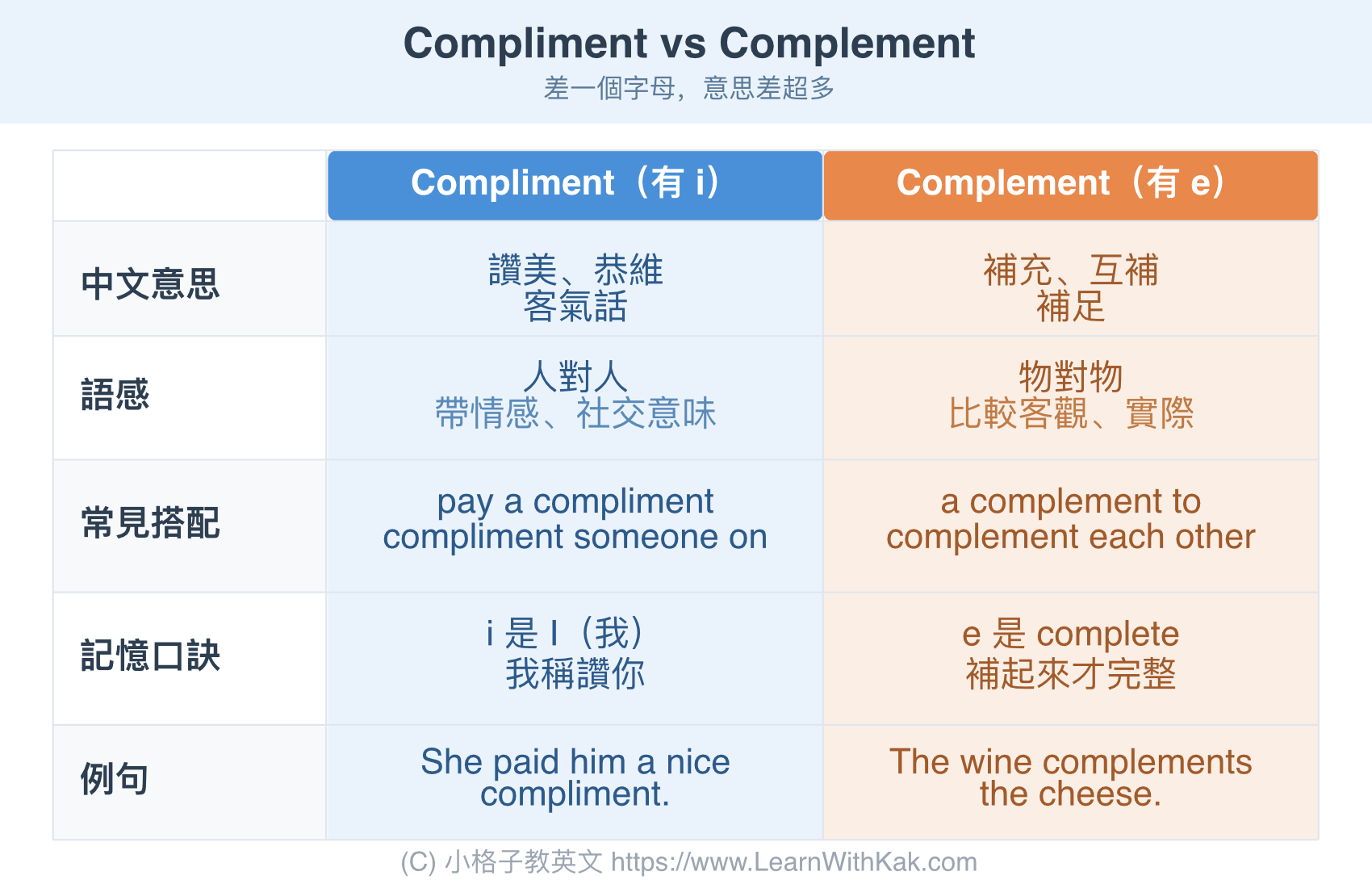
講到這裡,compliment complement 的差別其實有個超簡單的記憶法,看那個 i 跟 e 就好:compliment 的 i 就想成 I(我),我稱讚你就是 give you a compliment;complement 的 e 就想成 complete(完整),東西補起來才完整,就是 complement。
語感上也完全不一樣,compliment 是人對人的讚美,帶情感、帶社交意味;complement 是事物之間的互補,比較客觀、實際。寫 email 或聊天的時候,只要多花半秒想一下這個小口訣,就能避免打錯字鬧笑話。下面這張表把兩個字整理在一起,一眼就能看出差別。
| Compliment(有 i) | Complement(有 e) | |
|---|---|---|
| 中文意思 | 讚美、恭維、客氣話 | 補充、互補、補足 |
| 詞性 | 名詞 / 動詞 | 名詞 / 動詞 |
| 常見搭配 | pay a compliment、compliment someone on | a complement to、complement each other |
| 語感 | 人對人,帶情感、社交意味 | 物對物,比較客觀、實際 |
| 記憶口訣 | i 是 I(我),我稱讚你 | e 是 complete,補起來才完整 |
延伸:Complimentary vs Complementary
既然都講到這了,順便提一下形容詞版本,這兩個也超容易搞混。
Complimentary 有兩個意思,一個是「讚美的」,另一個是「免費的」,最常聽到的是 complimentary breakfast(免費早餐),飯店都會這樣說。Complimentary ticket 就是招待券。
Complementary 意思是「互補的」,complementary colors 是「互補色」,就是美術課學的那個,complementary skills 是「互補的技能」。
(23) The hotel offers complimentary breakfast and Wi-Fi for all guests.
飯店提供所有房客免費早餐和 Wi-Fi。
(24) They have complementary personalities, one is outgoing and the other is reserved.
他們的個性互補,一個外向一個內向。
(25)
A: Is the shuttle bus complimentary?
A: 接駁車是免費的嗎?
B: Yes, it’s included for all hotel guests.
B: 對,房客都有含在裡面。
(26)
A: Orange and blue are complementary colors, right?
A: 橘色跟藍色是互補色對吧?
B: Yep, that’s why they look so good together.
B: 對啊,所以搭在一起才這麼好看。
這兩個形容詞光看拼法真的很難分,建議直接把 complimentary 跟免費、讚美綁在一起記,把 complementary 跟互補、色彩綁在一起記,久了就不會再搞混。
(27)
A: The spa gave us complimentary access to the pool.
A: Spa 招待我們免費使用泳池。
B: Nice, that’s a great perk.
B: 讚耶,這個福利不錯。
(28) Their skill sets are complementary, so the project moves a lot faster.
他們的技能互補,所以專案進展快很多。
下次要稱讚別人,記得用有 i 的 compliment;要說兩個東西很搭,用有 e 的 complement。一個字母差很多,搞懂之後就不會再打錯字,也不會被笑英文不好了。
延伸閱讀:【被稱讚只會說 Thank you?回應讚美英文 6 種說法,職場也適用】
如果你喜歡這篇文章的話,可以追蹤我們的 Threads 和 Facebook 唷!