
想用英文說「必須」,很多人第一個想到的就是 have to,但 must 和 need to 也都有「必須」的意思。問題是,三個用起來語感差很多,隨便替換反而會讓人聽起來怪怪的。必須英文到底怎麼分?這篇把三個都拆開講清楚,還有 TOEIC 最愛考的 don’t have to vs. must not,一起搞定。
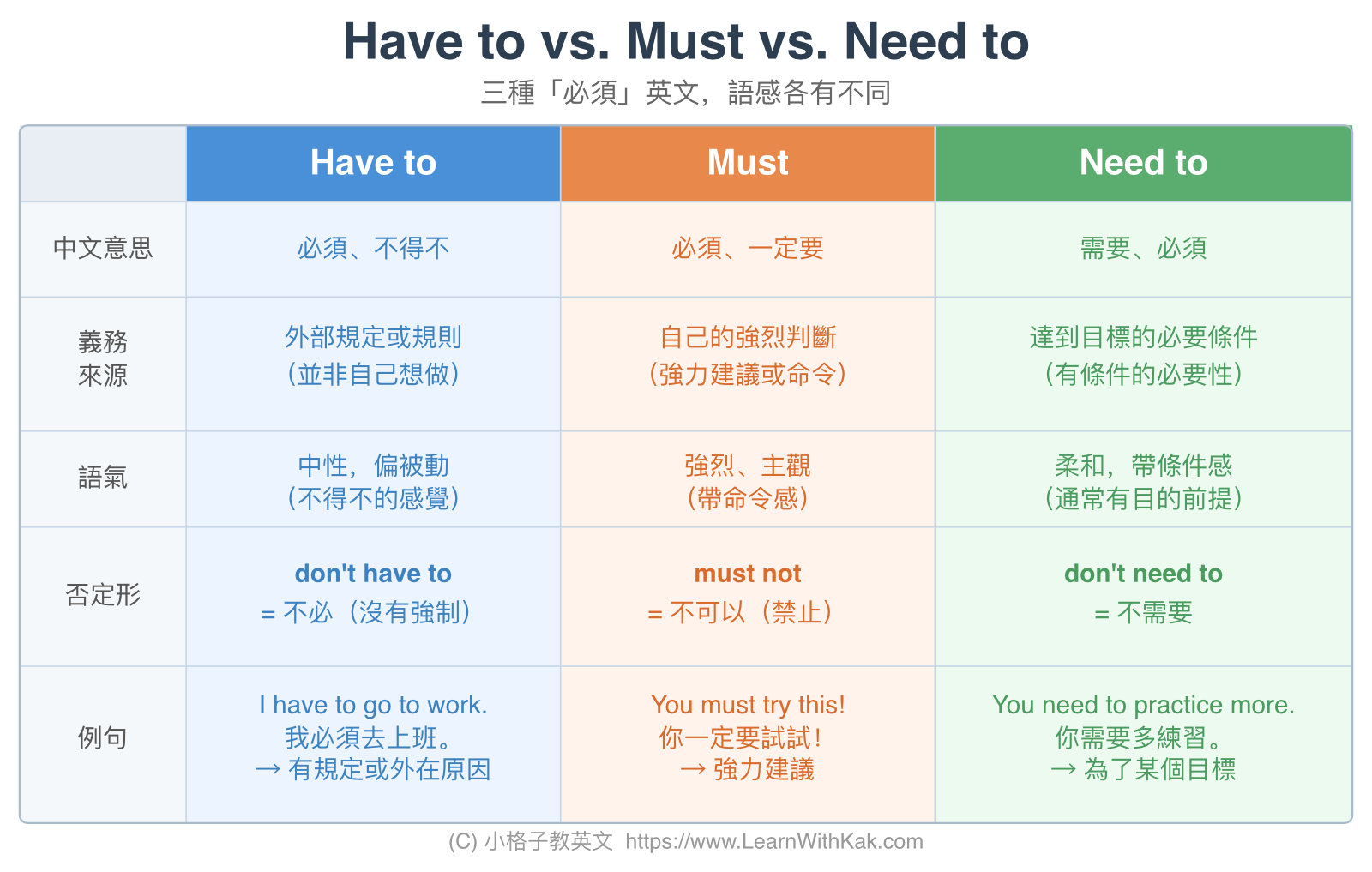
Have to:不得不,因為有規定
Have to 用在義務感來自「外部」的時候,也就是有某個規定、規則、或是他人的要求,讓你「不得不」做某件事。這個義務不一定是你自己想的,但因為有外在原因,你必須做。
(1)
A: Why do you always leave the office at exactly 6:30?
A: 你為什麼每天都準時六點半離開辦公室?
B: I have to pick up my kid from school. It ends at 7.
B: 我必須去接小孩放學,學校七點才放。
(2) I have to submit this report by 5 PM or my manager will be upset.
我必須在下午五點前交出這份報告,不然我主管會不高興。
(3)
A: Are you coming to the team dinner tonight?
A: 你今晚要來團隊聚餐嗎?
B: I want to, but I have to finish the presentation first. My boss needs it tomorrow morning.
B: 我想去,但我必須先把簡報做完,我老闆明天早上要用。
(4) Employees have to wear a badge at all times in the building.
員工在大樓裡必須隨時佩戴識別證。
(5) I have to renew my passport before the trip. It expires next month.
我必須在旅行前更新護照,下個月就到期了。
Have to 用法 的語感重點:義務感是「來自外面的」,有一種「因為有規定或有原因,所以我不得不做」的被動感。
Must:自己覺得非做不可
Must 的義務感是從「自己內心」出發的,可能是你強烈認為某件事必須做,也可能是你在強力建議、甚至命令別人。語氣比 have to 更強烈、更主觀。
(6) You must try the beef noodles here. They’re seriously the best.
你一定要試試這裡的牛肉麵,真的超好吃的。
(7)
A: I haven’t slept properly in three days.
A: 我已經三天沒睡好了。
B: You must get some rest. This isn’t sustainable.
B: 你一定要好好休息,這樣下去不行的。
(8) All participants must register before the event. Late registrations will not be accepted.
所有參加者必須在活動前完成報名,逾期恕不受理。
(9)
A: Did you watch that documentary on Netflix?
A: 你有看 Netflix 那部紀錄片嗎?
B: Not yet.
B: 還沒。
A: You must watch it. I’ve never cried so hard at a documentary before.
A: 你一定要看!我從來沒有為一部紀錄片哭成那樣過。
(10) I must remember to call the client back this afternoon.
我一定要記得今天下午回電給客戶。
語感重點:Must 帶有強烈的「主觀必要性」,說話者自己覺得這件事非做不可,或者在強力建議、命令別人。例句 (8) 是書面公告,正式場合用 must 語氣比 have to 更強硬,合約和規則說明裡很常見。
Need to:為了目標才需要
Need to 的義務感比較「有條件」,通常是說「為了達到某個目標,你需要做這件事」。語氣比 have to 和 must 都柔和一點,有種邏輯推導的感覺,常常搭配 if you want X 這樣的前提出現。
(11) If you want to improve your English, you need to practice speaking every day.
如果你想提升英文,你需要每天練習開口說。
(12)
A: I keep failing the TOEIC listening section.
A: 我多益聽力一直考不好。
B: You need to work on your listening speed. Try listening to podcasts without subtitles.
B: 你需要加強聽力速度,試試看聽 podcast 不開字幕。
(13) We need to update the software before the client presentation tomorrow.
我們在明天客戶簡報前,需要把軟體更新好。
(14) You need to book the restaurant in advance. It’s always packed on weekends.
你需要提前訂位,那間餐廳週末一直都很滿。
語感重點:Need to 很常搭配「if you want X」或表達原因的句子,強調這是達到某個目標的必要條件,沒有 have to 那麼有被迫感,也沒有 must 那麼強烈。
Have to vs. Must 放一起比
很多人以為 have to 和 must 可以隨便換,其實有時候確實可以,但語感不同。同一個情境用不同的字,傳遞出來的訊息會有微妙差別。
(15)
Have to:I have to exercise more.(有外在原因,例如醫生說要、或自己知道有這個必要)
Must:I must exercise more.(自己強烈覺得非做不可,語感更迫切)
(16)
Have to:You have to wear a helmet when you ride.(規定,外部要求)
Must:You must wear a helmet when you ride.(強烈建議或帶命令語氣)
(17)
A: Are you going to the meeting?
A: 你要去開會嗎?
B: Yes, I have to. It’s mandatory.
B: 對,我必須去,是強制出席的。
這裡換成 “I must go” 也說得通,但 “I have to” 帶有「被要求去」的感覺更自然,比較符合「強制出席」的情境。
(18)
A: This place is amazing. You must come here sometime.
A: 這個地方超棒的,你一定要找時間來。
換成 “You have to come here” 也對,兩個都常用。Must 稍微更強烈,帶有「我真心強烈建議」的語感,在表達推薦的時候比 have to 更常聽到。
簡單記:有規定或外在壓力用 have to;自己覺得非做不可,或在強力建議別人,用 must。
Don’t have to vs. Must not
這個組合是多益和 TOEIC 考試的高頻考點,也是很多台灣學習者最容易搞混的地方。中文兩個都可能被翻成「不需要」或「不必」,但意思完全不一樣。
Don’t have to = 不必、不需要(沒有義務,但你可以選擇做)
Must not = 不可以、禁止(絕對不能做)
(19) You don’t have to wear a suit to the office. We’re pretty casual here.
你不需要穿西裝來辦公室,我們這裡蠻隨意的。
(20) You must not share your password with anyone, including your colleagues.
你絕對不可以把密碼分享給任何人,包括同事。
(21)
A: Do I have to come in on Saturday?
A: 我週六一定要進公司嗎?
B: No, you don’t have to. It’s optional.
B: 不用,不是強制的。
(22)
A: Can I take photos inside the museum?
A: 我可以在博物館裡拍照嗎?
B: You must not use flash, but non-flash photos are fine.
B: 你不可以用閃光燈,但不用閃光燈拍是可以的。
(23) Employees don’t have to work overtime, but those who do will receive additional pay.
員工不必加班,但選擇加班的員工會有額外薪資。
這兩個是必須英文裡最容易被混淆的組合。TOEIC 出題時,常常在一段公告或規則裡,問你「Which of the following is TRUE?」,其中一個選項就是把 don’t have to(不強制)和 must not(禁止)混用來混淆你。只要這兩個搞清楚了,這類考題的陷阱一眼就識破。順帶一提,如果你對英文助動詞的其他用法有興趣,would have、should have、could have 的差別背後也是同一種邏輯,搞懂否定形的語感,TOEIC 文法題的勝率就上去了。
Have to 用法、must 和 need to 各有各的語感,三個搞清楚之後,不管是日常對話、職場英文、還是多益考試,用起來都會自然很多。
延伸閱讀:【主動語態 vs 被動語態怎麼分?被動文法用法全解析 + 多益必考句型】
如果你喜歡這篇文章的話,可以追蹤我們的Threads和Facebook唷!