
說「我到機場了」用哪個介系詞?說「我終於到東京了」又用哪個?很多人學了好幾年英文,arrive in or at 這個問題還是會搞混。其實選哪個介系詞,背後有一個很清楚的邏輯,知道這個原則,以後遇到就能直接判斷,不用靠感覺猜。
一個判斷原則,不用再猜
Arrive 後面的介系詞選擇,核心邏輯只有一條:看地點的「大小」和「性質」。
- 小地點、具體建築物 → arrive at
- 大地點、城市或國家 → arrive in
- 特定表面或樓層 → arrive on
- 結論、協議等抽象概念 → arrive at
記住這個邏輯,95% 的情況都能直接判斷。另外有一個一定要知道的:英文根本沒有 “arrive to” 這種說法,這是台灣人最常犯的錯誤之一,很多人是因為受到中文「到達」的影響,直接把 to 帶進去。
Arrive at:具體小地點
Arrive at 用在「比較小的、具體的地點」,像是建築物、車站、活動場所。機場、辦公室、餐廳、十字路口都屬於這類。很多去日本、歐洲旅行前會惡補機場英文的人,其實 “arrived at the airport” 這個句型就是最基本、最常用的一個。
(1)
A: Are you almost here?
A: 你快到了嗎?
B: Yeah, I just arrived at the lobby. I’ll be up in two minutes.
B: 對,我剛到大廳了,兩分鐘後上去。
(2)
A: What time does the meeting start?
A: 會議幾點開始?
B: At 9. Try to arrive at the conference room by 8:50.
B: 九點。試著在 8:50 前到會議室。
(3)
A: How was the traffic this morning?
A: 今天早上塞車嗎?
B: Not bad. I arrived at the office around 8:30.
B: 還好。我大約 8:30 到辦公室。
(4)
A: When did you get to the party?
A: 你幾點到派對的?
B: We arrived at the venue around 9 PM. Most people were already there.
B: 我們大約晚上九點到場地,大部分人都已經到了。
(5)
A: The train is here!
A: 火車來了!
B: Perfect timing. We arrived at the station just in time.
B: 時間剛好。我們剛好準時到車站。
(6) The bus arrived at the small town around noon.
公車大約中午到小鎮。
小城鎮也用 at,因為相對於大城市,小鎮屬於「比較小的地點」,邏輯完全一樣。
Arrive in:城市和國家
Arrive in 用在「比較大的地理範圍」,城市、國家、州都屬於這類。這組是多益考題裡最常出現的,因為台灣人很容易把城市(大地點)跟具體地點(小地點)的介系詞搞混,選 at 選 in 各有各的邏輯。
(7)
A: When do you land?
A: 你什麼時候降落?
B: Around 6 PM. So I should arrive in Taipei by 7.
B: 大約下午六點,所以我應該七點左右到台北。
(8)
A: Is this your first time in London?
A: 你第一次來倫敦嗎?
B: No, I arrived in London last year for work too. But this time is for vacation.
B: 不,我去年也因為工作來過倫敦,但這次是玩的。
(9)
A: Have you started your trip?
A: 你旅行開始了嗎?
B: Yes! We arrived in Japan this morning. The weather is amazing.
B: 是的!我們今天早上到日本了,天氣超讚。
(10)
A: How was the flight?
A: 班機怎樣?
B: Long. We arrived in New York after 15 hours. I was exhausted.
B: 很長。我們飛了 15 小時才到紐約,累壞了。
(11)
A: Did you make it to the conference?
A: 你有趕到研討會嗎?
B: Just barely. I arrived in the city right before it started.
B: 勉強趕上。我在開始前剛剛抵達市區。
“The city” 指的是整個城市範圍,用 in。這跟具體某棟建築或某個地點要用 at 是不同的概念。
(12) She arrived in Taiwan as an exchange student three years ago.
她三年前以交換生的身份到台灣。
Arrive on:表面和樓層
Arrive on 是三個用法裡最少見的,但在多益閱讀題或職場 email 裡偶爾會出現,知道比不知道好。
(13)
A: Which floor is HR on?
A: 人資在哪一層?
B: The 8th floor. The elevator should arrive on that floor in a second.
B: 八樓,電梯應該馬上到那層。
(14)
A: Are we taking a boat to the island?
A: 我們是坐船去島上嗎?
B: Yes. We should arrive on the island by noon.
B: 對,我們應該中午前抵達島上。
(15)
A: When do we land?
A: 我們什麼時候降落?
B: We’re scheduled to arrive on the runway at 11 AM.
B: 預計早上 11 點降落在跑道上。
(16) The passengers arrived on the platform just as the train was pulling away.
旅客剛到月台,火車就開走了。
島嶼的部分稍微複雜一點:小島通常用 on 或 at,強調「表面」或「地點」。但夠大的島、或有城市的島就用 in,例如 arrive in Hawaii、arrive in Taiwan,因為夏威夷和台灣已經大到被當成地區在處理了。
職場和多益必考:arrive at 的抽象用法
Arrive at 除了用在具體地點,也用在「抽象的目的地」,像是結論、決定、協議。這個用法在多益閱讀、職場英文 email 和商務會議裡超常出現,但很多人因為只記住「地點用法」,遇到這類句子就看不懂。
常見搭配:
- arrive at a conclusion(得出結論)
- arrive at a decision(做出決定)
- arrive at an agreement(達成協議)
- arrive at a solution(找到解決方案)
(17)
A: Did the team finalize the plan?
A: 團隊最終定案了嗎?
B: Yes. After two hours of discussion, we finally arrived at a decision.
B: 是的。經過兩小時討論,我們終於做出了決定。
(18)
A: How did the negotiation go?
A: 談判進行得怎樣?
B: Better than expected. We arrived at an agreement by end of day.
B: 比預期好,我們在當天結束前達成了協議。
(19)
A: Did the committee figure out the issue?
A: 委員會找出問題了嗎?
B: After reviewing all the data, they arrived at a solution.
B: 在審查完所有數據後,他們找到了解決方案。
(20)
A: That investigation took forever.
A: 那個調查花了好久。
B: I know. But they finally arrived at the truth.
B: 我知道,但他們最終找到了真相。
多益 Part 5(填空題)和 Part 6(段落填空)都很愛考這個搭配,測的就是你知不知道 arrive at 可以跟抽象名詞配在一起。如果只記住「地點用法」,這類題型就很容易選錯。
Home、Here、There 後面不用介系詞
很多人不知道,arrive 後面接某些特定的字時根本不需要加介系詞,加了反而是錯的。
(21)
正確:I arrived home at 11 PM.
錯誤:I arrived at home at 11 PM.
我晚上 11 點到家。
Home 在這裡是副詞,功能是修飾動詞,不是名詞,所以介系詞完全不需要。
(22)
正確:When did you arrive here?
錯誤:When did you arrive at here?
你什麼時候到這裡的?
(23)
正確:They arrived there ahead of schedule.
錯誤:They arrived at there ahead of schedule.
他們提前抵達那裡了。
(24)
A: Are you home yet?
A: 你到家了嗎?
B: Just arrived home. Give me five minutes to freshen up.
B: 剛到家,給我五分鐘整理一下。
Arrive、Reach、Get to 怎麼選
這三個詞都是「到達」,但語法結構不同,是多益和職場英文裡另一個常見考點,也是 arrive 用法的延伸概念。
Arrive:不及物動詞,後面需要介系詞(at / in / on),或直接接 home / here / there
Reach:及物動詞,後面直接接地點,完全不需要介系詞
Get to:後面加 to,再接地點
(25)
A: How do you usually say「到達辦公室」in English?
A: 你平常怎麼說「到達辦公室」?
B: Three ways work. “I arrived at the office”, “I reached the office”, or “I got to the office” — all mean the same thing.
B: 三種都可以。”I arrived at the office”、”I reached the office”、”I got to the office” 意思一樣。
(26)
A: Which sounds most formal?
A: 哪個聽起來最正式?
B: Arrive is slightly more formal. Reach is neutral. Get to is the most casual.
B: Arrive 稍微正式一點,Reach 比較中性,Get to 最口語。
多益小提醒:Reach 後面不加介系詞,所以 “reached at the station” 是錯的;Arrive 需要介系詞,所以 “arrived the station” 也是錯的。這兩個邏輯剛好相反,很容易搞混,是 arrive 用法裡值得特別注意的地方。
至於 “arrive to”,to 在英文裡有很多種角色,但接在 arrive 後面就是不對,這一點沒有例外。
四個常見錯誤
以下是 arrive 用法裡最容易踩的地雷,多益考試裡也常以這些錯誤作為干擾選項。
錯誤 1:用 “arrive to”
不正確:I arrived to the office.
正確:I arrived at the office.
英文沒有 arrive to,這是台灣人最常犯的錯誤。
錯誤 2:城市用 at
不正確:We arrived at Tokyo.
正確:We arrived in Tokyo.
城市是大地點,要用 in。
錯誤 3:建築物用 in
不正確:I arrived in the airport.
正確:I arrived at the airport.
機場是具體建築物,用 at。
錯誤 4:home 前加介系詞
不正確:I arrived at home.
正確:I arrived home.
Home 是副詞,不需要介系詞。
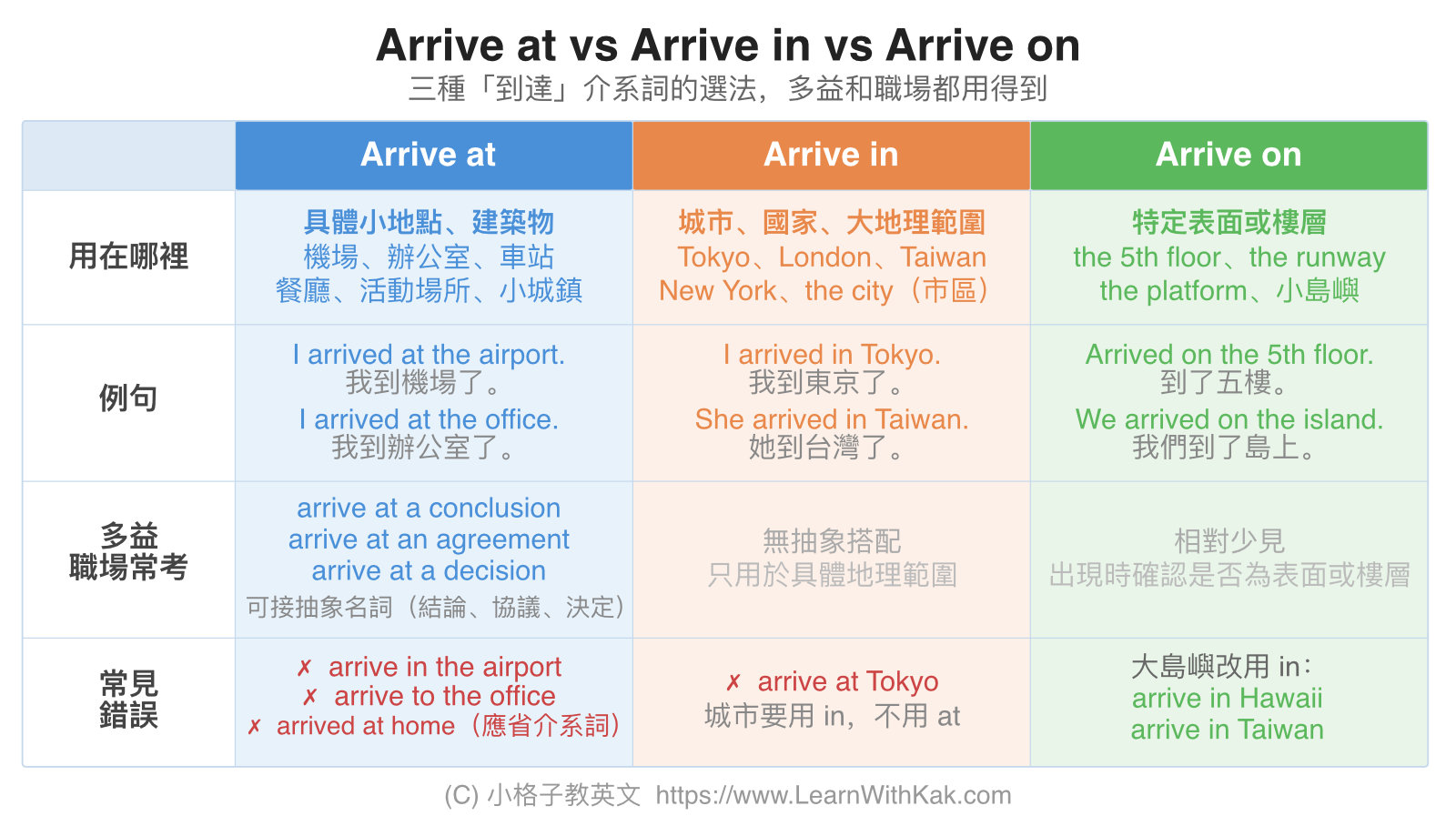
選 arrive in or at,只要記住「大地點用 in、具體小地點和建築物用 at」,大部分情況都能判斷對。職場英文和多益考題另外很常考 arrive at + 抽象名詞,這組搭配多練幾次就自然了。最後,arrive to 不存在,home、here、there 後面不加介系詞,這兩個記好就扣不了分了。
延伸閱讀:【行李遺失、航班延誤英文怎麼說?機場緊急狀況必備英文對話】
如果你喜歡這篇文章的話,可以追蹤我們的Threads和Facebook唷!