
By the way 中文意思是「順便一提」、「喔,對了」,跟 anyway、actually 常常被搞混,但語感差很多。有時候你想轉換話題、補充說明、或想委婉地糾正對方時,腦中冒出來的第一個英文詞常常就是這幾個。但如果亂用,語氣就會怪怪的,一起來看看這三個常見但容易混用的英文副詞,到底怎麼用才自然吧。
By the way
By the way 中文意思是「順便一提」、「喔,對了」,是最常見的轉換話題句型。常用在想補充資訊、從原本話題轉到另一個、或突然想到要說什麼的時候。
(1)
A: I finally finished the report.
A: 我終於把報告完成了。
B: That’s great! By the way, are you coming to the team dinner tomorrow?
B: 太好了! 喔,對了,你明天會來參加團隊晚餐嗎?
(2)
A: I bought a new coffee machine yesterday.
A: 我昨天買了一台新的咖啡機。
B: Oh nice! By the way, have you tried the new café near the station?
B: 不錯耶! 對了,你去試過車站附近那家新咖啡廳了嗎?
(3)
A: We’re planning a trip to Taitung next month.
A: 我們下個月打算去台東。
B: Sounds fun! By the way, did you already book the hotel?
B: 聽起來很棒! 對了,你訂好飯店了嗎?
(4) By the way, I saw your brother at the gym this morning.
對了,我今天早上在健身房看到你弟。
(5) Oh, by the way, I forgot to tell you something important.
喔對了,我忘了跟你說一件重要的事。
by the way 的用法通常用在輕鬆、自然的語氣中。如果是商業郵件或正式場合,可以用更中性的表達:
(6) On another note, please find the attached document.
另外,請參閱附上的文件。
Anyway
anyway 的用法比你想像中多,可以用來「拉回主題」、「結束話題」或「表達無所謂的語氣」。
(7)
A: Did you hear about the new restaurant?
A: 你有聽說那家新餐廳嗎?
B: Yeah, but anyway, as I was saying, we still need to finish this report by Friday.
B: 嗯,不過總之,回到剛剛說的,我們這份報告要在星期五前完成。
(8)
A: Sorry, I got distracted. What were you saying?
A: 不好意思,我剛剛分心了。你說到哪裡?
B: Anyway, we were talking about the budget plan.
B: 我們剛剛在講預算計畫。
(9)
A: The meeting ran longer than expected.
A: 會議比預期久。
B: Yeah, anyway, let’s grab lunch now.
B: 對啊,我們去吃午餐吧。
(10)
A: I’ll think about what you said.
A: 我會考慮你說的。
B: Sure. Anyway, that’s all I wanted to say.
B: 好啊,我就想說這些。
(11)
A: I should get going.
A: 我該走了。
B: Yeah, anyway, talk to you later.
B: 嗯,好啦,回頭再聊。
(12)
A: It’s getting late.
A: 時間不早了。
B: Anyway, see you tomorrow.
B: 對啊,那明天見。
(13)
A: He didn’t reply to my message.
A: 他沒回我訊息。
B: Anyway, it’s fine. I don’t care anymore.
B: 算了啦,沒關係,我不在意了。
(14)
A: I forgot to bring the charger.
A: 我忘了帶充電器。
B: Anyway, we’ll survive.
B: 反正還是可以撐過去啦。
(15)
A: She didn’t show up again.
A: 她又沒出現。
B: Anyway, I’m not surprised.
B: 反正我也不意外。
Actually
actually 常用來「糾正」、「補充」、「或表達出乎意料」。根據語氣不同,它可以柔和地澄清,也能加強語氣。
(16)
A: You’re from Canada, right?
A: 你是加拿大人吧?
B: Actually, I’m from New Zealand.
B: 其實我是紐西蘭人。
(17)
A: You didn’t like that movie, did you?
A: 你不喜歡那部電影吧?
B: Actually, I did! It was really good.
B: 其實我喜歡耶! 那部片真的不錯。
(18)
A: Did you like the restaurant?
A: 你喜歡那家餐廳嗎?
B: Yeah, actually, it was better than I expected.
B: 喜歡耶,事實上比我預期的好吃多了。
(19)
A: I thought you hated coffee.
A: 我以為你不喜歡咖啡。
B: Actually, I drink it every morning now.
B: 其實我現在每天早上都喝。
(20)
A: Should we submit the proposal today?
A: 我們今天要交提案嗎?
B: Actually, I think we might need more time to review it.
B: 其實我覺得我們可能需要多一點時間檢查。
(21)
A: Can we skip this step?
A: 我們可以跳過這步嗎?
B: Actually, it’s required by the system.
B: 其實這是系統要求的,不能省略。
三個詞放在一起比較
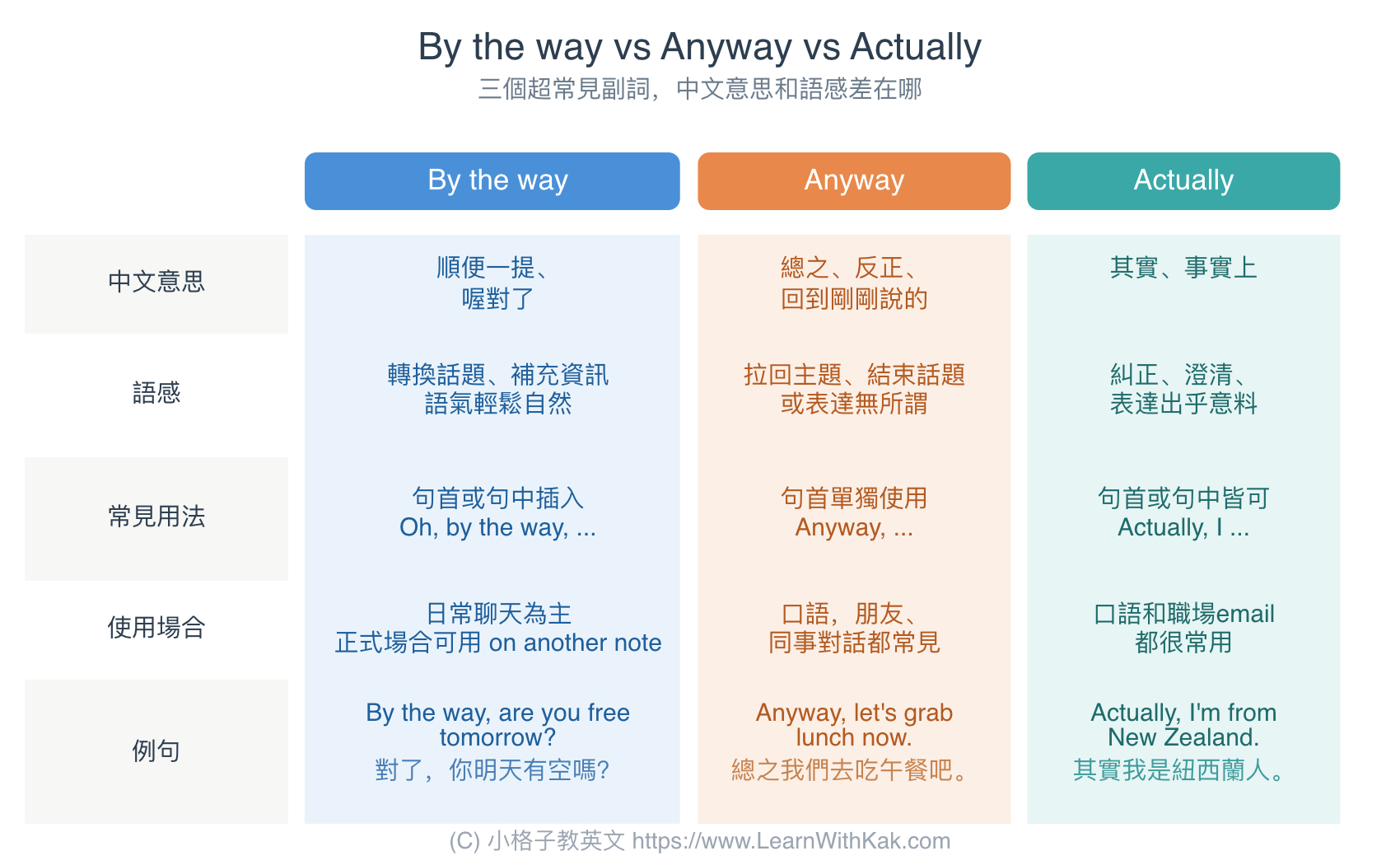
三個詞的中文意思和用法整理成表格,一眼看懂差在哪:
| By the way | Anyway | Actually | |
|---|---|---|---|
| 中文意思 | 順便一提、喔對了 | 總之、反正、回到剛剛說的 | 其實、事實上 |
| 語感 | 轉換話題、補充資訊,語氣輕鬆自然 | 拉回主題、結束話題,或表達無所謂 | 糾正、澄清、表達出乎意料 |
| 常見用法 | 句首或句中插入,Oh, by the way, … | 句首單獨使用,Anyway, … | 句首或句中皆可,Actually, I … |
| 使用場合 | 日常聊天為主,正式場合可用 on another note | 口語,朋友、同事對話都常見 | 口語和職場email都很常用 |
延伸閱讀:【要插嘴英文怎麼說?10 種禮貌切入對話的說法,從朋友聊天到開會都用得到】
如果你喜歡這篇文章的話,可以追蹤我們的Threads和Facebook唷!